
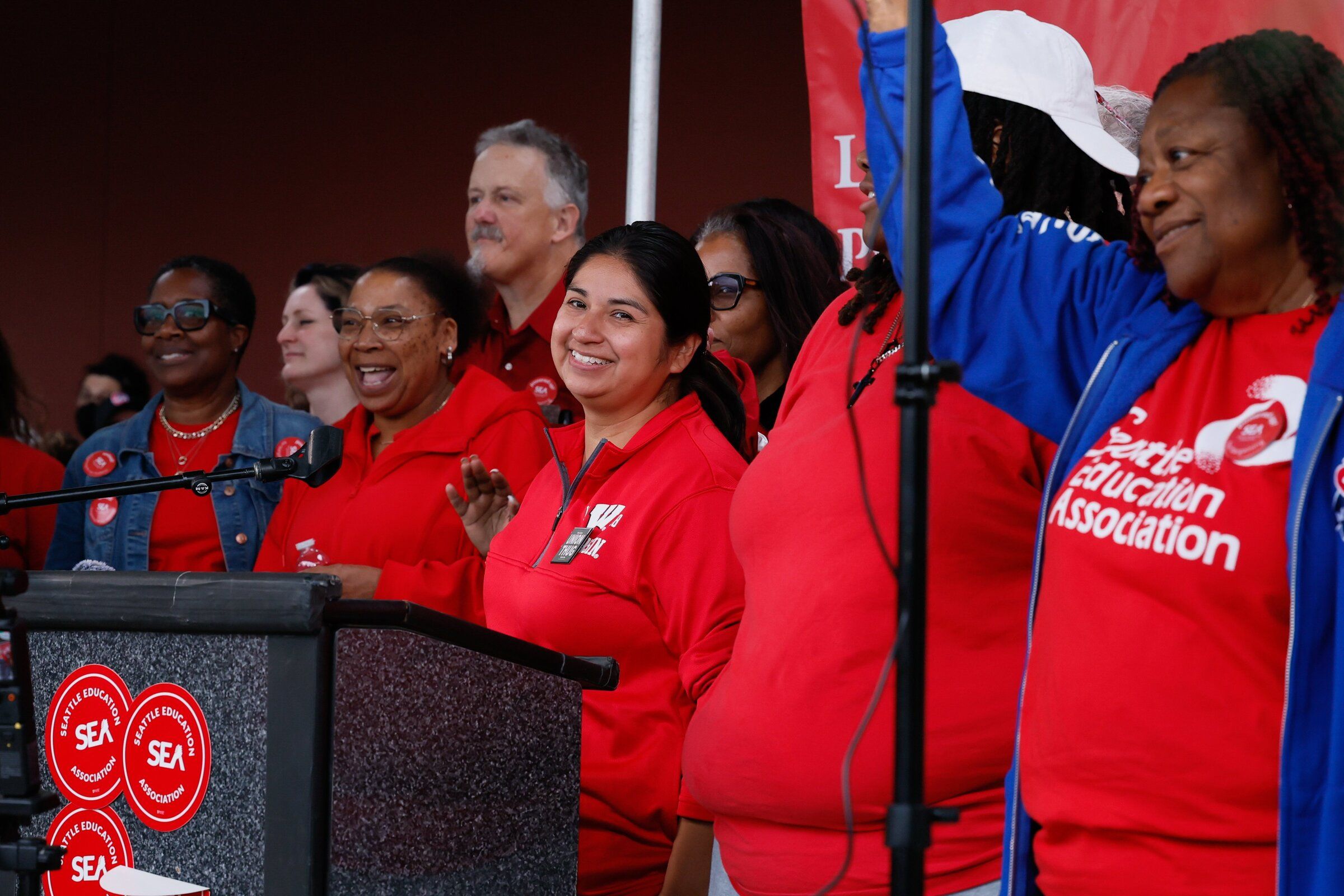
The Seattle Education Association and Seattle Public Schools reached a tentative agreement at the last minute, averting a strike that could have delayed the start of the school year. Teachers and other staff members expressed relief, while parents felt relief mixed with frustration: the decision was announced only around 11 p.m. on the eve of the expected return to school.
Negotiations had continued since June and concluded after weeks of deadlock. Superintendent Ben Shuldiner took part in the discussions personally and said he was proud of the agreement. It must now be finalized, approved by union members and then ratified by the school board.
One of the main sticking points was special education. The district has four types of programs because students require different levels of support — from instruction in a general education classroom with additional services to specialized classrooms for children with more complex needs. Currently, these programs are distributed unevenly among schools: each school typically offers only certain types of support, so some children are assigned to other schools with the appropriate program. This allows specialists and resources to be concentrated, but it can increase students’ travel times.
The district proposed changing how these services are distributed and organized, but the union was concerned about the consequences for students and staff. In the end, the sides agreed not to immediately implement a sweeping reform, but instead to launch an 18-month process involving the school community to develop a new approach.
After that process, the district plans to conduct a large pilot project, possibly as early as the third year of the new contract. It will test whether all four types of special education services can be provided at every school, so children would not have to transfer between schools depending on the programs they need.
The union’s second major achievement was a pay increase. All employees will receive raises reflecting the cost of living, along with additional increases for paraprofessionals, some office workers and other employees without state teaching certificates. Shuldiner said the final increases would be slightly higher than the previously announced 8.8% over three years, but would remain within the limits of the district’s approved budget.
Approximately 6,000 union members — teachers, paraprofessionals, secretaries, counselors and other specialists — must ratify the tentative agreement. The vote is scheduled for Sept. 11 at McCaw Hall. The spacious neutral venue can accommodate a large number of participants and allow for in-person verification of attendance and voting eligibility, while an online format could raise additional questions about the procedure.
After the union vote, the contract must be approved by the school board on Sept. 16 or earlier at a special meeting. The union represents employees and cannot independently require the district to fund the agreement, while the board cannot unilaterally impose it on staff. Therefore, both sides must approve the contract for it to take effect — confirming their agreement on salaries, working conditions and other provisions.
The final agreement was made possible by a compromise on special education and salaries, allowing the school year to begin as scheduled.
Based on: How Seattle Schools got the deal done to avert a teachers strike