
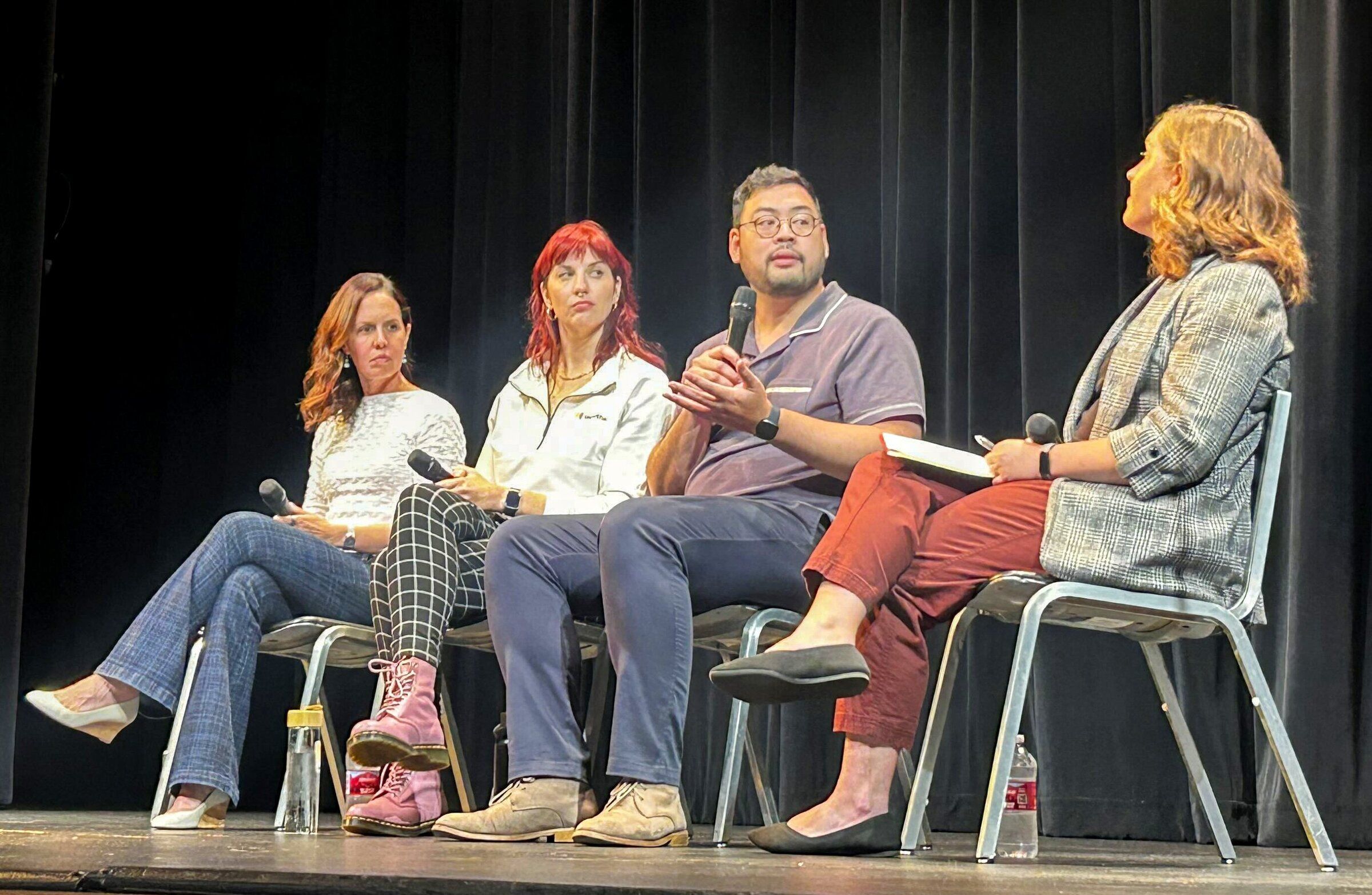
Artificial intelligence is already changing how people obtain information, work and communicate, and children are encountering this transformation from an early age. At The Seattle Times event “How to Protect Kids in the Age of AI,” experts Alexis Hiniker of the University of Washington, Green Lord of mpathic.ai and school health services coordinator Rio Hindami discussed AI’s impact on children’s mental health and development.
Parents should pay attention to how exactly their child uses a chatbot: as a tool or as something resembling a friend, adviser or confidant. Warning signs may include a steadily increasing amount of time spent communicating with the bot, hiding conversations, preferring AI’s advice to conversations with loved ones and believing that the chatbot “understands them better than anyone.” Turning to AI during a crisis instead of seeking help from adults or professionals is particularly dangerous.
Chatbots often support the user’s position and ask follow-up questions, encouraging the conversation to continue. As a result, a child may receive confirmation that they were right in a conflict without learning to analyze their own actions or solve problems independently. For this reason, schools and mental health services in the Seattle area can hold informational sessions for parents, explain the limitations of these systems and help identify troubling changes in children’s behavior. School psychologists, counselors and social workers can also regularly discuss students’ digital interactions, provide confidential support and refer families to licensed professionals.
Laws can improve safety, but rules alone are not enough. In Washington state, requirements intended to protect minors take effect Jan. 1. Chatbot operators must warn users that the bot is not a human or licensed professional, identify signs of crisis and self-harm, provide safe recommendations and direct children to emergency or professional help. The rules also provide for restrictions on dangerous and sexualized interactions, protection of minors’ personal data and documentation of safety measures.
Compliance with these requirements is generally overseen by the Washington state attorney general and consumer-protection regulators. Depending on the law’s final wording and how its rules are implemented, health authorities and law enforcement agencies may also become involved. Experts note that the law’s effectiveness will depend on enforcement methods, how harm is measured and whether the rules are actually followed. Cooperation among the government, researchers and technology companies themselves will also be important.
The idea that young people unconditionally love AI is also inaccurate. Many teenagers take a critical view of the technology, particularly because of its impact on the environment and creative professions. At the same time, AI can be beneficial: Some studies suggest that conversations with virtual companions can sometimes reduce suicidal thoughts, help people cope with loneliness and better understand their own expectations of relationships. However, positive examples exist alongside serious risks, so experts do not recommend treating AI as a substitute for human interaction or professional help.
In the United States, anyone facing a threat of self-harm or another immediate danger should call 988; in an immediate life-threatening emergency, call 911.
The main recommendation for parents is to build relationships based on trust and regularly discuss mental health and technology use with their children without judgment. Teenagers often remain silent because they are afraid of seeming like an additional burden to their parents. Adults should also speak openly about their own use of AI: what tasks it handles, what benefits it provides and what limitations it has. Such conversations can help children approach AI thoughtfully and seek support from people, rather than only from chatbots.
Based on: 5 things parents should consider when it comes to kids and AI