
This August marks the 100th anniversary of one of the most unusual rescues on Mount Hood, Oregon’s highest peak. In 1926, seven-year-old Jack Strong became lost in the mountains and spent four days there before a search party found him alive.
Jack’s story was one of the first major rescues carried out by the Crag Rats, a volunteer organization of experienced climbers and local residents. Its members later helped dozens of people on Mount Hood and in other areas. Unlike U.S. Forest Service rangers, who were responsible for managing federal lands, the Crag Rats specialized in volunteer search-and-rescue operations. The Oregon Journal described the incident in detail, calling it a story capable of inspiring preachers, teachers, scientists and lovers of dramatic tales.
It all began Thursday morning, when Jack set out with his two older brothers, Ray and Winston, from the family camp near Paradise Park toward Lost Creek. The boy decided to fish separately. When his brothers called him back, he headed in the wrong direction and soon realized he was lost.
Ray and Winston followed Lost Creek to the Sandy River but did not find their brother: Jack had already crossed the creek and was moving uphill along the opposite bank. By evening, the brothers had contacted Forest Service rangers. The search began the next morning, while Jack’s mother went looking for a telephone so she could tell his father what had happened.
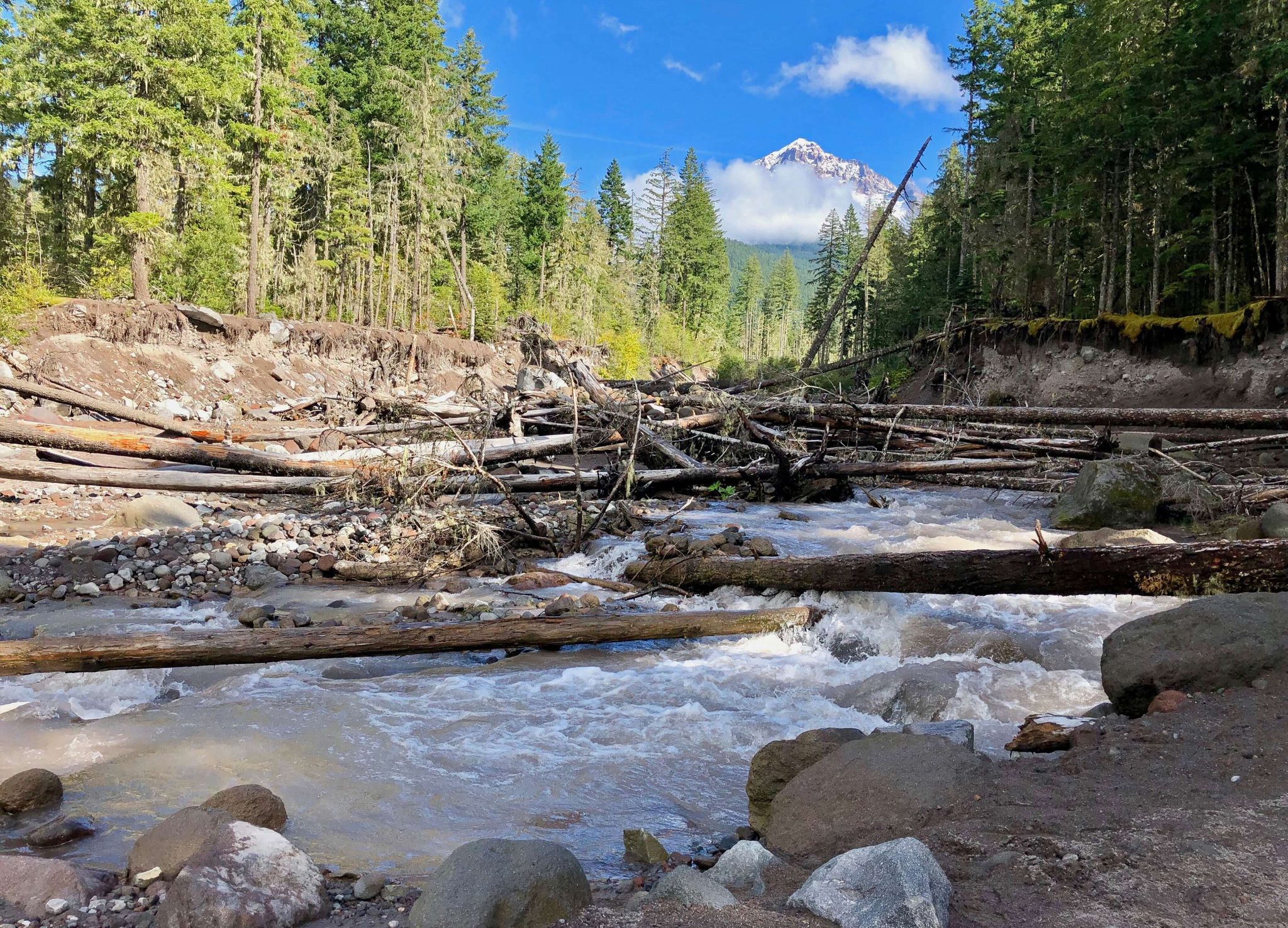
The terrain around Mount Hood was a complex system of valleys, forests and ridgelines. The Sandy River, Lost Creek and Muddy Fork, along with the Yokum Ridge, divided the area into difficult-to-reach sections, limited visibility and created countless possible routes. Without modern maps, GPS or reliable communications, rescuers had particular difficulty determining where the child had gone.
The search operation quickly expanded across the region. It was joined by sawmill and logging-company employees, members of the Mazamas and the Trails Club of Oregon, local residents and servicemen from the barracks in Vancouver, Washington. Women living near the ranger station prepared food for the searchers.
The Mazamas and the Trails Club of Oregon brought together mountaineers, organized climbs and taught safe travel in the mountains. Their members knew the local terrain well, so they often volunteered in search operations. The clubs also helped foster a culture of preparation, mutual assistance and responsibility that later became the foundation of professional rescue services in the Northwest.
Interest in the disappearance was so intense that federal authorities temporarily opened the Bull Run watershed to searchers, an area normally closed to the public. The protected district supplies Portland with drinking water, so access is restricted to prevent contamination, protect water infrastructure and preserve water quality. One participant joked that opening the protected area might normally have required an act of Congress, but a seven-year-old boy had managed to open it all by himself.
Jack himself, unaware of the scale of the search, remained calm. The first night, he ate raw fish he had caught in the creek, along with berries. He then threw away his fishing pole, deciding it was too heavy, and slept directly on the grass. The boy later said that he felt quite comfortable and was not especially afraid.
Jack decided to climb the slopes of Mount Hood and return to Paradise Park. He spent three nights near Muddy Fork, gradually making his way to Yokum Ridge at an elevation of about 6,000 feet. He was already roughly 30 miles from where he had gone fishing.
On the fourth day, Jack realized he would not be able to cross Reid Glacier and was preparing to descend. That was when Crag Rats members P.J. Bucklin, Jesse Pally and L.M. Baldwin spotted him. They suspected the boy might try to cross the glacier and climbed toward him from the other side.
When rescuers told Jack that hundreds of people were looking for him, he asked in surprise, “Me? Why are they doing that?” The boy even insisted that he could make his own way down the mountain. Meanwhile, at the camp, searchers gave the agreed-upon signal: two shots, followed by two more a minute later. For Jack’s mother, the pause was agonizing as everyone waited for confirmation that the child was alive.
Finally, a messenger ran into camp shouting, “They found him!” When people asked whether Jack was alive, he shouted back, “Oranges! No, orange juice!” This meant that the boy was conscious and able to speak. Soon Jack’s father, who was near the Sandy River, rushed to meet his son. Rescuers found that the boy’s face and hands were windburned, but otherwise he was healthy. When Jack entered the camp, he was greeted by a huge crowd, and his parents embraced him.
Today, searches on Mount Hood are coordinated by sheriffs from several counties, with the participation of volunteer groups, the Forest Service, medical personnel, aviation teams and other government agencies. Compared with 1926, rescuers now have mobile and satellite communications, GPS, digital maps, emergency beacons, drones, helicopters and databases containing weather and route information. Operations are conducted through unified incident command centers, allowing teams to be deployed and information shared more quickly. However, fog, snow, avalanches, difficult terrain and weak communications coverage can still seriously complicate rescue efforts.
And so Jack’s four-day disappearance ended with a joyful return and became part of the lore of mountain rescues in Oregon.
Based on: A century ago, one of the most dramatic rescues on Mount Hood unfolded