
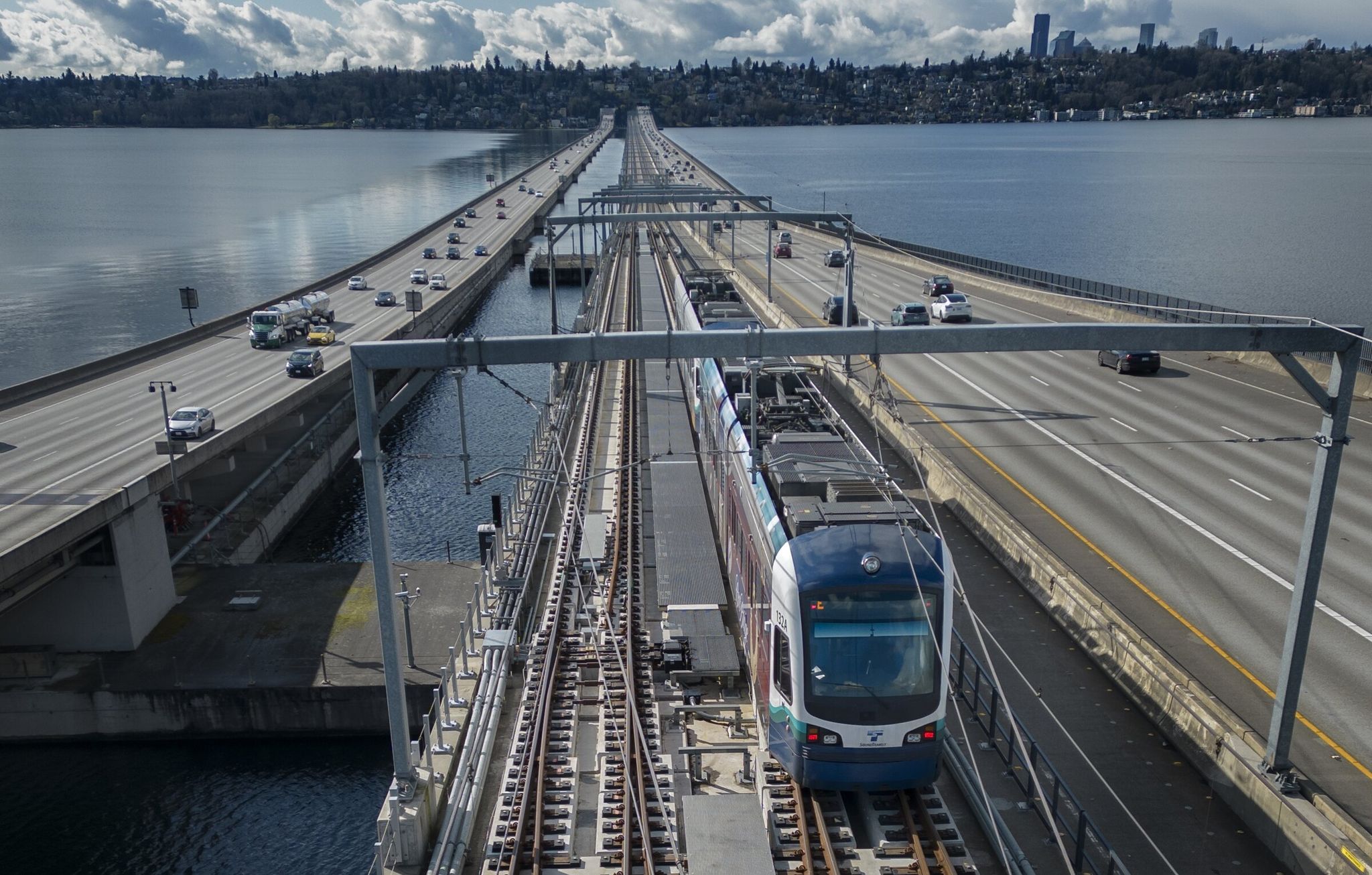
Last Saturday under a cold but clear sky, thousands of Seattle residents witnessed a historic event: the opening of the long‑awaited light rail extension that, for the first time, connects Seattle with the Eastside suburbs across Lake Washington via trains running on the I‑90 floating bridge. The unique pontoon bridge, part of the interstate highway, was chosen by regional transit agency Sound Transit to carry the tracks to save money and time and to minimize environmental impact compared with building a separate crossing. The opening ceremony—with lengthy speeches by politicians—delayed the first departure from Judkins Park station by nearly half an hour, and security staff struggled to handle the flood of people eager to be part of the moment.
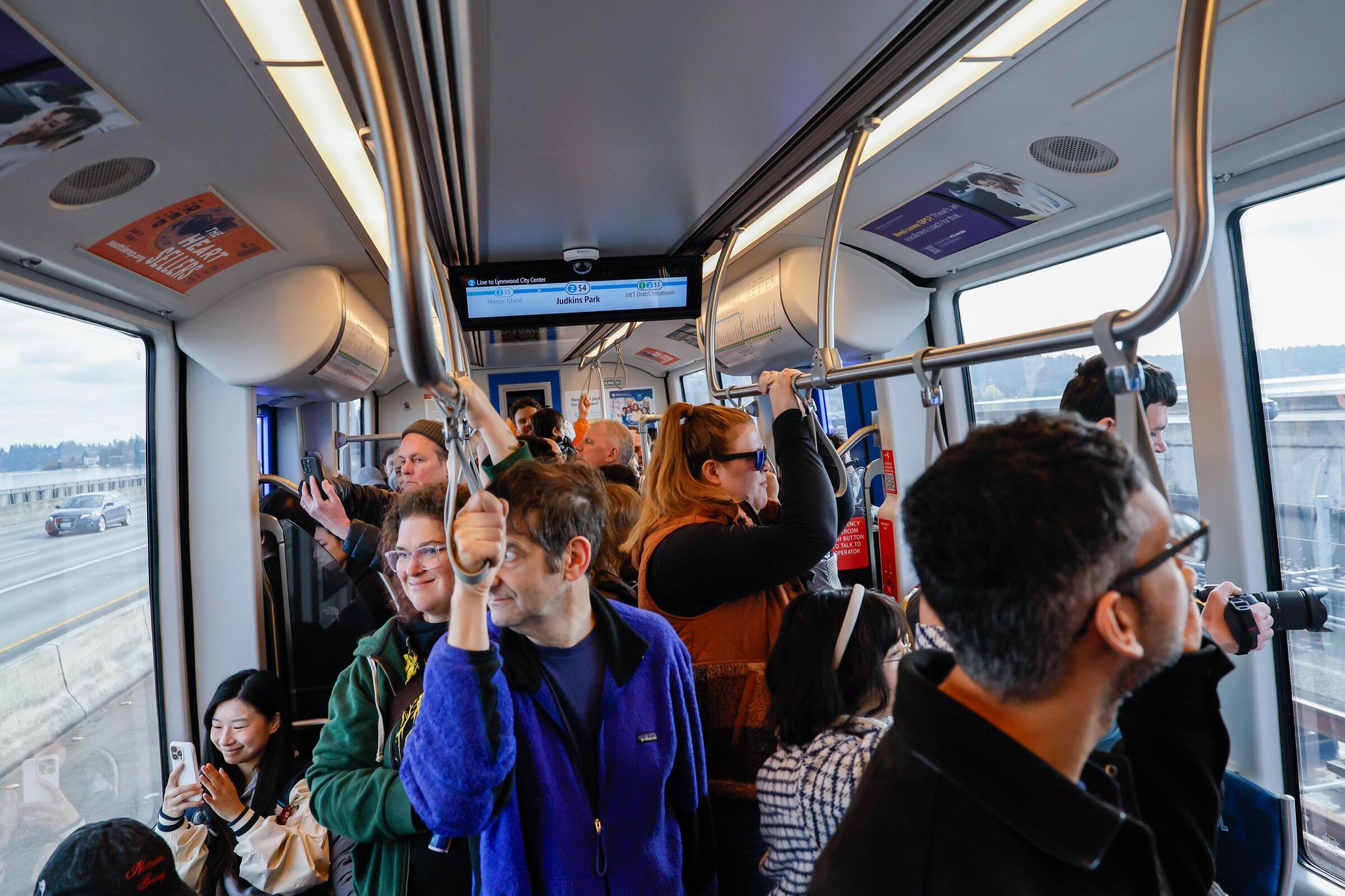
When the first passenger train descended onto the bridge deck and sped over the water, even seasoned officials showed visible amazement, and riders lined up at the windows with smartphones to capture the view. Cyclists and pedestrians on the bridge’s walking path waved from the side, and a fireboat marked the occasion by launching water arches into the air. There was a festive atmosphere in the crowded three‑car trains running during the early hours of service.
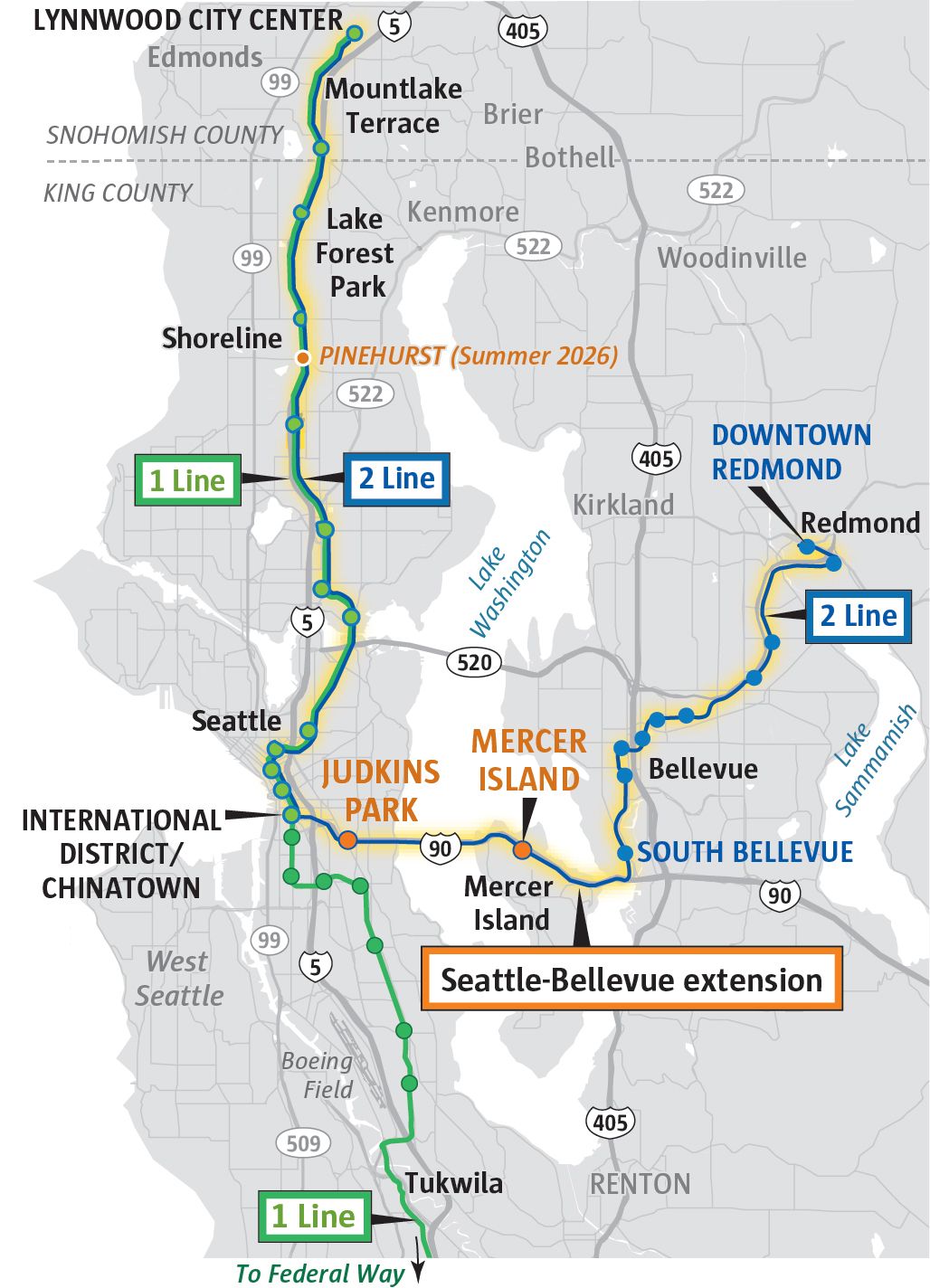
With the opening of just two new stations—Judkins Park in Seattle’s Central District and on Mercer Island—Sound Transit, the operator responsible for developing public transit in the central Washington region, has joined two previously separate lines into a single system. The north–south Line 1, running from Northgate through downtown Seattle, is now directly connected to Line 2, which previously operated only on the Eastside. This allows passengers to travel between neighborhoods and key destinations without transferring to buses or cars, creating a truly regional network.
The practical benefits for daily travel are substantial, officials and riders emphasize. You can now take the train to Marymoor Park, the Microsoft campus, hiking trails, or to the Bellevue and Redmond malls. In the other direction, Eastside residents get easy rail access to Seattle–Tacoma International Airport, baseball games at T‑Mobile Park, and the University of Washington campus. A trip for an adult starts at roughly $3. This direct connection addresses a longstanding problem of transportation isolation, shortens travel times, and stimulates economic development across the Puget Sound region.
For many residents the event has deep personal meaning. Anthony Wilson, who grew up in the Central District—the historic cultural center of Seattle’s African American community—and now lives in the former Coleman school building, heard vague promises about a line being built since childhood. On Saturday he came to the first train decked out in SuperSonics gear—the former NBA team that was once part of the city’s identity and sporting pride—and said he now plans to replace many bus trips to Federal Way with train rides.
This east–west expansion along the I‑90 corridor realizes a dream that predates the founding of Sound Transit. Voters approved the first modest segment of the line nearly 30 years ago. At the ceremony, U.S. Senator Patty Murray—introduced as the “godmother of light rail” for her years of work securing federal funding for projects like this—said she can finally answer a long‑asked question: “When will trains come to Bellevue?” The answer: about every eight minutes.
According to Sound Transit’s schedule, trains will run across the lake from early morning until midnight. Peak‑period headways will be eight minutes, and at night no more than 15 minutes. Two friends, IT specialists Aditya Bhansali and Apurva Koti, flew in specifically from London and San Francisco to be part of the historic day. Delivering this project required overcoming significant technical challenges associated with adapting the pontoon bridge and years of political negotiations to align the interests of multiple municipalities and secure funding.
Based on: Seattle light rail finally opens across Lake Washington