
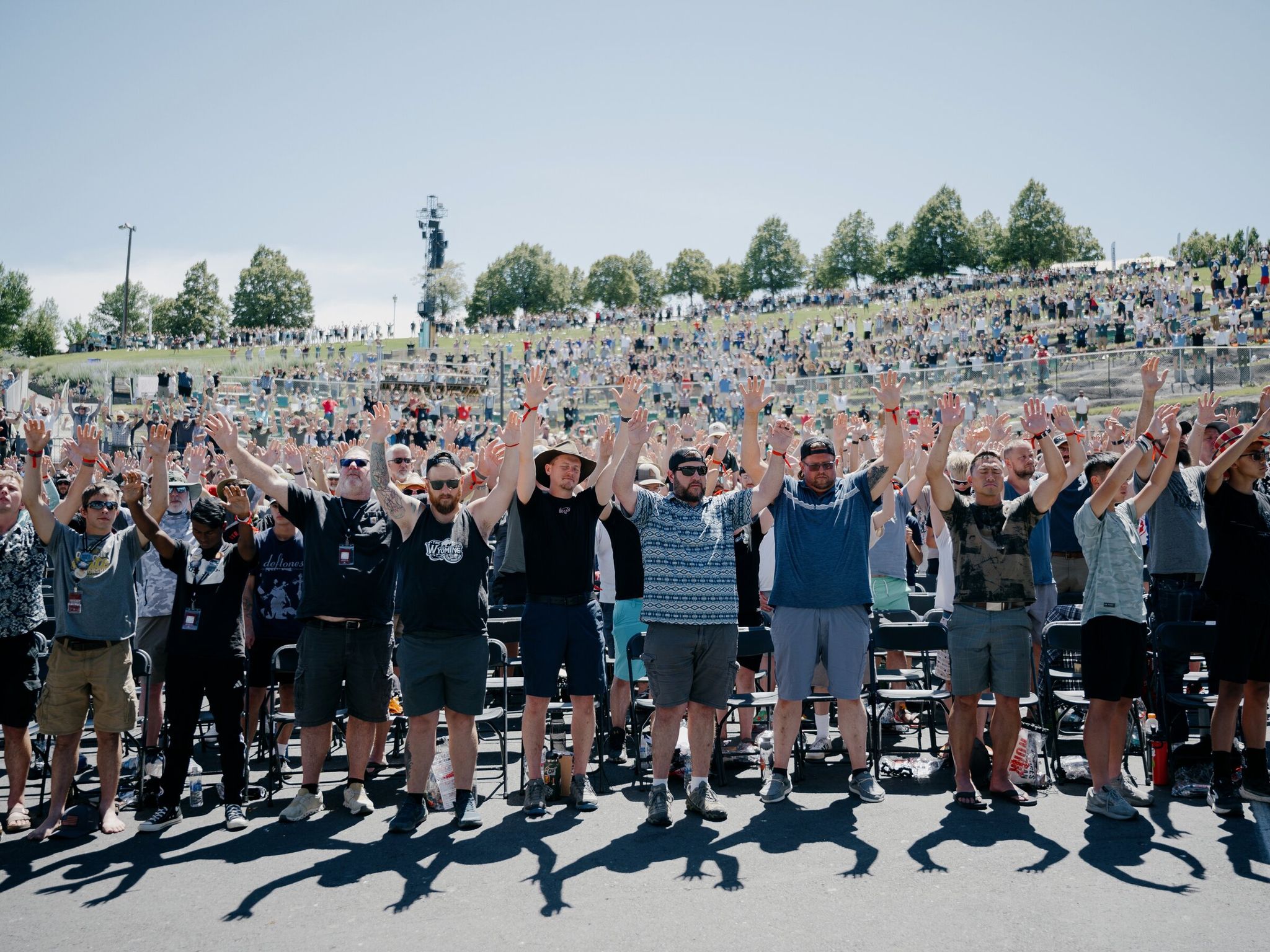
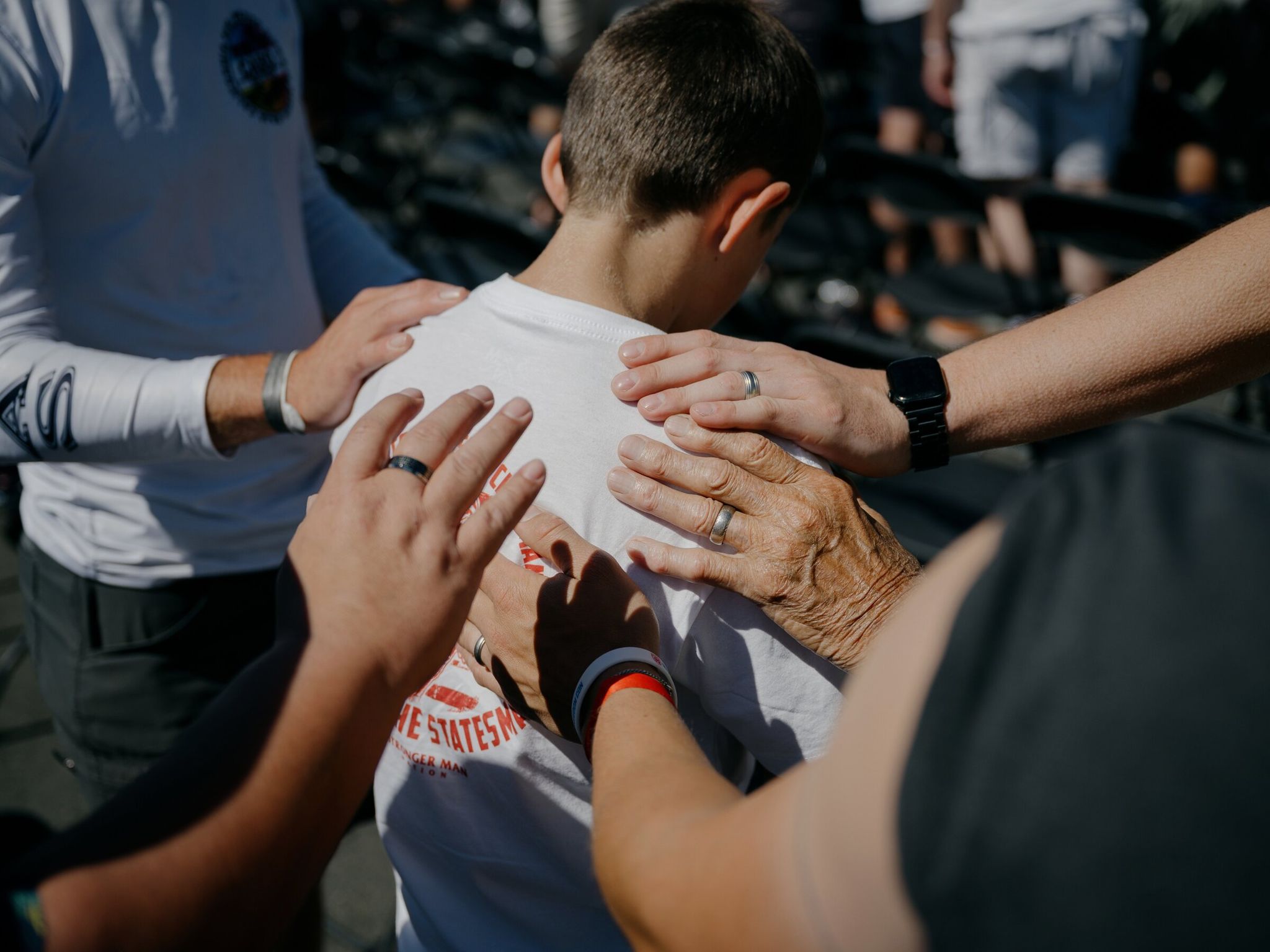
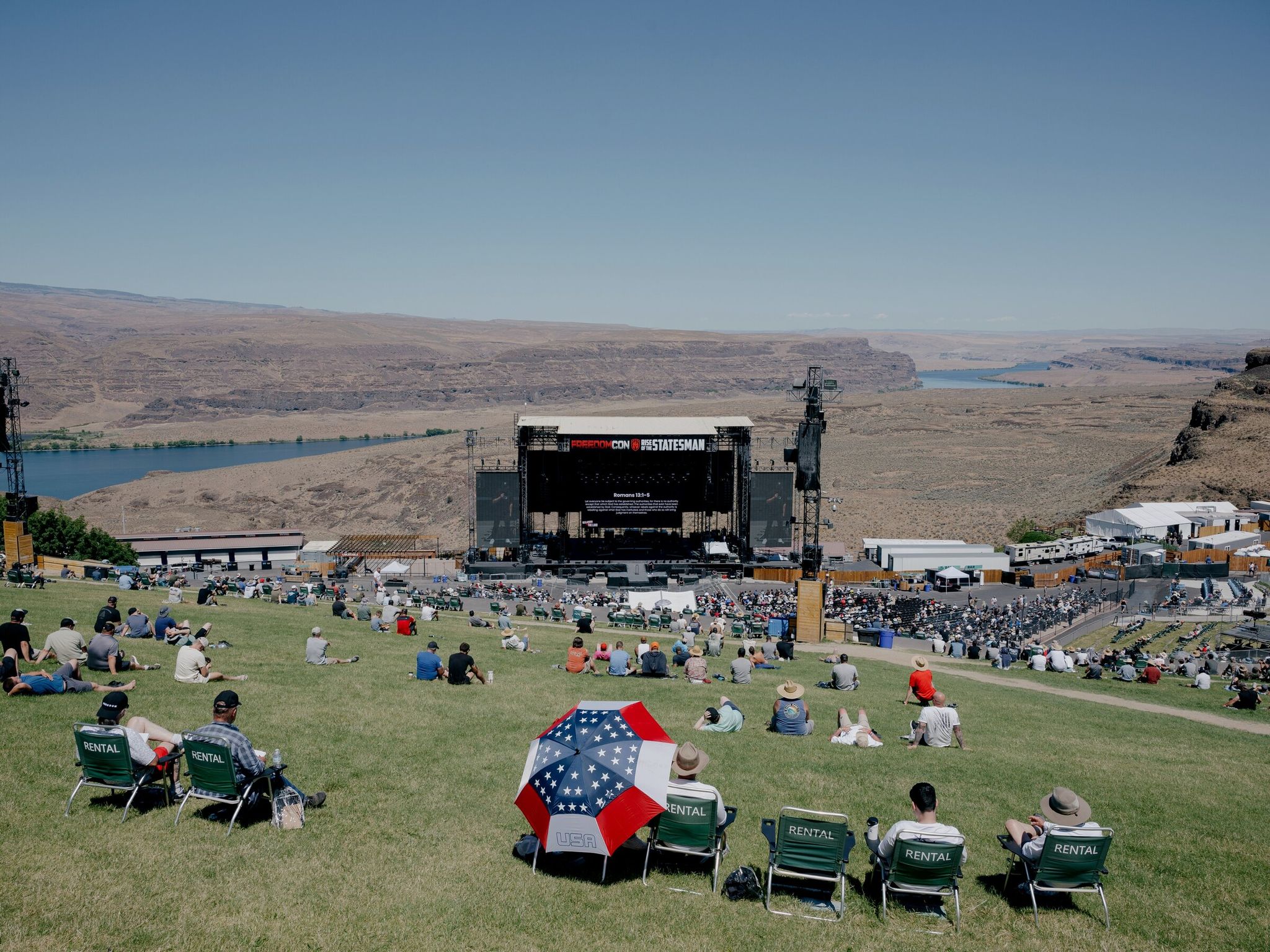
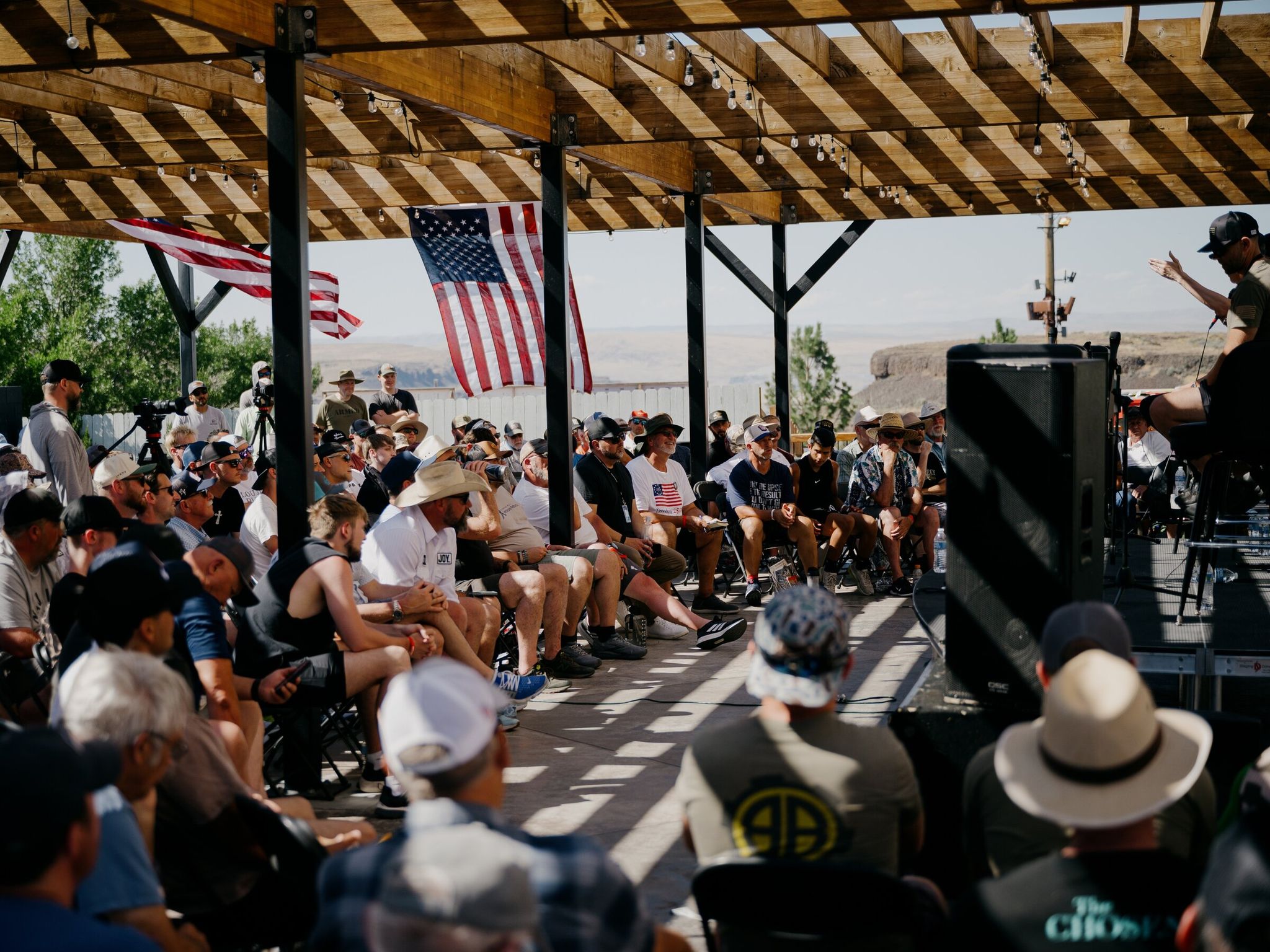
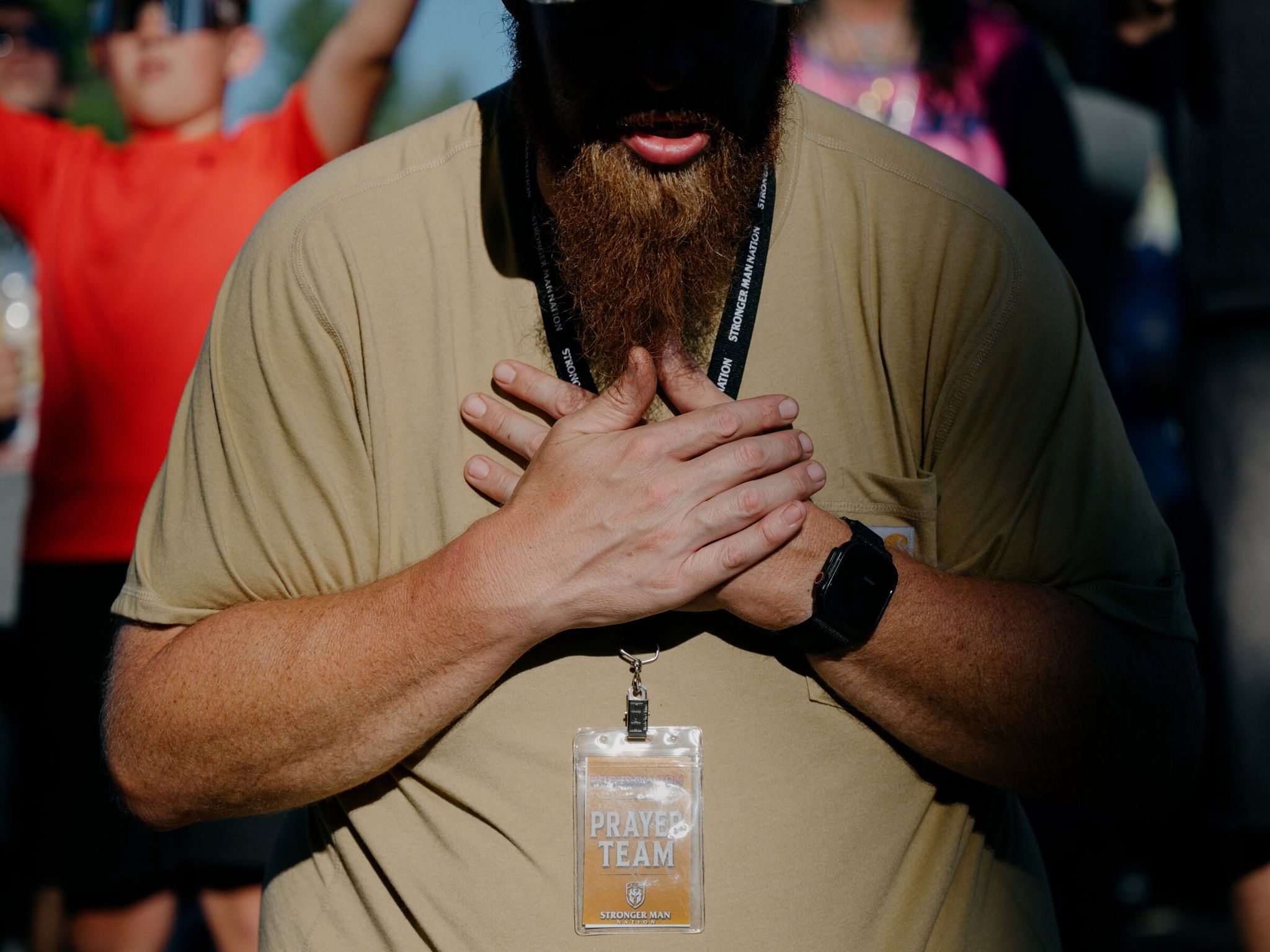
Over the past weekend, marked for Father’s Day, more than 4,500 men gathered in the small town of George, Washington, for the Freedom Con conference. The location was chosen for a reason: the Gorge Amphitheatre seats tens of thousands and is traditionally used for major Christian gatherings, such as The Return conference. The setting amid natural landscapes, far from secular megacities, symbolizes for the organizers a biblical “wilderness”—a place of secluded prayer and fellowship available to believers from across the Pacific Northwest. The event was a heady mix of Christian worship, patriotism, sporting competitions, and political mobilization. Attendees competed in weightlifting, navigated an obstacle course, changed tires, prayed, and listened to sermons. Organizers dubbed the weekend both a “spiritual awakening” and the beginning of a movement, urging conservative Christian men to “become statesmen.”
The conference’s tone was set by provocative speeches from the stage. Pastors urged men to run for office, have more children, and reject what the speakers called “woke secular gay paganism.” A particularly loud reaction came from Mark Driscoll—a former megachurch pastor of Seattle’s Mars Hill, which he founded in 1996. The charismatic preacher of a reformist bent stepped down in 2014 amid numerous allegations of spiritual abuse, manipulation, and intimidation of congregants; afterward, he relocated to Scottsdale, Arizona, where he founded a new church. At the conference, he said, “Heterosexual, sober men who marry girls and read the Bible—those are the real punk rock!” The crowd jumped to its feet, cheering the challenge.
Men arrived in groups—with sons, pastors, brothers, hunting partners, and friends from Bible study circles. Rick Slater, 44, set up camp with a crew from the area around Orting. “We’re trying to be better men,” he explained, adding that many in his group had quit drinking or started seeing a family counselor, and that he himself is working on his temper.
The event took place against the backdrop of the Columbia River and the Washington state flag, and on the eve of America’s 250th anniversary. That offered a rare chance to see how the right wing—gaining momentum—uses masculinity as a unifying force. The blending of worship, political activity, and male brotherhood points to a movement seeking to influence not just a church audience. For many attendees, the dominant feeling was belonging to something bigger.
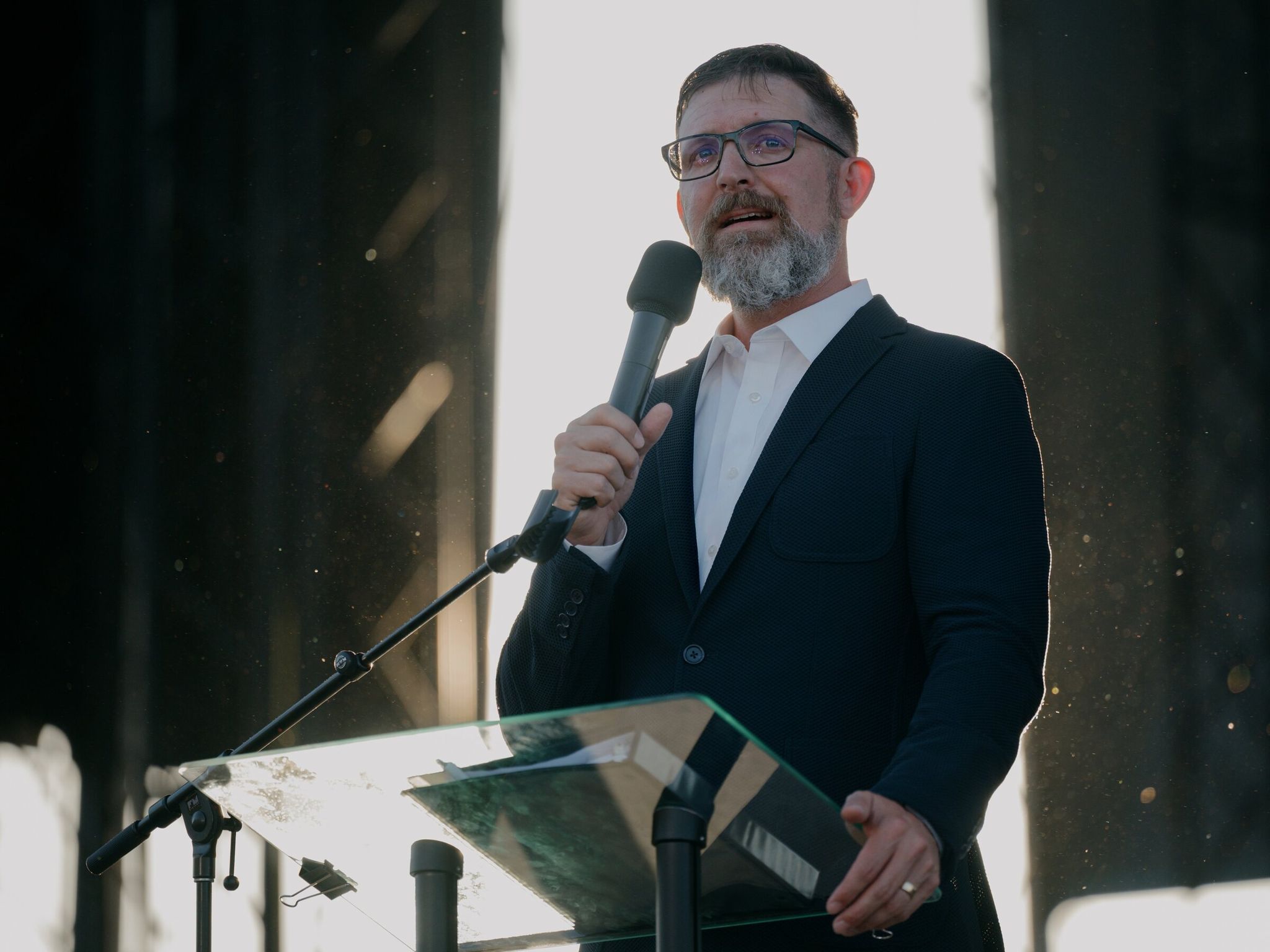
In his sermon, Driscoll tied stories from Genesis and Exodus to contemporary politics: he called the Tower of Babel a warning about globalism, and described the biblical tale as a “transgender god of Egypt.” The conference was organized by Grace City Church in Wenatchee through its Stronger Man Nation arm. Its pastor, Josh McPherson, prayed in the White House with Trump and now leads a growing empire that includes a podcast and an “anti-woke” college he calls “a Protestant West Point.” Speakers raised topics including abortion and gender identity, but also the housing crisis in Washington—where housing costs are far higher than the national average. The causes of the crisis lie in the rapid growth of tech giants (Amazon, Microsoft, Google, Boeing), which attracted high-paid specialists and drove up housing prices, as well as strict land-use and zoning rules that slow construction. The absence of an income tax in the state further fuels demand: the average home price here is nearly double the national figure (about $500–600 thousand versus $300–400 thousand). That scope reflects an attempt to link cultural conservatism with pressing economic problems.
David Prince, a student at the new Grace City college, said that young men trying to become breadwinners and start a family are being “crushed by tyranny.” At the same time, attendees were urged not to move to more conservative-friendly states like Texas, but to stay and fight for “blue” Washington. Movement leaders emphasize that believers should be “leaven” in secular societies—to influence culture from within rather than fleeing to already conservative regions. Leaving a “blue” state would mean surrendering territory, while what is needed here is spiritual transformation through the presence of Christians. Pastor Russell Johnson said, “If all the good guys leave, the state doesn’t get better—it gets worse.”
Politics permeated the entire weekend. Speakers encouraged church participation in local elections and initiatives. A pastor from Texas, Nate Schatzline, described how small groups of congregants organize trips to city councils and train candidates. Adam James, a Grace City pastor running for the state house of representatives, urged support for conservatives on seats at the Supreme Court and for “biblical” candidates for the legislature, as well as approval of a measure to repeal the new income tax.
Attendees readily embraced the focus on local politics. Kenny Blythe, 38, remarked, “Everyone comes to vote for the president, but nobody goes to vote for the person who catches stray dogs. And I want that position to be held by someone guided by the Bible.” Among the men at the conference, hundreds of women volunteers from Grace City stood out. For them, organizers set aside a “quiet zone” with a sign reading “be mindful and enjoy the space quietly,” so as not to distract the men while they listened to sermons.
Based on: Testosterone and the Bible are the ‘new punk rock’ at Gorge event