
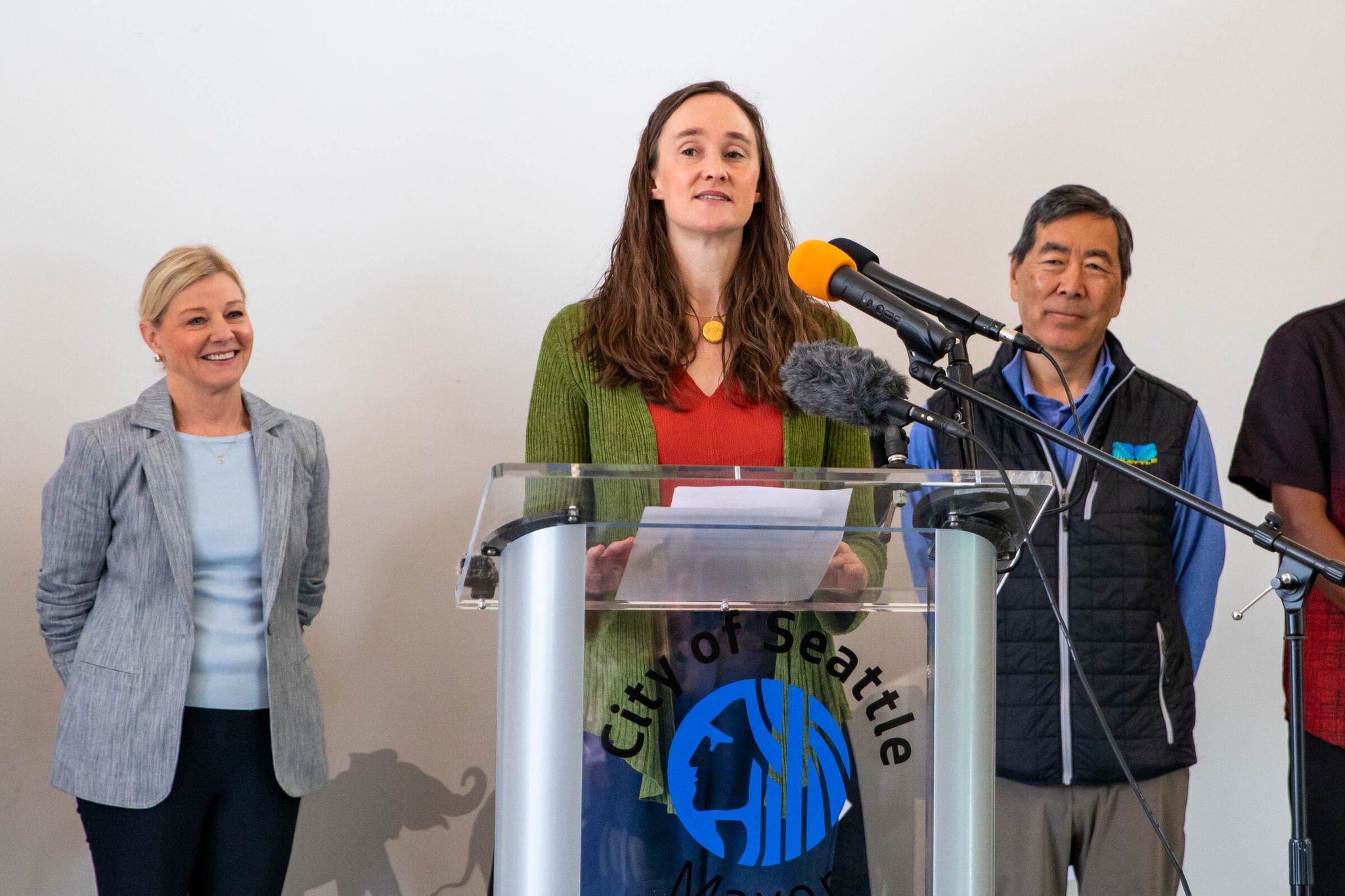
Seattle Mayor Katy Wilson announced at a Wednesday news conference that more than 1,400 teens from the city and their guardians will receive free tickets to matches at the 2026 FIFA Men’s World Cup. The games will take place at the famed Lumen Field, located in the heart of the city near Elliott Bay. The venue, known for its unique acoustics that create a “wall of sound,” is home to the Seattle Seahawks (NFL) and Seattle Sounders (MLS). For Seattle, often described as one of the most sports-oriented cities in the U.S., hosting world-class matches underscores its global profile. The initiative is being billed as the largest local youth access program for the upcoming World Cup: the last time the U.S. hosted the men's tournament was in 1994, and Seattle has never been a host city for any World Cup events, so many participants will see a global soccer tournament live for the first time.
The program is implemented jointly with the Seattle FIFA World Cup 2026 local organizing committee and is fully funded by sponsors — including Alaska Airlines, Amazon, Boeing, Microsoft, the Port of Seattle, the Puyallup Tribe, and the University of Washington. No city budget funds are involved, emphasized the mayor’s spokesperson, Jonah Spangenthal-Lee. The Puyallup Tribe’s participation — one of the federally recognized Indigenous tribes whose historical lands include the area of present-day Tacoma — reflects a long tradition of local government collaboration with Native peoples. In the Seattle region, tribes such as the Duwamish, Suquamish and Puyallup play a key role in preserving cultural heritage, managing fisheries and promoting tourism, and their sponsorship is not only financial support but also a recognition of their contributions to Washington state’s history and present.
“This is about so much more than just going to a soccer game,” Wilson said. “We’re telling young people they belong at the most meaningful events in our city. We’re showing that the world is bigger than they might imagine, and that Seattle’s values are opportunity for all, the importance of community, and the drive to make sure everyone can be part of something extraordinary.”
Each teen will receive a ticket to one match, a voucher for stadium food and a Seattle FIFA World Cup 26 team scarf. Some nonprofits will also receive free transportation to and from the stadium in partnership with King County Metro. Tickets will be distributed through 40 youth organizations already selected by the organizing committee; their names will be announced in the days leading up to the tournament.
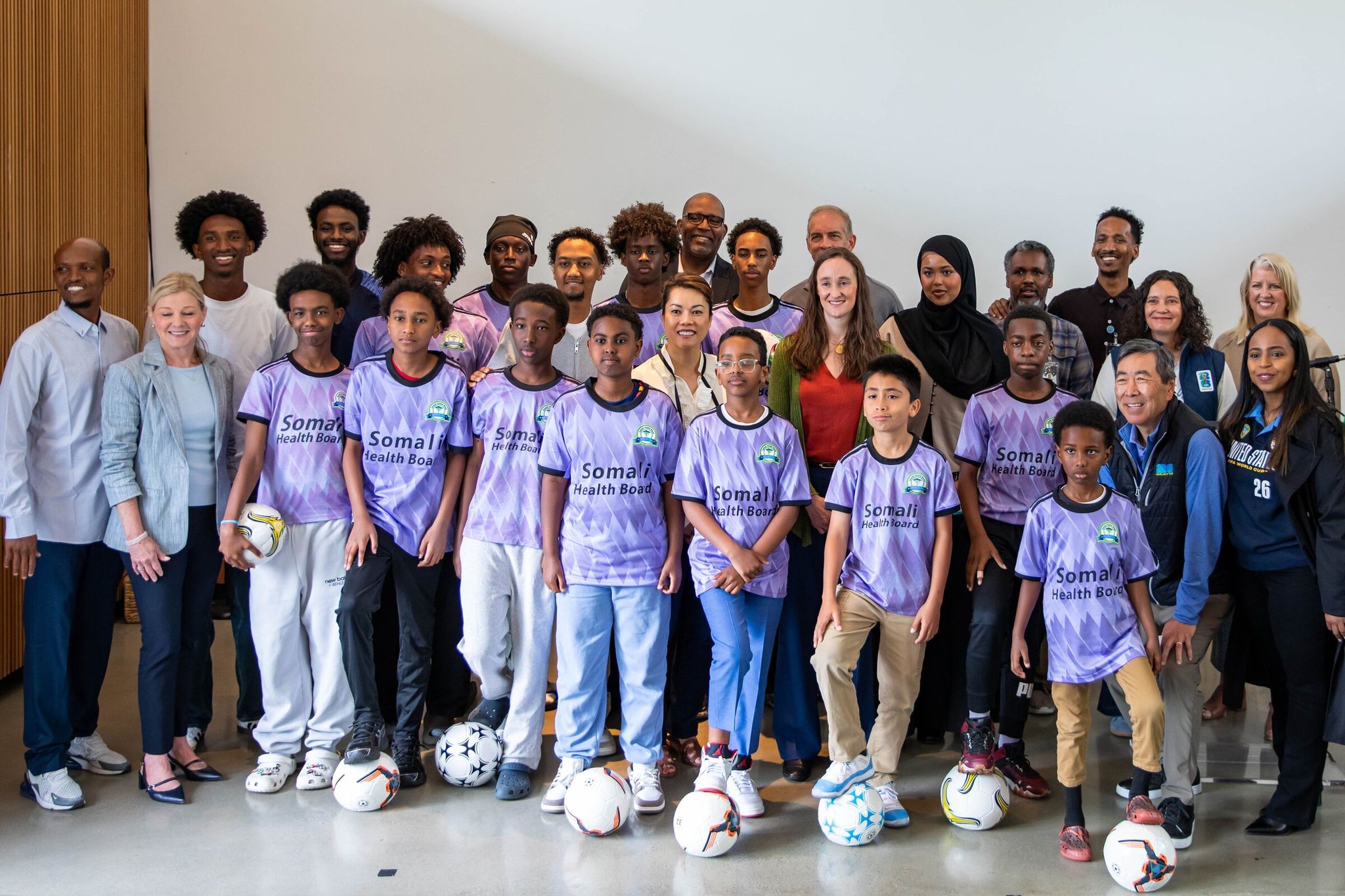
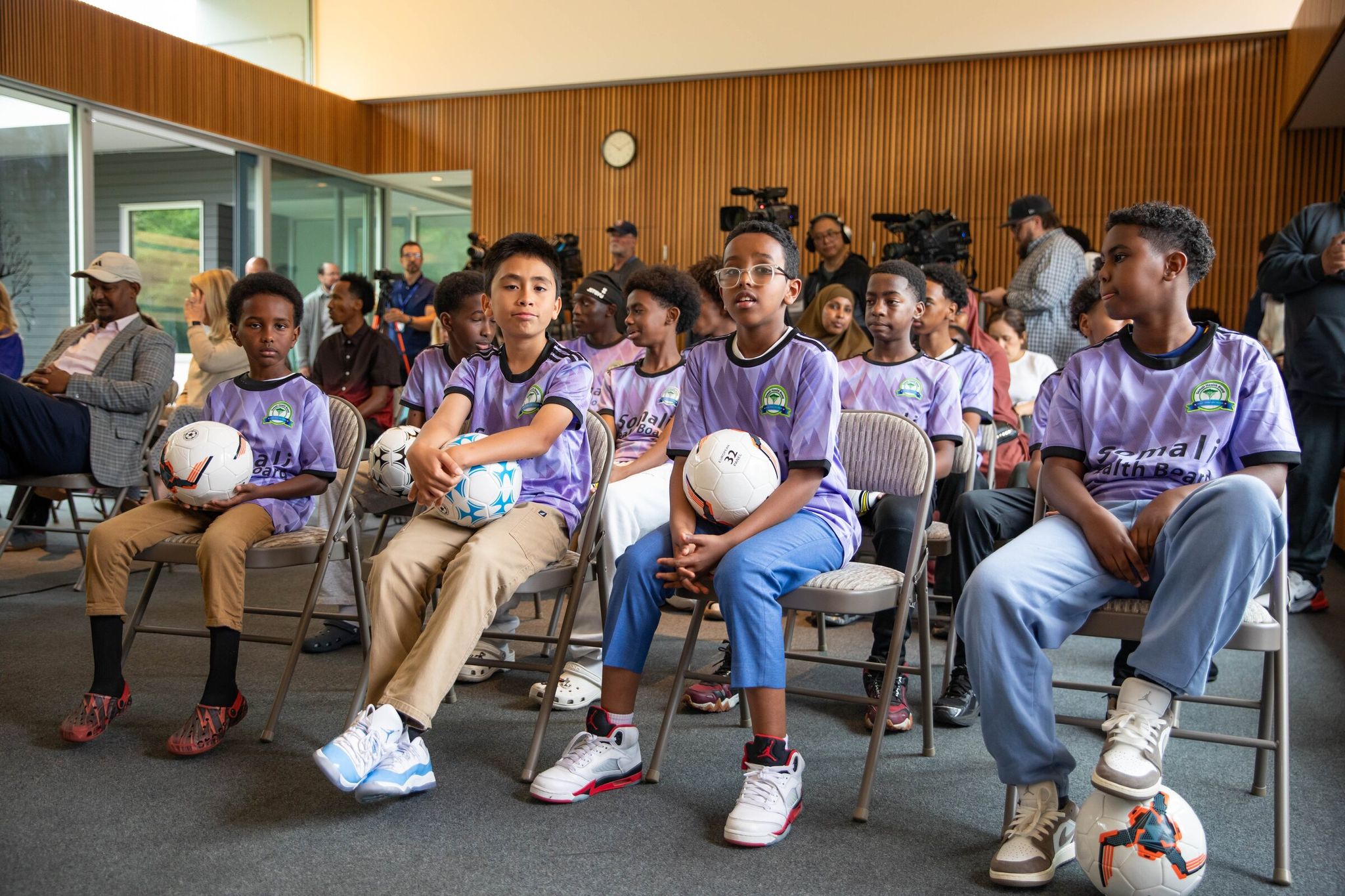
One of those organizations is the Somali Health Board — a nonprofit founded by Somali immigrants and refugees that works to improve access to health care, education and social supports for the Somali diaspora, partnering closely with local hospitals, schools and government agencies to overcome language and cultural barriers. The Somali community is an important part of King County, numbering in the tens of thousands and representing one of the largest and fastest-growing immigrant groups in the region: since the 1990s, Somalis have brought entrepreneurial energy to Seattle’s economy and culture. At the news conference, young members of the soccer club affiliated with the board posed for photos with the mayor in purple jerseys. The board’s executive director, Najma Osman, noted the club was created to give youth “a goal to run toward,” and today it unites 12 teams across the state.
Local organizing committee CEO Peter Tomozawa thanked corporate partners for providing the funding: “Tickets aren’t cheap, and we didn’t get them handed to us — we had to raise the money so these kids could get to the matches.” For the general public, tickets for matches in Seattle remain available through FIFA’s final sales phases, but even after modest price drops in the last month the cheapest ticket still costs hundreds of dollars — a burden this initiative aims to ease for young fans.
Based on: More than 1,400 Seattle youths to get free World Cup tickets