
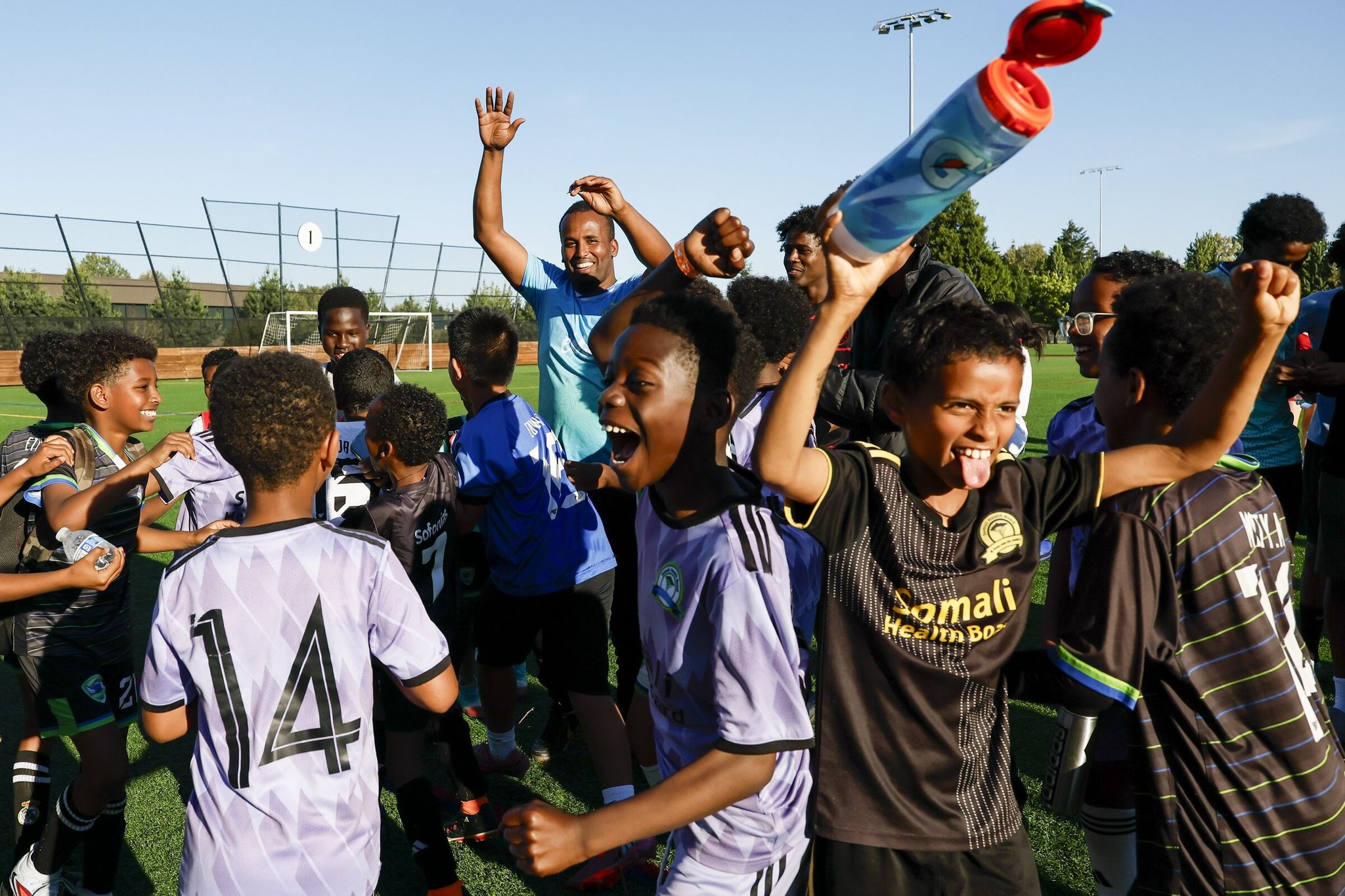
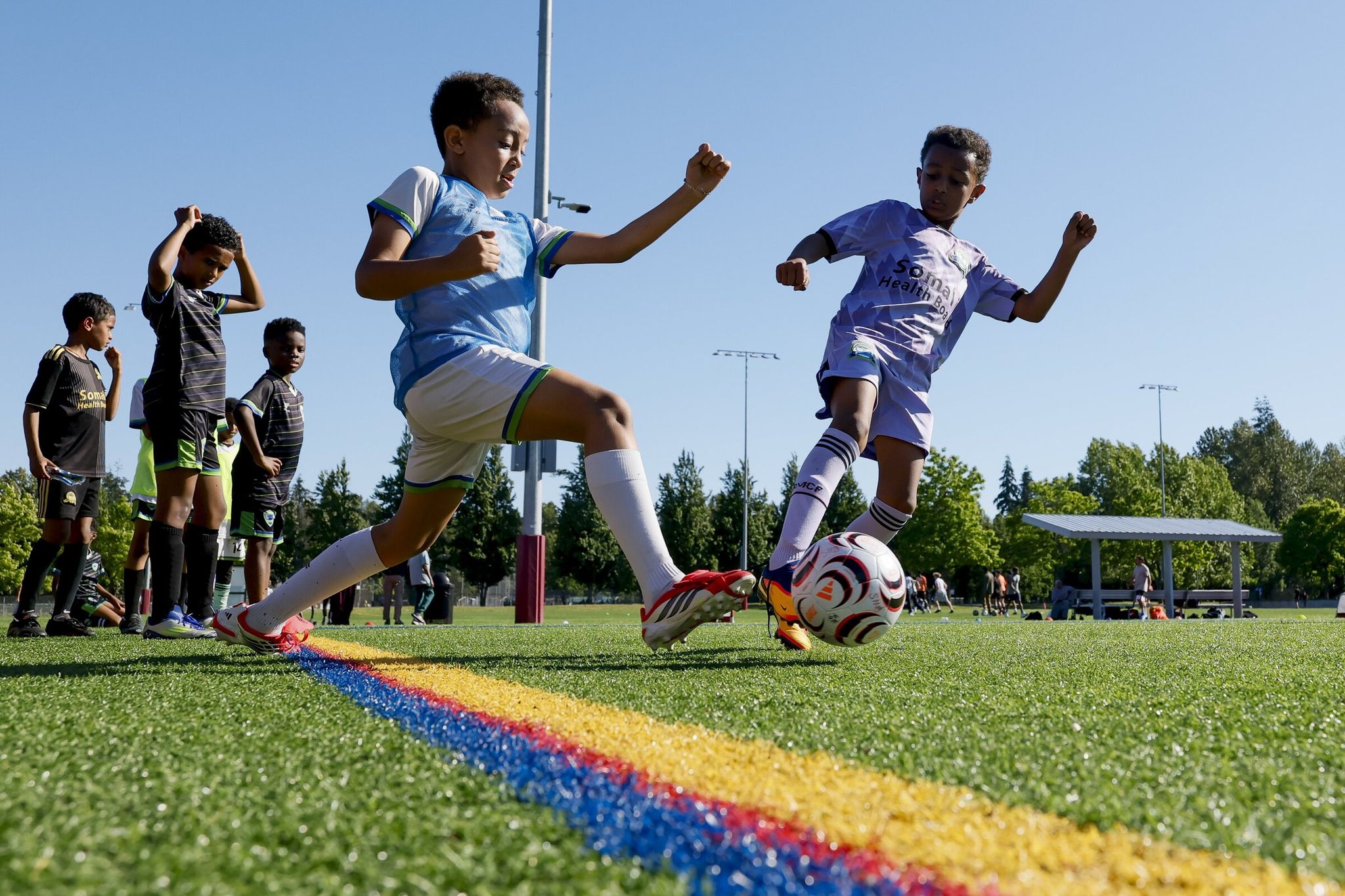
On a field in a suburb of Seattle, coach Mahamud Kassim wasn’t barking out commands on a World Cup stadium pitch. Instead, he was teaching children from the “Somali Football Health Club” to keep their heads up and break away from defenders. Parents watched from the sideline as the boys prepared for a 3×3 tournament timed to celebrate Eid al-Adha. The scene is part of a growing surge of football excitement in the region ahead of the 2026 World Cup, whose matches will be played at Lumen Field — one of the loudest venues in MLS, and home to the Seattle Sounders. For the tournament, the FieldTurx artificial turf will be replaced with natural grass.
The club started because organized youth soccer is often too expensive for low-income families. A free, year-round program based in Tukwila — a southern suburb that has drawn Somali refugees with affordable housing, proximity to social services, and an established community since the 1990s — serves immigrants and low-income families. Today, Tukwila is often called “Little Mogadishu”: Somali cafés, mosques, and halal shops line the streets. It began informally about ten years ago, and in 2018 the club came under the management of the Somali Health Board. Today, the program has grown from a single team of 17 children to 11 teams and more than 170 players.
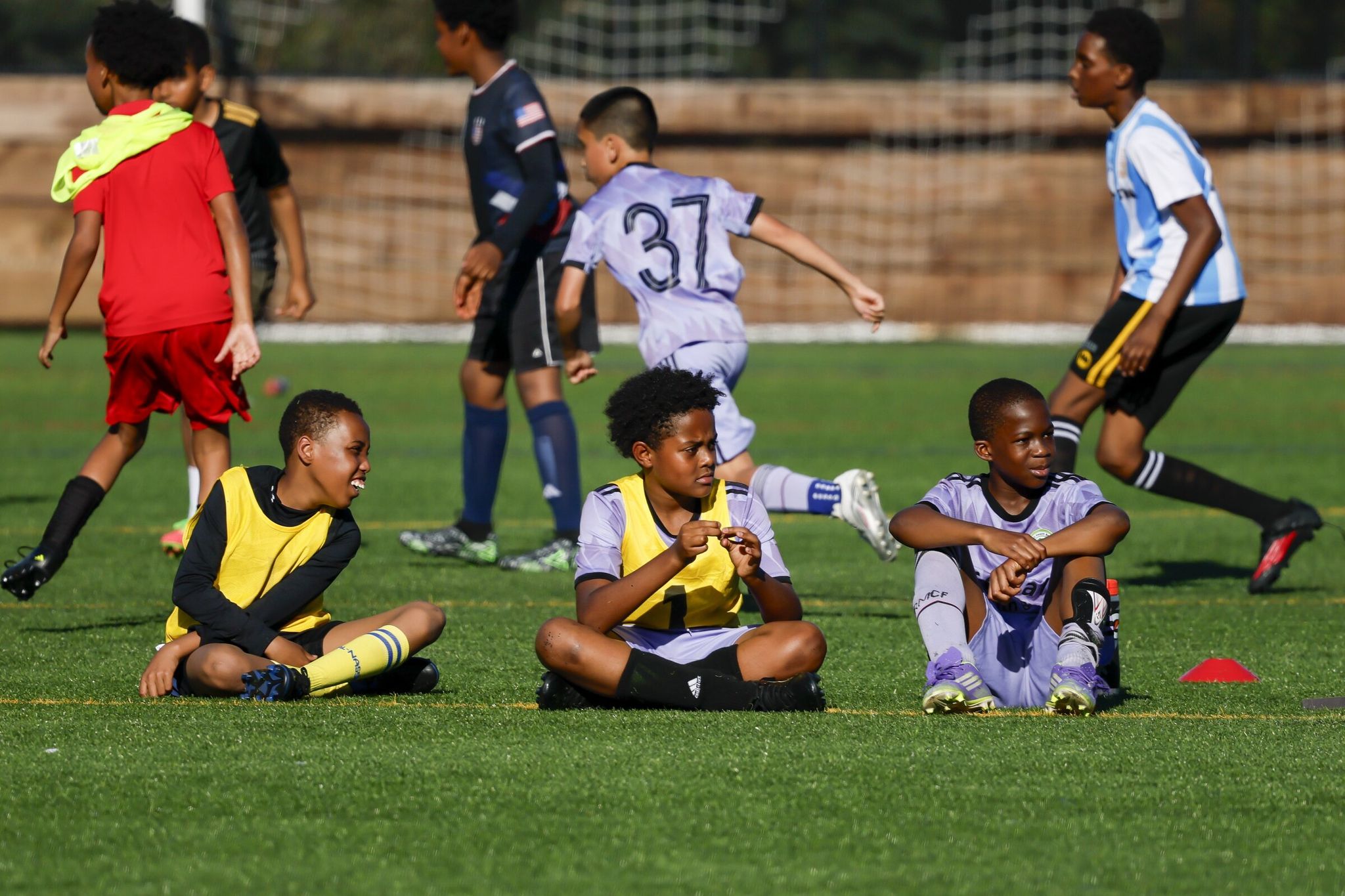
Tryouts are held each year. Selected players train twice a week and take part in tournaments and leagues. On Saturdays, open sessions draw up to 100 kids. Partially funded by King County’s “Best Start for Kids” initiative, the club provides uniforms but doesn’t require the expensive fees typical of paid programs. “Best Start” receives money through a sales tax (0.1% of purchases) and grants, supporting not only sports projects, but also preschool programs, youth mental health, help for families in crisis, and parent education.
Executive director Najma Osman stresses that the club’s value isn’t in inventory or elite fields. This is a place for social and emotional wellbeing: children find their identity and friends. “It helps young people stay connected to their culture, building friendships,” she says. That’s especially important in communities where they want children to feel at home.
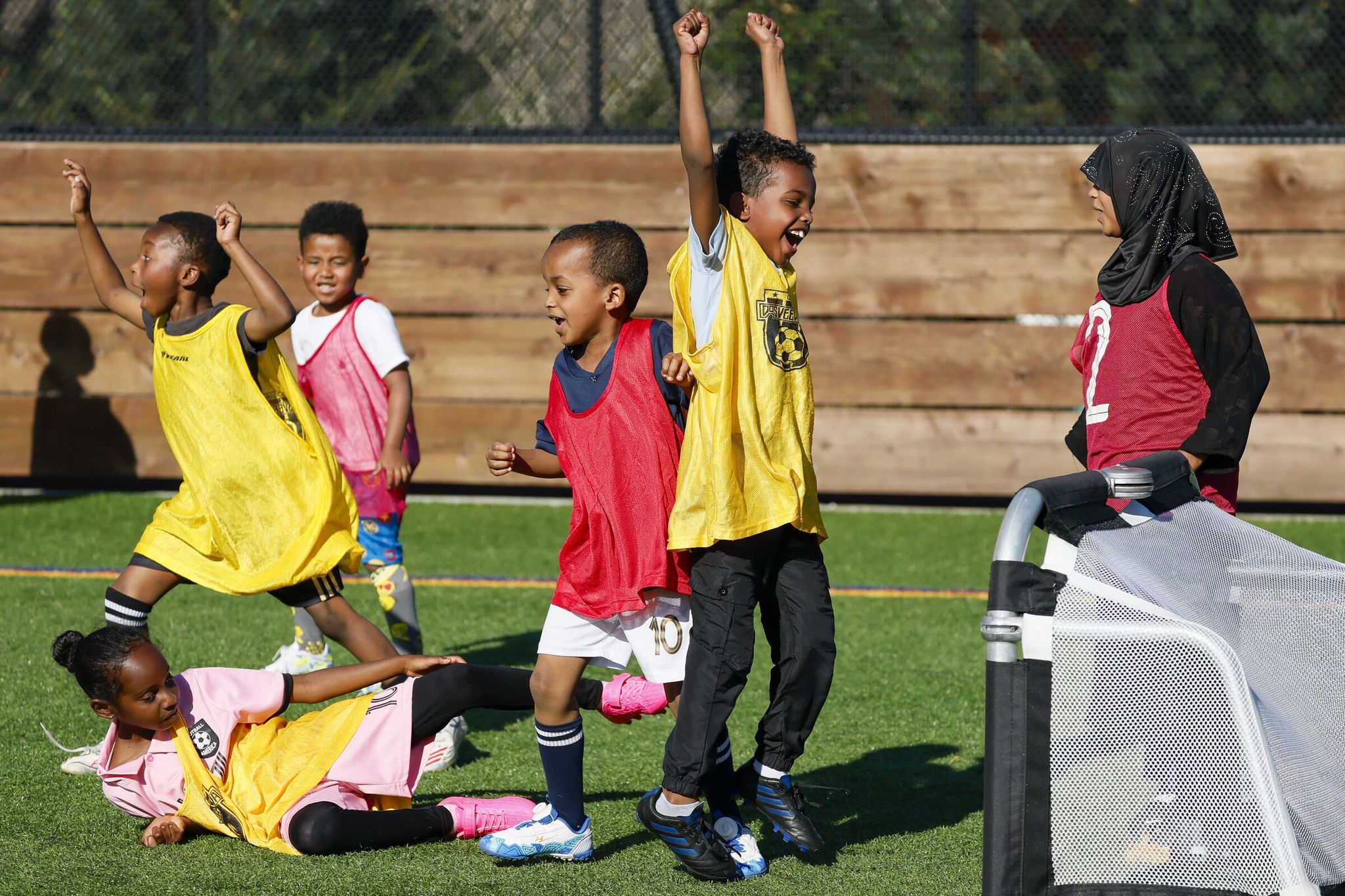
Although most of the players are Somali, the club is open to children from Latin American, Afghan, and other immigrant and East Africa refugee families. Since many families are Muslim, the program is adjusted to religious practices: during Ramadan, trainings are canceled, and matches are scheduled early in the morning so those who are fasting can play. “We do all the work without waiting for parents to ask,” says Malim.
Off the field, mothers chatted on a bench, while the boys in purple jerseys worked on dribbling under Kassim’s instructions. Parents say there’s a special atmosphere here — everything is built on getting to know one another and shared culture. Idil Shifow says her son tried two other programs before finding this one: “He sees lots of people who look like him, talk like him, and the coaches are older uncles.” Aisha Tunkara adds, “We have a family-like setting. The kids call each other brothers, and they call mothers aunts.”
Community activist Mohamed Yusuf reminds people that soccer has always been at the center of Somali life and the lives of many immigrants. He recalls watching the World Cup in Somalia on a black-and-white television, arguing about “God’s hand” — Diego Maradona’s famous moment. After arriving in Seattle as a refugee in 1996, he saw how soccer helped newcomers build community. “Soccer is in our DNA,” Yusuf says. “The kids play now because their parents played.”
The connection to the World Cup has been overshadowed by the U.S. refusal of entry to Omar Artan — a businessman who owns popular cafés (such as “Café Avole”) and an activist who for decades has helped Somali people find jobs and built bridges between cultures in Seattle. He was supposed to become the first Somali referee at the World Cup. The decision by the border service, sparked by passport-related disputes, outraged the community: another youth team returned 20 free tickets to the matches. Yusuf called it “devastating,” but added, “We’ve seen worse. We’re resilient and we’re moving forward.”
Despite the disappointment, kids from the club are excited about the upcoming World Cup. The program received 40 free tickets through a youth initiative and plans to take players and families to a Round of 16 match on July 6. For the club, the tournament is not only a global event — it’s also a reminder that some players may someday find themselves on such a stage. The experience inspires and opens access to what would otherwise be out of reach.
The club already has successes: several graduates have founded a semi-professional team, Holac FC, and the U-19 team won the Washington State President’s Cup. Abdul Hamadi, 14, who joined the club at age 8, was selected for the U-14 talent camp with the U.S. Soccer Federation. He acknowledges that without the club, he wouldn’t have achieved it. Still, the program faces financial hurdles: other clubs charge thousands of dollars, and grass fields are expensive and booked up. Somali Health Board Soccer Club mainly uses cheaper turf fields, and some kids show up without cleats. “We don’t have backpacks,” says Malim. “But what they lack in material things, they make up for with heart.”
Based on: Seattle-area Somali soccer club offers kids year-round joy