
On Aug. 8, 80-year-old Roger Durheim traveled to the Peone Prairie, located in what is now the Spokane Valley, northwest of the city, probably near present-day Deer Park. The area lies outside the current Spokane Tribe Reservation. Durheim wanted to check on the condition of the 250-year-old pine after the Fairview Fire. Known as the “Signal Tree” or “Treaty Tree,” it stood in a grove within the nearly 1.5-square-mile burn area.
At the base of the pine, he noticed smoke, alerted firefighters to the danger and asked them to protect the historic tree. Several days later, Durheim returned and found the pine toppled. Since the late 1920s, when his grandfather Albert bought the property, the tree had been part of the family’s history. Several generations of Durheim children played near its hollow base and climbed on it.
The pine’s fall marked the end of a local landmark that had survived fires, lightning strikes and radical changes to the landscape. Its history is connected to Upper Spokane Chief Baptiste Peone, who established a Hudson’s Bay Company trading post nearby in the 1840s. It became a center of the region’s economic life and stood near Peone’s family cabin, built beside the pine that was already growing there.
According to Warren Sayler, a historian and representative of the Spokane Tribe, horse races were held near the tree, and people were buried nearby. The memory of the site was preserved through oral traditions, stories told by elders and tribal research. At the same time, the site cannot automatically be assumed to have national landmark or National Register of Historic Places status: its official protection depends on a specific registration at the state, county or tribal level.
The name “Treaty Tree” became associated with the pine after Peone raised a white flag on it, signaling the neutrality of his people during conflicts between Indigenous tribes and settlers in the 1850s and 1860s. Later, Indigenous people were forcibly relocated to reservations, and the prairies were converted into farmland, but the tree continued to grow.
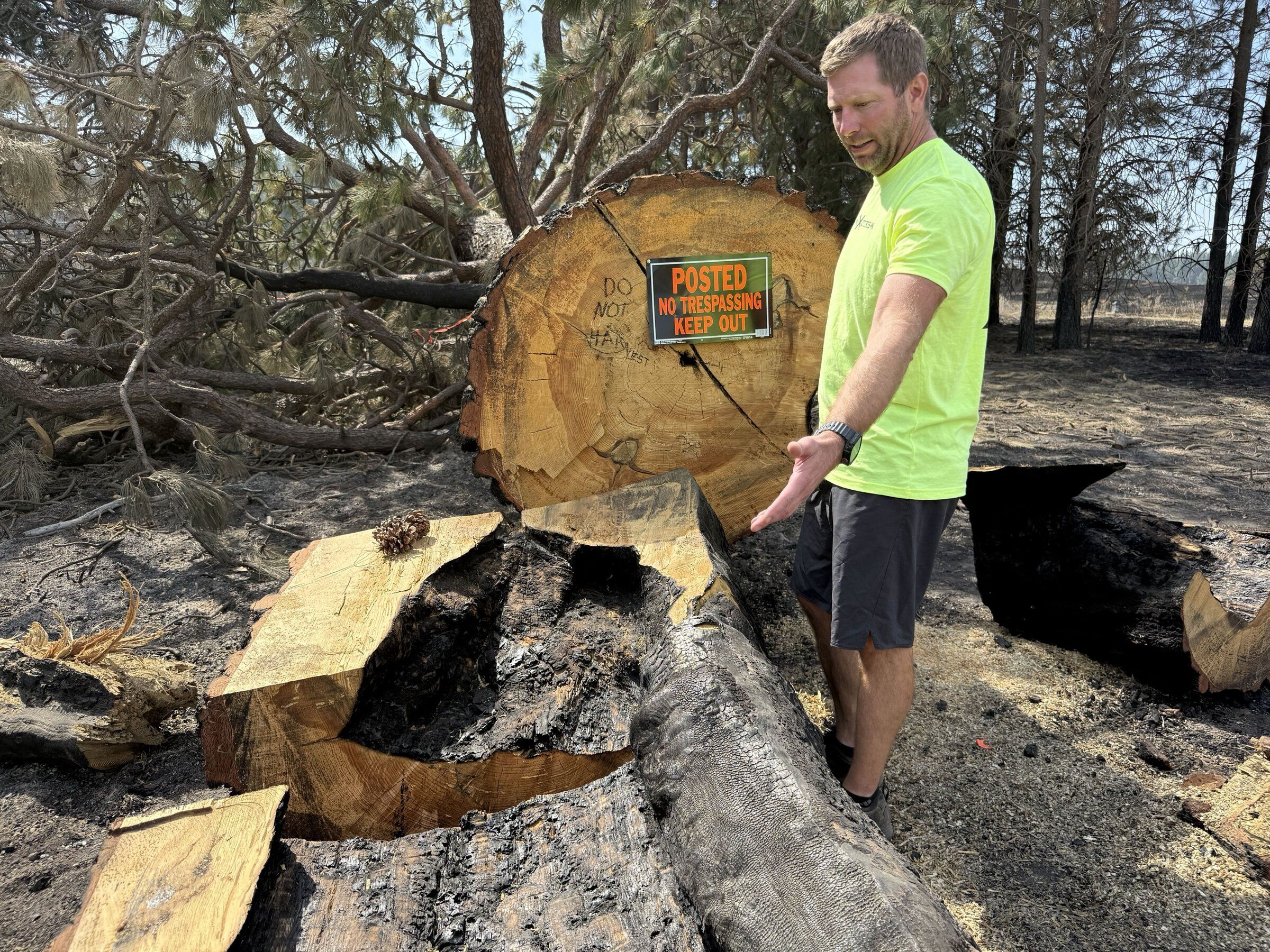
The pine survived the 1908 fire that destroyed buildings on the property. In 1922, lightning struck it and another large tree about a mile away at nearly the same time. The second pine split apart and died, while the Treaty Tree escaped with a scar. Another fire about a century ago left a wide, ragged wound at its base, which partially grew over with time.
During the Fairview Fire, property owner Josh Hitchens saw video of his home and noticed the top of the pine in the background. It was later determined that firefighters had cut down the tree, considering it a serious hazard and doubting that it would survive. Before it fell, they pumped hundreds of gallons of water into it, removed hot embers from its hollow and covered the trunk with soil. But the tree continued to deteriorate and fell onto several young pines that had grown from its cones.
The fire spread rapidly across dry grain fields and forest. Eastern Washington often experiences hot, dry weather in summer, while strong winds, dry grass, stubble and brush create a continuous layer of fuel. In forests, accumulated dry branches and needles accelerate the flames. Local farmers helped firefighters by providing tractors, water tanks and other equipment, creating firebreaks and backup lines, and ensuring access to roads and water. These efforts were coordinated with official emergency services.
The fire destroyed nearly 60 structures and overwhelmed emergency services, although it was smaller than some other fires during that period. Firefighter John Eimen recalled that the situation spiraled out of control almost instantly, despite every effort to save the pine. Hitchens and Durheim acknowledged that firefighters had been working under extraordinarily difficult conditions.
Now Hitchens wants to turn the fallen trunk into a monument to peace. He is considering inviting carvers from around the world, including members of the Spokane Tribe, to create a sculpture at the site. Tribal archaeologist Bobby Rose has already shared the information with the tribal council and is awaiting a decision on possible participation or a ceremony.
Tribal representatives could hold a prayer or blessing, a memorial ceremony, a laying of flowers or tobacco, or a traditional gathering featuring stories and songs. The specific ceremony will depend on the decision of tribal elders and authorities. Surviving saplings may carry on the tree’s lineage, while its wood may preserve the memory of a pine that withstood lightning, fires, disease and damage for decades.
Based on: 250-year-old Treaty Tree falls in Spokane fire