
For generations, the Little Spokane River Valley has attracted residents with its wetlands, vivid wildflowers and abundant wildlife. The area is home to historic settlers’ houses and the natural areas of Riverside State Park, which are popular with tourists, hikers, paddlers and bird-watchers.
Long before Spokane was established, the valley was home to Indigenous peoples, including the Spokane Tribe. They fished in the river and left images on the rocks that are believed to be more than 250 years old. These sites are known as the Indian Painted Rocks.
The petroglyphs are located in the northern part of Riverside State Park, along the rocky banks of the Spokane River. The Painted Rocks Trail leads to them, while the Knothead Loop also passes through the area. Visitors are advised to check the park map and current trail conditions before traveling.
In recent years, the valley has been badly affected by the Autumn Lane Fire, one of three major fires that made up the Spokane Complex. The blaze destroyed about 14 square miles and permanently changed the local landscape and community.
Park representative Rex Schultz said the northern section of Riverside State Park along the Little Spokane River was particularly badly burned. Fires had occurred there before, but this one was much larger: grass and brush were almost completely destroyed, and the ground was covered in ash.
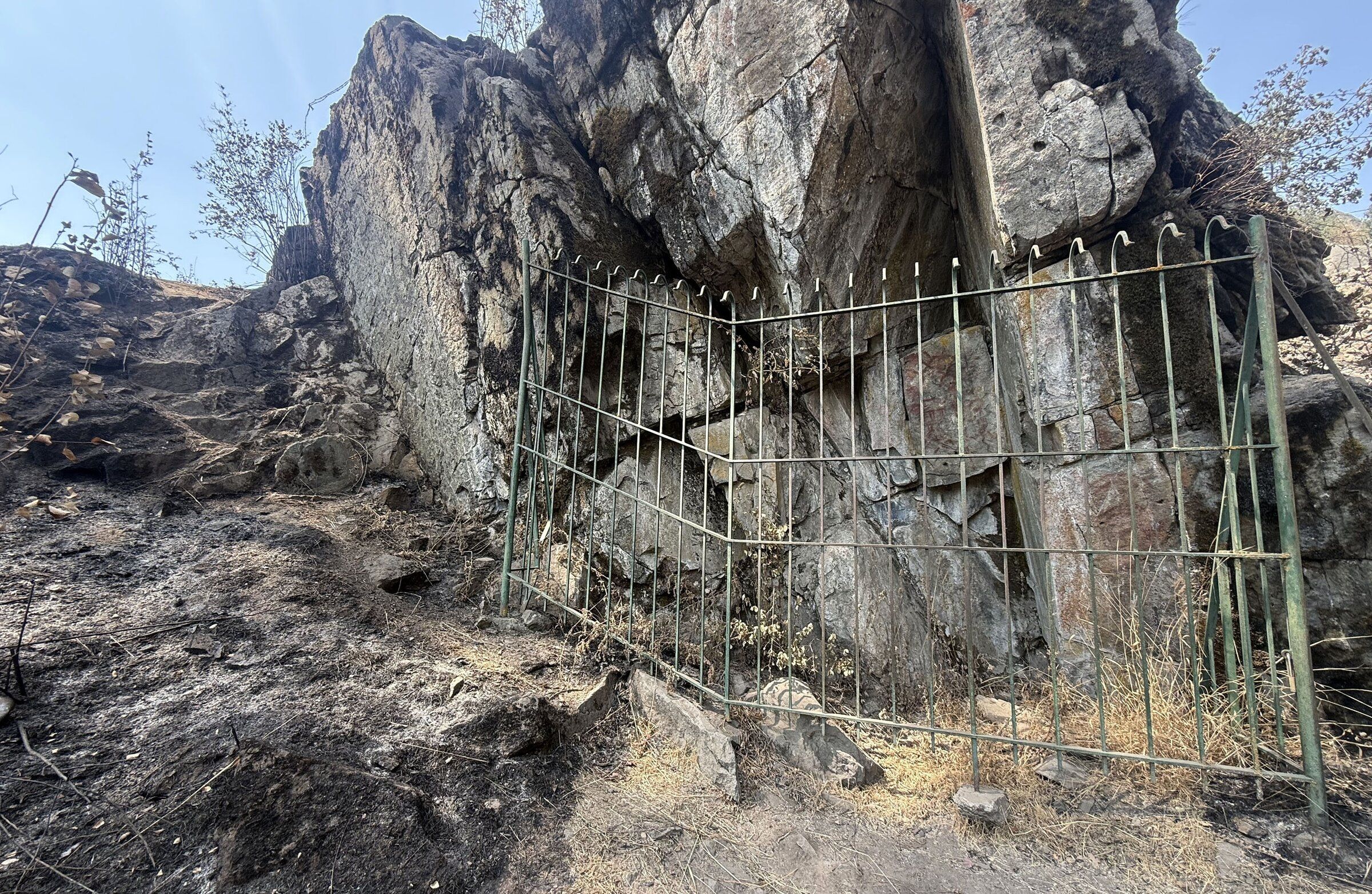
The ancient rock art, however, suffered little damage. It remained visible among charred trees and ash, although some vegetation had grown dangerously close to the rocks. Warren Sayler, a historian and member of the Spokane Tribe, said the images’ exact origins are unknown. They may have depicted hunting, intertribal gatherings or spiritual themes.
The Spokane Tribe advises the park on the cultural significance of the sites, helps develop materials for visitors and advocates treating the petroglyphs with care. Because of their possible spiritual significance, some information about the images may not be made public.
The images were created with crushed red rock and animal fat on a sheer cliff about 25 feet high. They are divided into two groups on an area roughly six by six feet in size and have become more difficult to interpret over time because of rain erosion. Sayler said sites like this may have been used repeatedly, meaning that a single rock can sometimes preserve images created in different centuries.
Local resident Ty Brown believes Rutter Parkway, which runs along the river, probably helped slow the fire’s spread. It may have created a break in the vegetation, reducing the amount of available fuel, while also providing firefighters with access for suppression efforts. In eastern Washington, roads often serve as firebreaks, evacuation routes and access roads for emergency equipment, although they cannot guarantee that a powerful fire will stop.
Brown’s home was near the edge of the evacuation zones for several days. He has researched the valley’s history for more than a decade and said he is relieved that most historic sites survived, but that his main concern is for neighbors who lost their homes.
Park crews are now removing burned trees and other hazardous fire debris near recreational routes, including the Knothead Loop and Painted Rocks trails. Forester Dave Kass said the first priority is to eliminate threats to visitors and infrastructure. After that, crews will work on forest recovery, preventing renewed fires and erosion, and controlling the spread of insects, diseases and weeds.
The fire destroyed about 1,600 acres of the park—roughly 15% of its total area. Recovery will take place in stages. Specialists will assess hazardous trees and the most vulnerable slopes, stabilize the soil, install erosion-control measures, seed native grasses and plants, and contain invasive species. They also plan to monitor natural recovery, the spread of insects and diseases, and, when necessary, supplement natural regrowth with plantings and measures to reduce the risk of future fires. Kass said the work will take years.
Based on: Spokane fires spared Indian Painted Rocks, damaged state park