
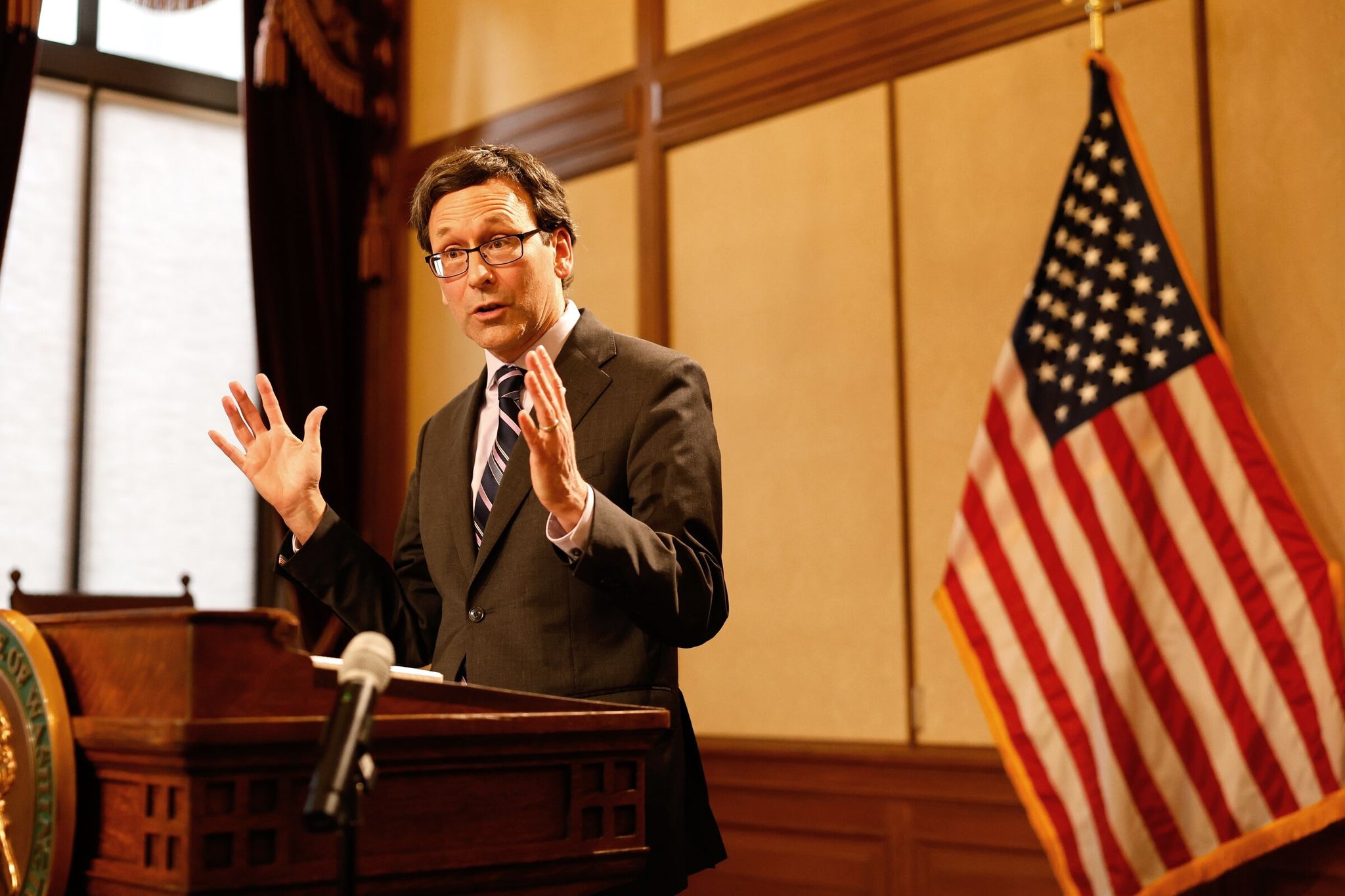
Washington Governor Bob Ferguson said he will veto any attempts to expand the new tax on incomes over $1 million or lower its threshold. The statement came amid a growing repeal campaign that is likely to go to a vote in November. In a post on X, Ferguson tried to reassure voters worried the tax could eventually affect less-wealthy households.
The governor’s political signal reflects anxiety among Democrats: they fear that non-millionaire voters will reject the tax if they suspect it will sooner or later reach them. The law Ferguson signed in March already includes an inflation adjustment mechanism that will raise the income threshold, but that has not allayed opponents’ concerns. The governor emphasized the tax will remain targeted and will be levied only on the state’s wealthiest residents.
Opponents of the tax immediately ridiculed Ferguson’s pledge. Brian Heywood, a hedge fund manager funding the signature-gathering campaign to repeal the tax, called the governor’s statement “dishonest populism.” Republican Travis Couture added that voters will “destroy this unconstitutional tax,” which he said harms the economy and forces companies to leave the state, as Starbucks recently did.
Notably, Washington has a system of direct democracy enshrined in the state constitution. Any group of citizens can propose a law or seek to repeal an enacted law by collecting a required number of signatures, after which the issue is placed on the ballot. This mechanism is especially popular on tax matters: since the 1930s, all attempts to introduce an income tax have failed in referendums, and activists often use referendums to block legislative tax initiatives that voters see as too burdensome. Historically, an income tax has been barred in the state on multiple levels: as early as 1933 the Washington Supreme Court ruled that a progressive income tax violated the state constitution, and subsequent court rulings and referendums reinforced that ban. The state is considered liberal on social policy but very conservative economically: the absence of an income tax attracts wealthy individuals and corporations. The “millionaires tax” seeks to circumvent this ban by being framed as a tax on “large financial transactions,” not on income. In 2023 the Washington Supreme Court allowed such a tax on capital gains above $250,000, ruling it a tax on transactions, which created a precedent for future initiatives, although a personal income tax remains prohibited.
The new 9.9% tax would affect roughly 21,000 households with incomes over $1 million. If it survives legal challenges and the November vote, collections would begin in 2029. The tax is expected to raise $3 billion to $4 billion annually for the state budget, funding schools, universities, health care and other services. Notably, Washington is one of nine U.S. states without a personal income tax, and residents have rejected similar initiatives ten times over the past nine decades.
Supporters of the tax point to polls showing backing for taxing millionaires and note the successful adoption of a capital gains tax on the wealthiest residents in 2024. But opponents say the signature drive is moving faster than expected: 92,000 signatures were collected in the first week, and 309,000 are needed by July 2 to get the initiative on the ballot. Heywood emphasized that the signatures are being signed “by ordinary people, not millionaires.”
Based on: Ferguson vows to veto any expansion of WA ‘millionaires tax’