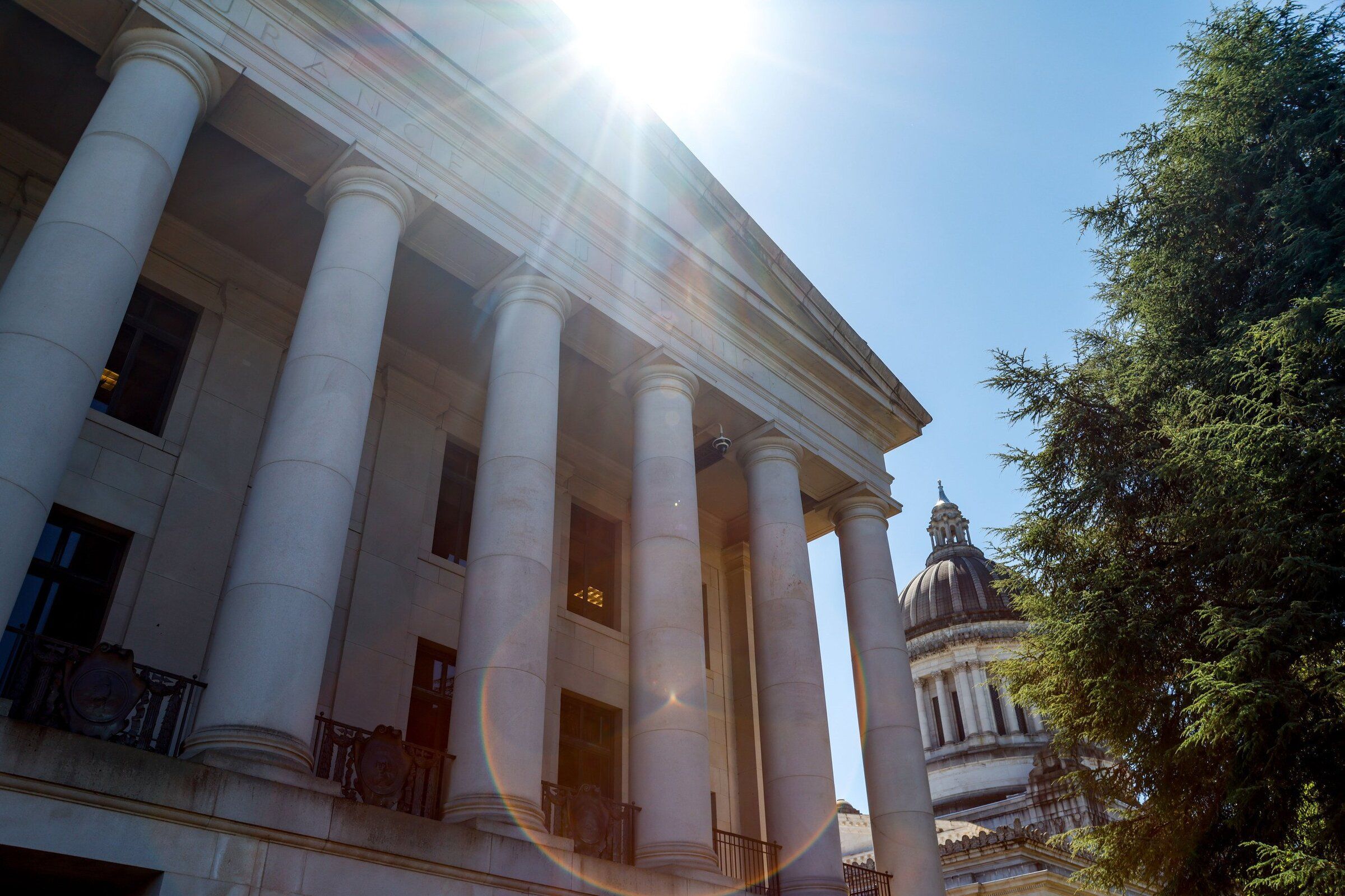
Three significant events are unfolding in Washington state: the state Supreme Court will consider whether lawmakers have the right to withhold public records, potentially changing the balance of power; police discovered a bobcat in the home of a 93-year-old woman who had mistaken it for a cat; and Seattle schools avoided a strike, preserving the scheduled start of the school year. These stories — ranging from legal precedents to odd curiosities — reflect the complex intersections of urban life, where nature, politics and education meet in the most unexpected ways.
Washington Supreme Court to Consider Lawmakers’ Right to Withhold Public Records
An important legal precedent is taking shape in Washington state — one that could fundamentally alter the balance between government transparency and the effectiveness of the legislative process. The state Supreme Court has agreed to hear a case involving so-called “legislative privilege,” the right of lawmakers to withhold some of their working documents and correspondence on the grounds that internal decision-making processes need protection. The decision follows a long series of legal disputes and now places a difficult question before the state’s highest court: Where does the public’s right to know how laws are made end, and lawmakers’ right to work confidentially begin?
The dispute has its roots in ongoing conflicts among journalists, advocates and public officials. Washington residents have repeatedly requested lawmakers’ correspondence, bill drafts and internal analyses, believing that such materials should be available under the state’s Public Records Act. Lawmakers, however, argue that their work requires a certain degree of privacy. If every preliminary discussion, draft or personal opinion became public, they say, the legislative process could be paralyzed, forcing politicians to constantly worry about public reaction and making them afraid to express unpopular but necessary viewpoints. In essence, legislative privilege is intended not to protect secrets for their own sake, but to protect the process of developing compromises and decisions — a process that rarely takes place entirely in public and often requires informal discussions.
The Supreme Court must now determine how applicable this privilege is when state law explicitly establishes a presumption of openness. The justices will have to balance two constitutional values: the public’s right to information and the need to ensure that the legislative branch can function properly. Similar cases have already been heard in other U.S. states, with mixed results. In some instances, courts sided with transparency, noting that modern technology allows politicians to protect their most sensitive discussions from outside scrutiny without concealing all of their records. In others, courts recognized that excessive interference in internal processes could lead lawmakers to stop putting their thoughts on paper altogether — ultimately making their work less transparent, not more.
The principal argument made by supporters of transparency is that voters have the right to know how, and under whose influence, laws governing their lives are created. If the privilege is interpreted too broadly, it could protect not only strategic discussions but also correspondence with lobbyists, major business representatives or even private arrangements among politicians. Although lawyers for the lawmakers insist that the privilege is not unlimited and applies only to internal deliberative processes, critics fear that in practice it could become a convenient tool for concealing information that might be uncomfortable for those in power.
Significantly, the article published in The Seattle Times briefly reports the essence of the case — the high court agreed to consider the issue — but does not provide specific details about which documents lawmakers are trying to withhold. This only underscores that even the description of the dispute itself remains contested. The hearings are expected to attract considerable public attention, since the court’s decision will establish a precedent that could remain in effect for decades and affect how every future legislative session operates.
If the court sides with lawmakers, it will effectively legitimize a practice that citizens have continued to challenge. If it sides with transparency, lawmakers will have to fundamentally revise their methods and be prepared for much of their daily work to become public. The middle ground, as is often the case in law, is the most difficult: The justices may try to draw a fine line that protects genuinely sensitive aspects of lawmaking while preventing officials from hiding information that should truly be public behind an abstract “privilege.”
For ordinary Washington residents, the case deserves close attention because it concerns more than legal technicalities. It addresses the fundamental question of how democratic their society is. If citizens cannot access information about how laws are made, their participation in political life becomes largely symbolic, while real power becomes concentrated in the hands of a small group of professionals operating beyond public oversight. Ultimately, the Supreme Court’s decision will determine whether politics in the state remains transparent and government accountable, or whether closed-door discussions become the accepted norm.
Police Find Bobcat in Home of 93-Year-Old Woman Near Seattle
The story begins as a typical call about a missing pet but quickly turns into something entirely unexpected. An elderly woman in a Seattle suburb reported to police that her cat was missing. When officers arrived, they discovered that the “cat” was actually a real bobcat that apparently felt completely at home. The woman had likely been feeding the wild animal, mistaking it for a large domestic cat, and had no idea who had moved in under her roof.
Police officers, accustomed to all kinds of situations, clearly did not expect to find a bobcat in the living room of a 93-year-old American woman. The predator was calm, but that did not stop law enforcement from calling wildlife specialists. The situation ended well for everyone: The bobcat was turned over to the appropriate authorities and will most likely be released into the wild, away from residential areas. The retiree escaped with little more than a fright and will presumably think twice before inviting unfamiliar “cats” into her home. Details of the incident were described in a police report, which also notes that such encounters are becoming increasingly common in the region as cities expand and human development encroaches on wildlife habitat.
It is worth noting that the original report contains a particularly curious discrepancy. At the top of the material about the bobcat discovery, an entirely different story is mentioned — tragic events in Haiti, where gang attacks in the city of Kenscoff left dozens dead and more than 50 people kidnapped. This was likely an aggregator error, with a fragment from another news story inserted into the article about the furry visitor. Still, setting aside the technical glitch, the main story remains revealing: Even in comfortable American suburbs, wild animals can sometimes be closer than we think, and they are not always willing to settle for the role of a cute household pet. The bobcat incident is a reminder that, despite the apparent domestication of our surroundings, nature occasionally makes its presence known. Elderly people living alone may sometimes fail to recognize danger because of their kindness and trustfulness. Fortunately, no one was injured, the bobcat showed no aggression, and the entire episode ended almost like a joke. But the case offers an excellent opportunity to consider how we coexist with wildlife and why wild cats are increasingly choosing human homes — whether because of a lack of food or simply because they are curious to look through the window at people willing to feed them. Police and wildlife officials have already commented on the incident, urging residents not to approach wild animals and to report them to specialists rather than trying to “tame” predators themselves. The 93-year-old homeowner, meanwhile, appears to have been delighted by the unexpected visitor, although she will probably pay closer attention to the identifying features of feline species before opening her door to them again.
Seattle Strike Averted: New School Year to Begin on Time
Seattle avoided a dramatic scenario that could have left thousands of students without classes on the first day of the school year. Late Tuesday evening, the Seattle Education Association teachers’ union and the city’s school administration reached a tentative agreement, allowing the school year to begin Wednesday morning as scheduled. The news came as a relief to parents, students and teachers, who had anxiously followed the negotiations in recent weeks.
Tensions peaked last week, when teachers voted 91% in favor of authorizing a strike if the two sides could not reach an agreement by the start of the school year. The situation worsened Saturday evening when negotiations reached an impasse. By the following morning, however, a mediator had joined the process, and discussions resumed with renewed intensity. Negotiators even joked that they might have to bring an air mattress so they could meet the deadline — the schedule was that demanding.
Seattle Schools Superintendent Brent Schundler, speaking to reporters Tuesday afternoon, thanked the mediator and emphasized his decisive role in achieving progress. Without the specialist’s involvement, he said, the outcome could have been very different, and he was glad they would not have to consider the possible negative consequences. More than 300 people — teachers, students and parents — also gathered outside the district administration building that day to show support for the union. Some held signs calling for the district to reconsider its proposed staffing levels for special education.
The ratio of specialists to students in special education programs was a major point of contention. District proposals included changes to the structure of those programs, including a reduction in the number of paraprofessionals in classrooms. However, neither the district nor the union has disclosed the details of the proposals or the tentative agreement. Such confidentiality is common during the preliminary agreement stage, but it has raised numerous questions among members of the public, particularly parents of children with special educational needs.
Paraprofessionals are teacher assistants who play a crucial role in supporting students with disabilities. They help adapt instructional materials, accompany students throughout the school day and implement individualized education plans. Reducing their numbers could significantly affect the quality of education for the most vulnerable students, which is why the proposal prompted such strong opposition from the teaching community.
The agreement must now be ratified by union members in a special vote, requiring only a simple majority. Such procedures usually take several days, but given the parties’ desire to avoid a strike, the vote will likely be organized quickly. Even if ratification takes longer, however, the start of the school year will not be disrupted — the key outcome of the agreement.
For Seattle, the dispute served as a reminder of how fragile the balance can be between teachers’ demands and school-budget constraints. Similar conflicts over fair pay and working conditions occur across the country, and each time they threaten to disrupt education. Seattle’s experience shows, however, that even in the most difficult situations, when both sides are willing to compromise and seek help from professional mediators, a solution acceptable to everyone can be found. The hope now is that the compromise will hold and allow Seattle students to begin the new school year calmly, without concerns about their future. More information is available in the KUOW article.