Day in review: Fantasy managers worry about Christian McCaffrey ahead of the game against the Seahawks; Seattle’s Museum of Flight switches to solar power with nearly 2,000 panels; and Starbucks closes five Washington stores while cutting 51 headquarters jobs.
Christian McCaffrey and the “Seattle Trap”: Should Fantasy Managers Panic Ahead of Week 5?
In the world of fantasy football, few things are more nerve-racking than watching your first-round pick go on the road against one of the league’s most difficult defenses. That is the situation facing Christian McCaffrey’s fantasy managers ahead of Week 5, as the San Francisco 49ers prepare to play in Seattle. Yahoo Sports analysts Josh Norris and Hayden Winks examined the dilemma in the latest episode of Yahoo Fantasy Football with Josh and Hayden, and their conclusion was more reassuring than alarming—although questions remain.
The concern is easy to understand, even for those who only follow fantasy football on Sunday mornings. The Seattle Seahawks have opened the season with one of the league’s best run defenses. Their front seven is aggressive, fast and, most importantly, disciplined in gap responsibilities. Last season, the Seahawks held McCaffrey to modest rushing numbers twice, forcing the 49ers to adjust their offense on the fly. For a running back whose fantasy value depends heavily on touches and the ability to break the first tackle, such a matchup is traditionally considered a “trap game.” That is the idea behind the title of the Yahoo Sports video, in which Norris and Winks weigh the risks against the potential reward.
However, several nuances distinguish panic from sound analysis. First, McCaffrey is not merely a between-the-tackles running back. Kyle Shanahan’s scheme uses him on routes from the backfield, in the slot and even on perimeter runs, where Seattle’s defense is much more vulnerable than it is up the middle. That means that even if the traditional running game struggles, a healthy number of targets could save McCaffrey’s fantasy day. Second, this season’s Seahawks defense is still finding its identity under a new coordinator, and its pass-defense numbers leave something to be desired. Against a team that can be exploited through the air, Shanahan will almost certainly design a plan in which McCaffrey is used more as a receiver than as a battering ram.
What are “touch volume” and why do they matter? In fantasy football, a player’s value is measured not only by yards but also by opportunities—touchdowns, receptions and targets. The more often a coach gives a player the ball, the more likely it is that he will score an acceptable number of fantasy points even in a difficult matchup. McCaffrey has historically been one of the league leaders in this category, and that volume is what makes him “bulletproof” most weeks.
The key insight from Norris and Winks, judging by the episode preview, is that there is no reason to expect a complete collapse, but expecting 30 fantasy points would be unrealistic. A reasonable projection is a “solid but not explosive” performance, with receptions and red-zone opportunities likely to play the decisive roles. If the 49ers reach the end zone, Shanahan will almost certainly give McCaffrey the ball near the goal line—and that is the most valuable scenario for fantasy managers. Betting on a touchdown in this game means betting on the coach’s trust, not on the defense’s statistics.
There is also a broader context. Seattle is a divisional rival, and such games often become grinding battles with few possessions. That is the main risk—not a poor performance by McCaffrey, but a limited number of drives for the entire team. Fewer possessions mean fewer touches and fewer chances for a fantasy breakthrough. In this case, the opposing defense is dangerous not so much directly as indirectly, by slowing the pace of the game.
The analysts’ ultimate recommendation, as it can be reconstructed from their discussion, is straightforward: do not bench McCaffrey or try to trade him because of one matchup. He remains an elite-tier player, and a difficult game merely lowers his ceiling; it does not erase his floor. If you have an alternative with a more favorable matchup, you could consider that player as a flex option, but only in exceptional circumstances. For most managers, the right decision is to trust McCaffrey’s talent and the volume Shanahan is likely to give him.
Ultimately, the McCaffrey-Seattle storyline is a classic test of a fantasy manager’s patience. The league is full of examples in which benching a star because of a difficult matchup resulted in 25 points left on the bench. The Yahoo analysts appear to be advising managers not to give in to that panic, but to take a broader view: a player’s role in the offense, touch volume and the coach’s trust in the red zone matter more than the label “tough matchup.” Week 5 will show who was right, but until then McCaffrey remains what he has always been—the centerpiece of one of the league’s best offenses.
Seattle’s Museum of Flight Switches to Solar Power
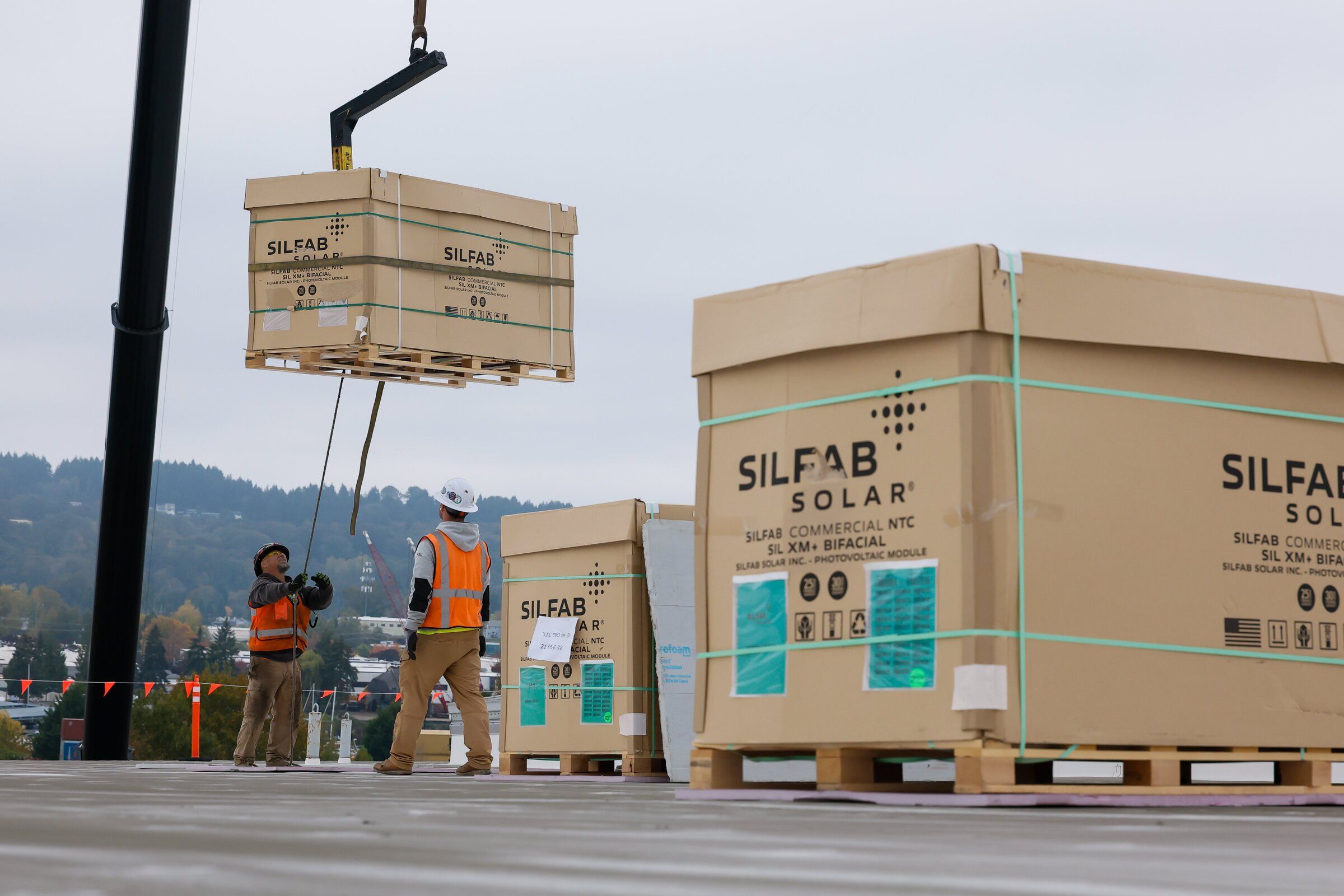
Seattle’s Museum of Flight, located in a city that is hardly known for its sunshine, is taking a bold step toward a more sustainable future. The museum’s West Campus, which includes the Space Gallery and Aviation Pavilion, is preparing to rely almost entirely on solar power. Nearly 2,000 solar panels will be installed on the roofs and surrounding grounds. This is more than a technical upgrade; it is a symbolic gesture. Aviation has historically been associated with a huge carbon footprint, yet the industry’s museum is beginning to use clean energy for its operations on the ground.
As reported by The Seattle Times, museum officials remain optimistic despite Seattle’s reputation as a rainy, overcast city. Even with the Pacific Northwest’s changeable weather, solar panels can generate a significant amount of electricity over the course of a year, particularly during the spring and summer. The project calls for nearly 2,000 photovoltaic panels, which will cover the West Campus’s electricity needs—from exhibition lighting to climate-control systems.
It is important to understand what “100% solar power” means in the museum’s context. It does not mean operating independently using only sunlight; that would require enormous energy-storage systems. Instead, the museum will use a balancing system: during sunny hours, it will send excess electricity to the grid, and during cloudy periods, it will draw power back from the grid. This arrangement is known as net metering. In effect, the museum becomes not only a consumer but also a small power plant. A key detail is that the West Campus houses unique artifacts—the Space Gallery’s actual spacecraft and the Aviation Pavilion’s historic aircraft. Keeping them in ideal condition requires a stable power supply, and solar panels will help reduce dependence on fossil fuels.
The project also carries an obvious irony: a museum devoted to aviation—one of the most energy-intensive industries—is becoming an example of energy responsibility itself. That does not change the fact that airplanes continue to burn jet fuel in the sky, but it demonstrates that even institutions connected to the industry can reduce their carbon footprint. The project is expected not only to lower electricity bills but also to serve as an educational tool, allowing visitors to see renewable energy in operation. Funding likely includes federal and local grants, as well as private donations; in the United States, projects like this are often supported by tax incentives for nonprofit organizations.
For Seattle, the project sends another message: solar power can work even in an “unsuitable” climate. The city has long invested in hydropower, but diversifying energy sources is important for grid resilience. If the Museum of Flight—a place where people dream about the sky—can run on sunshine, it may inspire other cultural institutions as well. The only questions are how quickly the installation will pay for itself and how often clouds will block the sun over Evergreen Street. Judging by the determination of the museum’s leadership, however, they are ready to capture every ray.
Starbucks Closes Five Washington Stores and Cuts Headquarters Jobs
Starbucks, widely viewed as a symbol of stability and one of the most employee-friendly employers in American retail, has officially notified authorities that it will close five stores in Washington state and eliminate some positions at its Seattle headquarters. The notice is known as a WARN notice—a document employers are required under U.S. law to file with state authorities in advance if they plan mass layoffs or the closure of a facility. According to the filing, the changes will affect 51 people in total, with departures beginning November 14 and continuing through December 4.
The company emphasizes that the filing merely formalizes decisions it announced on September 24. In other words, the public notice does not represent an unexpected reversal, but rather the bureaucratic implementation of a previously announced effort to improve efficiency. The stores being closed include a café on 170th Avenue in Redmond, a location on Rainier Avenue and a store on Leary Way in Seattle, as well as cafés on Wellesley Avenue in Spokane and Mill Plain in Vancouver. Those losing their jobs include baristas, shift supervisors and a coffee leader—the employee responsible for coffee quality and staff training. Some will be offered transfers to other Starbucks locations in the same region, which softens the impact but does not erase the fact that jobs are being eliminated.
The company’s Seattle headquarters on Utah Avenue has not been spared. Eight positions are being cut, involving a range of levels—from an accountant and two service representatives to two managers, a senior manager, a director and a project manager. This is significant: the cuts affect not only frontline employees but also managerial and administrative positions, which typically signals a structural reorganization rather than targeted savings. The company says the layoffs will be permanent and that employees received at least 60 days’ notice, the standard required under U.S. labor law in cases of mass layoffs.
The issue of unions also deserves attention. According to the notice, most of the affected workers are not represented by a union and do not have so-called bumping rights—the right to displace a less senior colleague and keep their job instead. In other words, these employees have no formal mechanism to protect themselves when a store closes. Employees at the Redmond store and at the Wellesley location in Spokane, however, are represented by a union, making the situation uneven: some workers have organized support, while others face the company’s decision alone. For Starbucks, which has been engaged in a difficult and at times contentious struggle with union organizing at its stores in recent years, this is another sensitive issue that critics will likely highlight.
What lies behind these figures? The closure of five stores and the elimination of 51 jobs do not, by themselves, look catastrophic for a chain with thousands of locations worldwide. But the context matters more than the scale. The company that grew from a single store at Seattle’s Pike Place Market is reducing its presence in its home state at a time when the coffee market is under pressure from cheaper competitors, changing consumer habits and rising labor costs. The decisions announced in late September were presented as part of a broader strategy to improve efficiency, and the current notice is only the visible part of that process. For employees—especially those without union protection—the dry language of the filing represents a very concrete prospect: searching for a new job just before the winter holidays, when the labor market is traditionally less active.
Several terms in the notice, as explained by KOMO News, are worth clarifying. A WARN notice, or Worker Adjustment and Retraining Notification Act notice, refers to the requirements of a U.S. federal law that obliges large employers to notify authorities and employees of planned mass layoffs or closures at least 60 days in advance. Bumping rights are the right of a more senior employee to take the position of a less experienced colleague during layoffs—a kind of internal seniority system. If such rights do not exist, the employer is not required to find the worker another position within the company. A coffee leader is not simply a barista but an employee responsible for beverage-preparation standards and mentoring, a role the company typically treats as specialized and provides separate training for. Finally, the Seattle Support Center is Starbucks’ corporate office, where administrative, financial and management functions are concentrated rather than retail sales.
The central conclusion is simple: even the world’s most recognizable coffee chain is being forced to cut costs and rethink its structure, and it is doing so not only by closing unprofitable stores but also by reducing its administrative workforce. The fact that some of those affected are managers and directors suggests that the company is optimizing not only its “floor” but also its “ceiling.” For workers, this means that union representation and formal employment rights are becoming increasingly important factors in determining who survives the next wave of restructuring and who is left out. For Starbucks itself, it is another step in the difficult balancing act between investor pressure, competition and the employer reputation the company has spent decades cultivating.