
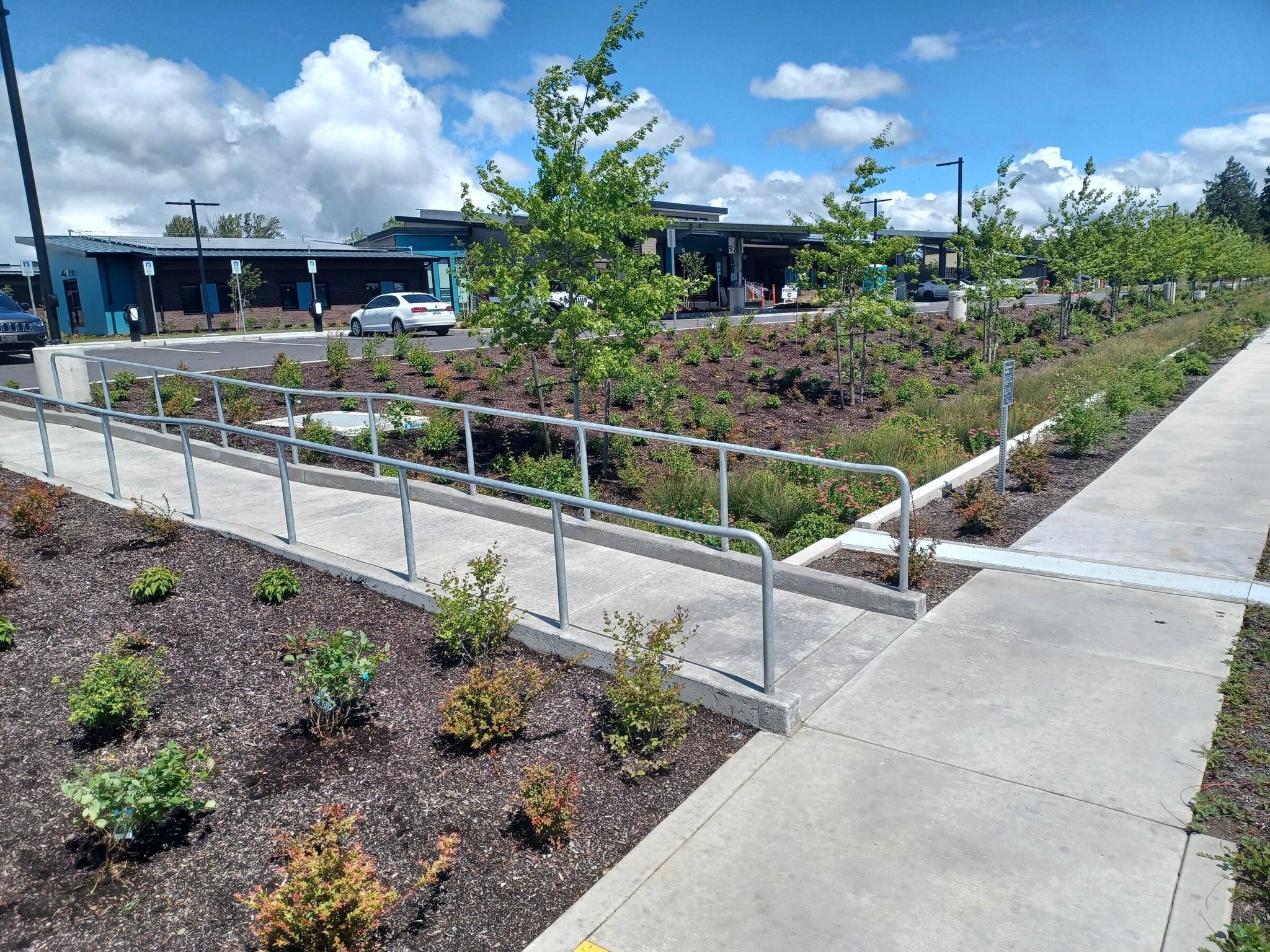
In Vancouver, Washington, the modern Brockmann psychiatric center, completed at a cost of $42 million, sits empty without a single patient. A year ago, as construction was finishing, state lawmakers announced deep budget cuts that led to an indefinite postponement of the facility’s opening. Now a group of relatives of people with serious mental illnesses is actively pushing officials to consider alternative options, including transferring the campus to private management.
The new complex was designed to house 48 patients undergoing so-called “civil commitment” — involuntary, long-term treatment for people who have not committed crimes but have been deemed dangerous to themselves or others. At full capacity the facility was expected to employ more than 100 staff. Instead of opening the center, the state allocated funds only for a “warm shutdown” — maintaining the building without admitting patients.
Parents and family members of patients from southwest Washington are sounding the alarm. They point to the enormous costs borne by patients and their caregivers due to the shortage of treatment facilities. “We talk a lot about the cost to open Brockmann, but we don’t talk about the cost of keeping it closed,” says Jerry Clark, the mother of a son with a serious mental illness who died in 2019. Activists emphasize that the state spends far more on incarceration and emergency medical care for people who do not receive timely treatment.
The state Department of Social and Health Services (DSHS) has already begun holding public hearings with local officials, medical providers and patients. In September the agency is due to deliver a report with recommendations to Governor Bob Ferguson. But the governor’s spokeswoman, Caitlin Safford, warns it’s too early to talk about budget decisions. “All options are on the table,” she says, while acknowledging that transferring the campus to private operators could complicate compliance with mandated bed requirements. Those requirements were set by a federal judge in the Trueblood v. DSHS (2015) case, which ordered the state to ensure timely access to psychiatric care, maintain a certain number of inpatient beds, and guarantee transfers of inmates from jails to hospitals within seven days. Private operators may cut bed counts because of staffing shortages or unprofitability, which could expose the state to fines of up to $10,000 a day or intervention by a federal court.
The main problem, activists say, is a shortage of beds for involuntary treatment. Even if the center opens, it will not speed up the bureaucratic “civil commitment” process, in which decisions are made by Designated Crisis Responders (DCRs) — specially trained mental health professionals with legal authority to evaluate people in acute crisis. They make the key determination whether a person meets the criteria for involuntary hospitalization for up to 72 hours. DCRs are appointed by regional behavioral health authorities and decide based on strict criteria: danger of harm to self or others, and inability to meet basic needs. Extending involuntary treatment requires a court order, with the DCR testifying as a witness. But families say that once beds become available, the system will start working faster. “Right now crisis responders say, ‘We have nowhere to put them, so we won’t file a hold.’ If there is a facility, they will start sending people there,” explains Andy Prater of the group “Open Brockmann.”
Based on: Families push for opening of dormant Vancouver mental health campus