
Two families of workers killed when a tank ruptured at the Nippon Dynawave Packaging paper mill in Longview have filed a third wrongful-death lawsuit. The relatives of 27-year-old Dillon Miller and 26-year-old Clinton “CJ” Doran allege that the mill kept using the tank despite inspections showing that its walls had dangerously thinned. The lawsuit also names the site’s former owner, Weyerhaeuser, as a defendant.
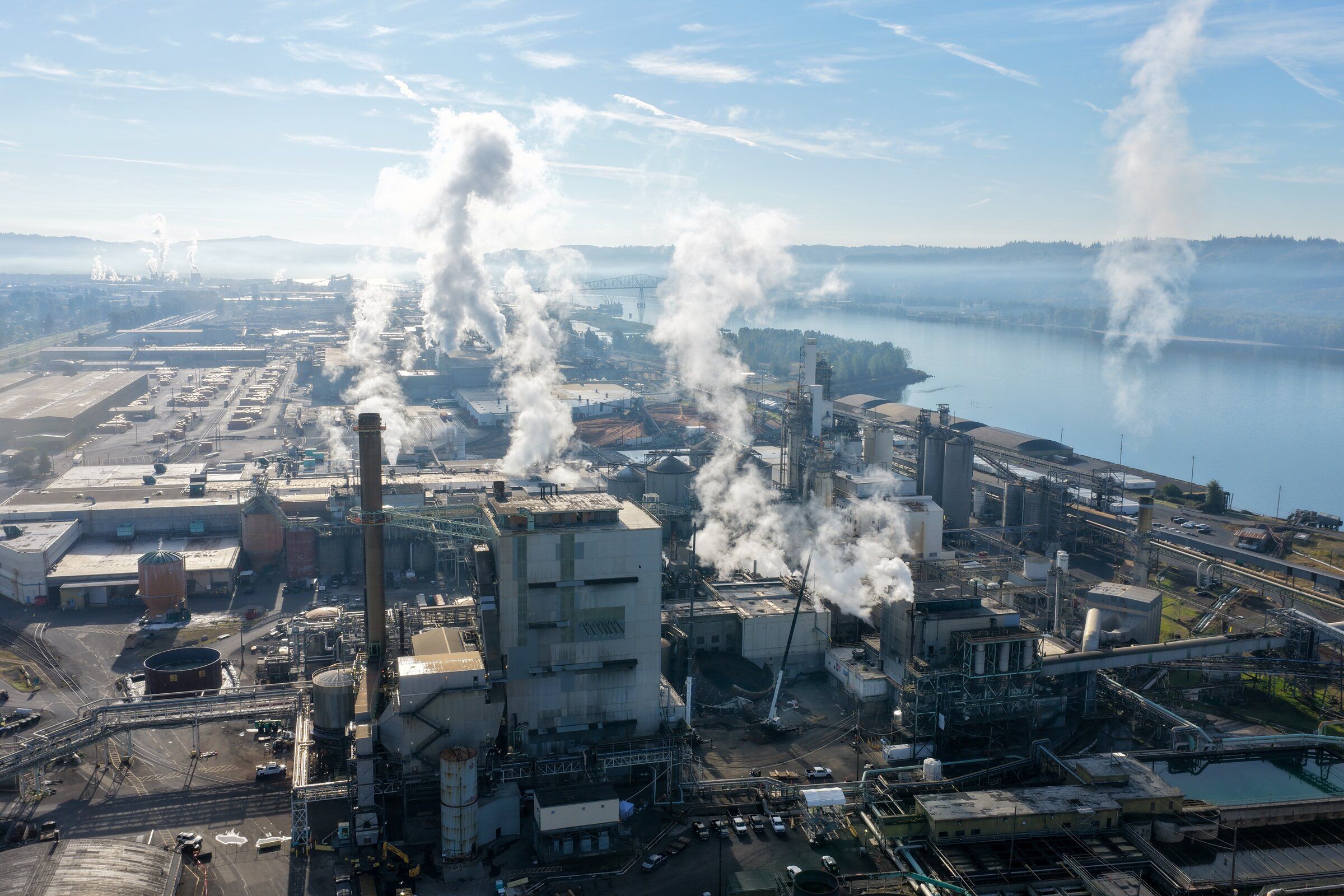
The steam rising above the mill’s stacks on October 16 was more than just a familiar part of Longview’s industrial landscape. Since the disaster on May 26, the sight and smell of the operating mill have reminded the city of that morning, when G Tank released about 900,000 gallons of hot, caustic liquid known in papermaking as “white liquor.” Eleven employees were killed and several others seriously injured.
The new lawsuit was filed Friday, October 23, in Cowlitz County Superior Court. Miller, an electrical and instrumentation technician and father of three, survived the initial release. He was taken first to Longview’s hospital and then to a Portland burn center, where he died that same day. Doran, who worked as an instrumentation and controls electrician, was killed at the mill. He had been married just over a year.
In their complaint, the families repeat the central allegation made in two earlier cases: that Nippon Dynawave followed a policy of running aging equipment until it failed. The U.S. Chemical Safety and Hazard Investigation Board found that, as early as July 2025, a contractor had discovered that substantial areas of the tank’s steel shell were thinner than the calculated minimum for safe operation. The report recommended an internal inspection and repairs, explicitly warning that the tank was unfit for further use without this work and posed a high risk of failure.
Follow-up external inspections in October 2025 and February 2026 again found dangerously thinned walls. According to federal investigators, the tank was not taken out of service, repaired or operated at a reduced level. On the morning of May 26, a failure in an adjacent production process stopped the flow of liquid out of G Tank, while inflow continued. By 6:22 a.m., the tank was about 90% full; at 7:09 a.m., its wall ruptured.
Built in 1987, the tank stood in a courtyard between the mechanical and electrical repair shops, where workers typically gathered for morning meetings. A wave of caustic liquor at about 200 degrees Fahrenheit crushed cars, blew out gates and a building wall, and flooded rooms on the ground floor. Of the 17 workers downstairs when the tank ruptured, 11 suffered fatal injuries.
The lawsuit also names Weyerhaeuser, which built G Tank and sold the mill to Nippon in 2016 for $285 million. The families’ attorneys allege that the former owner placed the tank too close to work areas and failed to provide adequate secondary containment to hold a sudden release. Weyerhaeuser called the incident a tragedy, said it was prepared to cooperate with regulators, and stressed that it had not owned or operated the facility for more than a decade. Nippon Dynawave declined to comment on the ongoing litigation.
The families’ legal path is complicated by the state’s workers’ compensation law, which generally limits the ability to sue an employer in civil court over workplace injuries and deaths. The company is already seeking to dismiss one of the earlier cases, arguing that negligence alone is not enough to establish liability: plaintiffs must show that the employer knew an injury was inevitable and deliberately disregarded that knowledge. Meanwhile, investigations are continuing by the state Department of Labor & Industries, the federal Chemical Safety and Hazard Investigation Board, and the state attorney general’s office, which was authorized this summer to examine possible criminal conduct.


Based on: 2 more grieving families sue Longview mill over ‘unimaginable losses’