A tragedy at a pulp mill in Washington: an explosion left one dead and nine injured, while Meta is cutting nearly 1,400 jobs in the region as it reallocates toward AI.
Tragedy at the pulp mill: chemical tank explosion kills one person
An explosion of a chemical tank at the Nippon Dynawave Packaging pulp and paper complex in Longview, Washington, turned into a full-scale disaster. According to the latest reports, one person died, nine were injured to varying degrees, and the fate of another nine employees remains unknown. The incident occurred early Tuesday morning, around 7:20 a.m., when a tank containing so-called "white liquor" — a key chemical reagent used in processing wood into pulp — ruptured. Local authorities asked residents to stay away from the industrial area but assured there was no immediate threat to the general public. The case has been a heavy blow to the southwest Washington community, where many residents are connected to the mill.
An article in The Seattle Times reports the explosion involved a tank of about 80,000 gallons that was roughly 60 percent full. Eight plant workers and one firefighter were injured; the firefighter was later discharged from the hospital. Injuries range from minor to critical. The injured were taken to medical facilities in Longview and Vancouver. Large numbers of rescue and fire personnel were dispatched and continue recovery operations, attempting to locate those listed as missing. One employee, in a panic, called 911 to report many people with chemical burns and pleaded for immediate rescue units. Relatives of workers also tried unsuccessfully to reach their loved ones, adding to the chaos of an already tense situation.
One of the key post-accident problems has been chemical runoff. The "white liquor" entered the storm sewer system connected to the dike system; however, according to Anna Isenman, a representative of the state Department of Ecology, pumps that discharge water into the Columbia River were promptly shut off. Unlike oil, this chemical solution cannot be collected or contained by ordinary means; it can only "self-neutralize" when mixed with water over time. This means the environmental consequences may be long-term, although officials say there is no immediate threat to public health. Rescue specialists are already monitoring wildlife to assess the scale of the damage.
Perhaps the most shocking part of this story is not the incident itself but its backstory. Regulatory data analysis shows that Nippon Dynawave Packaging has a long trail of environmental and operational violations. Over the past five years, the U.S. Environmental Protection Agency (EPA) has informally flagged the company at least 19 times for violations of the Clean Air Act and the Clean Water Act. When violations became critical, the EPA issued formal penalties at least five times. During 2024 the mill was in a state of "significant" noncompliance with waste discharge regulations, and in August of last year pollution levels exceeded allowable limits by 770 percent. Notably, across all years of violations the total fines imposed by the EPA amounted to just $16,000, of which only $10,000 was collected. The Occupational Safety and Health Administration (OSHA) also fined the company, for example $700 for safety violations in 2021. Even the state Department of Ecology fined the mill $2,000 in 2024 for wastewater pollution and $4,500 for excessive sulfur dioxide emissions.
The scale of the tragedy becomes clearer when you consider that the Longview mill is a large operation employing about 550 people. It produces roughly 280,000 tons of bleached liquid carton and pulp annually. For those unfamiliar with the chemical processes, "white liquor" is an aggressive mixture based on sodium hydroxide (caustic soda) and sodium sulfide. When heated, it breaks down lignin — the substance that binds cellulose fibers in wood — allowing fibers to be separated to produce clean pulp. Contact with such a solution or inhalation can cause severe chemical burns. Although Nippon Dynawave, owned by the Japanese corporation Nippon Paper Industries (which bought the mill from Weyerhaeuser in 2016 for $285 million), has previously experienced incidents — including a 4,000–5,000 gallon sulfuric acid spill in 2017 — the current catastrophe raises serious questions about workplace safety and the effectiveness of government oversight at hazardous facilities. This story is not only about human tragedy but also about systemic problems that may have been preventable.
Washington state tragedy: chemical plant blast leaves people injured
A chemical plant explosion in Washington state caused serious injuries to several people. The incident occurred at an industrial site, the details of which are still being clarified, and video from the scene, circulated by local news outlets, captured the scale of destruction and panic among workers. Witnesses reported a powerful blast wave and a subsequent fire that required emergency responders. According to preliminary reports, the injured were hospitalized, but the exact number of victims and the severity of their conditions remain unknown. The cause of the explosion is under investigation; experts suggest it may be related to process violations or equipment failure.
In the context of this incident it is worth noting that Israeli military forces said they struck a new Hamas leader in the Gaza Strip, killing three Palestinians. Palestinian hospital sources reported that at least three people were killed and another twelve injured in a series of airstrikes in Gaza City. This information, published by KIRO 7 News Seattle, shows how two entirely different stories — a local industrial accident and an international conflict — were combined in a single information flow. If the Washington explosion raises questions of industrial safety and local risk, the airstrikes in Gaza reflect escalation in the Middle East, where each new military operation deepens the humanitarian crisis.
For readers unfamiliar with who the "new Hamas leader" is: Hamas is a Palestinian Islamist organization that controls the Gaza Strip and is designated a terrorist organization by many countries, including Israel and the United States. Changes in its leadership are often tied to the elimination of previous leaders or their going underground, making targeted strikes by Israel part of a strategy to weaken the group’s military and political structure. The key takeaway from these two events is that both locally and globally the risks from technological and military incidents remain high. The casualty and damage figures underscore the fragility of human life in the face of industrial disasters and armed conflict, and the need to strengthen safety measures at industrial sites and seek avenues for de-escalation in conflict zones.
Meta lays off nearly 1,400 employees in Seattle: a new reality for tech giants
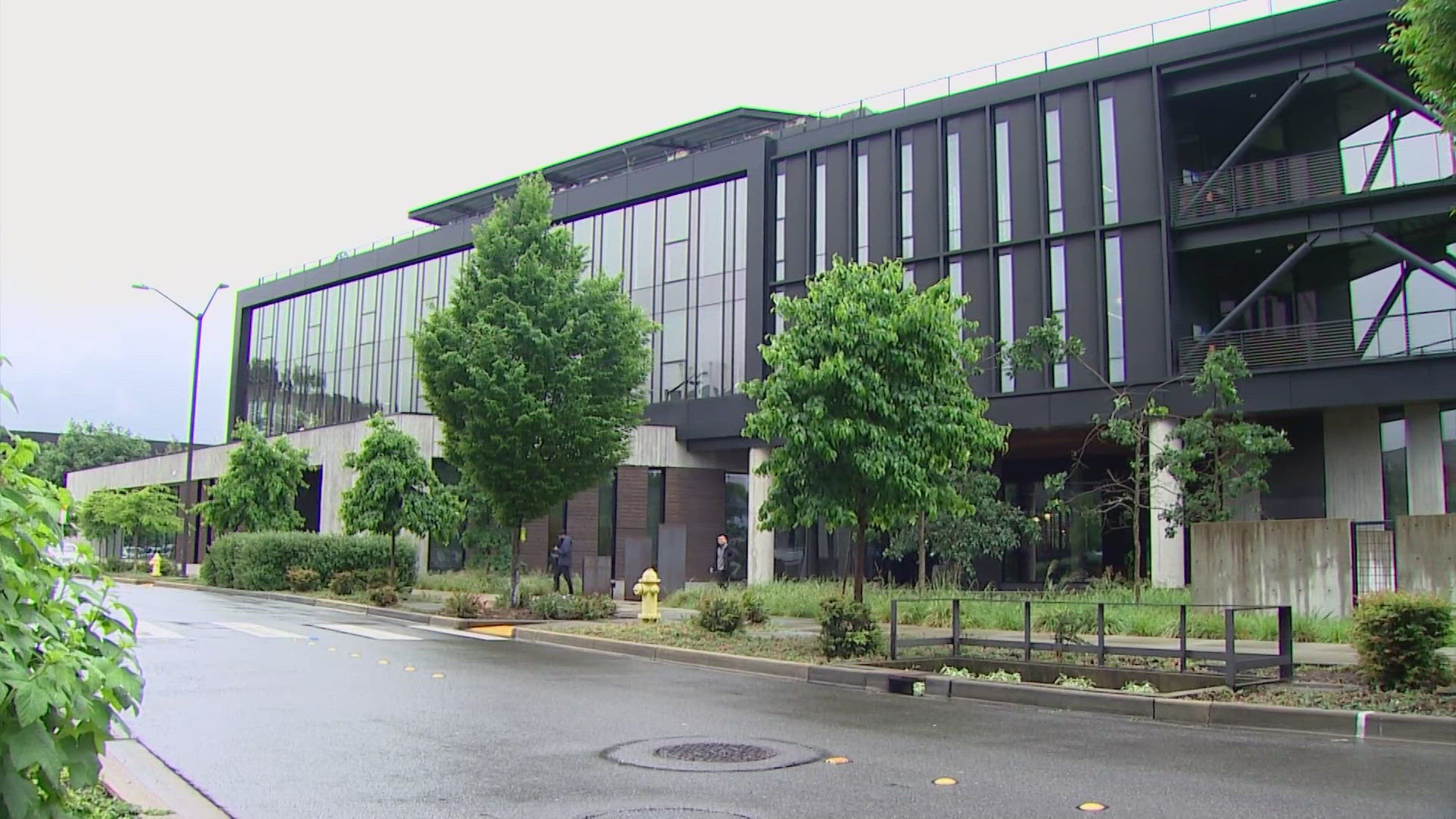
Meta, the parent company of Facebook, Instagram and WhatsApp, is continuing a large-scale restructuring, announcing layoffs of nearly 1,400 employees in the Puget Sound region of Washington state. The move is part of a global reduction of roughly 8,000 jobs, about 10 percent of the company’s workforce. The biggest hit fell on the Bellevue office, where nearly 699 people will lose their jobs. In Seattle, offices on Dexter Avenue and Utah Avenue will see cuts affecting another 215 and 44 employees respectively, and 206 people in Redmond will be affected. In addition, 231 remote employees living in Washington were also included in the layoffs. As noted in a notice filed with the Washington State Employment Security Department, the layoffs take effect July 22 and are permanent. All this is happening as the company actively reallocates resources toward developing artificial intelligence, hiring specialists in that area and winding down lower-priority initiatives.
The situation at Meta illustrates the tectonic shift happening in the tech industry. A company that just a few years ago was aggressively hiring and planning for the metaverse is now forced to "optimize" after a period of rapid growth. Meta spokesperson Tracie Clayton said in an official statement that changes vary by team: "They include layoffs, closing open roles, and moving thousands of employees to priority business objectives across the company." That means, besides direct layoffs, many positions that were planned are simply being closed and existing staff are being moved onto AI-related projects — the company's new "gold mine." To give a sense of scale: Washington is one of Meta’s key tech hubs, with about 8,000 employees in the region at the time of the announcement. Thus nearly one in five workers in that region will lose their jobs, which will be a serious blow to the local labor market, especially in high-tech sectors.
A key point needing clarification is Meta’s shift from the metaverse to AI. The metaverse, championed by Mark Zuckerberg in 2021, envisaged a virtual digital world for communication, work and entertainment. However, that project proved extremely expensive and did not generate rapid returns. The company is now sharply pivoting: investments are being funneled into generative artificial intelligence, which can create text, images, video and even code. Layoffs in the "real" world, such as in Washington state, are the direct cost of this strategic shift. Meta is effectively saying: older roles — in marketing, support, and project management — are no longer as vital as engineers and researchers who can work with large language models. This is not just a budget-cutting exercise but a fundamental business transformation in which the company sacrifices thousands of jobs to try to lead the AI arms race. The consequences for the Puget Sound region will be long-lasting: not only will thousands of families lose stable incomes, but the commercial real estate market in cities like Bellevue and Seattle could see reduced demand as Meta and other tech firms downsize. This is a worrying signal for the entire West Coast tech ecosystem, where "capitalism of abundance" gives way to ruthless efficiency.