
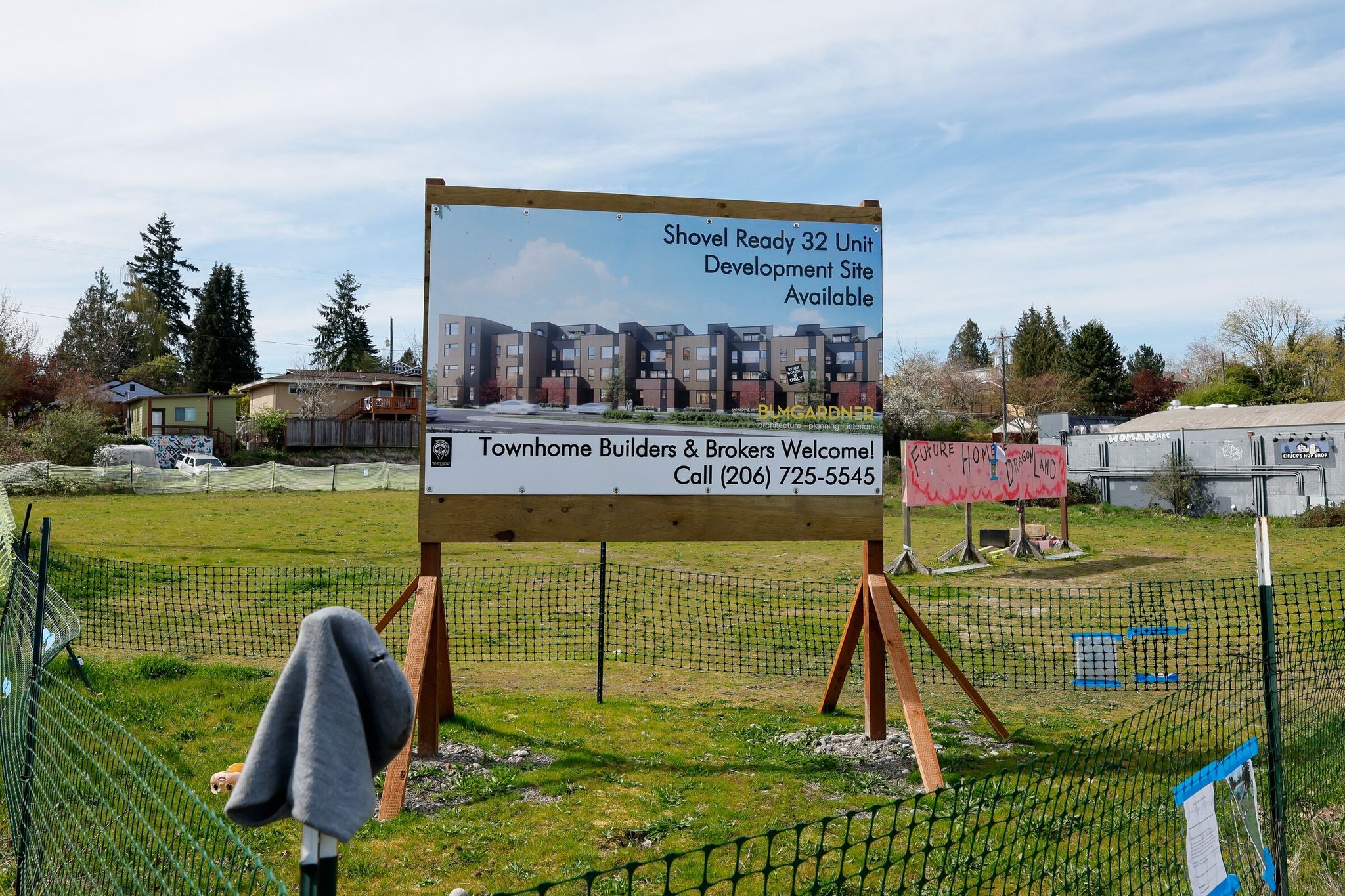
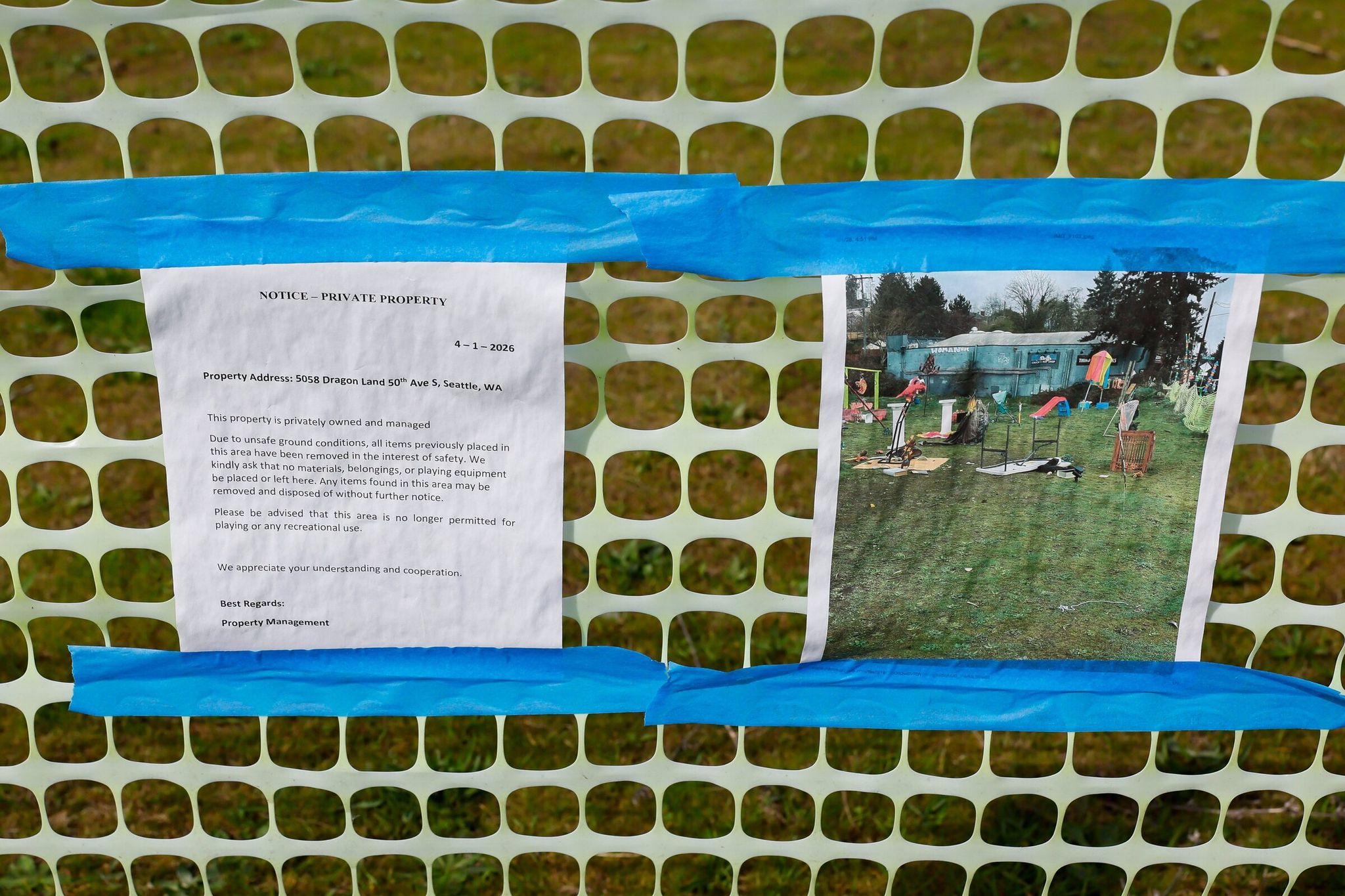
In South Seattle there was briefly a magical place called "Dragon Land" — a spontaneous art installation created by residents on a vacant lot. It filled with dolls, toys, paintings and, of course, dragons, attracting attention from across the city. But on April 1 the improvised exhibit suddenly vanished: workers hired by the landowners removed almost all the objects.
Over the past year "Dragon Land" grew from a local curiosity into a full-blown phenomenon in the Seward Park neighborhood. That large historic park on a peninsula in Lake Washington in southeast Seattle, known for its old-growth forest and active local community, provided an ideal backdrop for the creative initiative. The neighborhood’s spirit of creativity and conservation coincided with the appearance of an empty lot adjacent to the park, which an artist turned into an impromptu art installation. The vacant parcel at the street corner filled with creations not only from neighbors but also from anonymous artists across Seattle, reflecting collective fantasies and a hunger for self-expression. The site became a symbol of unexpected beauty and a gathering point for the community.
The removal of the art space was driven by plans from developers who own the land. They intend to sell the lot for a residential development, and the accumulation of art objects, they said, complicated that goal. The owners left only the original sign reading "Future Home of Dragon Land" and a few concrete blocks, hauling the rest to a dump. One of the owners is local developer Fred Reed. Conflicts like this between temporary public art and new development are common in Seattle’s rapidly growing neighborhoods, such as South Lake Union, Ballard or the Central District, where development pressure often collides with communities’ desire to preserve the cultural character of places.
Public reaction was split: many people on social media mourned the loss of a unique spot that “gave us what we didn’t know we needed.” Others saw the removal as an inevitable step in the evolution of urban space. Even the project’s creator acknowledged its impermanence from the start.
The initiator of "Dragon Land" was a local artist known by the pseudonym SEA Dragonsss, whose wooden dragons decorate many streets in Seattle. He is relatively unknown outside local communities and social networks, as he often works anonymously. Seattle has a long tradition of spontaneous public art, including street murals, sanctioned graffiti spots and temporary installations, especially in neighborhoods like Fremont, Capitol Hill and Ballard, where art is often used to express local identity. SEA Dragonsss turned an abandoned gas station into an open site where anyone could add something. The idea captured people’s imaginations, and the installation grew, inspiring dreams of a permanent themed park.
Fred Reed explained that although he and his partners initially tolerated the creative initiative, over time the art objects began to resemble “junk” and interfered with commercial plans. He urged people not to leave anything more on the lot, emphasizing, “We don’t want to be the art police,” but said they had to maintain order.
Artist SEA Dragonsss took the project’s end philosophically, saying that "Dragon Land" fulfilled its main mission — for a short time it satisfied a widespread need for connection and togetherness. In his view, real art cannot please everyone, and that is its value and what distinguishes it from kitsch.
But the story may not end here. The artist does not rule out the possibility that the spirit of collective creativity could be reborn on another vacant lot, since the city still has many open spaces. Such parcels are common in transitioning areas, for example in industrial zones (SoDo, Georgetown), or on land awaiting development. Seattle authorities regulate their use through zoning rules, temporary-use permits and programs that encourage activation of vacant land, but priority is usually given to long-term development. "Dragon Land" is gone, but it left behind an important question about the place of spontaneous art in the modern city.
Based on: South Seattle’s Dragon Land is gone; long live Dragon Land?