
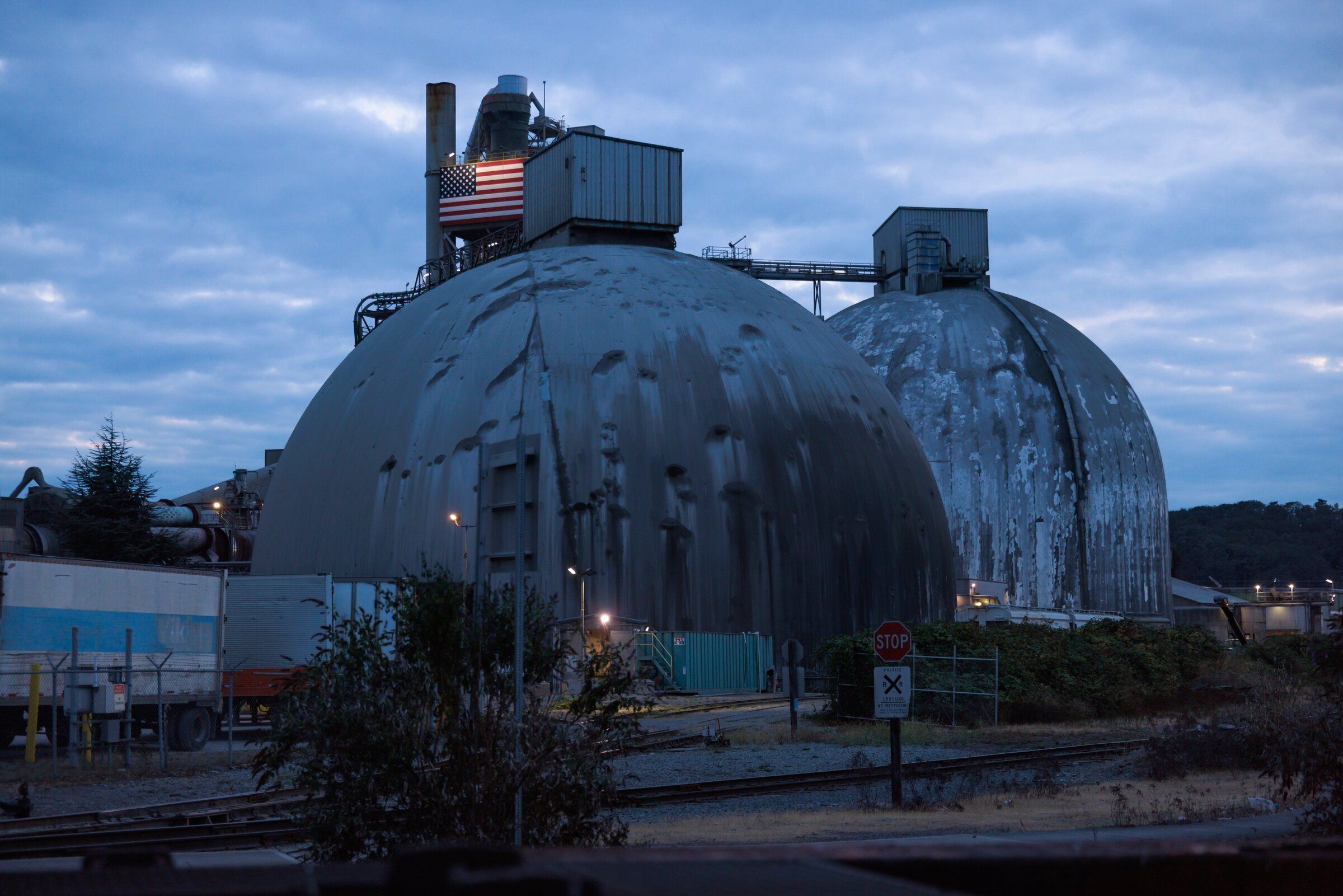
Ash Grove Cement will not be allowed to increase the number of vehicle tires burned in its cement kilns. The decision was a victory for environmental activists from the Duwamish River Community Coalition, who spent about a year opposing the expansion. At the plant in the industrial Duwamish Valley, tires are used alongside coal, natural gas and other fuels.
Following public protests and concerns about toxic-metal emissions, the Puget Sound Clean Air Agency required the facility to conduct tests. The agency oversees air quality in King, Pierce, Snohomish and San Juan counties; issues permits to major sources of emissions; conducts inspections; investigates complaints; and can require corrective measures or impose penalties.
Tests conducted in June showed that cadmium emissions increased when the proportion of tires was raised. As a result, the agency decided to keep the existing limit and did not allow Ash Grove to burn more tires. The company and regulator had previously said repeatedly that expanding tire use would not increase toxic-metal pollution.
Residents can participate in similar environmental proceedings by reporting odors, smoke and emissions; submitting written comments on proposed permits; and attending public hearings. Information about comment deadlines and hearings is usually posted on the agency’s website. However, issues involving soil and water pollution often fall under the authority of other state and federal agencies.
Activists said the outcome confirmed the importance of residents’ participation in environmental decision-making. More than 500 residents and 30 local businesses signed a petition opposing the expansion of tire burning. After the test results were published, Earthjustice and the coalition withdrew their appeal against the company’s permit because their key demand — testing the emissions — had been met. Ash Grove said it would continue operating in compliance with environmental regulations and seek opportunities to make production more sustainable.
The Duwamish Valley, including Georgetown, South Park and parts of Beacon Hill, has developed as an industrial and port district for decades. The area is home to factories, warehouses, rail lines, highways, wastewater-treatment facilities and cargo terminals. The environmental conditions are also affected by diesel exhaust from trucks and trains, emissions from industrial and asphalt plants, port vessels, road dust, pollution from highways and wildfire smoke. Historical activity by chemical manufacturers, shipping companies and waste-processing facilities has contaminated the soil and water.
Environmental risks are especially high for low-income families and people of color in Georgetown and South Park, who often have fewer opportunities to oppose harmful land uses. Studies show that residents of these neighborhoods die, on average, eight years earlier than residents of Seattle and King County, while children are hospitalized for asthma more often. In addition, Ash Grove emitted about 360,000 metric tons of greenhouse gases in 2021, making it the largest polluter in southern Seattle and South King County.
Based on: Activists block attempt to burn more tires at Seattle cement plant