
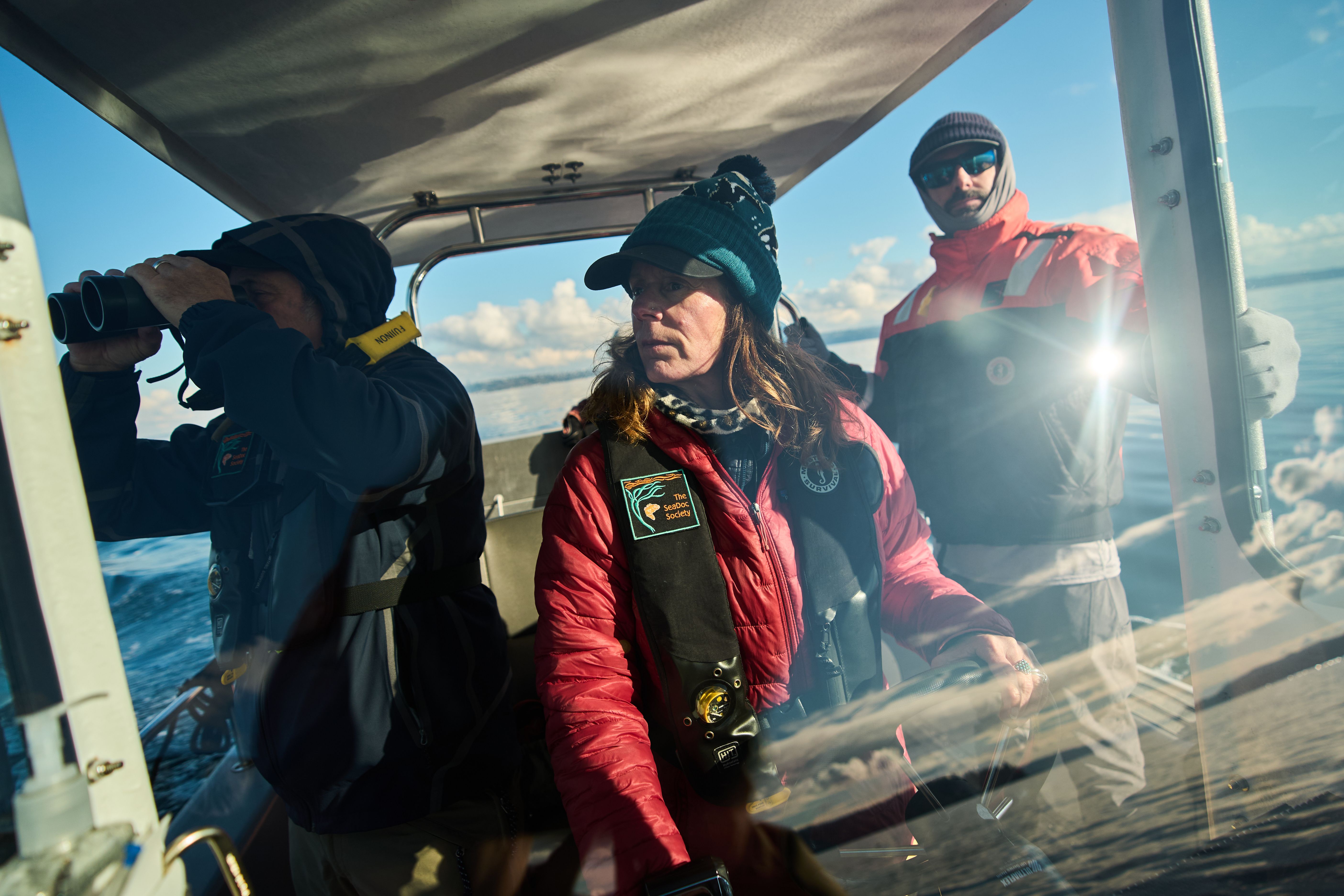
Every fall, biologist Deborah Giles searches for southern resident orcas, an endangered population with just 76 individuals remaining. In recent years, the whales have been appearing less often in the Salish Sea, a network of waterways between Washington state and British Columbia that includes the Strait of Georgia, the Strait of Juan de Fuca and Puget Sound. Salmon migrate through these waters between the ocean and the rivers where they spawn. In the fall, orcas hunt salmon north of Seattle, and researchers take the opportunity to collect samples with partners from the San Diego Zoo.
From a small boat, scientists launch a drone carrying Petri dishes and microscope slides. It flies over an orca’s blow and collects droplets. An 11-year-old dog named Eba sniffs out feces. On one November day, the whales were hard to spot because of poor light and unpredictable behavior. Eba detected a sample, but the team couldn’t find it.
Breath and fecal samples contain information about hormones, bacteria, fungi, parasites and DNA. Researchers analyze them to build individual health profiles for the animals. By measuring pregnancy hormone levels, they found that many females miscarry; calf mortality is also high.
Southern resident orcas usually live in family groups and feed mostly on salmon, especially Chinook. Dams on Washington state rivers, including the Columbia, make it harder for salmon to reach their spawning grounds, while reservoirs and changes in river flow worsen their survival prospects. Overfishing and other factors also affect salmon numbers. According to Giles, the average weight of a Chinook has fallen to about 5.7 kilograms.
Bigg’s orcas, also known as transient orcas, inhabit the same waters. They more often hunt marine mammals such as seals and sea lions in small groups, so they are less directly dependent on Chinook stocks. Bigg’s orcas are thriving as long as they have enough other prey.
Reducing noise from ships could help southern resident orcas, but researchers consider restoring salmon populations and their migration routes the most urgent task. Some of the salmon that spawn in the Salish Sea are caught far to the north, including off Alaska, before they can return. “Our task is to turn back the clock,” Giles says.
Based on: Using a drone and a poop-sniffing dog, scientists perform health checks on endangered orcas