
In downtown Vancouver, Washington, signs appeared urging people not to kill spiders but to “relocate” them to favorite waterfront establishments. It is unclear whether this was a joke, a promotional campaign or a sincere initiative. However, experts warn that releasing a captured spider on someone else’s property should be done only with the owners’ permission, and that “relocating” the animal often harms it.
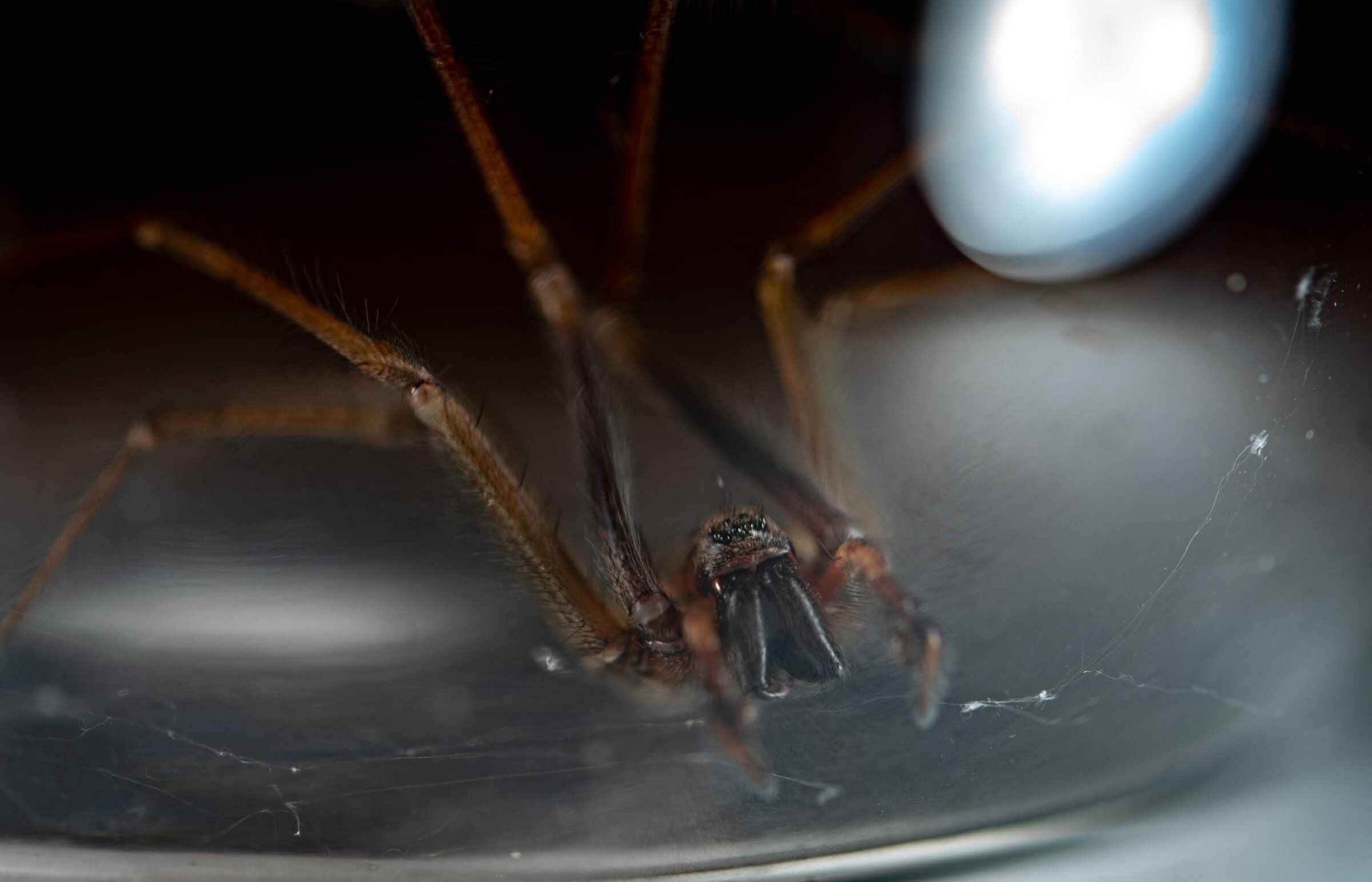
Rod Crawford, curator emeritus at the Burke Museum of Natural History and Culture at the University of Washington in Seattle, has studied spiders and other arachnids of the Pacific Northwest for many years. He explains that house spiders do not enter homes to escape the cold. Many have evolved to live inside buildings and survive poorly outdoors. For that reason, such a spider should not simply be thrown into a garden or forest. If it must be removed from a room, it is better to move it to another sheltered location — such as a garage, basement, shed or utility room.
There is no evidence that the local waterfront lacks spiders. Although populations of some invertebrate groups, especially pollinators, are declining in Washington, no decline in spider populations has been documented. About 985 species live in the state, but only 25 to 30 species are commonly found in and around homes. Each is adapted to a particular environment: outdoor species are not suited to living indoors, while indoor species are not suited to open spaces.
Most spiders, including large funnel-weaving house spiders, are harmless to people and help control insect populations, including pantry pests, moths and beetles that damage carpets. Homes also commonly contain cobweb spiders, while gardens are home to orb-weaver spiders, yellow garden spiders, recluse spiders and false black widows.
The western black widow, Latrodectus hesperus, is generally considered the most medically significant spider in the state. It has a shiny black body, and a red hourglass-shaped marking is often visible on the underside of its abdomen. The yellow sac spider, Cheiracanthium, usually causes localized pain when it bites but rarely leads to serious consequences. False black widows of the genus Steatoda resemble true widows because of their dark coloration and rounded abdomens, but they generally lack a bright red marking, and their bites are typically much less severe.
It is difficult to identify a spider reliably by appearance alone, so it is best to photograph it or show it to a specialist and avoid handling it. Anyone experiencing severe pain, muscle spasms, difficulty breathing or rapidly increasing swelling should seek medical attention. If the spider poses no danger, Crawford’s advice is simple: let it pass peacefully.
Spiders are not insects but arachnids: they have four pairs of legs, an exoskeleton and bodies divided into a cephalothorax and abdomen. More than 45,000 spider species are known, and all produce silk, although they use it for more than just webs. Nearly all species are venomous, but only a few can harm humans; in ecosystems, spiders remain important predators that feed on insects and other invertebrates.
Based on: It’s spider season — but expert reminds that indoor spiders belong indoors