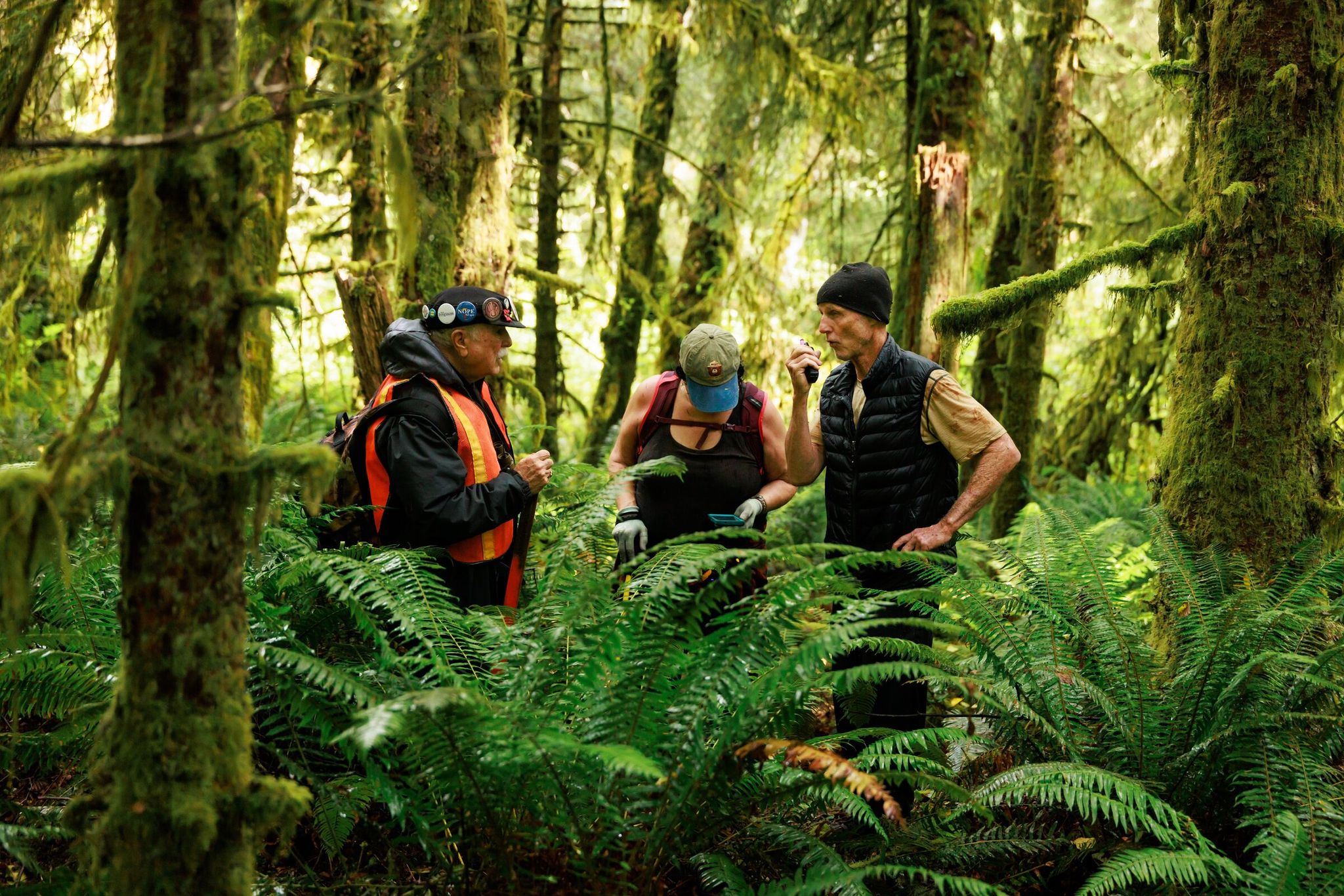
The Olympic Peninsula Forest Defenders coalition raised $32,000 from 325 donors in just four days to prevent the logging of two acres of century-old forest west of Port Angeles. This is the first instance in the state where public donations allowed already-sold trees to be bought back and left standing. The unique deal was made without the participation of the Department of Natural Resources (DNR), which owns the land.
According to Elizabeth Dunn, an attorney with the Center for Land Law who acted as a mediator, the agreement was a “win-win” for all parties: the logging company Webster Logging and the state received full compensation, and the forest remained intact. The parcel was part of a larger sale called “Doc Holliday,” which drew criticism from environmentalists, tribal representatives and locals who argued that the century-old trees provide more value standing alive.
Conservationists emphasize that amid the climate and biodiversity crises, the state needs to find new revenue sources rather than rely on cutting old-growth forests. These so-called “historical forests” are too young to qualify for protection under the federal Northwest Forest Plan of 1994, but are considered “the old forests of the future.” It’s important to note that the term “old-growth” has stricter criteria: it generally requires trees older than 200 years and specific ecological features such as large old trees, dead wood, and a multi-layered canopy. That is why the “historical forests” on the Olympic Peninsula remain without federal protection. Additionally, the Northwest Forest Plan is focused on conserving ecosystems for particular species, such as the northern spotted owl, on federal lands, whereas “historical forests” sit on state lands and fall outside its scope. Nevertheless, “historical forests” serve as important carbon sinks, habitat for imperiled species, and regulators of streamflows during dry periods. They also function as buffer zones for true old-growth and support populations of rare species.
Controversy over Washington’s older forests reached such intensity that in 2024 the new commissioner of public lands, Dave Apteogrove, was elected on a platform to preserve historical forest blocks. The commissioner of public lands is an elected office responsible for managing the state’s vast public lands, including forests, parks and natural resources, and for overseeing the Department of Natural Resources (DNR). That is why the 2024 election was closely tied to forest conservation: the commissioner makes key decisions on logging, protection of “historical forests,” and balancing economic interests with environmental priorities. However, the DNR refuses to revisit already-executed contracts, including the Doc Holliday sale, which was approved before Apteogrove took office. According to DNR spokeswoman Michael Kelly, the agency is focused on developing a new forest policy for the future.
After an eight-month moratorium on timber sales from complex forest ecosystems, the DNR is mapping state lands where historical forests may occur using both computer modeling and field surveys. The agency learned about the charitable deal to save the two acres only from news reports, and in theory that parcel could be put back up for sale if it does not receive official protection status.
The Elwha Forest Heritage coalition is also aiming to preserve a larger parcel within the Doc Holliday sale, valued at roughly $1 million. It could be logged as early as July. Advocates are proposing a land swap to save this unique coastal stand of Sitka spruce, notable for its high biodiversity.
Because the sale was already approved by the Board of Natural Resources, the DNR does not intend to reopen negotiations and expects logging contractors to fulfill the contract. Nevertheless, the precedent of a public-funded rescue of two acres could become a new model for protecting valuable forests in the future, showing that even sold trees can be spared if fair compensation for all parties can be found.