
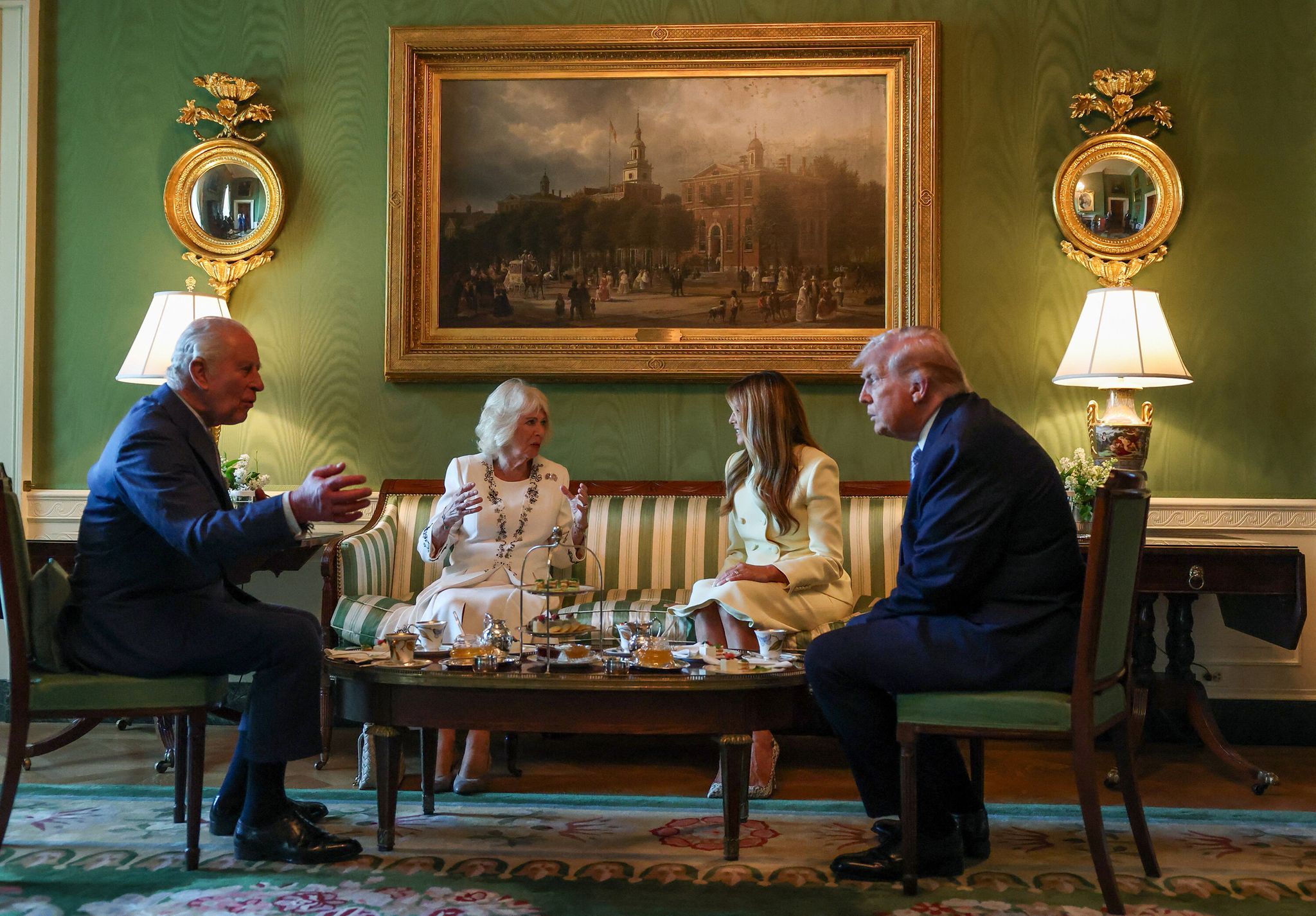
King Charles III and Donald Trump are polar opposites in style and temperament. The British monarch, a meticulous adherent to protocol and ritual, is heading to Washington for a multi-day state visit that will include an address to Congress and a meeting with families of the 9/11 victims in New York. Against the backdrop of pomp and ceremony, the king will need to use the weight of the British monarchy to ease the tensions that have clouded relations between the UK and the US since the start of the year.
It would be an exaggeration to say the "special relationship" has collapsed, but ties between the kingdom and its former colony are not at their best. The two sides have clashed over energy, trade, NATO and the status of Greenland — a Danish territory that Trump once threatened to seize by force. The American president, who expresses deep respect for the royal family but disdain for British politicians, increasingly groups the UK with what he calls "woke" European countries, accusing the continent of becoming a "hell" because of migrants, crime and wind turbines.
Relations looked different in Trump's first year in office, when Prime Minister Keir Starmer was seen as one of the few European leaders capable of managing an impulsive American, especially on Ukraine. Trump called Starmer an excellent leader in a difficult situation, and last May the two sides concluded a trade agreement — much lighter than the White House's negotiations with the European Union. But a two-month war with Iran shattered the fragile trust.
The conflict in the Persian Gulf, where Trump became entangled amid a six-month 50% rise in oil prices, led the president to publicly criticize the British. He expected London to provide its bases in the region for American bombers, but Starmer's government initially refused and then allowed the bases to be used only for defensive strikes. That did not satisfy Trump: he had hoped Starmer would follow Washington silently, like Tony Blair did in Iraq in 2003, but the British acted independently.
Starmer, now one of Britain's least popular politicians, is using the confrontation with Trump to bolster his standing. The British public views the American leader very negatively, and resisting his pressure brings the prime minister political points. In speeches in Parliament and interviews, Starmer has consistently said he will not bow to ultimatums and will not send British troops to fight the Iranians.
The economic situation adds fuel to the fire: the International Monetary Fund judged that the UK is more exposed than other advanced economies to disruptions in energy supplies from the Middle East, leading to downgraded growth forecasts. "It frustrates me that because of the actions of Putin or Trump families see spikes in their energy bills," Starmer told British television. For a prime minister whose future leading a Labor Party riven by disagreements is uncertain, such forecasts feel like a death knell.
The negative reaction to the Iran war is not limited to the left. Kemi Badenoch, leader of the right-wing Conservative Party, initially supported strikes on Iran but later criticized the Trump administration for lacking a strategy. Even Nigel Farage, leader of the euroskeptic Reform UK party and a personal friend of Trump, praised Starmer for refusing to take part in the conflict. Thus the British political spectrum is united in rejecting the US military policy.
King Charles III faces a difficult mission. His task is to use the authority of the monarchy and his personal charm to try to defuse tensions over a White House dinner and photo ops on the Capitol steps. Given the depth of the disagreements, the king will have to show all his diplomatic skill to gently remind American partners of the value of the transatlantic alliance — before mutual irritation turns into a real rupture.
Based on: Will King Charles’ visit help soften the transatlantic bad feelings?