
The Protect College Sports Act, which is intended to establish federal rules for college sports in the United States, did not receive a Senate vote before the start of the August recess. Consideration has now been postponed until after Labor Day, and Majority Leader John Thune has promised to hold a procedural vote between Sept. 15 and 23.
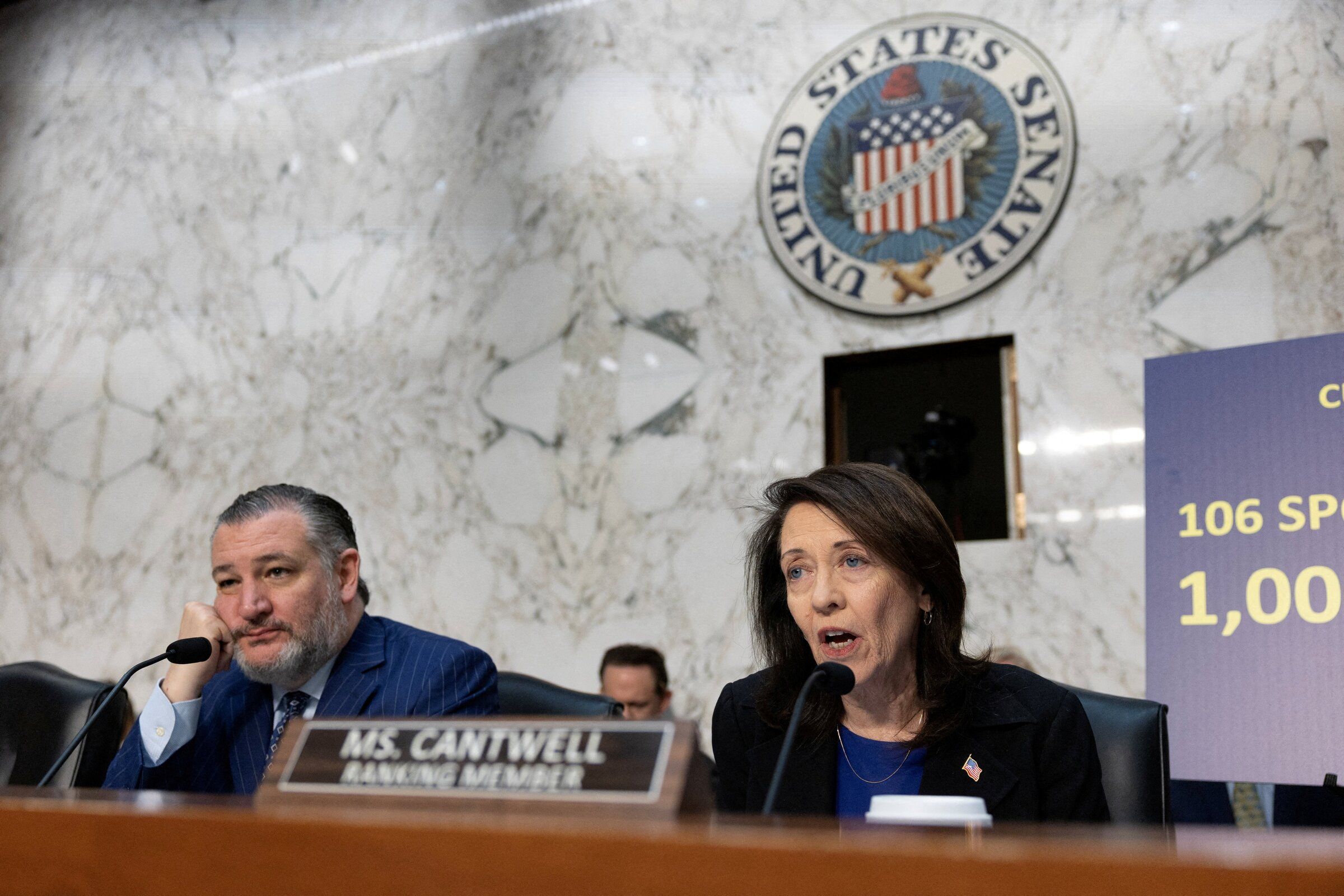
The bill, authored by Sens. Maria Cantwell and Ted Cruz, addresses a wide range of issues: athlete compensation, coach and player transfer rules, conference expansion, protections for Olympic sports, scholarships, medical care and the first federal guarantees of athletes’ rights to use their name, image and likeness (NIL).
Cantwell said the delayed vote does not mean the bill has been abandoned. According to her, the problems facing student-athletes and universities have not gone away, and the legislation is intended to provide stability for the industry while protecting women’s and Olympic sports.
The five-week pause, however, increases the risk of further complications. During that time, domestic or international events could alter the Senate’s agenda, while the bill could face additional criticism. The approaching midterm elections could also make it more difficult to find a compromise.
The NCAA still sets overall competition rules, eligibility requirements, academic standards and limits on athlete compensation. But leading conferences consider the system too slow and bureaucratic. Since athletes were allowed to earn money from the use of their names, images and popularity, rules governing transfers, compensation and revenue sharing have increasingly been challenged in court. As a result, the SEC and Big Ten are seeking a more independent and clearly defined governance model.
Even potential Senate approval would not guarantee passage in the House of Representatives. Opponents of the current version include, among others, the Congressional Black Caucus, the NAACP and the AFL-CIO labor federation. House Majority Leader Steve Scalise, who represents Louisiana — home to LSU, an important SEC member — may also be skeptical.
Scalise’s position could prove especially difficult. He will have to balance the interests of LSU, the state’s university system, fans and donors. If the bill expands the authority of the SEC and Big Ten, that could increase the chances of his support. But potential threats to smaller universities and opposition from other states could, conversely, make it more difficult to advance the legislation.
If the bill fails, the SEC and Big Ten could begin changing the structure of college sports on their own. They are the NCAA’s two wealthiest and most commercially successful conferences, comprising leading universities with enormous audiences, major media contracts and powerful football programs. Their combined revenue and political influence allow them to negotiate athlete funding and rules even without the consent of the entire NCAA. In terms of resources, they are already comparable to individual professional sports organizations, although they formally remain associations of universities.
The first possible scenario is partial self-governance. The SEC and Big Ten could continue competing against other conferences while leaving the NCAA’s governance system and creating their own rules and oversight mechanisms. Big Ten Commissioner Tony Petitti stresses that the main goal for now is to secure passage of the bill, but if it fails, the conferences could work together to find another sustainable model.
A more radical option would be a complete breakaway: the SEC and Big Ten could organize separate competitions primarily among their own teams, with conference champions meeting in a season-ending final. They are not ready to take such a step yet because it would provoke opposition from television companies, politicians and other conferences. However, the bill’s failure could accelerate the creation of a superleague featuring 24–30 of the strongest universities, effectively turning college football into the equivalent of a mini-NFL.
Such a split would affect more than just elite teams. The SEC and Big Ten generate a significant share of viewer interest and television revenue, so media companies could redirect funding toward the most popular universities. Smaller schools risk losing revenue, prestige and access to major competitions. Olympic sports would also be threatened, as many are funded through football and basketball revenue and are less commercially attractive on their own.
That is why the fate of the bill matters not only to athletes and universities but also to the future of the entire U.S. college sports system.
Based on: Protect College Sports Act: What Senate delay means for Big Ten, SEC