On Tuesday, a five-vehicle crash involving a semi-truck occurred on northbound I-5 in Seattle, injuring several people, causing a diesel spill, and blocking the two right lanes. The resulting traffic jam stretched for more than three miles. That same evening in Chicago, a 33-year-old suspect was arrested in connection with the October 13 killing of a gas-station clerk in the Belltown neighborhood. The motive remains unknown.
Five-Vehicle Crash on I-5 in Seattle: Injuries and Diesel Spill
On Tuesday afternoon, October 20, a traffic collision involving three passenger vehicles and a semi-truck occurred on northbound Interstate 5 in South Seattle. According to FOX 13 Seattle, the crash happened at about 2:55 p.m. local time just north of the South Michigan Street exit, near Boeing Field. Several people were injured, and the truck’s fuel tank was damaged, causing diesel to spill onto the roadway. The two right lanes of the highway remained blocked, and drivers were urged to use caution and expect delays.
According to the Seattle Fire Department, the injured people were treated at the scene. The exact number of injured people and the severity of their injuries had not been released. Authorities also did not say when normal traffic would resume across all lanes. Traffic was moving in the three left lanes, creating additional strain on an already busy stretch of highway.
The diesel leak made the situation particularly difficult. According to the report, the fuel tank on the driver’s side of the tractor-trailer was damaged, and crews were working to contain and clean up the spill. Such incidents require not only an immediate response from firefighters but also specialized environmental cleanup services, since diesel can harm the environment and make the road surface slippery, increasing the risk of secondary crashes.
Several details may not be immediately clear to readers. Northbound I-5 is one of the region’s main transportation arteries, connecting Seattle with its northern suburbs and Canada beyond them. As a result, any lane closure there can have a domino effect, spreading to nearby interchanges and local streets. Boeing Field, mentioned in the description of the crash site, is a historic airport located directly south of downtown Seattle, and the highway near it is traditionally heavily trafficked. A semi-truck is a commercial vehicle in which the cab and trailer are connected by a fifth-wheel coupling. Damage to its fuel tank is a common consequence of side-impact crashes, and such incidents often result in fuel spills on roadways.
The main takeaway is clear: even a relatively localized multi-vehicle crash can paralyze a significant portion of a city’s transportation network for hours. The Seattle Fire Department confirmed that several people required treatment at the scene, but at the time of publication there were no official figures on the number or condition of those injured, nor an estimate for when the lanes would reopen. The situation therefore remained fluid, and the publication urged readers to follow updates. Drivers planning to travel through South Seattle were advised to choose alternate routes in advance, since the combination of blocked lanes, emergency-response operations, and diesel-slicked pavement made the area potentially dangerous. The incident also highlights the importance of maintaining the fuel systems of commercial vehicles: damage to a tank can turn an ordinary crash into an environmental incident requiring much more complex and time-consuming cleanup.
Traffic Jam on Northbound I-5 in Seattle: Crash Paralyzes Traffic
On Tuesday afternoon, Seattle once again faced a familiar but no less unpleasant problem—a traffic jam on the region’s main transportation artery. At about 3 p.m., a crash on northbound Interstate 5 just south of S Michigan St blocked two right lanes. The Washington State Department of Transportation (WSDOT) said the situation was further complicated by the closure of the ramp from Albro St to northbound I-5. According to the department’s initial estimates, the backup stretched for more than three miles, creating serious problems during the evening rush hour for thousands of drivers heading north from downtown.
Emergency crews arrived promptly, and shortly after its initial report, WSDOT issued an update confirming that the crash was still blocking two right lanes and that the backup had exceeded three miles. Officials asked motorists to take the situation into account when planning their trips and to drive carefully. The agency’s official message, quoted by MyNorthwest, said: “Plan accordingly and drive carefully.” Earlier in the same report, WSDOT had stated: “Emergency crews are on scene. Expect delays and use caution.”
To understand the scale of the disruption, it is worth noting that I-5 is the main freeway connecting Seattle with the rest of the West Coast, and its northbound lanes are among the city’s busiest during the evening commute. Even a minor crash can trigger a chain reaction: closing two lanes forces drivers to merge, while the blocked ramp from Albro St removes an alternative route, causing the backup to spread quickly. That is why a three-mile traffic jam is more than a mere inconvenience—it represents a significant loss of time for hundreds of people and creates a potential risk of secondary collisions. It is also notable that the report is dated October 2026, making it a typical example of breaking local news updated as events unfold. WSDOT traditionally uses its social media pages to provide immediate information, and in this case the link to the agency’s post, with its precise wording, serves as an important primary source for those monitoring traffic conditions in real time.
The main lesson is simple: incidents like this show how fragile a major city’s transportation system can be and how profoundly a single crash can affect thousands of people. Drivers in the area were advised to select detours in advance and monitor WSDOT updates, since the situation remained fluid and reports about the length of the backup or the number of blocked lanes could change. No official information about injuries had been released, meaning the main costs in this case were motorists’ time and frustration—an important reminder of the price of inattention behind the wheel and the need for the cautious driving urged by authorities.
Suspect in Seattle Gas-Station Clerk’s Killing Arrested in Chicago
The story began early on October 13, when Seattle police received a report of a shooting at the 76 gas station at 351 Broad Street in the Belltown neighborhood. Arriving officers found a 36-year-old clerk unconscious behind the counter with gunshot wounds. Seattle Fire Department medics pronounced the man dead at the scene; nothing could be done to save him. Investigators quickly reconstructed what happened: a suspect dressed entirely in black entered the store, approached the register, shot the clerk, and fled on foot. Nearly the entire department leadership responded to the scene, including Acting Chief Sails, Assistant Chiefs Brown and Powell, as well as homicide detectives and crime-scene personnel.
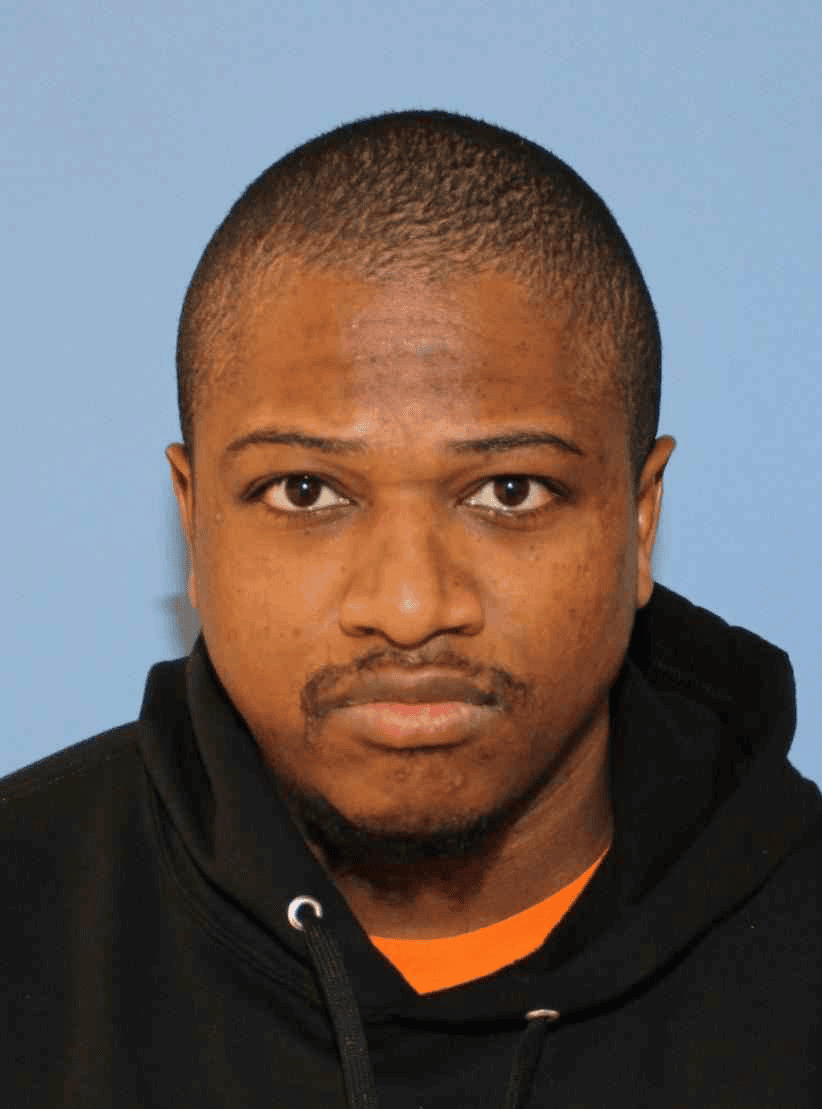
A week later, on October 20, police appealed to the public for help locating 33-year-old Michael O’Neal Fleming, who was believed to be involved in the killing. Authorities warned that the man was armed and dangerous and said people who encountered him should call 911 and not approach him. The suspect was described as a Black man with a stocky build and a height of approximately 173 centimeters, or about 5 feet 8 inches. At the time of the crime, he was wearing a black hoodie, black coat, black pants, and a black shoulder bag. One curious detail is that the suspect’s surname appeared in two spellings in the appeal—Fleming and Flemming—a common feature of preliminary reports in which information is still being verified.
The case reached a turning point that same evening when Fleming was arrested in Chicago, Illinois, by U.S. Marshals. The arrest took place without incident. The suspect had apparently traveled nearly 3,000 kilometers from the scene of the crime before being located. This demonstrates how extensively federal agencies become involved when a homicide suspect is on the run: the U.S. Marshals Service has broad jurisdiction and a network of regional task forces, allowing it to apprehend fugitives far beyond the state where a crime occurred.
Several points help put the case in context. The U.S. Marshals Service is the nation’s oldest federal law-enforcement agency. Among other responsibilities, it searches for and arrests fugitives throughout the United States, including at the request of local police departments. The “homicide and assault unit” and “crime-scene unit” mentioned in the report are specialized Seattle Police Department divisions responsible, respectively, for investigating serious crimes against people and collecting physical evidence. The incident number at the end of the notice is a standard internal identifier used to track a case in the department’s system; it also identifies the West Precinct and the third quarter.
What remains unknown is the motive. An official statement from the Seattle Police Department public information office explicitly says that homicide detectives are still working to determine what led up to the shooting. Whether it was an armed robbery, a personal dispute, or something else has not been made public. Investigators have also not disclosed how they identified Fleming or how he came to be in Chicago. It is likewise unclear when he will be returned to Seattle and what charges he will ultimately face. For now, all that is known is that the arrest was carried out peacefully—an important detail given the warning that the suspect was armed.
The main takeaway is straightforward: the killing of a Belltown gas-station clerk has reached an important procedural milestone—the suspect is no longer at large. For the victim’s family and the city, however, the investigation is far from over. Police continue to ask anyone with information about the events of the morning of October 13 to call the Violent Crimes Tip Line at (206) 233-5000. Such information could prove decisive in determining the motive and circumstances of the tragedy, which occurred just minutes before the start of an ordinary workday.