
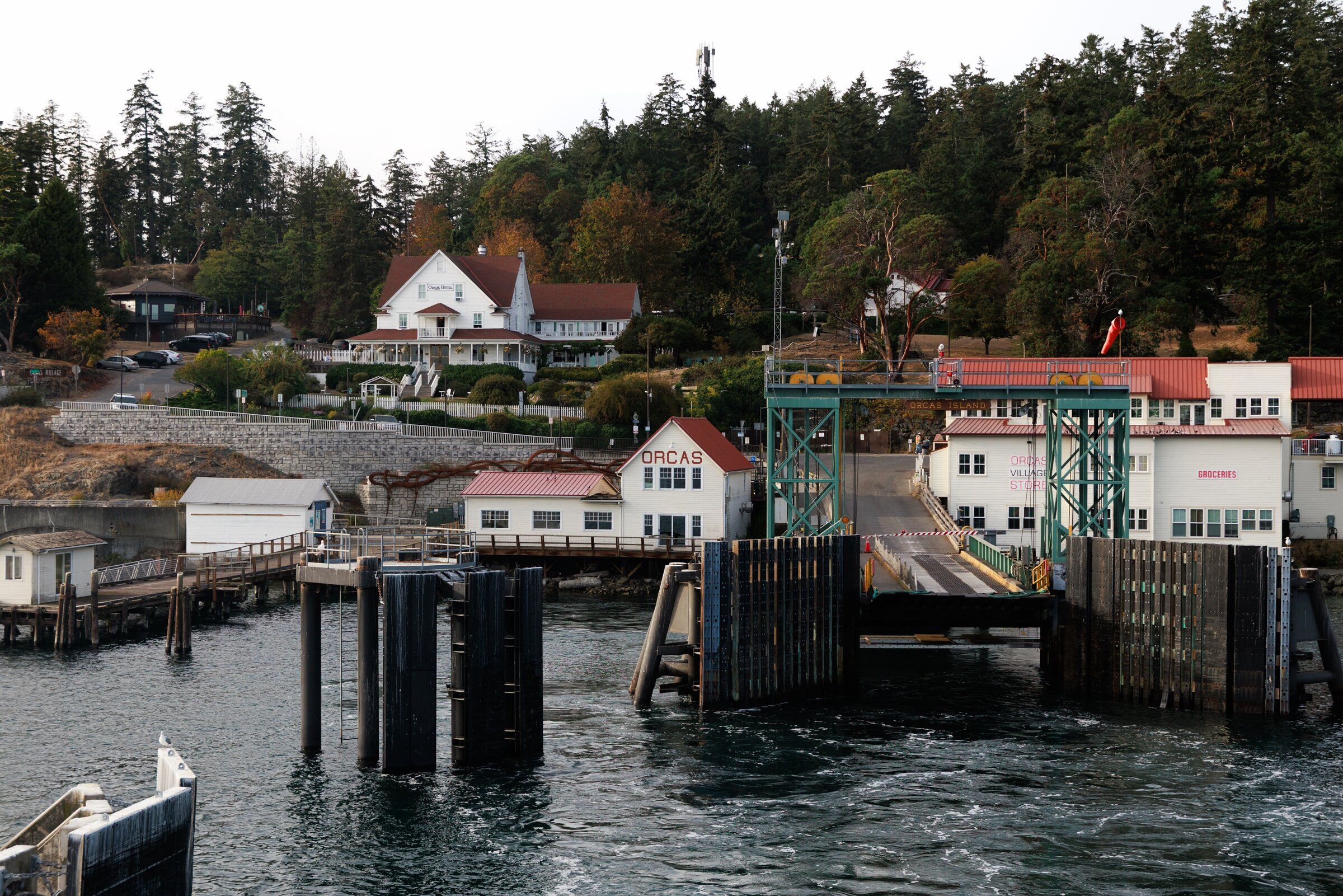
Damage to the ferry terminal’s movable bridge on Orcas Island prompted San Juan County to declare an emergency and sharply restricted the island’s main supply route. After inspectors found cracks in two steel beams, the state barred vehicles longer than 22 feet and weighing more than 8,000 pounds from crossing the terminal. Washington State Ferries estimates repairs could take up to two weeks. For the island’s economy, this means more than an inconvenience for tourists: deliveries of food, fuel and medicine, as well as waste removal, must be urgently reorganized.
On a map, the San Juan Islands look almost like an extension of Washington’s coast: water, wooded islands and a short trip from Anacortes. But for Orcas, the ferry is not a picturesque feature of everyday life. It is a road, a supply corridor and a link to the outside world. When that road narrows to passenger cars, the island suddenly sees just how much depends on a few yards of steel at the water’s edge.
The restrictions took effect Monday, November 9, after a routine engineering inspection. Specialists examined the underside of the transition span—the movable section that rises and falls with the tide, connecting the shore to the ferry deck. They found cracks in two steel stringers, load-bearing beams, beneath one of the traffic lanes. The span was built in 1979 and upgraded in 1987; now it has become the most vulnerable link in the route.
Ferries are still running, and passenger cars can still travel to and from Orcas. But drivers must cross the span at no more than five miles per hour and stay on the east side of the bridge: to the left when boarding and to the right when disembarking. Larger vehicles are not being accepted at Orcas, Anacortes, Shaw, Lopez or Friday Harbor if Orcas is their destination. The no-show fee has also been waived for travelers whose reservations became unusable under the new rules.
This is where the administrative phrase “state of emergency” takes on a very concrete meaning. Large trucks that normally bring store supplies, fuel, medical shipments and materials can no longer reach the island by the usual route; the same vehicles are typically used to haul waste away. The county says suppliers are already looking for workarounds, including hiring barges. But barges have limited capacity and availability, and using them costs considerably more than the regular ferry crossing—especially for small businesses whose costs are already shaped by island geography.
On November 10, the San Juan County Council, which adopted the emergency declaration, asked Governor Bob Ferguson to consider direct financial assistance for local businesses forced to pay for this kind of logistics, and to provide state coordination, technical help and organizational support. The county’s document stresses the need to maintain access to essential services and protect residents’ health and safety—language more commonly heard after a storm or fire, but in this case prompted by a crack hidden beneath the deck.
The state Department of Transportation has completed the design for emergency repairs. Rather than carry out the slower process of welding on site, crews plan to install steel reinforcement plates with bolted connections; the contractor has begun erecting scaffolding to access the underside of the span. Washington State Ferries is also looking for ways to shorten the restrictions and possibly allow at least some larger vehicles to cross sooner. For now, Orcas is waiting not only for the dock to be repaired, but also for a reminder of an old truth of island life: the water may be calm, yet the connection to the mainland can still be fragile.


Based on: Emergency declared as Orcas Island ferry terminal damage chokes supplies