
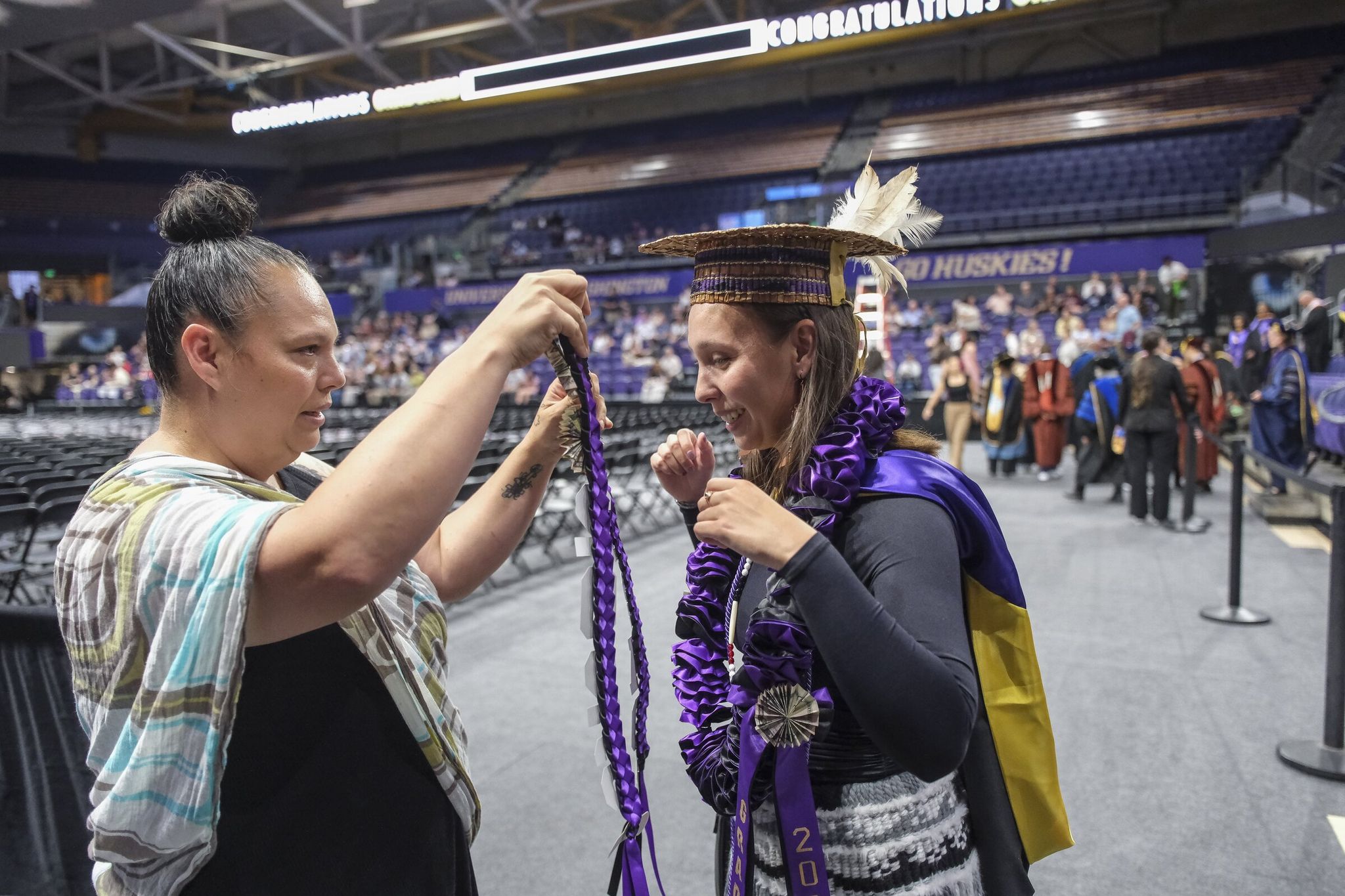
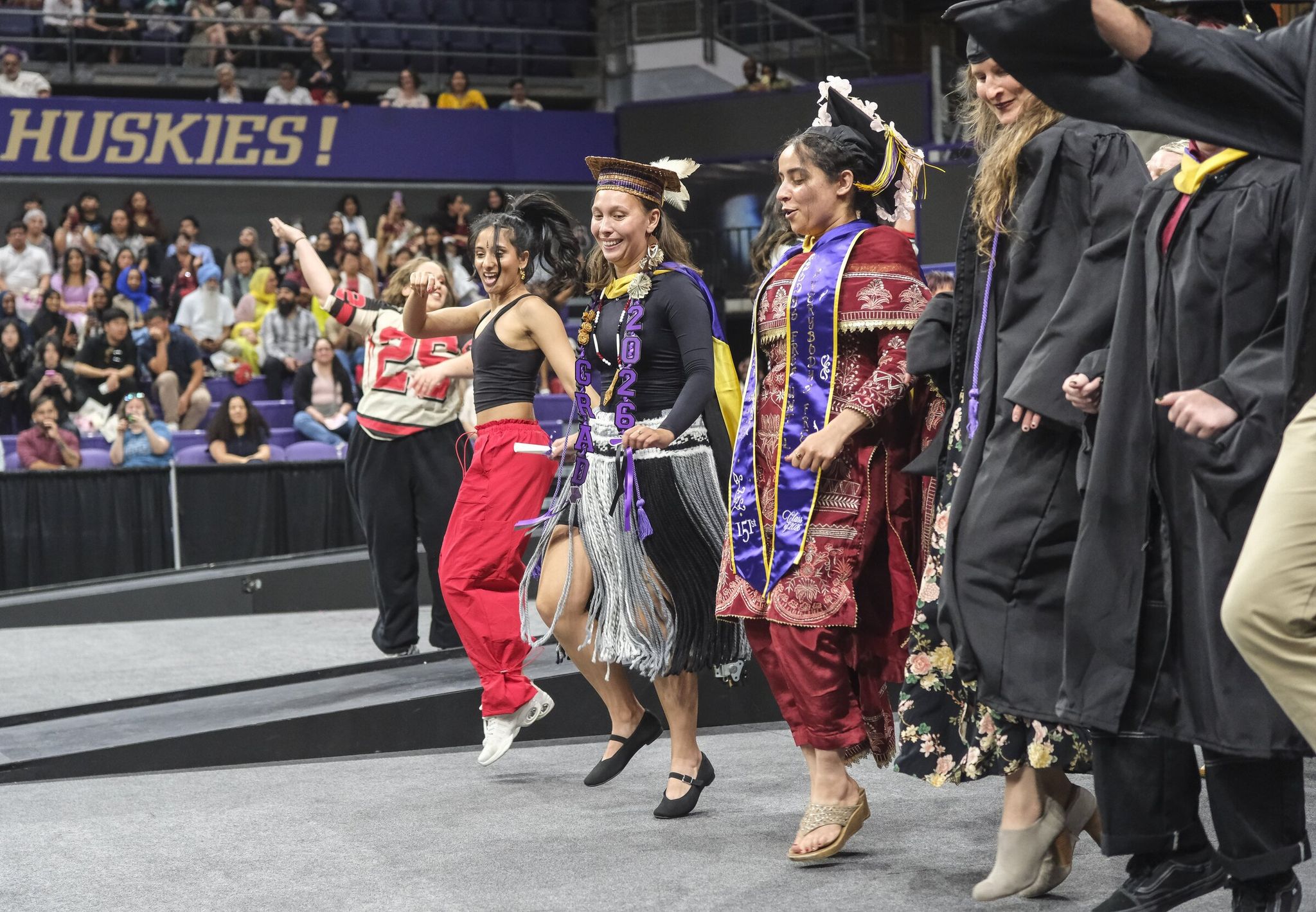
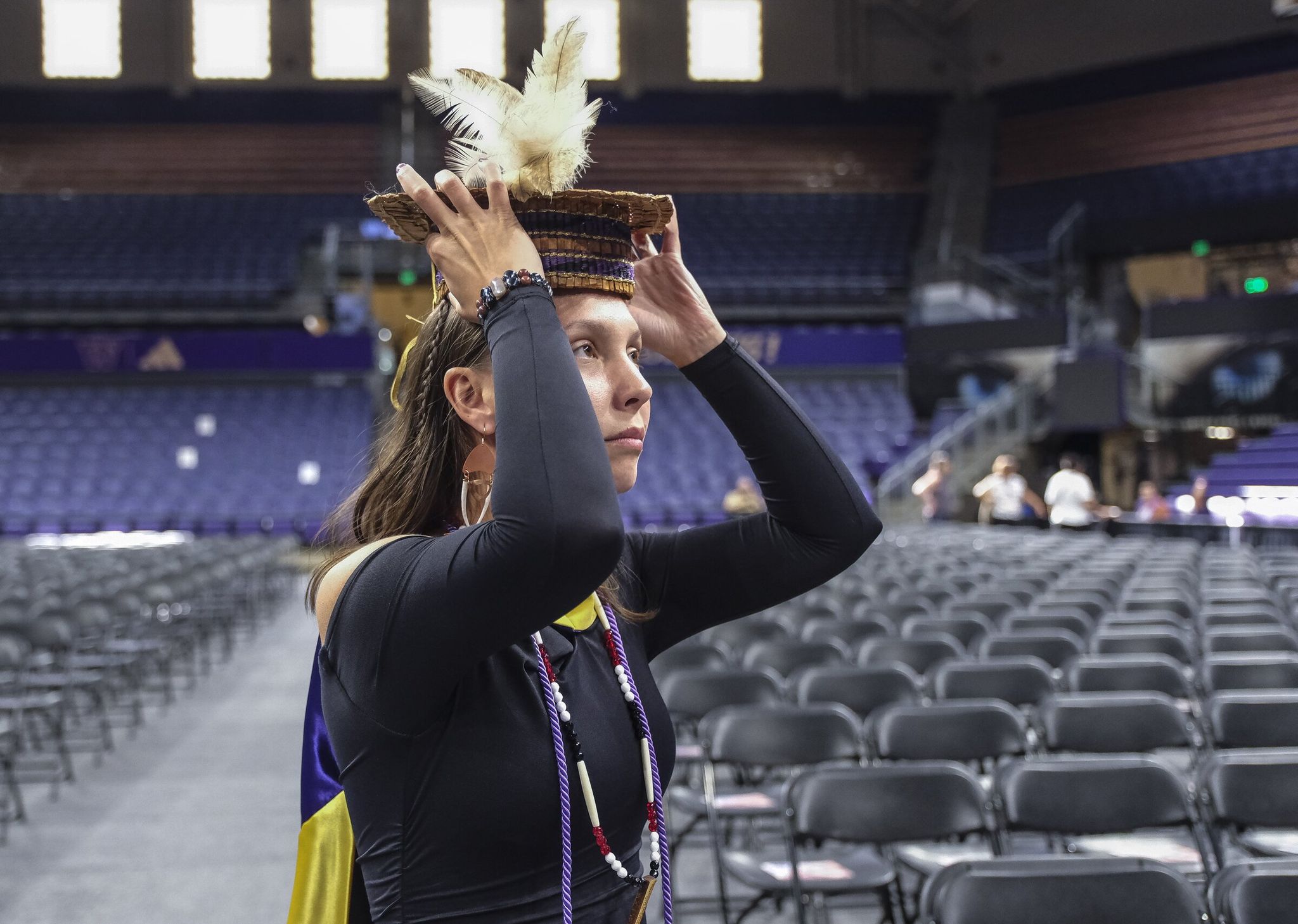
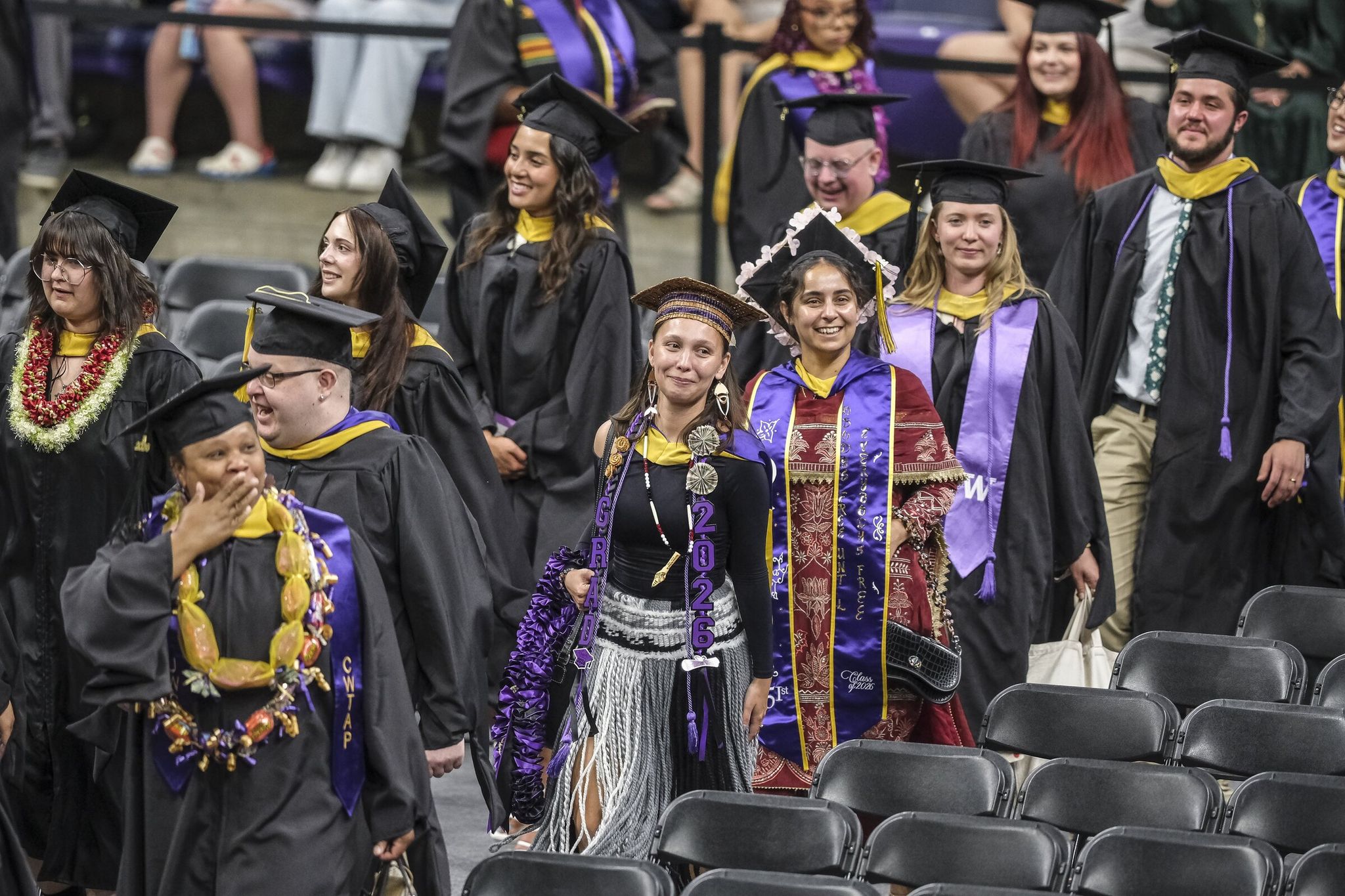
Rosalie Fish, preparing to enroll at the University of Washington — a major research university in Seattle with strong programs in engineering, medicine and the sciences — faced the high cost of tuition. Athletics covered her first two years of college, but the four-year program was still out of reach. A generous Cowlitz Tribe assistance program helped her not only earn her bachelor’s degree, but later pay for a master’s in social work. “I could focus on my studies, not on how to make ends meet,” Fish says. She received her master’s degree last week.
Fish’s path would have been unimaginable in the program’s early years, when tribal leaders struggled to raise just $40 to $50 for scholarships. Before the tribe gained federal recognition in 2000 — an official status that confirmed the Cowlitz Tribe’s sovereignty and its right to self-govern — the tribe did not have access to federal education, health and housing programs. Only after that was it possible to negotiate the construction of ilani Casino, which opened in 2017. Until then, the foundation survived only on donations and determination. The program has existed for at least since 1974. “Even when we had no money at all, people valued education so much,” recalls Mike Ayoll, who, along with his wife Joan, ran the program as volunteers for eight years.
Today, thanks to revenue from ilani Casino, the program’s main source of funding, and to the settlement of land claims — legal requirements to recognize rights to ancestral lands, from which the tribe receives royalties for resource use — the Cowlitz Tribe supports about 300 students each year. The program covers everything, from vocational certificates to medical education. Students can receive up to $7,000 per year for an associate degree, up to $14,000 for a bachelor’s and up to $21,000 for a master’s, plus additional payments for books, supplies and housing.
Unlike many Native nations, the Cowlitz Tribe does not have a compact reservation where tribal members live. Historically, that is largely due to U.S. policies of relocation and assimilation of Native peoples, including the 1887 Dawes Act, which broke up communal lands into individual plots. Many moved to cities to find work, and federal recognition did not require residency on reservation land. About 5,000 people are spread across the Pacific Northwest, throughout the U.S. and even overseas. The education assistance program reaches students in 32 states, becoming more than just financial support — a way to stay connected to a dispersed community. The tribe also strengthens cultural ties through digital communities and regular events. “It’s a factor for unity for the tribe,” Mike Ayoll says.
Randle Kinswa, a graduate of Gonzaga Law School — a private school in Spokane known for its Native law programs — learned about the program in high school. Knowing the tribe would cover much of his undergraduate costs, he chose to attend Eastern Washington University (EWU) — a regional school focused on education, business and social sciences in Cheney — to save on legal education. Kinswa is now preparing for the bar exam and plans to begin his career in Seattle, hoping to take a more active role in tribal affairs in the future.
Austin McMahan, 28, grew up on a dairy farm and, after high school, went straight to work. Last year, he enrolled in an eight-week certification program for heavy equipment, but he worried about losing his paycheck and the cost of tuition. “The tribe’s guaranteed assistance strengthened my decision,” he recalls. After completing the courses, his employment options expanded: he now works in forestry during fire season and hopes to move into the mining industry — one of the key sectors for the Pacific Northwest, where, alongside high-tech, there is also aerospace, agriculture, logging, fishing and hydropower.
Melissa Halvorsen, 51, grew up in poverty and couldn’t attend college until starting a family. After a divorce and the loss of the family business, she decided to go back to school at nearly 50. The assistance program helped her earn a double major in human resource management and business administration, followed by a master’s degree in organizational leadership. “Without the scholarship, I wouldn’t have been able to pay for it. It’s a real blessing — my dreams came true,” she says. Today, Halvorsen works for the tribe as a program manager for seniors.
The program does not tie students to specific careers — they are free to choose any path. There is no requirement to work for the tribe after graduation; maintaining good academic performance is enough. Applications are accepted year-round. “Education is an investment in tribal members and the community’s future,” emphasizes Joan Ayoll.
Program staff, including its director Carol Bernison, work closely with students, helping them complete paperwork for financial aid, overcome academic challenges and deal with personal issues. If a student stumbles, the goal is to support, not punish. “We understand you can trip up,” says Mike Ayoll. “So what? Shake it off and keep going.”
The program’s impact can be seen across generations of graduates. Former scholarship recipients now work for the tribe, serve on committees and boards, and run for leadership positions. Others have become homeowners, teachers, lawyers and entrepreneurs. According to Mike Ayoll, it is “family-level economic development” — a result that began with a few dozen dollars and a belief in education.
Based on: Cowlitz Tribe’s tuition assistance powers generations of graduates