
On October 26, the Washington State Court of Appeals reinstated a lawsuit brought by GRE Downtowner LLC, a subsidiary of Goodman Real Estate and operator of the Addison on Fourth complex, against the City of Seattle. The company claims that a combination of rules adopted between 2018 and 2021 deprived the complex of its economic viability and effectively amounted to a taking of property without compensation. The court did not invalidate any city laws or award the owner damages; it ruled only that the facts alleged in the lawsuit were sufficient for the case to proceed beyond the initial stage.
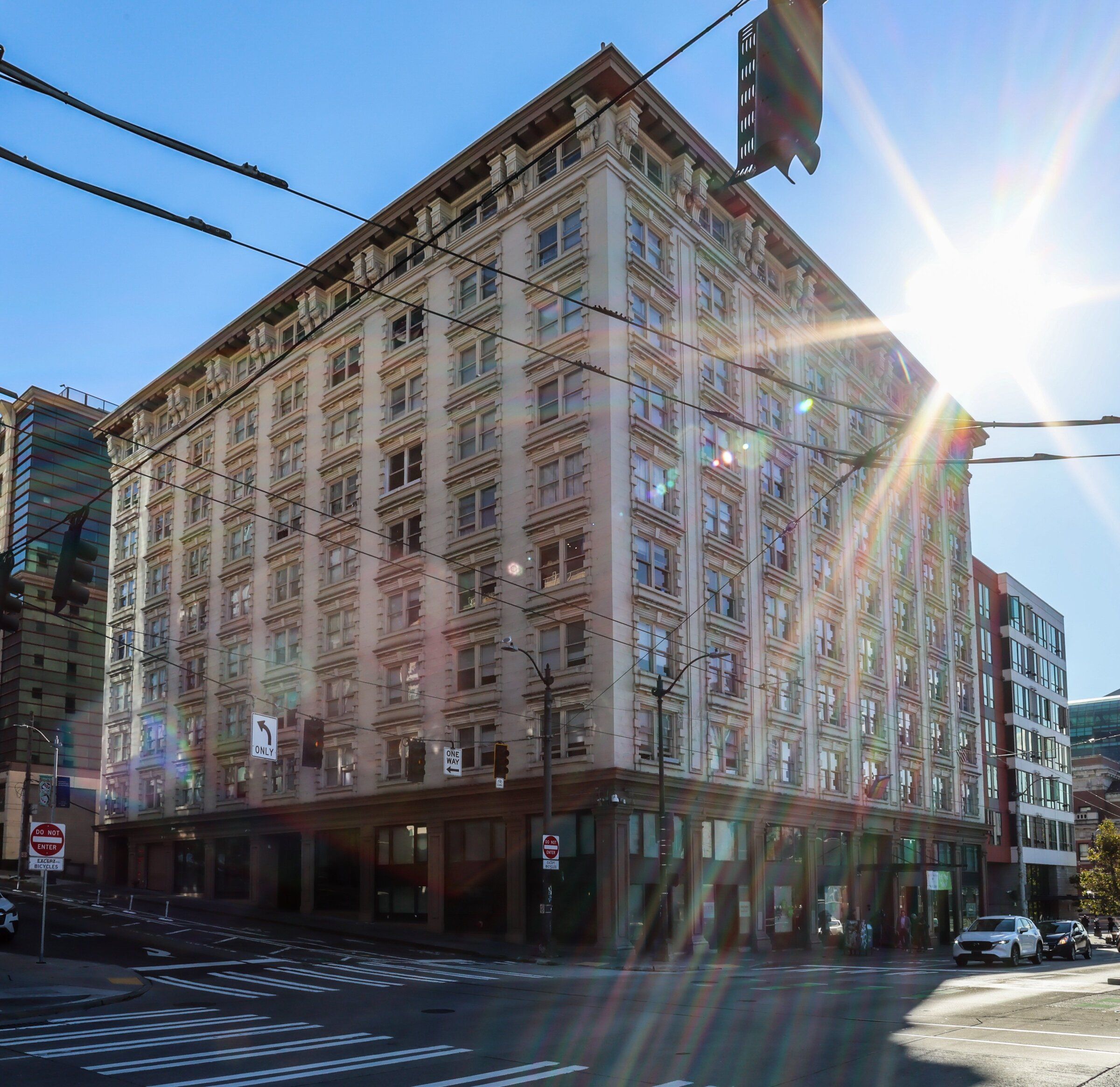
The dispute has an almost emblematically Seattle setting: affordable housing a few blocks from downtown, where public need and private interests have long existed in close and uneasy proximity. Addison on Fourth has 254 studio and one-bedroom apartments, including housing for people with disabilities, 46 artist studios and four commercial spaces. GRE Downtowner bought the building in 2012 for $12.5 million and invested another $26.5 million in renovations, using financing and tax credits through the federal Low-Income Housing Tax Credit program. In return, the complex must remain housing for low-income tenants for decades.
According to the company, the arrangement worked as intended until 2018. From 2015 to 2018, the complex collected 90.6 to 93.9 percent of its potential rental revenue and generated positive cash flow. Then the Seattle City Council began passing, one after another, laws intended to strengthen tenants’ position in a housing market where losing an apartment often means not moving elsewhere, but being forced out of the city.
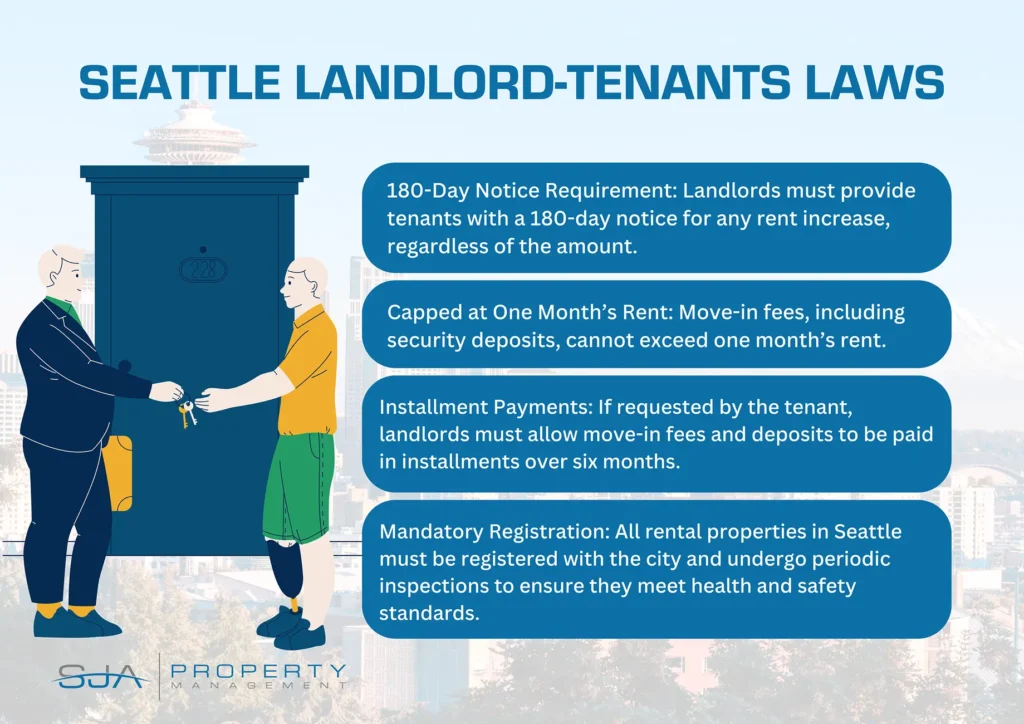
The lawsuit cites six measures. They include a ban on denying housing to an applicant or evicting a tenant solely because of their criminal history; a “roommate rule” granting occupancy rights to a tenant’s immediate family, an additional occupant and, in some cases, members of that person’s family; a winter ban on certain evictions from December 1 to March 1; and a near-total moratorium on evictions for nonpayment of rent during the pandemic, in effect from March 2020 through February 2022. The city also extended the required notice period for rent increases from 60 to 180 days and introduced relocation assistance for tenants forced to move after a rent increase of 10 percent or more: landlords must pay an amount equal to three months of the tenant’s new rent.
GRE argues that these rules, taken together, changed not just the accounting but the very ability to operate the building. According to the complaint, rent collection fell from 87 percent of potential revenue in 2019 to 44.1 percent in 2023; losses from 2020 to 2023 reached nearly $6.2 million, and the vacancy rate approached 45 percent in 2023. These are the plaintiff’s claims, which have yet to be tested in court. The city, for its part, argued that restrictions imposed by the federal affordable-housing program—not just municipal regulations—affect the building’s value and its ability to be sold.
A King County trial court dismissed the case in February 2025, finding the claims insufficient. The Court of Appeals’ Division One viewed the matter differently. At the motion-to-dismiss stage, a court must assume that the facts alleged in the complaint could be proven. The panel found that the company had described its alleged economic harm, its reasonable expectations for the investment and the connection between them and the city’s regulations in sufficient detail. The court also applied a six-year statute of limitations, rather than a three-year one, because the dispute concerns income from the use of real property.
The ruling’s most sensitive point concerns the additional-occupant rule. The judges found that the mechanism described in the lawsuit could potentially affect a property owner’s fundamental right to decide whom to admit into their home. If the rule does in fact give independent occupancy rights to third parties whom the owner did not invite, it could amount not to ordinary regulation of landlord-tenant relations but to what is known as a physical regulatory taking. But here, too, the finding is procedural: the court did not say that such a taking had already occurred, only that the company could try to prove it.
For Seattle, the case reaches far beyond a single troubled building in the Chinatown–International District. The city developed its tenant-protection system in response to high housing costs, evictions and the imbalance in bargaining power between tenants and property owners. Now it will have to defend that system not in City Council political debates, but in a detailed court proceeding examining causation, property values and the limits of the right to exclude others from one’s property. The City Attorney’s Office said it was reviewing the decision and had not yet decided whether to seek review by the state Supreme Court.

Based on: WA court decision revives landlord’s challenge to Seattle rental laws