
For 19 months on one of Seattle’s busiest bus arteries, Madison Street, three massive steel plates served as a temporary "lift" for 20-ton buses. They covered an annoying construction error: the platforms at three stops on the G Line rapid route were built about 2.5 centimeters (roughly 1 inch) higher than they should have been. That seemingly minor coin-sized gap made boarding impossible for people in wheelchairs and using walkers.
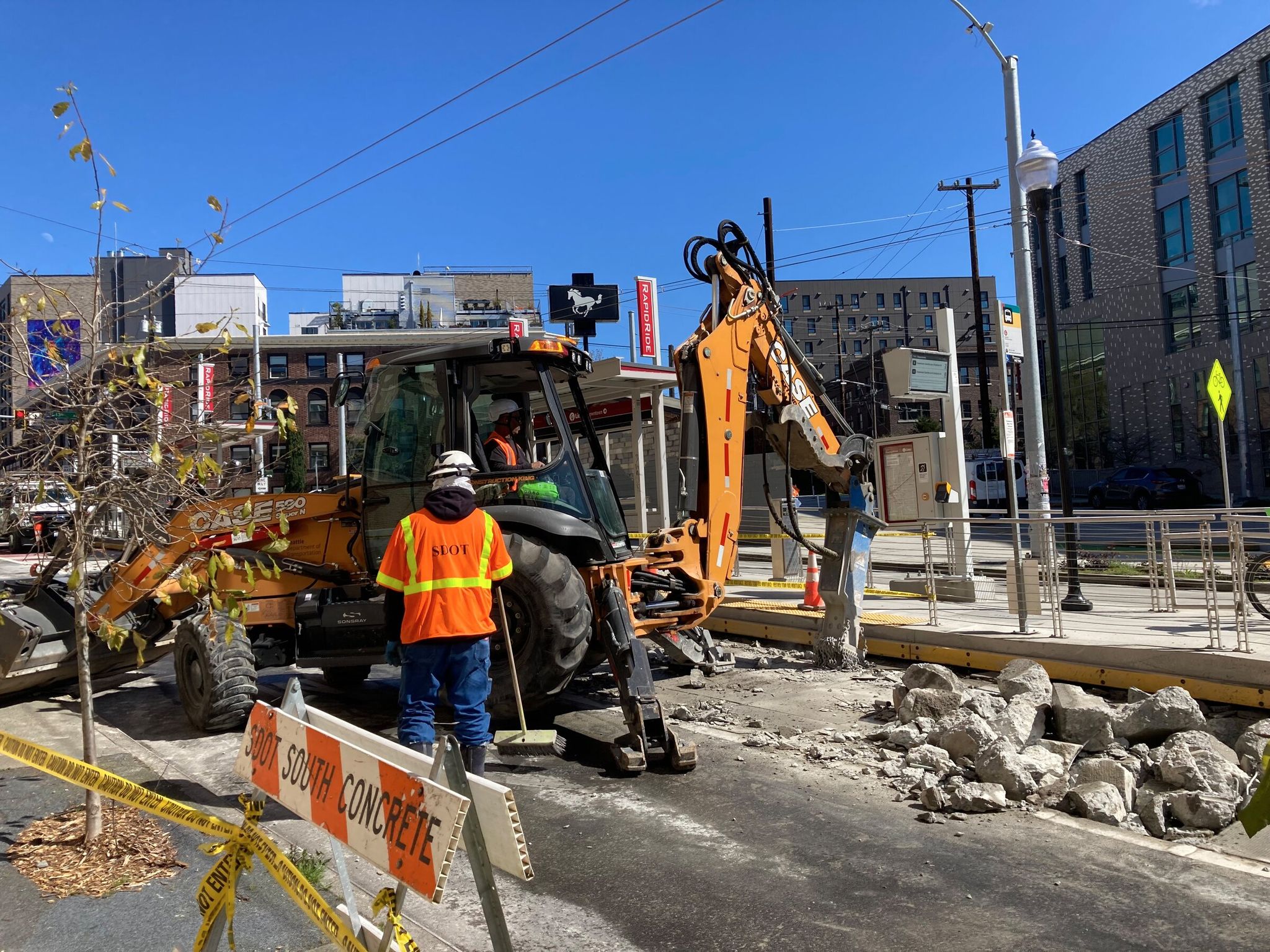
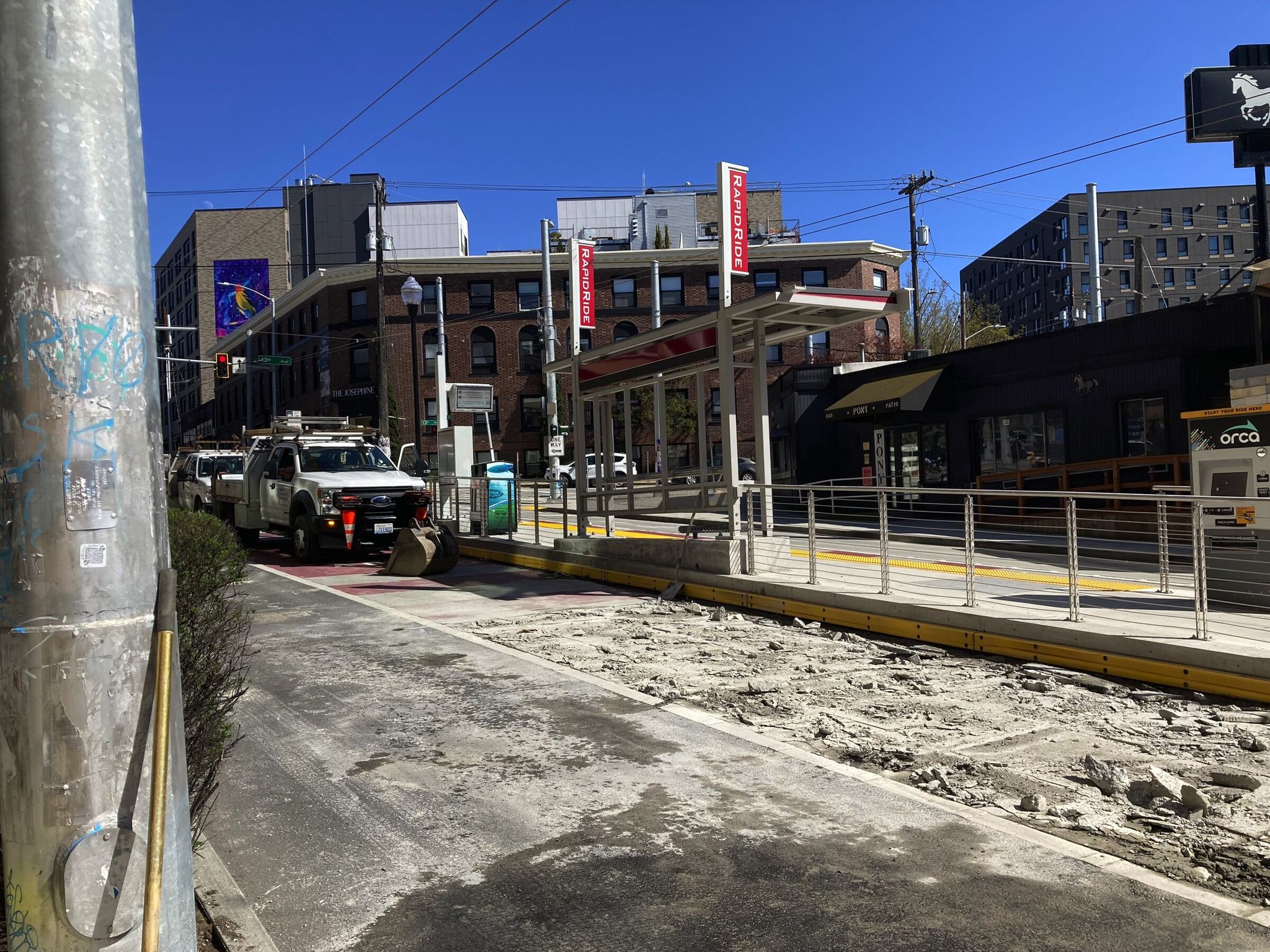
Now the plates have finally been removed and the asphalt beneath them replaced. Fixing the defect is estimated by the Seattle Department of Transportation (SDOT) to cost about $650,000. Those funds will be drawn from the original $144.3 million project budget, which included bus purchases, sidewalk construction and traffic-signal upgrades.
SDOT spokesperson Mariam Ali noted the problem didn’t stem from code violations but from the particulars of new equipment. The platforms were built within allowable tolerances but ended up slightly too high for the proper deployment of ramps on the new articulated buses that have doors on both sides. These buses are new to the city’s transit fleet.
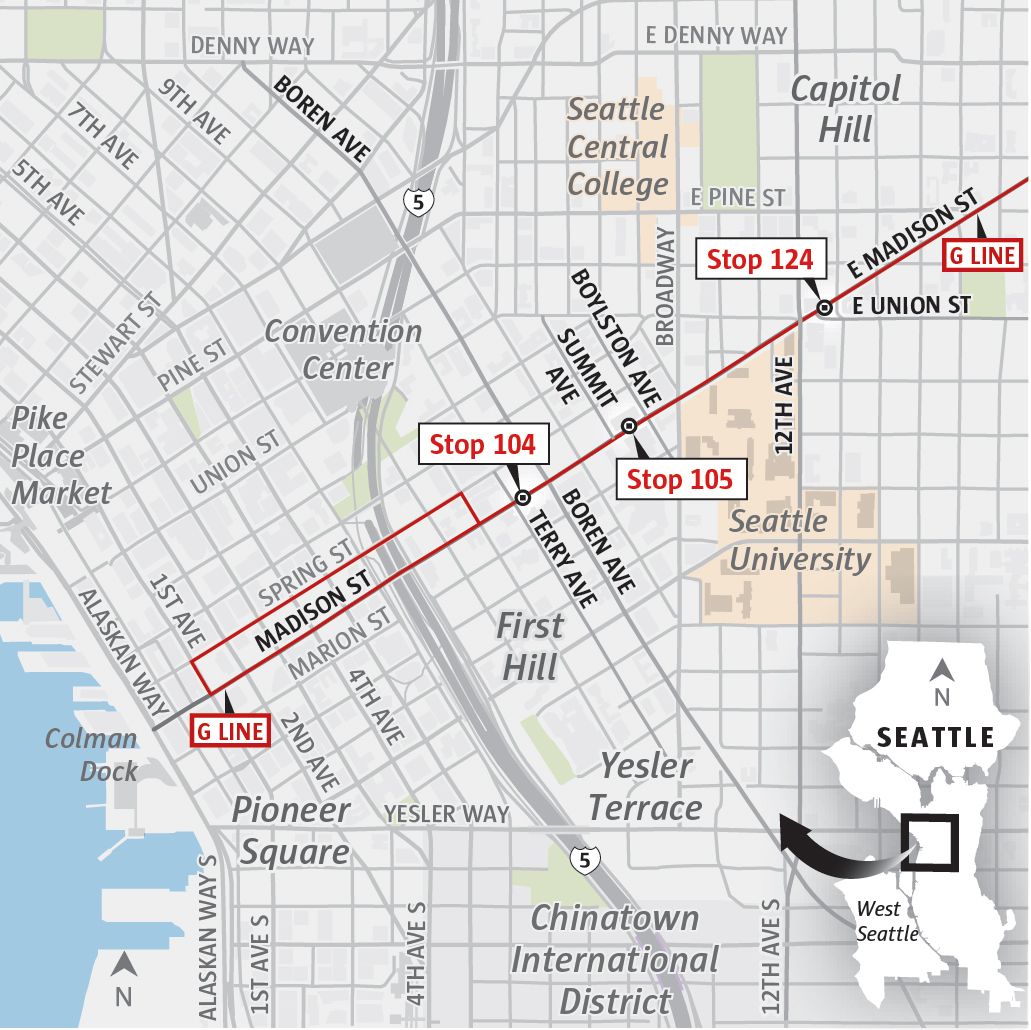
Despite the technical hiccup, the RapidRide G Line, which opened in September 2024, quickly became popular. Its 4-kilometer route connects the downtown core with First Hill and Capitol Hill. These neighborhoods are dense urban centers: Capitol Hill hosts numerous businesses and cultural venues, and First Hill is a major medical cluster with several hospitals, creating steady demand for efficient transit. In its first months of operation, weekday ridership nearly doubled, reaching 6,600 passengers.
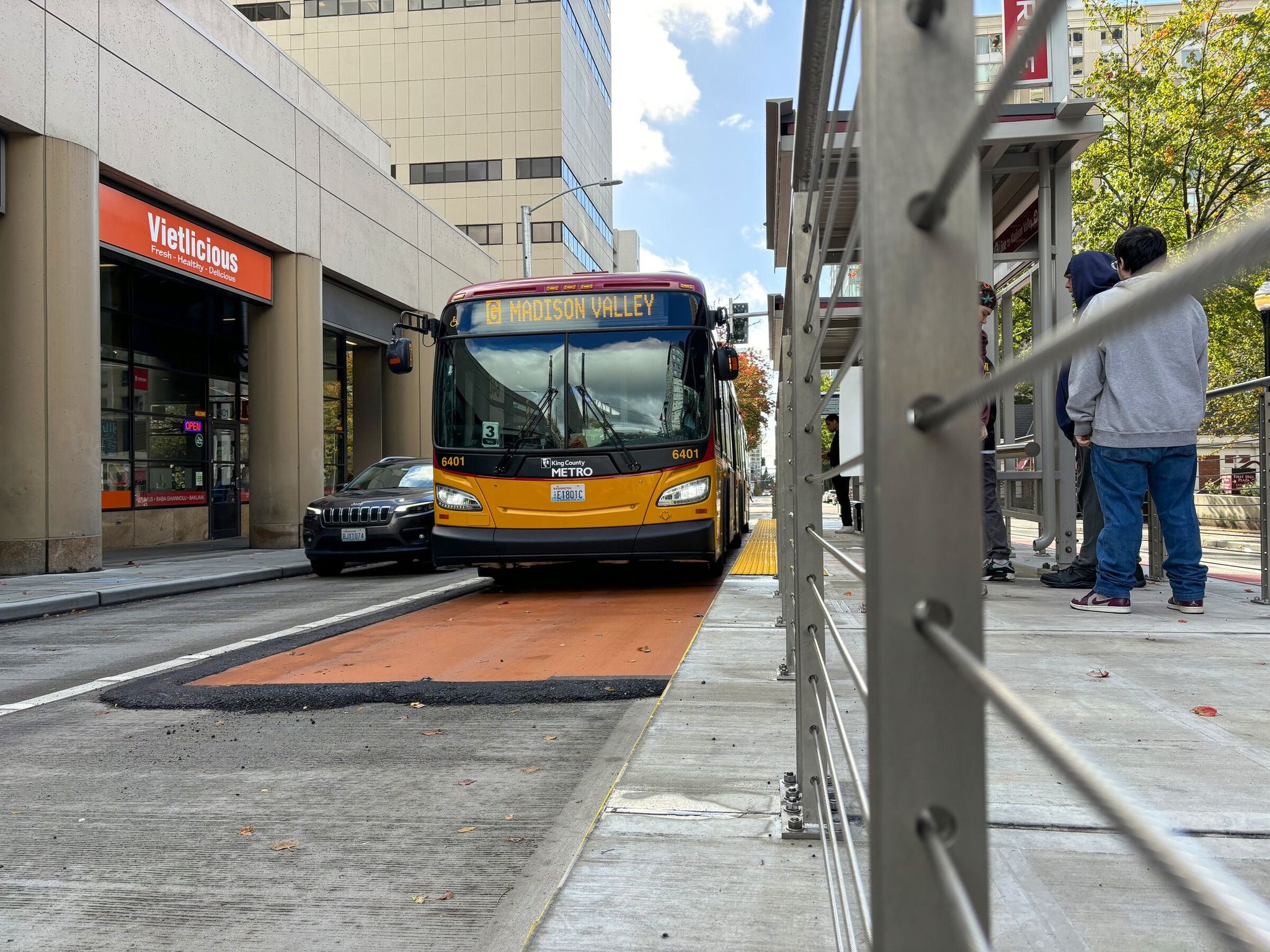
What’s unique about the new buses is that they have doors on the left side as well. That allows them to stop at island platforms in the middle of the street without disrupting car traffic. To speed boarding, the buses do not tilt toward the curb. Instead, the platform must be perfectly level with the bus floor so the wheelchair ramp creates a smooth transition.
The height issue was discovered at three such island stops where left-side doors are required. Those are stops No. 104 and No. 105 heading toward Madison Valley and stop No. 124 heading toward downtown. A discrepancy of a couple of centimeters prevented proper ramp deployment.
For residents who endured three years of construction on Madison Street, the mistake may come as an unpleasant surprise. The overall project was completed on time, but the bus line’s launch was delayed by years relative to initial promises. The G Line’s launch was originally scheduled for 2024 but was pushed back due to broader problems affecting Seattle transportation projects, such as workforce shortages, supply-chain issues for materials and delays building infrastructure in dense urban areas. Even now, the route — which is supposed to run every 6 minutes — is more than 5.5 minutes late in over 20% of trips.
The G Line is the eighth route in the RapidRide network, which since 2010 has offered more frequent, faster trips with bus priority. This bus-rapid system differs from regular buses by offering more frequent service, dedicated lanes, platform-level boarding with prepayment, and modern information displays. Four more lines are planned by 2032. Though the G Line is the shortest route in the network, it offers an excellent transfer to the Colman Dock ferry terminal, with ferries to Bainbridge Island and Bremerton, and to the Link 1 light-rail line at the Westlake station, which runs north to the University of Washington and south to the airport, giving riders access well beyond Seattle.
Based on: 19 months and $650,000 later, steel plates plucked from Seattle bus route