In Seattle, the Seahawks get a boost ahead of their game against the Bears with the return of Zach Charbonnet; police are searching for a suspect in the killing of a University of Washington student on campus; and a new light rail line is setting ridership records in Seattle while posting modest numbers on the Eastside.
Charbonnet Returns: Seahawks Get a Boost Ahead of the Bears
The Seattle Seahawks head into Monday night’s game against the Chicago Bears with a rare midseason feeling: several key players are returning, and the biggest news concerns running back Zach Charbonnet. Head coach Mike Macdonald confirmed at a Saturday press conference that Charbonnet will make his season debut after undergoing knee surgery on February 20. Officially, he has no injury designation, meaning he is fully cleared to play. It will be Charbonnet’s first appearance since January’s playoff game against the San Francisco 49ers, where he tore his ACL. Macdonald called his return “remarkable”—less than eight and a half months after surgery. “Zach is a guy who works in the shadows, and he’s already earned our respect, but hopefully people will understand what a great job he’s done getting back this quickly and being ready to play,” the coach said, according to a Seattle Sports report.
Rookie Jadarian Price is in a similar situation: he also has no game status after a chest injury, but Macdonald would not guarantee that the first-round draft pick will be activated from injured reserve by Monday. Price has missed the past four games, and the coach indicated that a roster decision could be made on game day: “If we make that move, as far as I know, it’ll happen Monday. We’ll see whether we do. We have some roster questions we’re working through right now.”
There are also some absences. The Seahawks have ruled out left tackle Charles Cross (ankle), receiver Rashid Shaheed (knee) and backup running back Velus Jones Jr. (hamstring). Edge rusher Uchenna Nwosu (ankle) is listed as doubtful. Veteran Josh Jones will start at left tackle in Cross’s place; he filled in for Cross in the final three regular-season games last year. Backup quarterback Drew Lock (right elbow), guard Anthony Bradford (knee), nose tackle Brandon Pili (back) and linebacker Patrick O’Connell (toe) are questionable.
Linebacker Drake Thomas (ankle), who missed two games, is returning to the starting lineup. Three-time Pro Bowl defensive tackle Leonard Williams (Achilles) and standout defensive tackle Byron Murphy II (back) have no game designation either. Both had been limited in practice because of recent injuries, but are ready to play. Chicago has ruled out backup running back Kyle Monangai (thumb, toe), who gained 324 yards at 5.4 yards per carry and scored three touchdowns in four games. Starting linebacker Di’Marco Jackson (ankle) and backup cornerback Malik Muhammad II (toe) are questionable.
A few terms are worth explaining. The anterior cruciate ligament (ACL) is one of the knee’s key ligaments. A tear typically requires surgery and lengthy rehabilitation; returning in less than nine months is considered quick even by modern sports medicine standards. In an NFL injury report, “doubtful” means a player is unlikely to take part in the game, while no designation means the player has no restrictions. Injured reserve is a mechanism that allows a team to temporarily remove a player from its active roster; bringing a player back requires a separate decision and often happens at the last minute.
The data and quotes paint a clear picture: Seattle enters the game with a boost on offense and an almost fully available defensive line, while the offensive line loses a key tackle and the Bears are without a productive backup running back. The main risks for the Seahawks are uncertainty surrounding Price and limited depth at quarterback and along the line. The returns of Charbonnet and Thomas strengthen the team in areas that matter against an opponent built around the run. If Charbonnet can handle the workload and Josh Jones holds up in Cross’s place, Seattle will have a real advantage. The final decisions on Price and the questionable players will be announced Monday—and could determine the outcome of the night.
Laundry Room Murder Mystery: Seattle Searches for Armed Suspect After Student’s Death
Late Sunday night, tragedy struck the University of Washington campus in Seattle, shaking the student community and drawing public attention to campus safety. A 19-year-old student found dead in the laundry room of the Nordheim Court Apartments residential complex had died violently, police said; she had been stabbed. According to ABC7 News, the victim was a transgender woman, and the suspect in the brutal crime remains at large, causing serious concern among law enforcement and university officials.
According to an official Seattle Police Department statement, the student’s body was discovered at about 10:10 p.m. local time. Half an hour later, at 10:40 p.m., the university sent an emergency alert to all students and staff living at Nordheim Court, instructing them to stay indoors and lock their doors and windows. The restrictions were lifted around 1 a.m., but that does not mean the threat has passed—the suspect is still at large. Police are actively searching for a man whose description was quickly shared with the public: a Black man with a beard, between 5 feet 6 inches and 5 feet 8 inches tall (about 168–173 cm). He was wearing a vest, a button-up shirt and blue jeans. The university added that the suspect is believed to be between 25 and 30 years old, with a slim build and black hair. These details are crucial to the search, as information from witnesses could help prevent further victims.
The incident has caused widespread alarm not only because of its brutality, but also because it happened in a place students traditionally consider safe—a campus residential complex where young people live, study and relax. The University of Washington issued a statement calling the incident “deeply troubling” and confirming that counseling will be available to those affected and to witnesses. The victim’s identity has not yet been officially released; university representatives said the King County Medical Examiner’s Office will identify her in the coming days. The fact that the victim was a transgender woman adds another social dimension to the tragedy, given the ongoing levels of violence and discrimination against transgender people. Police have not yet speculated about the motive, emphasizing that the circumstances leading up to the killing are still under investigation.
For readers unfamiliar with the terminology, a transgender woman is someone who was assigned male at birth but whose gender identity is female. Mentioning this in news reports is important because it helps readers understand that the crime may have been motivated by hate, although investigators have not officially confirmed that possibility. The Nordheim Court Apartments, where the tragedy took place, is an apartment-style student residence on campus, intended for upper-level undergraduates and graduate students. The laundry room where the body was found is a shared space, making the crime especially brazen: it took place in a common area where other people could have been at any time.
A key aspect of this story is how quickly authorities responded: only 30 minutes passed between the discovery of the body and the emergency alert, demonstrating that the alert system is well established. Even so, the main question—whether the suspect will be caught—remains unanswered. Seattle police are urging anyone with information to call the violent-crimes tip line at 206-233-5000. Any detail, whether suspicious activity near Nordheim Court on Sunday evening or a sighting of a man matching the description, could prove decisive. The Seattle tragedy once again raises questions about student safety, especially for members of vulnerable groups, and about how effectively universities and police can protect people on their grounds. For now, University of Washington students remain on edge, waiting for news of the suspect’s arrest and official confirmation of the victim’s identity—a young woman whose life was tragically cut short in its prime.
Seattle Light Rail: Records in the West, Modest Numbers in the East
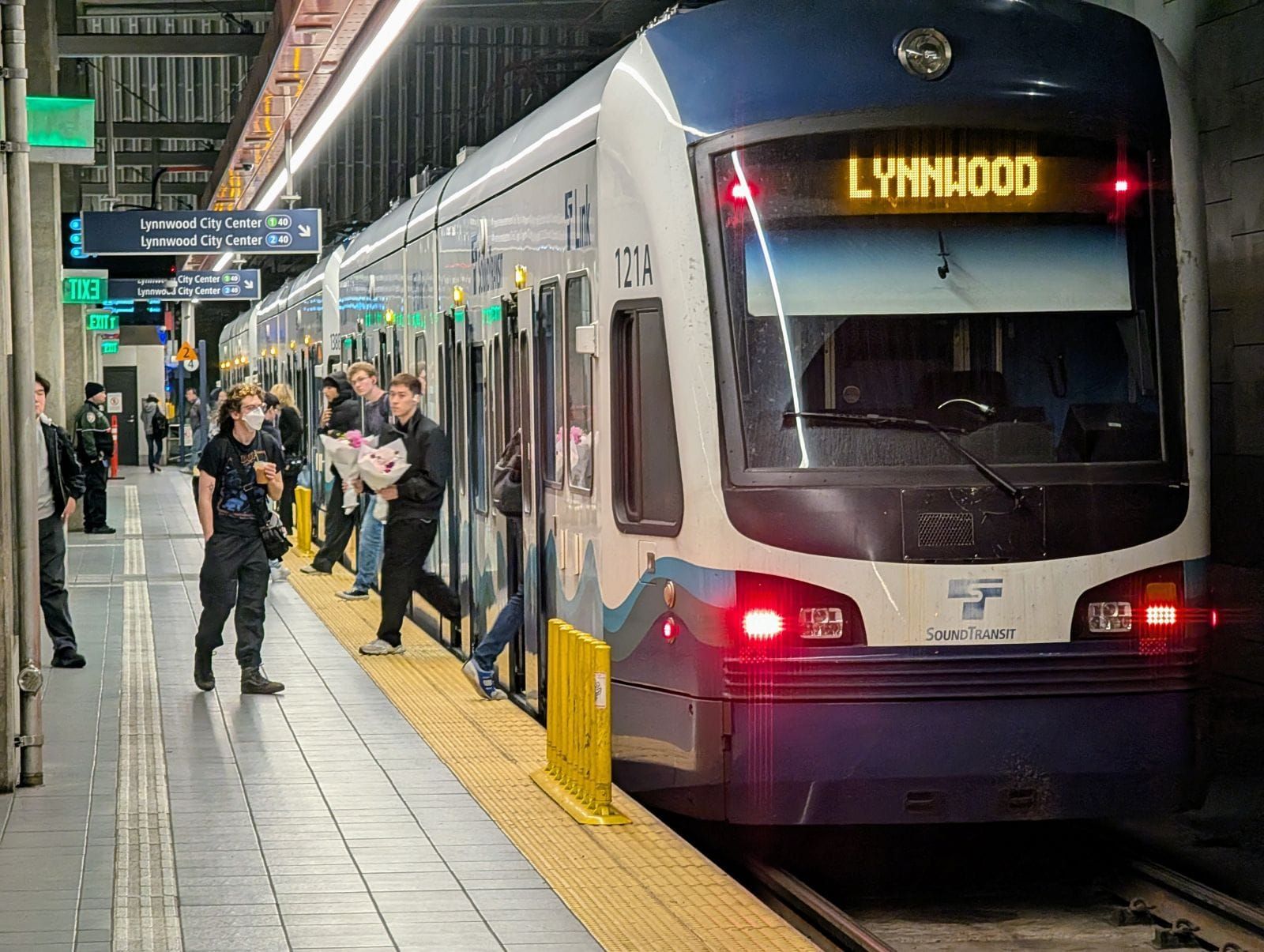
A new light rail line across Lake Washington, which opened in late March, has produced a notable increase in ridership. But most of the traffic is still on the Seattle segment, rather than in the eastern suburbs. That is the finding of a Sound Transit data analysis published by The Urbanist, which sheds light on how the network’s expansion is changing passenger habits and where the agency still has work to do.
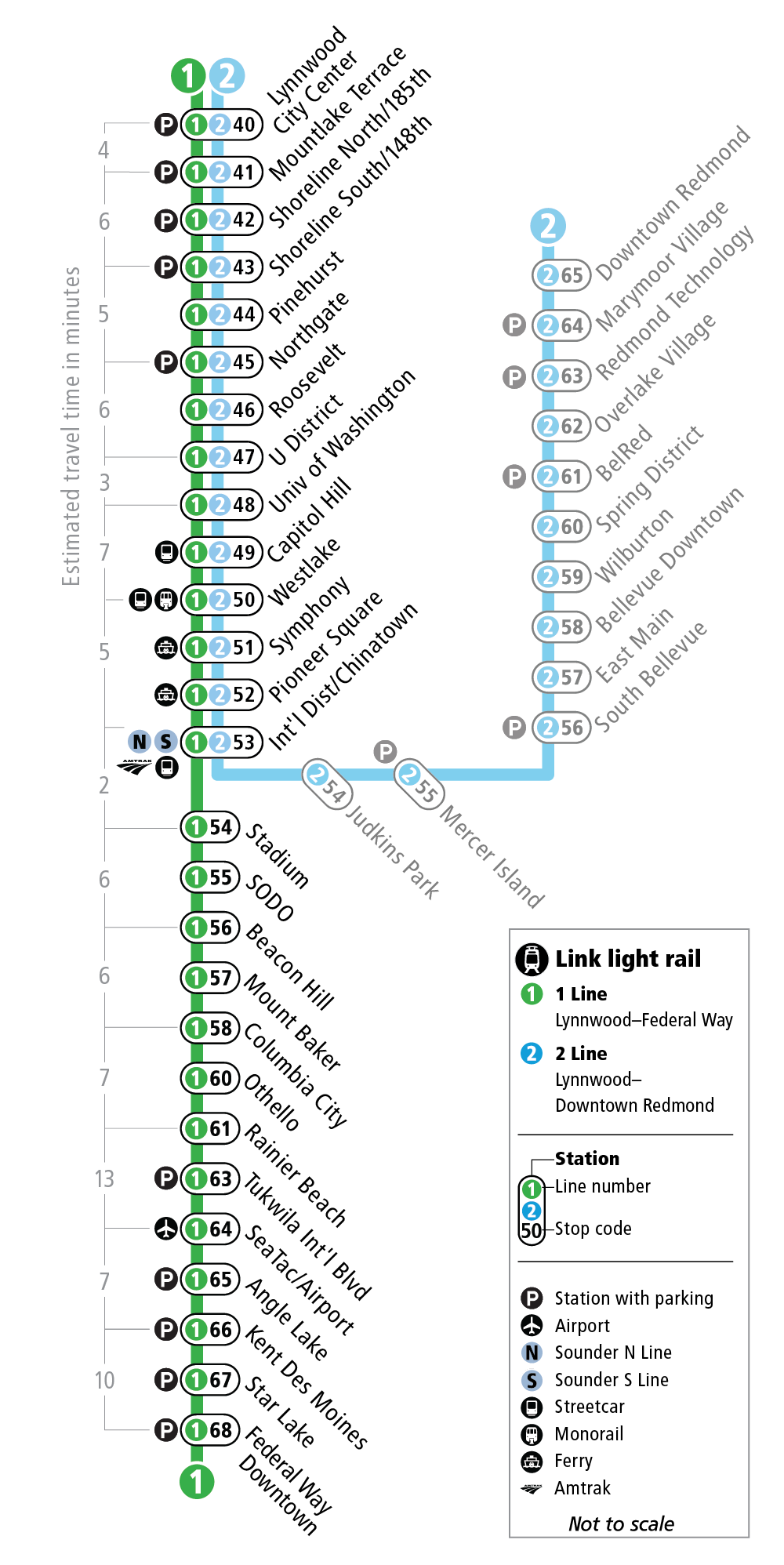
Here’s what has changed: after the 2 Line was extended across the lake on March 28 and connected with the 1 Line, trains on the shared stretch from Chinatown to Lynnwood began running every four minutes during peak hours. That doubling of service frequency has been the main driver of growth: daily boardings have remained above 160,000 even after the summer peak subsided. But ridership on the Eastside—where the crossing was built to serve—is much more modest. This is partly because construction defects and delays on the floating bridge forced Sound Transit to open what it called a “starter line” on the Eastside alone in 2024. By spring 2025, the line had reached Downtown Redmond and peaked at just under 11,000 daily riders that summer, before declining in the fall and winter. The spring connection across the lake brought ridership back to summer levels, but not significantly above them: the segment from South Bellevue to Downtown Redmond recorded about 14,000 daily boardings in June, and 11,330 in August, after the World Cup was no longer drawing extra interest.
A key challenge is that the agency cannot yet distinguish between ridership on the two lines at stations served by both. “According to our statistics team, we currently can’t separate 1 Line riders from 2 Line riders in the central area, but the team is actively working on it,” Sound Transit spokesperson Henry Bendon told the publication by email. “We don’t yet have a systemwide total for the 2 Line alone.” That means we can assess the Eastside branch only by looking at stations served exclusively by the 2 Line. Downtown Bellevue leads, averaging 2,541 boardings in August, followed by South Bellevue with 1,924, helped by its 1,500-space parking garage. Downtown Redmond ranks third with just over 1,600, followed by Judkins Park in Seattle and Mercer Island. East Main is the least busy station, with just 480 passengers a day.
Significantly, almost every station west of the lake attracts more passengers than the busiest Eastside station. The only exceptions are Rainier Beach, Kent-Des Moines and Star Lake, each with fewer than 2,500 daily boardings. Westlake station recorded 19,458 boardings in August—more than the entire Eastside segment of 12 stations served exclusively by the 2 Line. Eight of the system’s ten busiest stations are in Seattle, joined by SeaTac Airport station (second busiest) and Downtown Federal Way (tenth). Notably, Seattle’s nine most popular stations all benefited from the 2 Line extension, which roughly doubled service frequency and attracted new riders. The 1 Line runs three- or four-car trains, while the 2 Line usually runs two-car trains, so the 1 Line has more capacity. But passengers traveling along the shared segment board whichever train arrives first; with both lines running every eight minutes, it is essentially a coin toss.
The distribution of ridership is striking: the ten busiest stations account for about 65% of all boardings along the 1 Line corridor, while the remaining 16 account for just 35%. Shoreline South saw the sharpest increase from August to September, up 25%, from just over 2,800 to just over 3,500 passengers a day. The likely reason is the fall bus-route changes: Route 522 now runs to Shoreline South instead of continuing along SR 522 to the University of Washington campus, so its riders transfer to the train at Shoreline. The opening of new housing near the station may also have played a role. Federal Way added about 400 boardings as well, overtaking Roosevelt to become the month’s ninth-busiest station. The largest declines, meanwhile, were at Stadium and Westlake. Stadium depends on sporting events and game schedules, and the Seattle Mariners’ fading playoff hopes likely hurt its numbers. Westlake’s drop of nearly 2,000 boardings is harder to explain, but may be connected to the end of the tourist season. The airport station also lost about 1,000, lending support to that theory.
Overall, Sound Transit is keeping ridership close to the June peak during the World Cup period: in September, the 1 Line corridor saw just under 150,000 daily boardings, while the 2 Line’s exclusive segment had nearly 15,000. Systemwide figures fell in September, but only moderately, from the June peak of 178,264 daily boardings. What happens next is an open question. No major light rail openings are planned for nearly a decade: extensions to West Seattle and Tacoma Dome are expected by 2035, barring further delays, while the Graham Street infill station could provide a modest boost around 2031. The recently opened Pinehurst station is unlikely to make much difference to overall figures, as there is little housing nearby. Starting in 2028, the Stride bus rapid transit system could bring in more riders through bus-to-train transfers, but the effect is likely to be modest.
With rapid light rail expansion now on pause, ridership growth will have to come organically—from building homes and workplaces near existing stations and attracting riders with consistent, high-quality service. Part of the decline from the June peak may be explained by the agency’s run of serious disruptions after a month of near-flawless operation. It is hard to blame a rider for switching to a bike, scooter or taxi on days like those. The good news is that cities along the line are generally working to build housing near stations, though results vary, and Sound Transit has pledged to improve maintenance and disruption management to restore confidence in the system’s reliability. Even without major extensions in the near future, ridership still appears to be trending upward.
A few terms help explain the details. Light rail is a type of urban rail transit somewhere between a streetcar and a subway: it can run on dedicated tracks and partly underground, but is generally lighter and less expensive than a conventional subway. “Boardings” are the number of times passengers enter the system, not the number of unique people: someone who transfers is counted twice, so the figures may exceed the actual number of riders. “Headway” means the interval between trains; a four-minute headway instead of an eight-minute one is the doubling of capacity described by the author. A “starter line” is a temporary segment that opens before the full route is ready, allowing service to begin sooner. Finally, an “infill station” is added to an existing line between stations that are already in service, rather than being built as part of a new line.
The article’s main conclusion is simple: the lake crossing has acted as a catalyst, but Seattle has benefited most, as the doubled service frequency has made trains far more attractive. The Eastside is still lagging, and the lack of separate ridership data for the two lines makes it harder for the agency to optimize schedules and allocate capacity. Data, rather than new construction, will be the main tool for growth over the next decade—and whether ridership continues to rise will depend on Sound Transit’s success in building housing near stations and providing reliable service.