
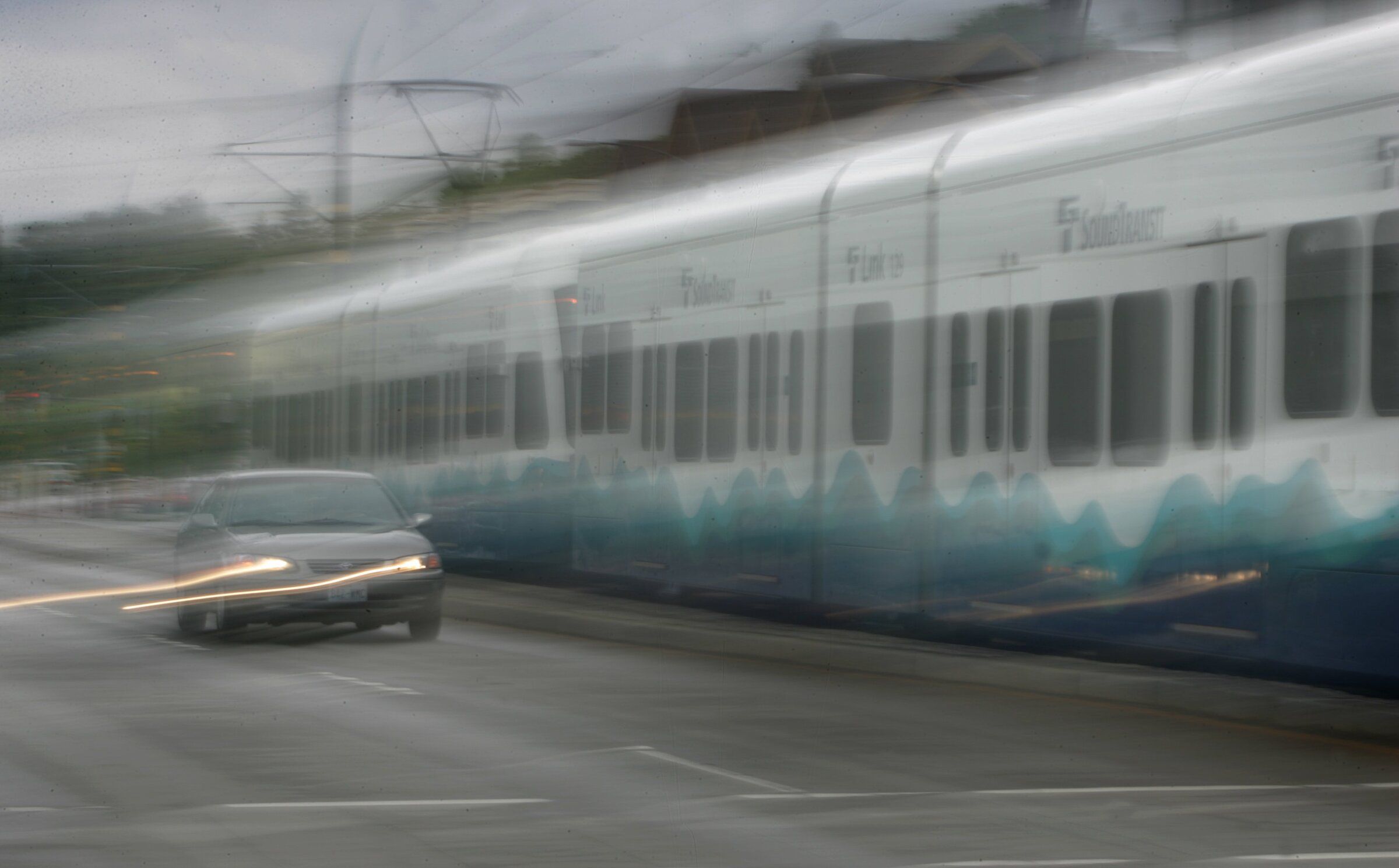
On the morning of October 28, a car collided with a Link Line 1 train at the intersection of Martin Luther King Jr. Way South and South Willow Street, near the Othello light rail station. According to Sound Transit and the Seattle Fire Department, no one was injured: the 20-year-old man in the car declined transport to a hospital, and trains between Columbia City and Othello were briefly replaced by shuttle buses. By noon, the line had returned to normal service, though the train involved was taken out of service for a technical inspection.
Firefighters received the call at 9:53 a.m., as the morning rush on Martin Luther King Jr. Way was giving way to the usual daytime bustle. The Link tracks on this street run neither above nor below the road, but in its median: trains move among cars, traffic lights, crosswalks and turns into the residential neighborhoods of Rainier Valley.
Sound Transit said the car attempted an illegal left turn onto South Willow Street in front of the approaching train. The impact damaged the train car, and debris was left on the tracks for emergency crews to clear. Firefighters soon cleared the scene; there were no reports of injuries to passengers or the driver.
Even a minor crash on this stretch, however, quickly becomes a problem for many more people than those directly involved in the collision. After the incident, Sound Transit suspended service between Columbia City and Othello stations and sent shuttle buses to the area. Shortly before 11 a.m., trains resumed their usual route.
Martin Luther King Jr. Way remains the most challenging part of Link’s first line. Along roughly 4.5 miles through Rainier Valley, trains cross 28 street-level intersections; three stations are located here—Columbia City, Othello and Rainier Beach. Sound Transit’s official plan identifies this corridor as having the highest concentration of incidents at street-level crossings since Link opened in 2009.
The vulnerability is not simply a matter of driver inattention. This is a densely populated, multilingual neighborhood with small shops, bus stops, pedestrians and steady car traffic. A train that needs a long distance to stop enters an urban rhythm in which drivers often focus first on the signal, oncoming traffic and the turn they need to make.
In recent years, Sound Transit and city agencies have tried to reduce the danger by adding warning signs, “Look” pavement markings near platforms and LED signs prohibiting left turns at certain intersections. The agency also runs a separate grade-crossing safety program focused primarily on Rainier Valley. But the latest collision shows that infrastructure measures do not change the basic rule of this corridor: tracks in the middle of the street are not an open lane of traffic.
The circumstances of the crash are still under investigation, and no official information has been released about possible penalties for the driver. For passengers, the incident meant a brief delay and a switch from train to bus; for a line increasingly connecting south Seattle with downtown, the university district and the northern suburbs, it was another reminder of the cost of saving a few seconds with an illegal turn.


Based on: Light rail train, car collide in Seattle