
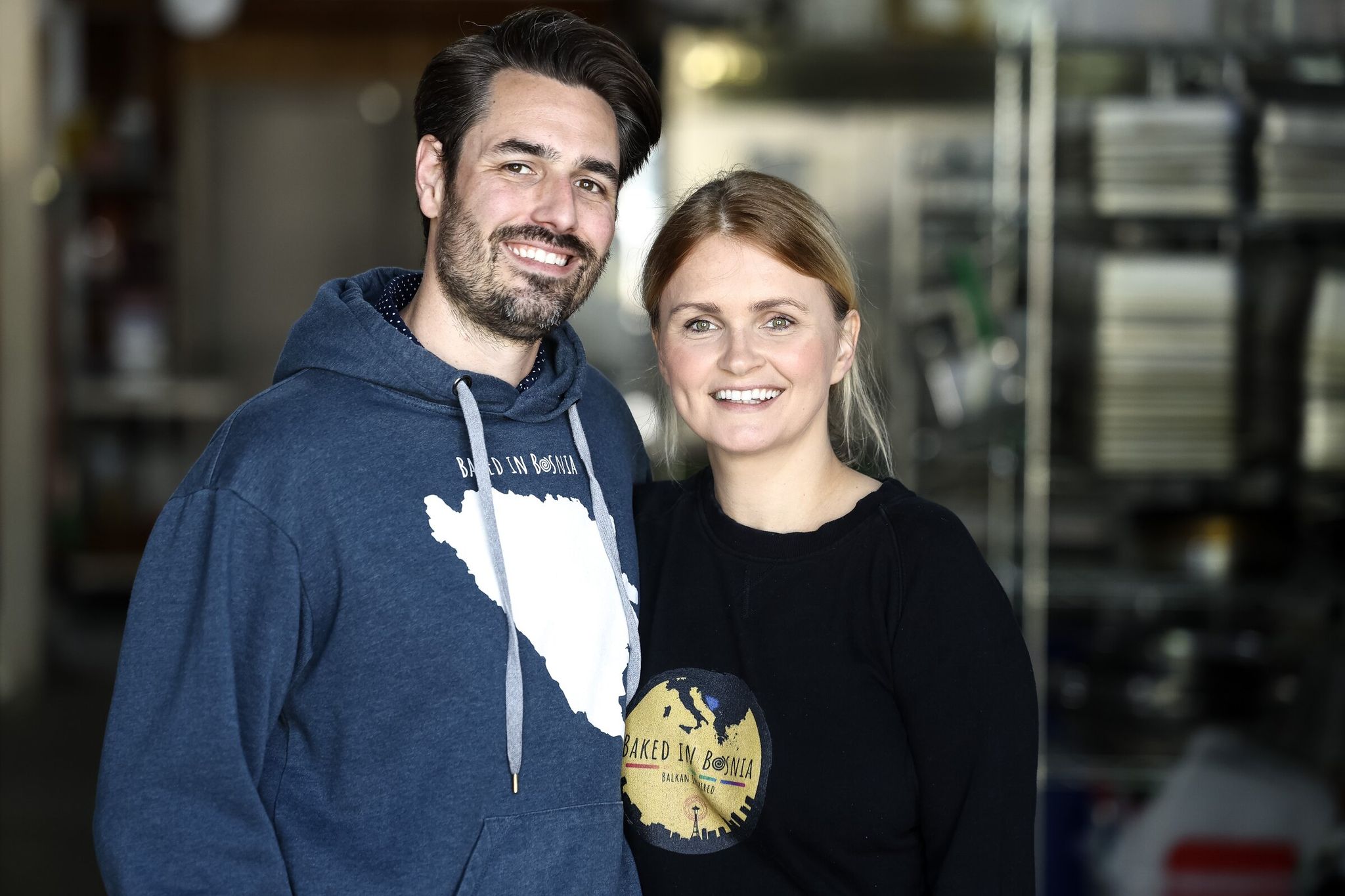
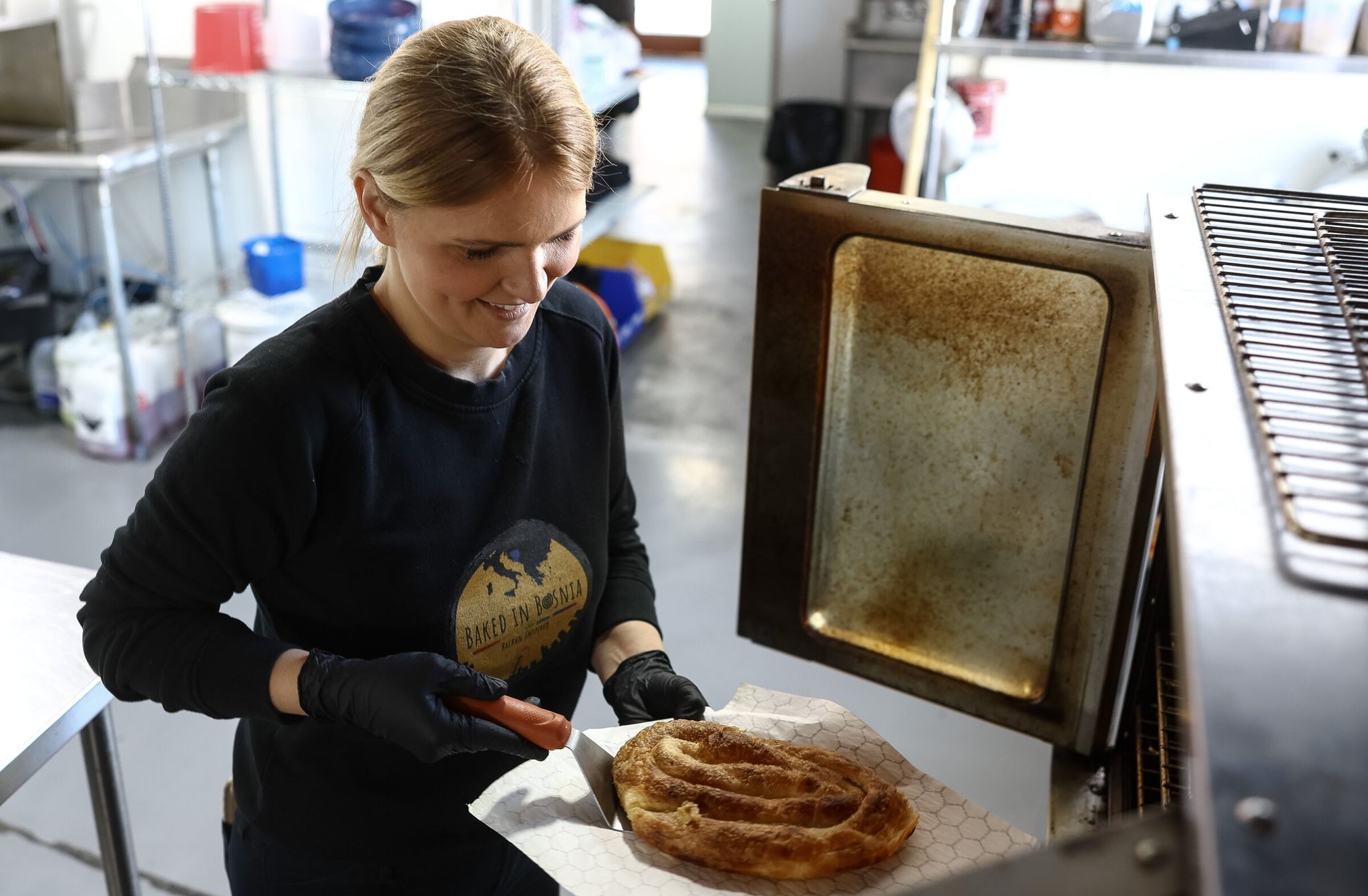
It’s hard to overstate the joy that swept through the home of Selma Mänsell on March 31, when Esmir Bayraktarević scored the winning penalty against Italy, sending the Bosnia and Herzegovina national team to the World Cup. A country with a little more than three million people had only been to the tournament once before. Selma, the owner of the Seattle catering business Baked in Bosnia, along with her husband Erik, says their family was “bouncing with happiness and yelling.”
Selma Porča, the executive director of the Congress of Bosniaks of North America in Seattle, also cried along with her family while watching the match. Both women were born in Bosnia. The Mänsell family fled war, lived for seven years in Germany, and then moved to Wisconsin when Selma was 13. Porča lived through the war and settled in the Seattle area at 13, too. For them—and for many other Bosnians—the pride in their homeland is incredibly strong.
That feeling shows up in the way they cheer for a young Bosnian national team that they see as underdogs—underrated and not yet proven. On June 24 at noon, they will meet Qatar at Lumen Field in Seattle—this city was chosen by FIFA in 2022 as one of the World Cup host cities because of its developed infrastructure and experience staging major tournaments. “People were laughing when Bosnia beat Wales. Italy was celebrating, thinking we’d break easily,” Porča says. “But Bosnia took it to them.”
Porča’s son plays soccer in Kirkland; she sees the team’s World Cup qualification as a story of representation. Bayraktarević, like her son, was born to Bosnian immigrant parents in Wisconsin. “He says, ‘He’s just like me.’ This story is so much more than soccer. It’s a story of resilience. During the war, there were attacks on the city’s multiethnicity—aggressors tried to destroy it. And now a national team made up of different religions and nationalities is a slap in the face to those nationalists. A wonderful story.”
After tears of joy over the win against Italy came a disbelief-tinged celebration when it was announced that Bosnia would play Qatar—right there in Seattle. “Literally, no exaggeration, it’s once-in-a-lifetime,” Erik Mänsell says. “A small country of three million people that has been through so much has raised a team that qualified—and then suddenly the World Cup is in North America, Seattle is one of the host cities, Bosnia is playing here, and we have this tiny Bosnian grocery business? Once in a lifetime.” Of the hundreds of thousands of Bosnians who moved to the U.S. after the 1990s war, about 5,000 live in the Seattle area—small compared with Chicago or St. Louis—but the local community is preparing to show off their city.
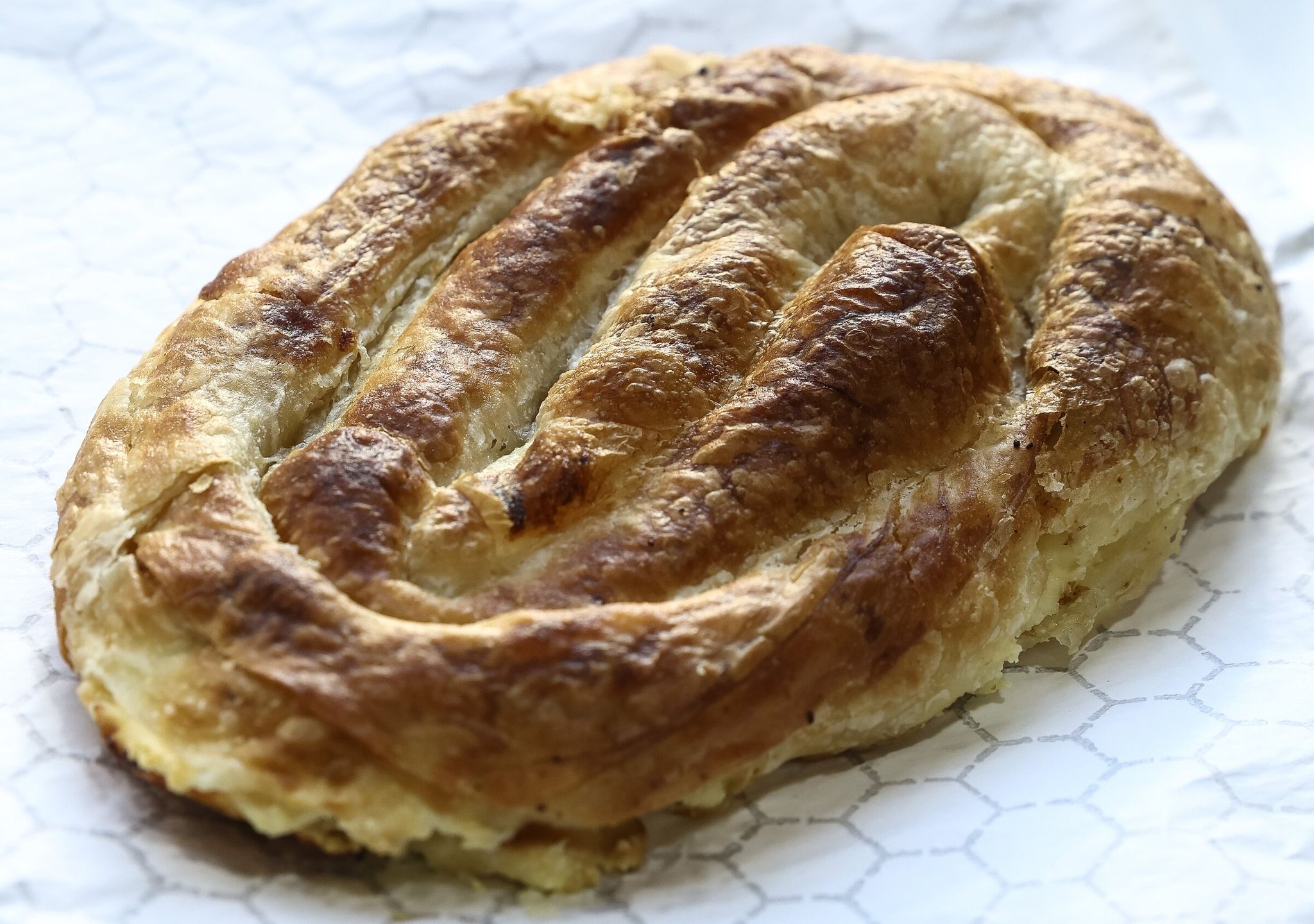
To highlight the Bosnians’ joy and hospitality, two events are planned. On June 23 at the Seattle Center—an enormous cultural and exhibition complex built for the 1962 World’s Fair that includes the famous Space Needle, as well as museums and parks—there will be a “Meet the Peoples” celebration, a free party for all ages with live music, food from Baked in Bosnia, and traditional Bosnian coffee from Vispak. Guests will be able to see a giant golden coffee pot brought by superfans—the so-called “Zlatna Džezva experience,” a symbol of Bosnian coffee culture. Local dignitaries and international guests will attend, but details are being kept secret.
On June 24 at 2 p.m., the Mänsells will bring Baked in Bosnia to Victory Hall, where a concert will feature Balkan music stars Adnan Nezir and Boban Rajović. There will be belly dancing, food, and other treats. “My dream is to get the big names—like Blue Thunder (the local jazz orchestra Pacific Northwest Blue Thunder Big Band), Macklemore, the popular Seattle rapper known for hits like ‘Thrift Shop,’ and also Dave Matthews,” Selma says. “We want to connect Seattle and Bosnia: our favorites and your favorites.”
Porča emphasizes that the event brings people together through the universal language of football and culture. “In moments like this, borders disappear, and our hearts beat in unison for the beautiful game.” For Bosnians in Seattle, this World Cup isn’t just sports—it’s a symbol of renewal, unity, and pride in their multiethnic homeland.
Based on: These Bosnian families in Seattle are ecstatic for the World Cup