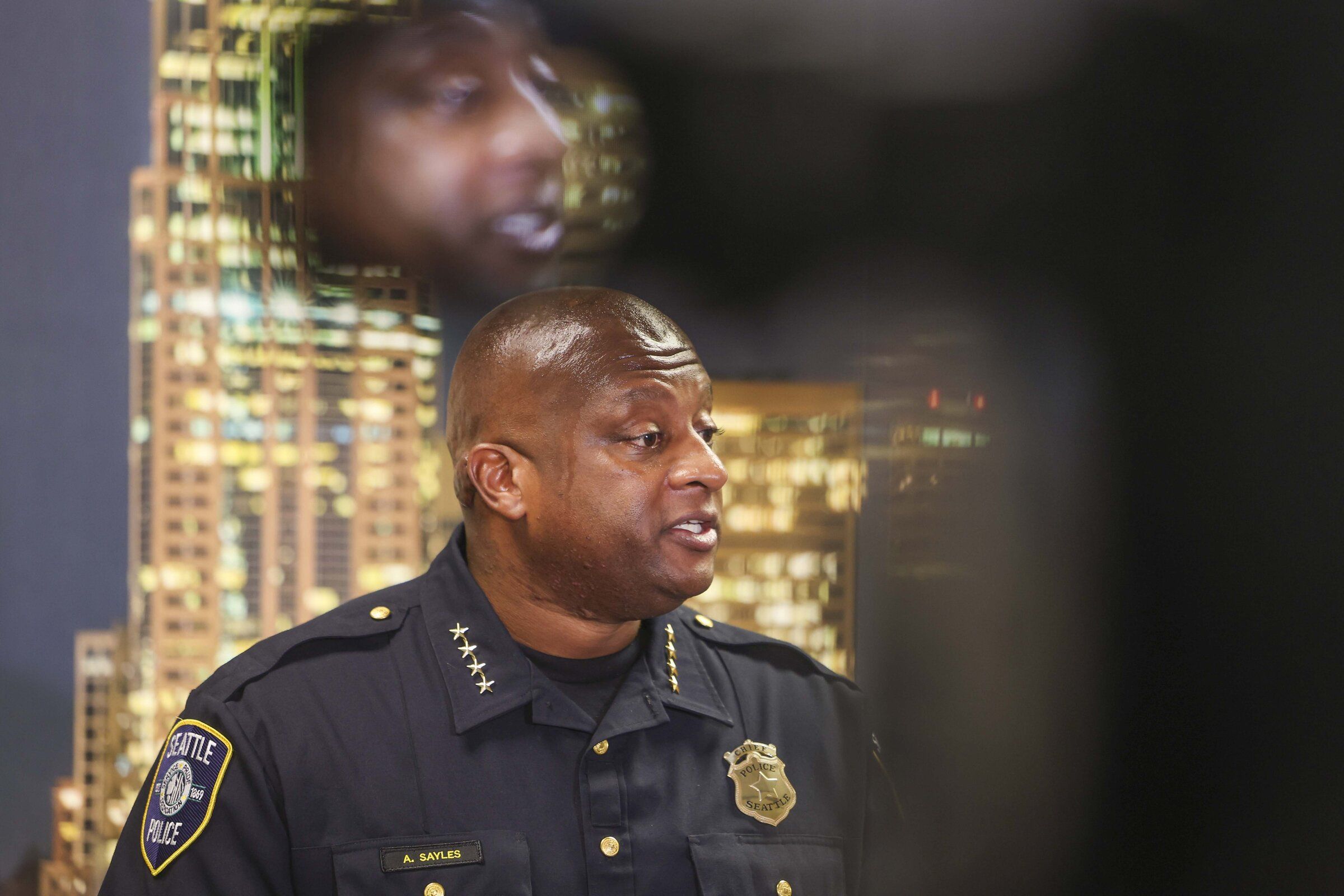
An internal Seattle Police Department report on the Bite of Seattle festival shooting revealed a conflict between SPD leadership and City Hall: the tactical response was swift, but public communication was delayed by five hours because of official interference. Police blamed elected officials for “distractions,” the chief’s absence and budget constraints, while the acting chief said he was caught between instructions from Dallas and demands from the mayor’s office to postpone the briefing. Barnes’ resignation, new protocols and demands from victims’ families have all turned the tragedy into an indicator of the city’s deeper institutional problems.
Bite of Seattle shooting report found officials distracted police from informing the public
The story of the July 26 shooting at the Bite of Seattle festival is taking on a new dimension—and this dimension concerns not only the tragedy itself, but also how city authorities communicate with residents during a critical moment. Months after the incident, which left three people dead and four others injured, the Seattle Police Department (SPD) published an after-action report on its response. The document’s conclusions were unflattering for the city administration: while officers on the ground acted quickly and professionally, public communication was delayed at the leadership level, apparently because of interference by senior officials.
According to the report, “senior officials and elected officials distracted sworn personnel from timely public information and on-scene decision-making.” The first public briefing took place only five hours after the shooting—a delay for which both SPD and City Hall were criticized. Two internal meetings took place before the first public briefing. As MyNorthwest notes, the report directly points to the need to change the city’s approach to public-safety communications. Proposed measures include assigning an on-scene public information officer in advance, with standing authority to issue alerts, and separating the acting police chief’s tactical role from the responsibility of serving as liaison to the mayor’s office. The document emphasizes that “a strong tactical response does not necessarily result in a rapid informational response—these two tasks require separate planning and resources.” It also recommends approving in advance a drone-use protocol for mass-casualty incidents and active-suspect scenarios, as well as expanding bicycle perimeter patrols beyond the eight officers currently assigned.
At the same time, the report praised the actions of police officers: they ran toward the sound of gunfire and apprehended the shooter within 20 to 30 seconds. Thousands of people were safely evacuated without anyone being injured in the process, while SWAT teams and patrol officers methodically searched the IMAX theater after receiving information that a possible suspect had headed there. Three people died and four were injured in the shooting. A 15-year-old remains in custody, while at least one suspect remains at large. The report also addresses staffing and budget issues: seven supervisors and approximately 25 to 29 officers were assigned to an event attended by thousands of people. Saturday’s staffing was reduced specifically for the city’s Torchlight Parade, demonstrating the limited pool of overtime funding that must be divided among several major events occurring simultaneously.
Mayor Katie Wilson’s spokesperson, Alex Hudson, said that during emergencies the goal is to establish clear communication among the mayor’s office, the police and the public, and that improving these processes is a priority. According to Hudson, the mayor and the acting police chief announced enhanced communication practices last month. The mayor is now focused on preventing similar tragedies and supporting victims’ families, as reflected in a recently released gun-violence prevention plan and investments in prevention and intervention. Acting Police Chief Andre Sayles and Assistant Chief Tyrone Davis will present the report at a meeting of the Public Safety Committee on Tuesday at 9:30 a.m.
Several terms require clarification to understand the context. An after-action report is a formal review conducted after an incident, used by law-enforcement and military organizations to identify strengths and weaknesses. The term “public information officer” refers to an employee responsible for dealing with the media and issuing official statements. The police chief’s “tactical role” involves directing operations at the scene, while the role of liaison to the mayor’s office involves political and administrative coordination. As the report shows, combining these functions can slow public communication. Finally, an “overtime pool” is a limited budget for paying officers for additional shifts, which must be shared among several major events taking place at the same time.
The report’s key insight is that the communication failure was not the result of poor police work on the ground, but of a management structure in which political leadership and tactical command were too closely intertwined. As the document itself put it, “the gaps identified here—the air-support policy and the timing of public information—are downstream from that response.” In other words, the officers’ rapid and disciplined response was not matched by equal speed at the organizational level. This raises the question of structural reform for the city: preassigning an information officer, creating a drone protocol and expanding patrols are not merely technical improvements, but attempts to synchronize the bureaucratic machinery with the speed of people working on the front lines. The report’s statement that “a strong tactical response does not automatically produce a rapid public-information response” sounds like an indictment of the city’s entire communications system. For Seattle, where public safety and trust in government remain contentious issues, these findings could prompt a reassessment of how the mayor’s office and police department work with one another and with residents during crises.
Seattle police blame budget constraints and “distractions” for delay in Bite of Seattle shooting information
The scandal surrounding the July 26 shooting at the Bite of Seattle food festival has taken a new turn. On Monday, the Seattle Police Department (SPD) published a report blaming the shortage of funds and “distractions” created by elected officials for the hours-long delay in publicly reporting the incident. The document, obtained by The Seattle Times, sheds light on the department’s internal problems while also raising questions about transparency and the effectiveness of law enforcement during crises.
SPD’s main argument is that the department did not have sufficient resources to issue official statements promptly. The report emphasizes that budget constraints prevent the city from maintaining a fully staffed public-relations team capable of operating around the clock. With all available personnel focused on finding the shooter and securing the scene, the communications unit became overwhelmed. The report separately identifies so-called “distractions” from elected officials who, according to police, interfered with the operational process by demanding immediate explanations and comments, further intensifying the chaos in the information environment.
For readers unfamiliar with the event, the Bite of Seattle is a major annual food festival that attracts tens of thousands of people. A shooting at such an event automatically creates the risk of mass panic, making the rapid spread of accurate information critical. A delay of several hours meant that visitors and city residents were left without reliable information and had to rely on rumors and social media, potentially triggering additional incidents or disrupting emergency-medical operations. In this context, the term “distractions” is a euphemism for political pressure. Police are effectively suggesting that, rather than allowing the department to focus on apprehending the suspect, city officials demanded updates, scattering the attention of commanders.
Although the report does not provide a verbatim key quotation, its language clearly points to a conflict between the executive branch and law enforcement. If budget constraints are a structural problem that has been known for years, the mention of “distractions” amounts to a direct accusation against specific politicians. It indicates a deep crisis of trust within Seattle’s city administration. Instead of coordinated work to address mistakes, we are seeing an attempt to shift responsibility. For city residents, this means they could once again be left without timely information during the next emergency. Police need to consider not only funding, but also the creation of a clear crisis-communications protocol that would not depend on who called City Hall or how many times they called. For now, the SPD report looks more like a defense than an action plan.
Seattle police blame absent chief and mayor’s office for chaos after Bite of Seattle mass shooting
The incident that took place July 26 at Seattle Center, where the Bite of Seattle food festival was being held, resulted not only in a tragedy that left three people dead and at least four injured, but also in a major internal scandal within city government. Two months after the shooting, Acting Police Chief Tyrone Davis appeared before the City Council’s Public Safety Committee and effectively accused then-Police Chief Sean Barnes, who was on assignment in Dallas, and Mayor Katie Wilson’s staff of interfering with operational management at the scene. Davis said that, as acting chief, he should have had full authority to make decisions on-site, but instead found himself caught between Barnes’ remote instructions and demands from Deputy Mayor Brian Surratt that he postpone a public briefing. “When the acting chief is on scene, it’s his show,” Davis told council members, stressing that he had initially informed Surratt “out of courtesy” that he intended to speak to the press at 7:30 p.m., once the situation had stabilized, but was told to wait for the mayor. His proposed alternative—holding a briefing later that evening or the following morning—was ignored, and the public update ultimately did not take place until close to 11 p.m. “If I had known there would be no update until almost 11 p.m., I probably would have had a different conversation with the deputy mayor,” he acknowledged.
The situation was further complicated, Davis said, by Barnes’ beginning to issue instructions directly to staff, bypassing Davis’ authority—something Davis said had happened before. “This has already been discussed, and here it happened again,” he said. As a result, the mayor demanded Barnes’ resignation that same week and temporarily appointed Andre Sayles in his place. At the same council meeting, Sayles supported the criticism of his predecessor, saying commanders had been “seriously negatively affected by people who were not on scene and who were attempting to give orders.” Sayles also said he had introduced a new protocol under which no more than three members of the senior command staff could be away at the same time, while more than half of the leadership would have to remain within the area of responsibility. The move responded to criticism that too many senior police officials were out of town on the night of the shooting.
The public hearing followed the release of an internal SPD report on the response to the mass shooting. In the section titled “what went well,” police noted that one of the shooters was apprehended within 30 seconds and that the transition from tactical operations to saving lives and securing the scene was “seamless.” The document also listed serious systemic problems: the presence of numerous elected officials at Seattle Center distracted police from managing the chaotic situation and informing the public in a timely manner. Recommendations include assigning an on-scene public information officer in advance with authority to issue emergency alerts, holding public briefings before internal meetings rather than afterward, and separating the roles of commanders responsible for physical security from those responsible for coordinating with officials. The report separately notes the need for “preapproval” of access to drones through mutual-aid partners for mass-casualty scenarios. At the same time, it confirmed that the decision to position officers closer to the crowd, rather than only around the perimeter, was correct. According to the report’s authors, that decision “almost certainly” enabled the shooter’s rapid apprehension. The suspect has been charged with first-degree assault. The document also emphasizes that the number of personnel deployed—seven supervisors and as many as 29 officers—reflected the department’s budget constraints, and recommends that city officials “resource the remainder of the response” ahead of budget negotiations.
Mayor Katie Wilson ordered an independent review of information-sharing that night by Lisa Judge, the city’s inspector general for public safety, saying that her office and SPD had already established new rules for emergency public communications. In response to the police report, mayoral spokesperson Alex Hudson said that during emergencies the goal is to “streamline communication among the mayor’s office, police and the public.” Hudson said strengthening these processes is a priority, while the mayor is focused on preventing similar tragedies and supporting victims’ families, citing a recently released gun-violence prevention plan and investments in prevention, intervention and community support in the proposed 2027 budget. During public comment before the committee, Michelle Whitehead, cousin of Ashley Whitehead, one of the random victims killed while waiting in line for cotton candy, spoke. She demanded that the city create a portal for communicating with victims’ families and explain why Seattle no longer has a separate gang unit. Sayles responded that the structure had been renamed the Gun Violence Reduction Unit before he arrived in 2025, and that the day after the shooting SPD launched a pilot project allowing the unit to operate “very proactively.” “Too many people are sowing chaos in this city,” he said. “I want our police department to be very proactive with individuals who we know are responsible for a disproportionate share of the violence here.”
Several points help explain the context. Bite of Seattle is an annual, multiday food festival that draws tens of thousands of people to Seattle Center, a complex of cultural and entertainment institutions that is also home to the famous Space Needle. A mass shooting at such an event creates a chaotic environment with large numbers of civilians, making the work of police and emergency services more difficult. In the absence of the official chief, the acting police chief is supposed under the city charter to have full responsibility for operational command. In practice, however, political leadership, including the mayor and her staff, can intervene in matters of public communication, which became the subject of the dispute. The nearly four-hour delay in the public briefing after the situation had stabilized raises questions about how transparently city officials acted during the crisis. The reference to “preapproval” for drones also points to existing restrictions in Seattle on police use of unmanned aircraft, which require coordination through mutual-aid partners. Finally, renaming the gang unit as the Gun Violence Reduction Unit reflects a nationwide move away from the term “gang” in favor of broader language, though victims’ relatives view it as a weakening of the fight against organized crime.
The key conclusions from this story are as follows. First, the internal conflict between police leadership and the mayor’s office has become public, undermining trust in city government ahead of budget negotiations. Second, the SPD report acknowledges that the tactical response was fast and effective, but that communication and coordination with politicians failed, delaying public notification. Third, Barnes’ resignation and Sayles’ appointment have been accompanied by structural changes, including a new protocol governing senior-command availability and a pilot project for proactive work with the most dangerous individuals. Fourth, victims’ families are demanding greater transparency and a communication channel, while also asking why the investigation has not yet led to the apprehension of the other shooters. Finally, Mayor Wilson, whose office was criticized by police, is trying to shift the focus toward violence prevention and community investment, which could become a central theme of the 2027 budget process. All of this is taking place against a backdrop of continuing tension in Seattle over gun crime and disputes about whether police have adequate resources, making the Bite of Seattle story not merely a report on a tragedy but an indicator of deeper institutional problems.