
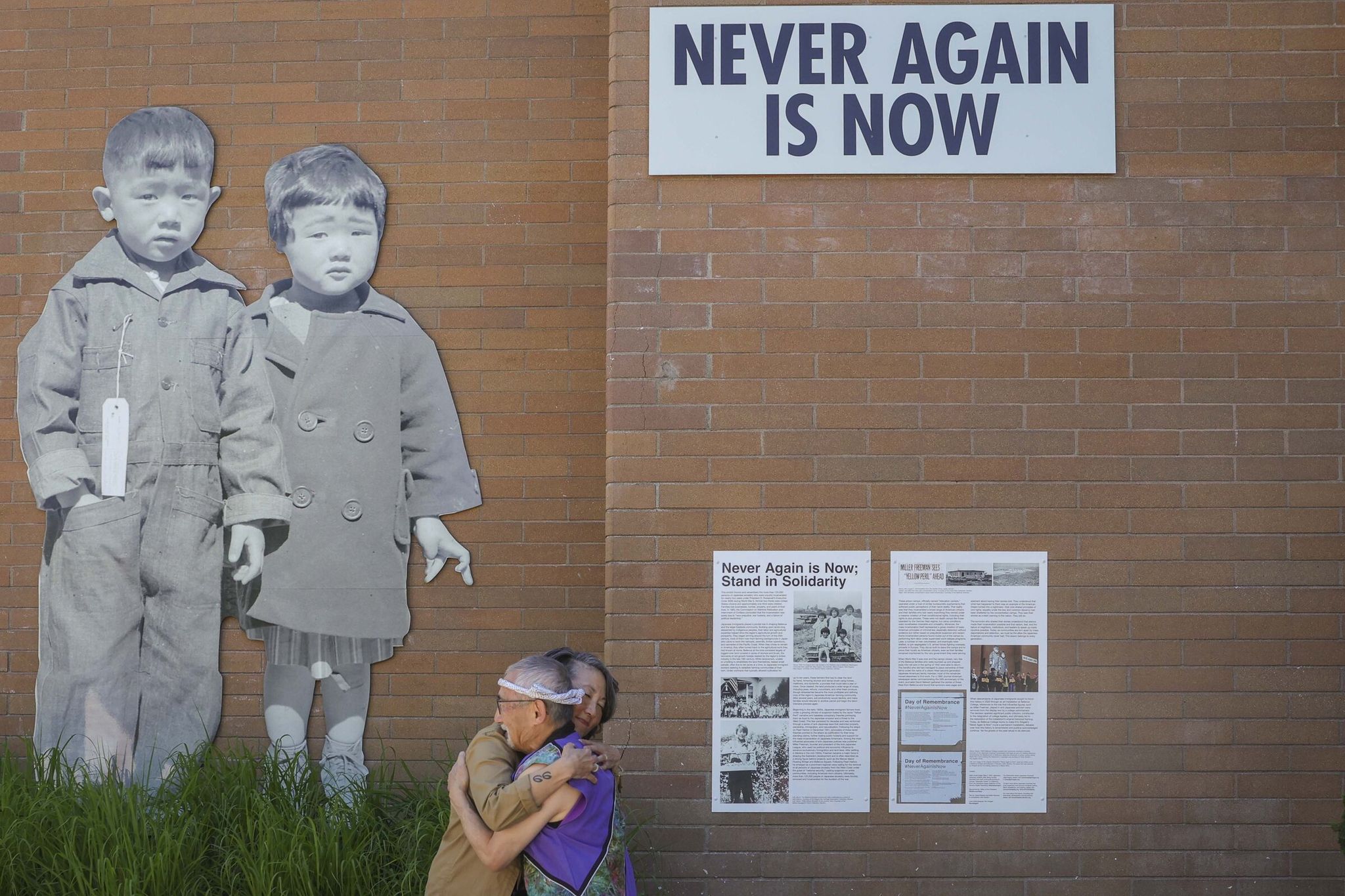
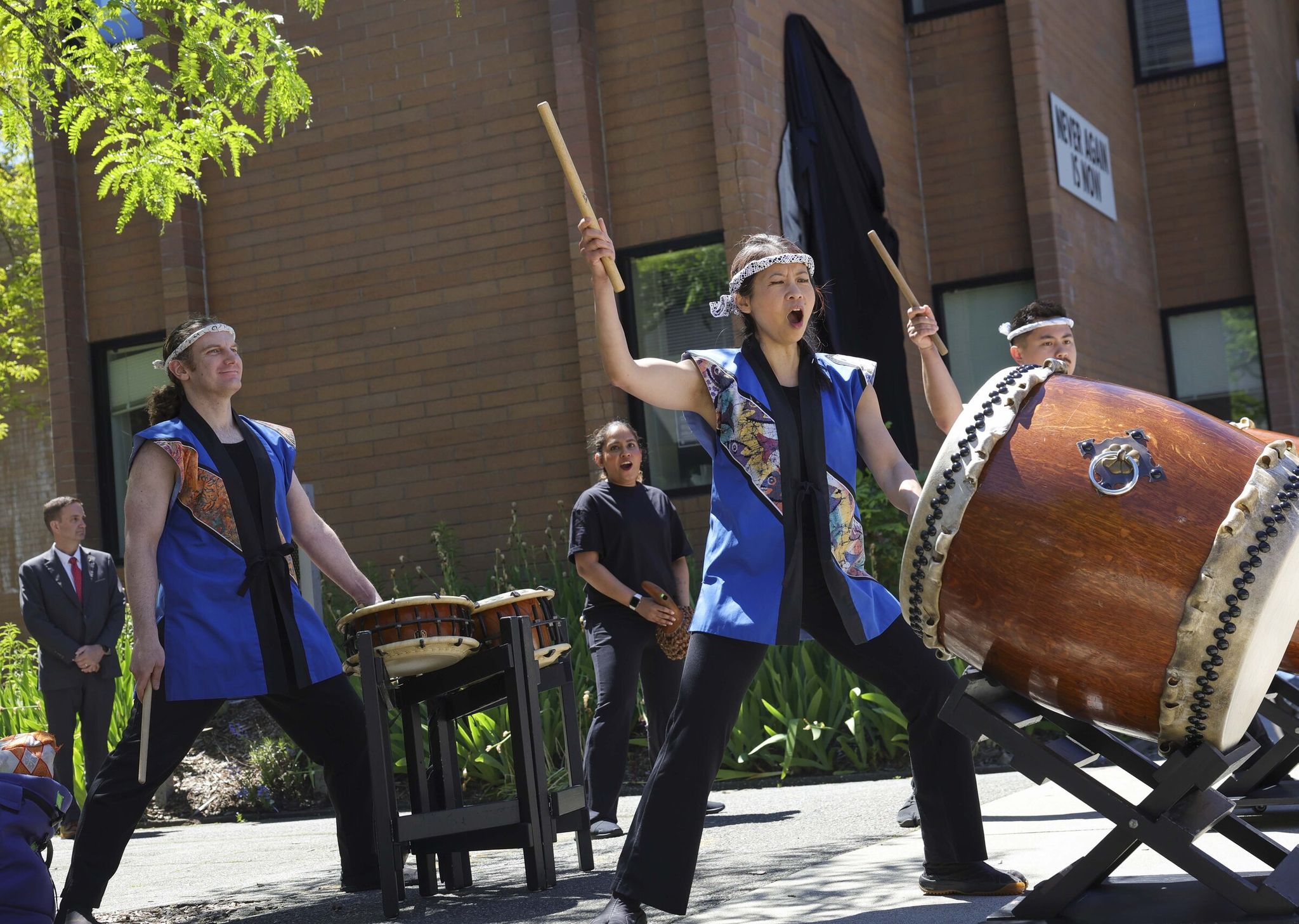
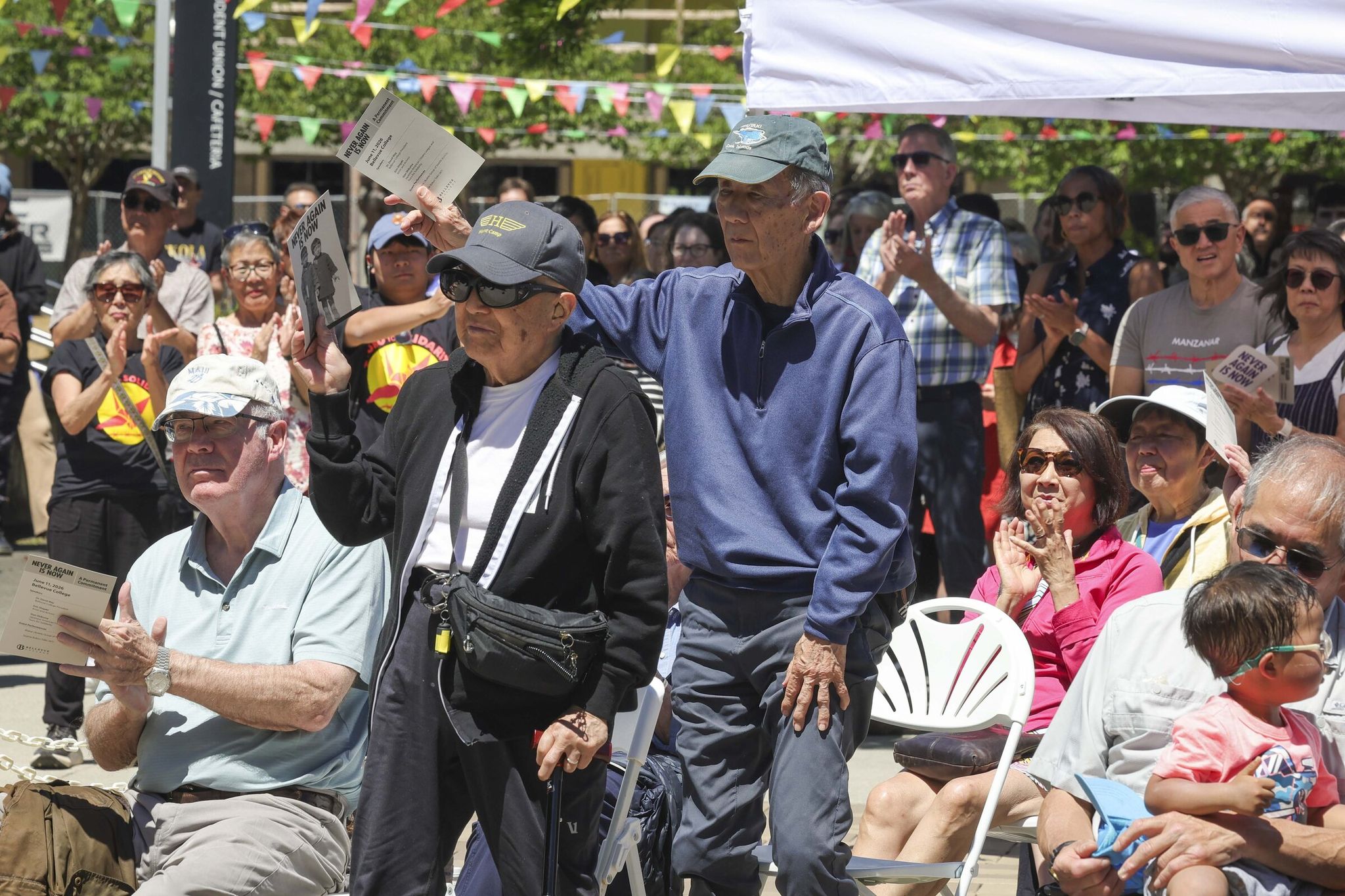
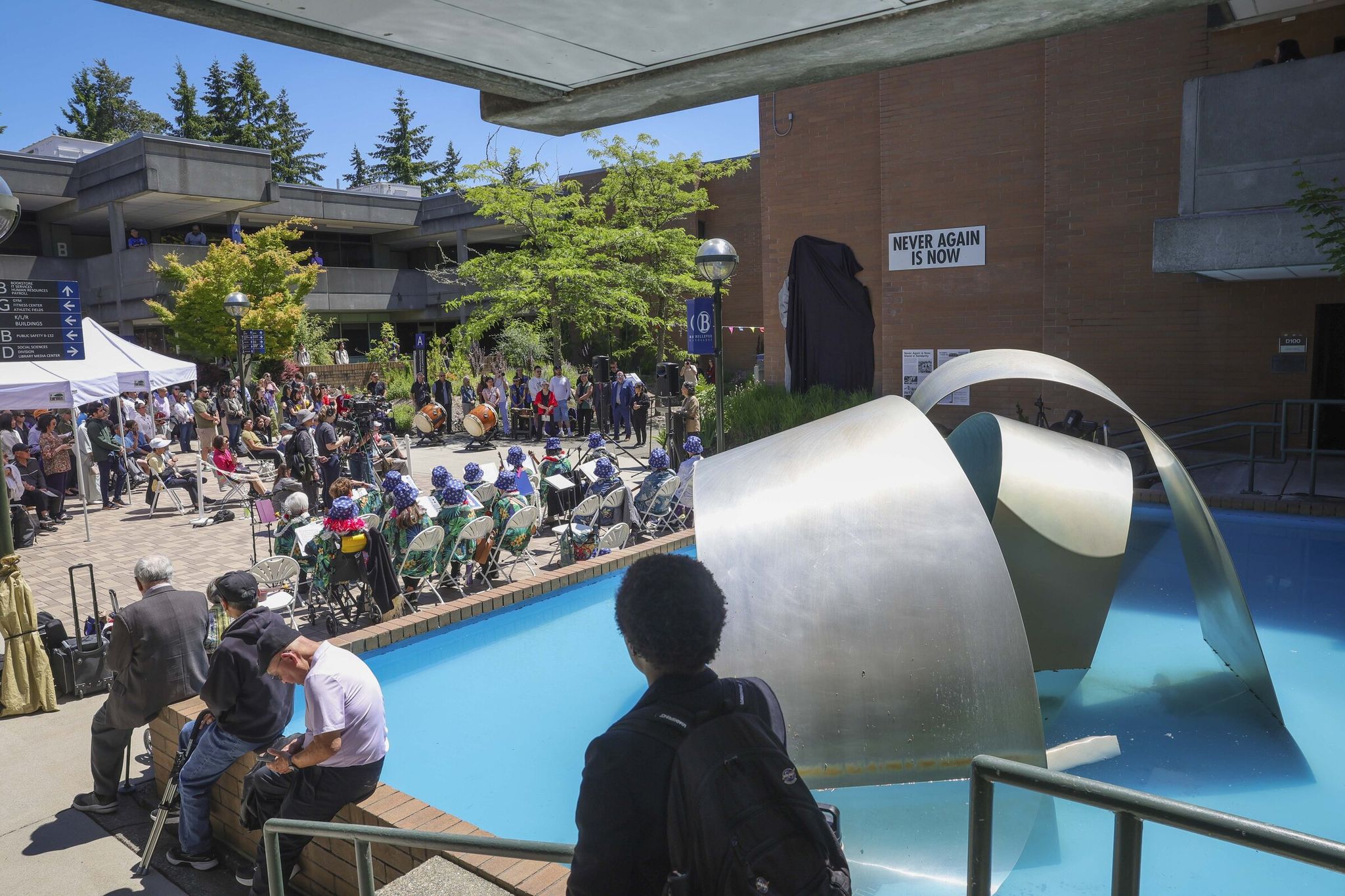
Bellevue College on the east side of Seattle has officially made permanent the mural "Never Again Is Now," dedicated to a tragic chapter in Japanese American history. The ceremony took place six years after the college vice president’s censorship of the work sparked high-profile resignations and public outcry. The monumental panel, 3.4 meters (about 11 feet) high, depicts two children of Japanese descent being taken to an internment camp in California.
The piece’s creator, Seattle artist Erin Shigaki, based the mural on the famous photograph by Dorothea Lange. The work first appeared at the college in 2020 as a temporary installation for Remember Day — Feb. 19, the date President Roosevelt signed the infamous Executive Order 9066. That order authorized the mass incarceration of Japanese Americans, and among the 120,000 people affected were relatives of the artist herself; her father was born in a camp in Idaho.
The controversy erupted when school administrators altered the artist’s text, erasing references to "anti-Japanese agitation led by Miller Freeman" — a local businessman who was a newspaper publisher (including The Seattle Times) and a major developer. His role as one of the leaders of the Anti-Japanese League of Washington — an organization that actively pushed to restrict the rights of Japanese immigrants, including prohibitions on land ownership — makes his status as a "founding father" of Bellevue highly contentious. That league, formed in the 1910s, lobbied for laws barring Japanese people from buying land and from gaining citizenship, leading to the passage of the Alien Land Law in 1921. The legacy of those laws is still felt today: families who lost property could not build wealth to pass on to later generations, and that wealth gap persists more than a century later. The original text also included information about the mass incarceration of 60 Bellevue-area Japanese families, which was removed. After this information leaked and public outrage followed, Vice President Gale Colston Bargh and the college president Jerry Weber resigned.
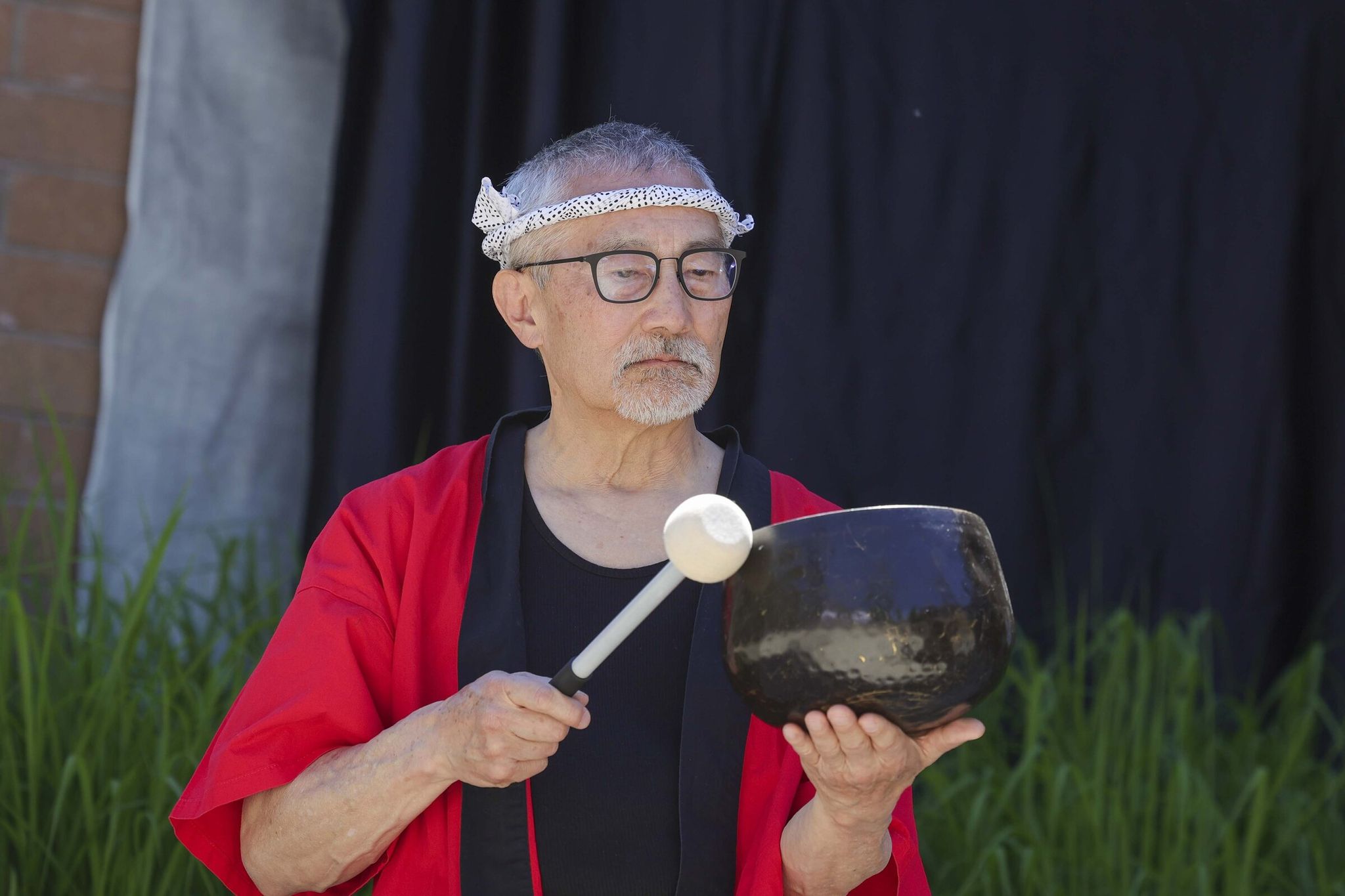
At the rededication ceremony, Shigaki said the incident helped her better understand how deeply certain historical narratives are embedded in places like Bellevue. Today Bellevue is a symbol of the American dream and tech-driven prosperity; the city seeks to present itself as diverse and progressive. But its history, which includes racial restrictions such as exclusionary covenants in property deeds, conflicts with that image. Acknowledging this history can undermine the city’s portrayal as a place of equal opportunity, creating an internal tension between civic pride and recognition of a darker legacy. Shigaki compared the wartime camps to modern immigrant detention centers, a parallel echoed by activist Stan Shikuma, who reminded attendees that people from Guatemala, Honduras and other countries are enduring similar suffering today.
The new mural is printed on weather-resistant metal and is accompanied by an informational panel with facts about the incarceration of Japanese Americans and the 2020 censorship controversy. College President David May emphasized that the artwork will serve as a permanent reminder to remember history, learn from mistakes and "remain vigilant in defending the dignity of every person."
Based on: Bellevue College rededicates ‘Never Again Is Now’ mural