The Seattle Mariners head into the trade-deadline crunch in a tough spot: the team is weighing whether it needs to add talent, considering lineup reshuffles, and thinking about the return of injured players. Meanwhile, Dodgers right-hander Roki Sasaki has turned in a run of strong starts.
Three Questions Facing the Mariners Before the Trade Deadline: A Breakdown From The Seattle Times
Seattle, as always, is at the center of baseball contradictions. The Mariners are arguably the league’s most confounding team this season, and in a Seattle Times piece the authors try to figure out what the front office will do by the trade deadline. The club started the year thinking about the World Series, but now, at the start of August, it’s languishing in third place in the weakest division in the league. At the same time, the team has a top-tier starting rotation, electric relievers, and a roster that looks as if it was assembled specifically for the playoffs—except the playoffs are still something the team has to reach. And that creates the key paradox: the Mariners both need reinforcements and suffer from roster overload. They don’t fully understand how they ended up in this situation, and they’re trying to find a way out of the prolonged stagnation.
The first question posed by the reporters is whether the Mariners will be buyers on the market—and whether they should be. The answer depends largely on the weekend against Minnesota, which is being called the season’s most important stretch. For the past few weeks, the front office has behaved like a confident buyer, but if the team doesn’t show progress in its series against the Twins, management will have reason to reconsider. It’s too risky to trade away real assets—whether young talent or proven players—when the roster itself is sputtering. On the other hand, the Mariners still believe they have the most talented roster in their division, and the division is more accessible than ever. The team has postseason experience, a high-end top five in its rotation, and outfielders with a track record of delivering in October. The only problem is getting there. If the front office decides that one or two targeted additions can solve the problem, it will move aggressively in the final hours before the deadline. But first, players have to prove they deserve that kind of backing.
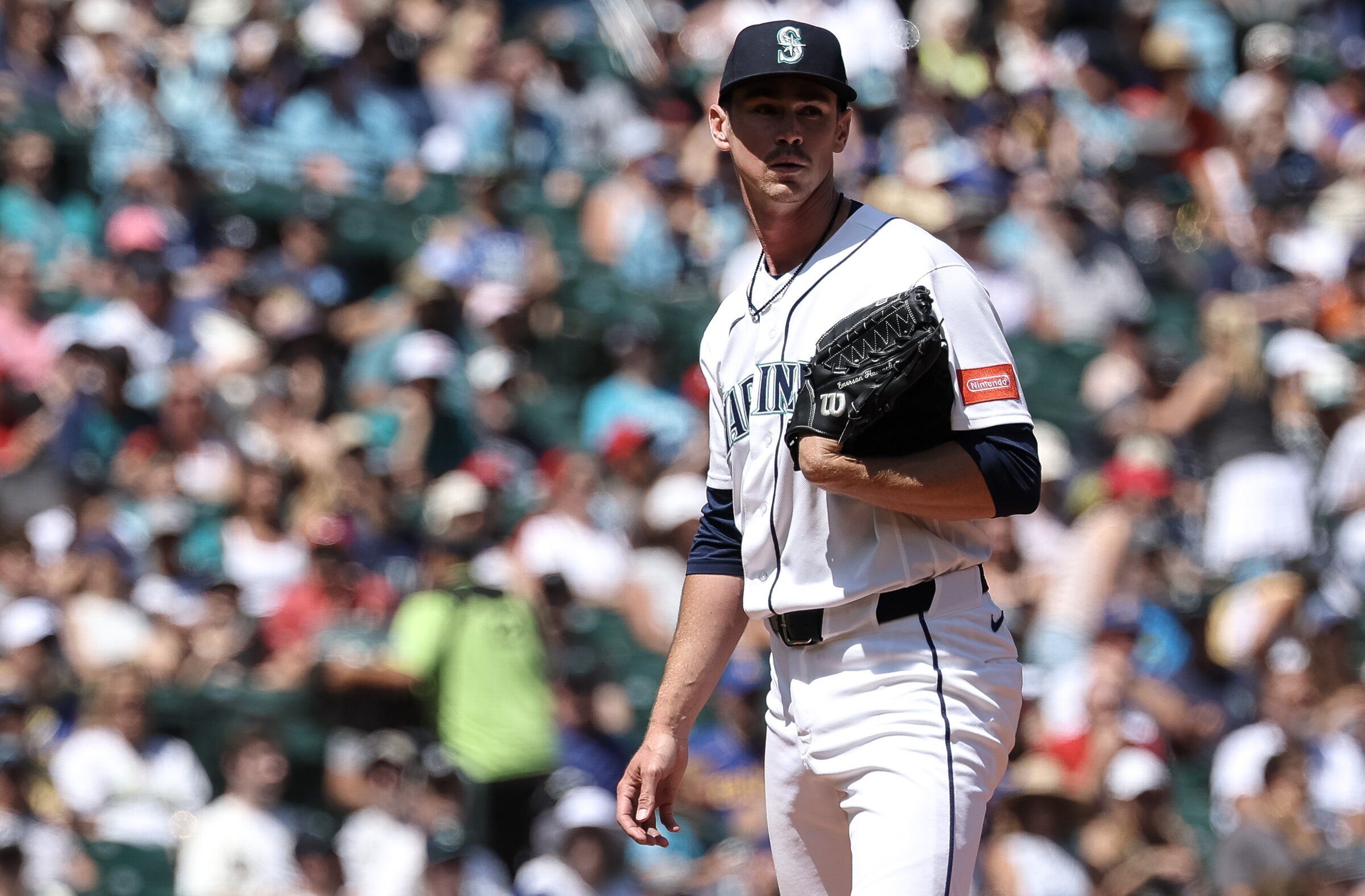
The second—and arguably most intriguing—question is whether the Mariners will part ways with Emerson Hancock. The chances of a trade for this right-hander, according to a source, are higher than the odds that he remains. Hancock has been one of the season’s biggest surprises: after starting the year listed as the team’s sixth starting pitcher, he reworked both his arsenal and his mindset, emerging as one of the three most productive starters on the roster. It would seem to beg the question: why would you give up that kind of talent that’s earning nearly the league minimum and is under club control for another four years? The answer is simple: Hancock is the best asset the Mariners are willing to offer the market. The club is absolutely not interested in touching Logan Gilbert, George Kirby, Bryce Miller, or Bryan Woo. And in the system, two more super-talents are coming up—Cade Anderson and Ryan Sloan—which are already nearly ready for the big leagues. That’s how Hancock ends up being the one who could fall by the wayside. The preferred option for Seattle would be to sell the 33-year-old Luis Castillo, and that scenario is possible, too—but the return would likely be far more modest. Castillo is older, costs more, and isn’t the same pitcher he was a couple years ago.
Still, sources say the Mariners are willing to eat some portion of the remaining $30 million on his contract, though negotiations are complicated by a $25 million club option for 2028, which could be activated. One interesting potential trade partner is the Padres: Seattle could deal Hancock to receive one of the Padres’ top relievers. But Mason Miller—the league’s best closer—probably won’t relocate; it wouldn’t be wise to surrender a huge package for a pitcher who only throws a few innings per week. More realistic targets are Adrian Morejón and Jeremeyah Estrada.
The third question is about upgrading the offense. The Mariners are desperately searching for a right-handed hitter, but the right-handed market is extremely limited, and the available options will come at a painfully high price. From the wish list, you can scratch Spencer Steer from the Reds and Casey Schmidt from the Giants—both right-handed sluggers recently landed on the injured list, further narrowing the market. One possible alternative is Taylor Ward of the Orioles, who is on track to hit the free-agent market, but with their current front offices, Seattle and Baltimore haven’t managed to reach a meaningful trade agreement.
The Miami Marlins are willing to move nearly anyone, and their breakout shortstop Otto López—who leads the league in hits and doubles—is one of the most intriguing possibilities. But that creates a dilemma: is it worth paying a massive price for a player with a short track record and adding another shortstop when the club has already invested in 21-year-old Colt Emerson? Perhaps López could play third base, but that all looks overly complicated.
Gléibar Torres of Detroit is another potential impending free agent with right-handed power and a decent reputation, but he’s never played third base—the specific infield spot the Mariners need to strengthen. Plus, in the remaining two months, he’ll need to be paid about $7 million, and even though the owners are open to increasing the payroll, they’re only prepared for a modest jump. Veteran Luis Robert Jr. of the Mets and George Springer of Toronto fall into the same category, and questions remain about their injury histories. Even Eugenio Suárez of Cincinnati is mentioned as a “feelings” option: last October he hit one of the most grand slam shots in the franchise’s history, and the team could use a little of that aura. But bringing him back for a third time—along with all the same drawbacks—is also far from straightforward.
The key intrigue is that the Mariners are a team that has to start winning right now, yet their roster seems stuck between ambition and reality. The trade deadline on Monday at 3:00 p.m. Pacific should provide an answer about whether the front office is doubling down on the current core—or whether it will acknowledge that something has gone wrong this year. Either way, they can’t just sit on the sidelines: both fans and the market expect decisive moves from Seattle.
Mariners Preparing for Shakeups: Donovan Returning, Arroyo Awaiting a Chance, and Jimothy Back in the Mix
Despite a disappointing July that cost Seattle the division lead, the Seattle Mariners aren’t giving up on the fight for a second consecutive AL West win. According to industry sources, the club’s front office is determined: it remains a buyer and intends to strengthen the roster. The market is expected to heat up in the final day leading into the MLB trade deadline on Monday at 3:00 p.m. Pacific. Meanwhile, the club is already considering several internal adjustments that could happen before the start of a nine-game home stand kicking off Friday against Minnesota.
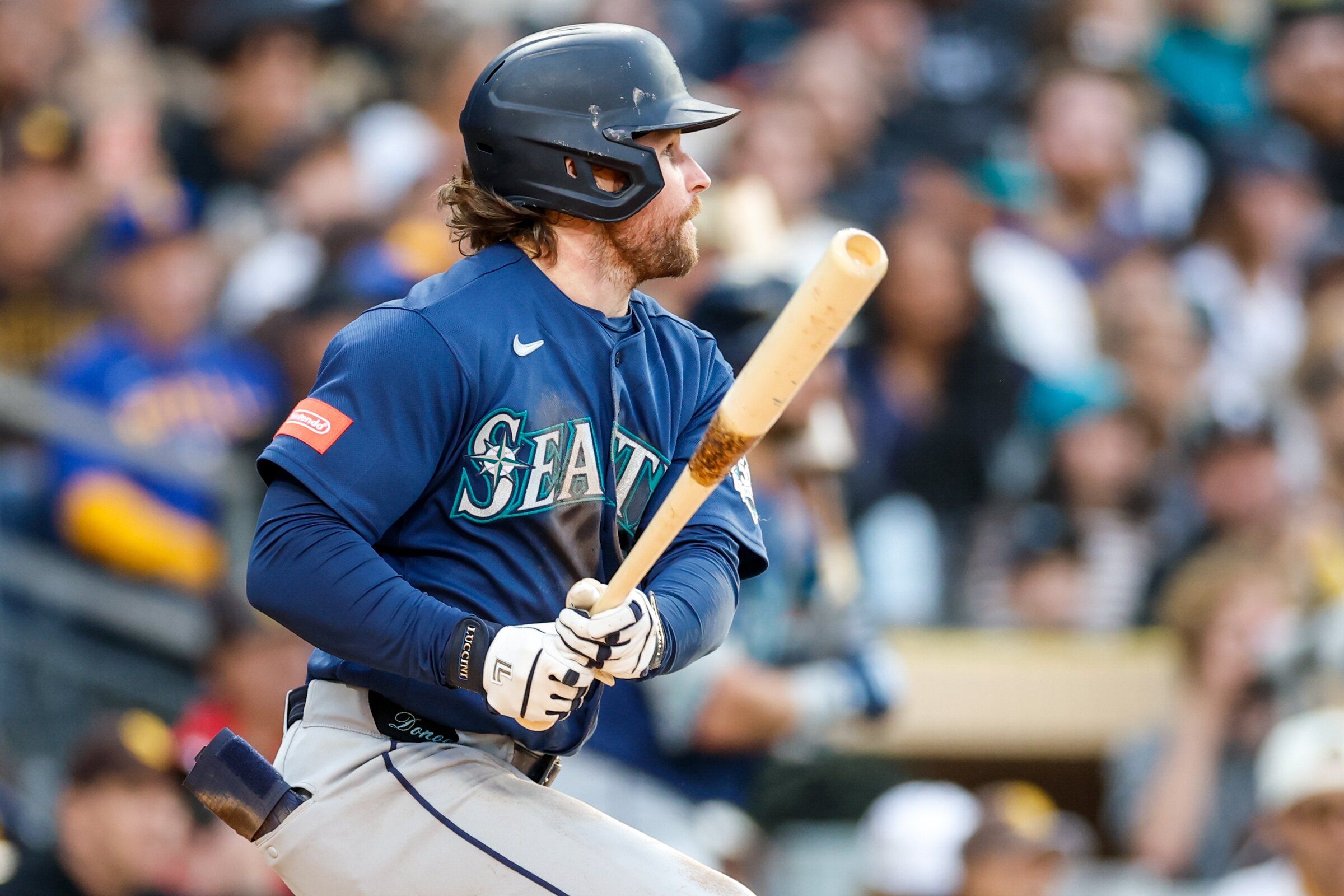
One of the biggest pieces of news is the return of Brendan Donovan. The veteran infielder, who has been on the injured list since mid-May due to a groin issue, is expected to be activated within the next few days. There’s just one catch: Donovan’s wife is due to give birth any day now, so the exact timeline could shift. In the meantime, Justin Crawford—another key infielder—has again missed a game in Los Angeles, as he continues to deal with wrist pain. The club is not ruling out sending Crawford to the injured list to give him time to recover.
In the context of possible lineup changes, all eyes are on 21-year-old prospect Michael Arroyo, one of the most exciting young hitters in the Mariners’ system. He remains a candidate to be promoted from Triple-A Tacoma. The only question is where he’ll play defensively—or whether he’ll simply be added into the lineup as a designated hitter. Inside the organization, there are those who believe Arroyo’s bat can strengthen the roster right now, especially in games against left-handed pitchers. This season, Arroyo has posted impressive numbers at Double-A and Triple-A levels: his batting average is .295, with 13 home runs, 18 doubles, and 15 stolen bases. His on-base percentage is .363, and his OPS is .842. “He’s not going to be scared—I know that,” a club insider told The Seattle Times.
Another Tacoma name worth tracking is Stewart Fairchild. The 30-year-old right-handed outfielder has already spent parts of six seasons in MLB with six different clubs, including a brief stint with Seattle in 2022. A Seattle native, he signed a minor-league deal with the Mariners earlier this month, and in 10 games for the Rainiers he has been putting on a show: .314 with three home runs, three doubles, two triples, and a 1.238 OPS across 45 plate appearances. Fairchild can cover all three outfield positions, and the question is whether he would be a better short-term option against left-handers than Arroyo—or whether he can outperform Víctor Robles, another right-handed outfielder with a similar skill set. Robles’ playing time has recently shrunk as Dom Canzone has secured a steady role as the right fielder and designated hitter.
It’s also notable that over the coming weekend, Seattle will face Minnesota, and the Twins plan to start two right-handers—Zebby Matthews on Friday and Taj Bradley on Sunday—with a left-hander, Connor Prielipp, taking the mound on Saturday. That adds another layer of intrigue to the question of which right-handed reinforcement the Mariners will want to use against a lefty.
The atmosphere at Dodger Stadium is also worth mentioning, since Seattle is finishing its road trip there. Julio Rodríguez, the team’s center fielder, has been wearing wax earplugs in the last two games. He’s trying to reduce the noise coming from two massive columns installed on 100-foot towers beyond the center-field wall, directly behind him. Dodger Stadium is traditionally considered one of the loudest venues in the league, so the veteran decided to approach the issue pragmatically.
And of course, the Mariners’ fans’ favorite bit of news is the “Jimothy the raccoon” story. Due to huge demand for tickets to the first Jimothy promo night scheduled for August 5, the club announced the addition of a second special ticket package with a themed T-shirt on August 7. It appears that even in a difficult stretch for the team, Seattle can still find reasons to be happy.
All of these decisions—from activating Donovan to potential calls for Arroyo or Fairchild—signal that the Mariners aren’t surrendering in the fight for the playoffs. The only question is what specific moves they’ll make in the remaining hours before the trade deadline, and how successful the roster shakeup will be in pulling the club out of its prolonged skid. As noted in a The Seattle Times report, the organization remains confident in the potential of this group of players, and the next week will show whether that calculation was correct.
Roki Sasaki Builds Momentum: The Japanese Phenomenon Again Proves Elite in the Dodgers’ Ranks
MLB’s official website published a game story from July 30, 2026, between the Seattle Mariners and the Los Angeles Dodgers. At first glance, it’s just another entry in a long season. But behind the dry numbers is an important trend: Japanese right-hander Roki Sasaki is again looking like he’s ready to become the Dodgers’ go-to weapon on the road to the playoffs.
The spotlight wasn’t so much on the final result as it was on Sasaki’s “sniper-like” numbers over the past month. As noted in a MLB.com story, in his last four starts he posted a phenomenal 2.25 ERA and recorded 26 strikeouts over 24 innings. Those figures aren’t just simple math—they’re an indicator that the 24-year-old Japanese pitcher has finally adapted to the demands of the world’s top baseball league and is peaking at the right time in the regular season.
To understand the value of these numbers, you have to break down the terminology. ERA, or earned run average, is the average number of earned runs a pitcher allows over nine innings. A 2.25 mark means that, for every nine full innings, Sasaki allows a little more than two runs—that’s the kind of level modern baseball typically considers elite for a starting pitcher. For comparison, the league-average ERA is usually around 4.00, meaning Sasaki is nearly twice as good as the typical pitcher.
Even more impressive is the strikeout-to-innings ratio. 26 strikeouts in 24 innings—more than one strikeout per inning—speaks to dominance over opposing hitters. When a pitcher consistently racks up that many strikeouts without contact, it suggests his pitches—especially the famous splitter—are in perfect form. That pitch is what made Sasaki a star in Japan in the first place, and now it’s paying off at the highest level again.
It’s also important to consider context: Sasaki arrived in MLB amid massive hype, but stretches of inconsistency are a normal part of any international pitcher adjusting to a new ball, a new schedule, and the quality of hitters. The fact that he’s put together such a powerful run now suggests he’s passed the difficult phase of acclimation. For the Dodgers—who historically like to lean on their top starters heading into October—this is an excellent sign. If Sasaki keeps carrying it forward, in the playoffs he could be the one tasked with keeping the league’s best teams’ attacks in check in the most important games.
As for the Mariners, taking on the Dodgers at their home field is always a serious test. Seattle leans on its strong starting rotation, but against Sasaki in this form, any opposing lineup looks vulnerable. You might assume the Mariners were hoping the Japanese pitcher wouldn’t be “in his groove,” but the statistics from his last four games suggest the opposite: he looks “out of his groove” specifically for opponents.
Overall, this game log is just a small snapshot of the bigger picture of the 2026 season. But it allows for some important takeaways. Roki Sasaki is already among the National League’s most dangerous pitchers, and the Dodgers—who put significant effort into bringing him in—are starting to reap the benefits. If this pace holds, talk about another Japanese wunderkind, Shohei Ohtani, could temporarily fade into the background, making room for a new Japanese legend on the canvas of Los Angeles. For now, though, fans can only enjoy the show—because when Sasaki’s splitter is working, it’s nearly impossible to stop.