
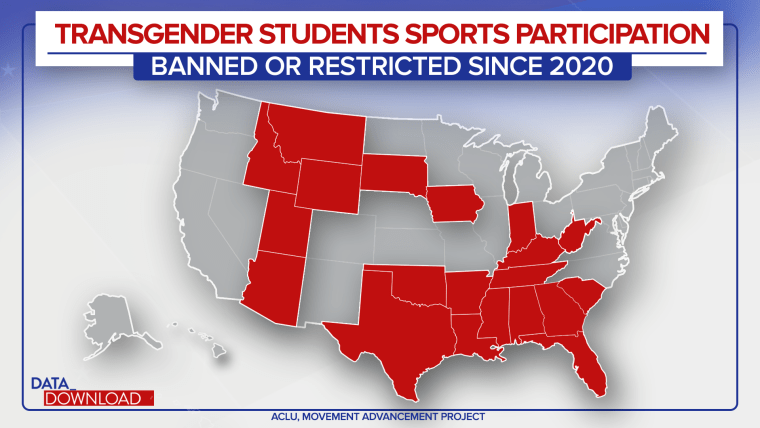
Washington state voters backed Initiative 638, a measure barring transgender girls from competing in girls’ school sports and requiring female team participants to obtain sex verification from a medical professional. The No Hate in WA State campaign, which opposed the initiative, conceded defeat on November 5, although the official ballot count was still underway. For a state long regarded as one of the strongest protectors of transgender students’ rights, this marked a significant and painful turn.
On Tuesday, November 3, supporters of No Hate in WA State gathered at Neumos on Capitol Hill in Seattle to await the first results. Campaign director Libby Watson addressed the crowd, not Regen Langholtz, whose name appeared in the event’s original description. Within the first hours of counting, it became clear that the initiative was well ahead; the following evening, the Associated Press called the race.
According to figures released on the evening of November 4, 1,252,863 people, or 56.6 percent, voted for Initiative 638, while 961,810, or 43.4 percent, voted against it. Opposition to the ban prevailed in just four of the state’s 39 counties: King, Jefferson, San Juan, and Whatcom. Seattle and its surrounding areas remained an island of dissent, but in most rural areas and small towns, the message of “protecting girls’ sports” proved more politically persuasive than concerns about children’s rights and privacy.
The initiative was launched by the conservative Let’s Go Washington committee, which is linked to Redmond financier Brian Heywood. The state legislature neither passed nor rejected it during its 2026 session, so the question went to voters. Until now, Washington Interscholastic Activities Association (WIAA) policy had allowed students to compete on teams that correspond to their gender identity; the rule has been in place since 2007.
The new law covers K–12 competitions—that is, from elementary through high school—where separate boys’ and girls’ categories exist. It bars students defined by the initiative as “biological males” from competing in girls’ events, both team and individual. Girls seeking to join such a team will have to submit a medical professional’s signed verification of their “biological sex,” based on reproductive anatomy, genetic data, or naturally occurring testosterone levels.
That wording became the main focus of the dispute. Supporters of the ban argued that it would not require new mandatory examinations: in their view, a doctor could rely on an existing medical record. Opponents countered that the text does not specify a uniform, non-burdensome method of verification, leaving schools, families, and doctors to decide what information and examinations are sufficient. They warned that the rule would affect not only transgender students, but also many other girls who would need a medical certificate to be allowed to play on a school team.
The scale of the legislative change stands out even more against the number of children at the center of the dispute. The WIAA said it knew of about 10 transgender students participating in sports across the state, out of roughly 225,000 student athletes. For supporters of Initiative 638, that does not diminish the fundamental question of fairness in girls’ sports. For opponents, the figures show that the state is introducing a broad verification system for a very small number of teenagers, for whom sports often mean not medals but an ordinary sense of belonging in school life.
No Hate in WA State acknowledged that the vote gap was unlikely to narrow enough to change the outcome, but vowed to continue its campaign. Lawyers and civil rights groups are meanwhile examining the possibility of a lawsuit, including on the grounds of Washington state’s constitutional privacy protections. Seattle’s Gender Justice League said it was considering a legal challenge; the ACLU of Washington also strongly condemned the measure, but has not yet announced a specific case.
The results are scheduled to be officially certified on December 3, and by then the WIAA must prepare new rules and forms for schools. The association has said it is conducting a legal review of the implementation details. The vote ended one political campaign, but not the dispute itself: it now moves from the ballot box to school administrators’ offices, doctors’ waiting rooms, and likely the courts.


Based on: Opponents concede loss in WA ban on trans girls in girls school sports