
The author recalls seeing a person lying on a sidewalk in New York several decades ago and asking her sister whether they should call for help. Her sister replied that such things happened constantly and that it was impossible to stop for everyone. Today, similar scenes have become familiar to the author in Seattle—on the way to work, the gym or the store.
The safety and health of people on the streets are often linked exclusively to homelessness, even though the causes of the crisis run much deeper. According to the University of Washington’s Department of Psychiatry and Behavioral Sciences, nearly one-quarter of the state’s residents experience mental illness or addiction at some point in their lives. People living below the poverty line report severe psychological distress 70% more often than more affluent residents.
The state lacks sufficient access to care because of high housing and living costs, shortages of specialists and treatment beds, problems with health insurance and lengthy waitlists. Seattle’s regional homelessness crisis adds further pressure: mental illness and addiction are often combined with a lack of stable housing.
The health care system is overburdened, while social institutions have been weakened by funding cuts and growing needs. The author believes the crisis requires new, evidence-based and accessible solutions. Art classes could be one of them—not as a luxury, but as part of care and recovery.
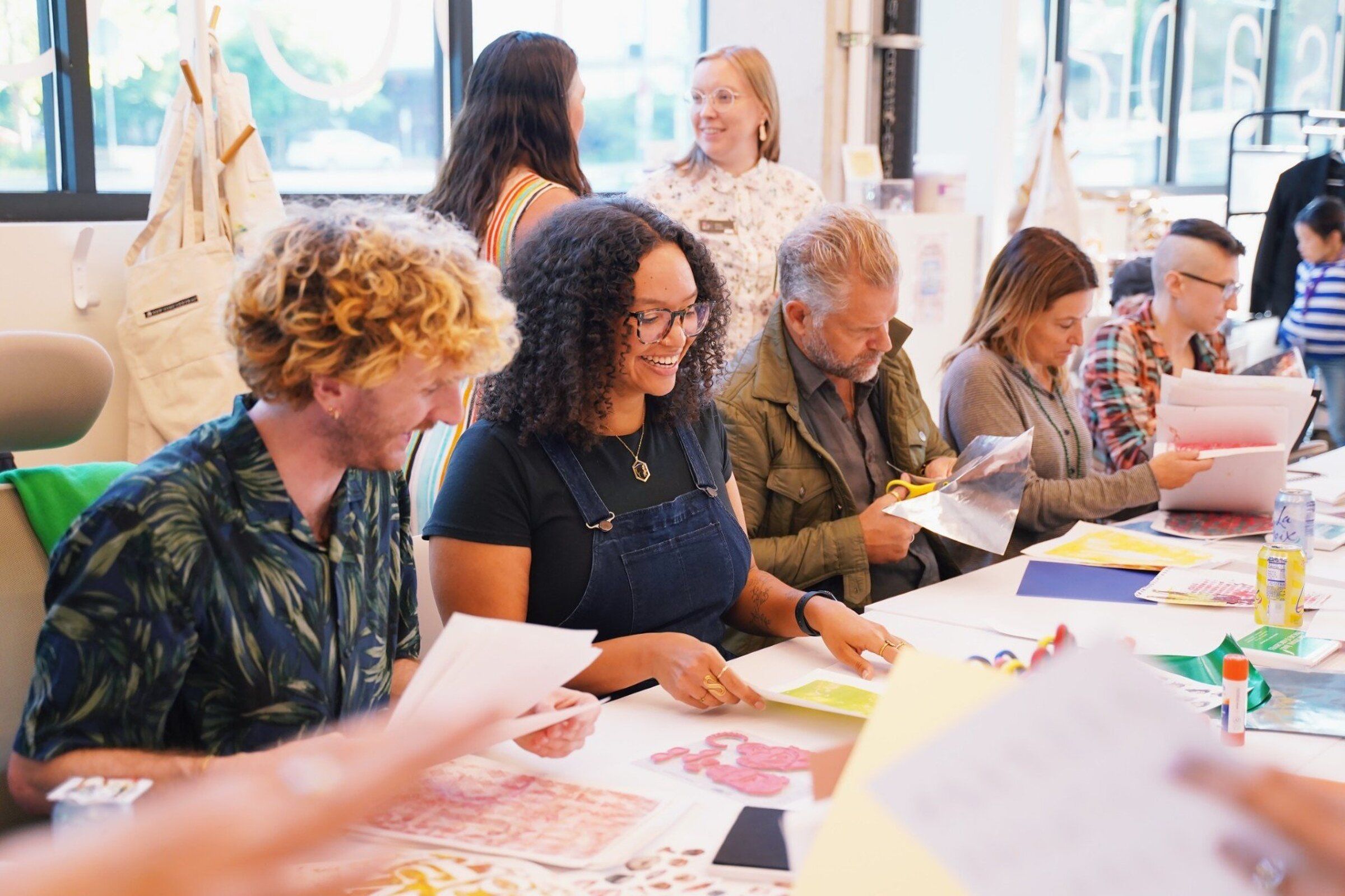
For 13 years, the author has worked at the Seattle nonprofit Path with Art. The organization offers free classes in painting, ceramics, writing, theater, music and photography to people who have experienced trauma, mental health crises or behavioral health conditions. More than 50 professional instructors serve approximately 2,000 participants and families each year, referred by health care providers, housing organizations and social services.
Path with Art serves as an additional resource, not a replacement for treatment or housing. Social workers, medical facilities, homeless-service providers and other partners refer people to the organization who may benefit from creative activities. Participants gain a safe community, regular practice and support that help strengthen social connections and everyday resilience.
The programs are intended, among others, for veterans, people recovering from gender-based violence and those returning to society after incarceration. The organization is able to reach so many participants through grants, donations and partnerships, as well as through the work of artists and nonprofit staff. Classes take place in community and partner spaces, reducing rental costs, while the group format allows many people to receive support at the same time.
A study published in the peer-reviewed journal Health Promotion Practice in collaboration with the Arts + Mind Lab at Johns Hopkins University found nearly a 90% improvement in participants’ mental health, along with a similar increase in their confidence in their ability to move forward.
One participant had previously worked as a massage therapist and successfully operated her own practice, but bipolar disorder destroyed her career and housing. She was admitted to psychiatric hospitals 26 times and lived in tent encampments and shelters. At 54, she saw an announcement at her clinic for a free art class. That class marked the beginning of seven years with Path with Art—and seven years without a single hospitalization.
She says resilience did not appear all at once: each individual class provided benefits, gradually restoring her sense of inner stability. Her experience shows that art can become part of preventing hospitalization for people with severe mental illnesses, rather than simply a pleasant way to pass the time.
Research links creative activity to improved physiological measures, regulation of the stress response and stronger emotional resilience. In medical practice, art activities have also been associated with less need for pain medication, shorter hospital stays, lower levels of depression and reduced health care costs. In the United Kingdom, so-called “arts on prescription”—referring patients to community and creative activities—has been used since the 1990s, and the World Health Organization summarized evidence from more than 3,000 studies in 2019.
Washington officials could introduce this practice as a complement to medical and social services. A doctor or social worker could refer someone to art classes in much the same way as with social prescribing, but not instead of psychotherapy, medication or addiction treatment. This would require sustained public funding, coordinator training, information sharing that protects confidentiality and evaluation based on attendance, levels of social participation and quality of life.
The author urges Washington not to wait until other states, including Connecticut, Maryland, Massachusetts and Wisconsin, have fully implemented similar programs. Art will not solve every problem, but it is an accessible, scalable and relatively inexpensive tool that should be funded, studied and included in standard care for trauma and mental health conditions. In the author’s view, what is lacking now is not evidence, but the political will to recognize art as an essential part of public health.
Based on: Art isn’t a luxury — it’s an intervention