
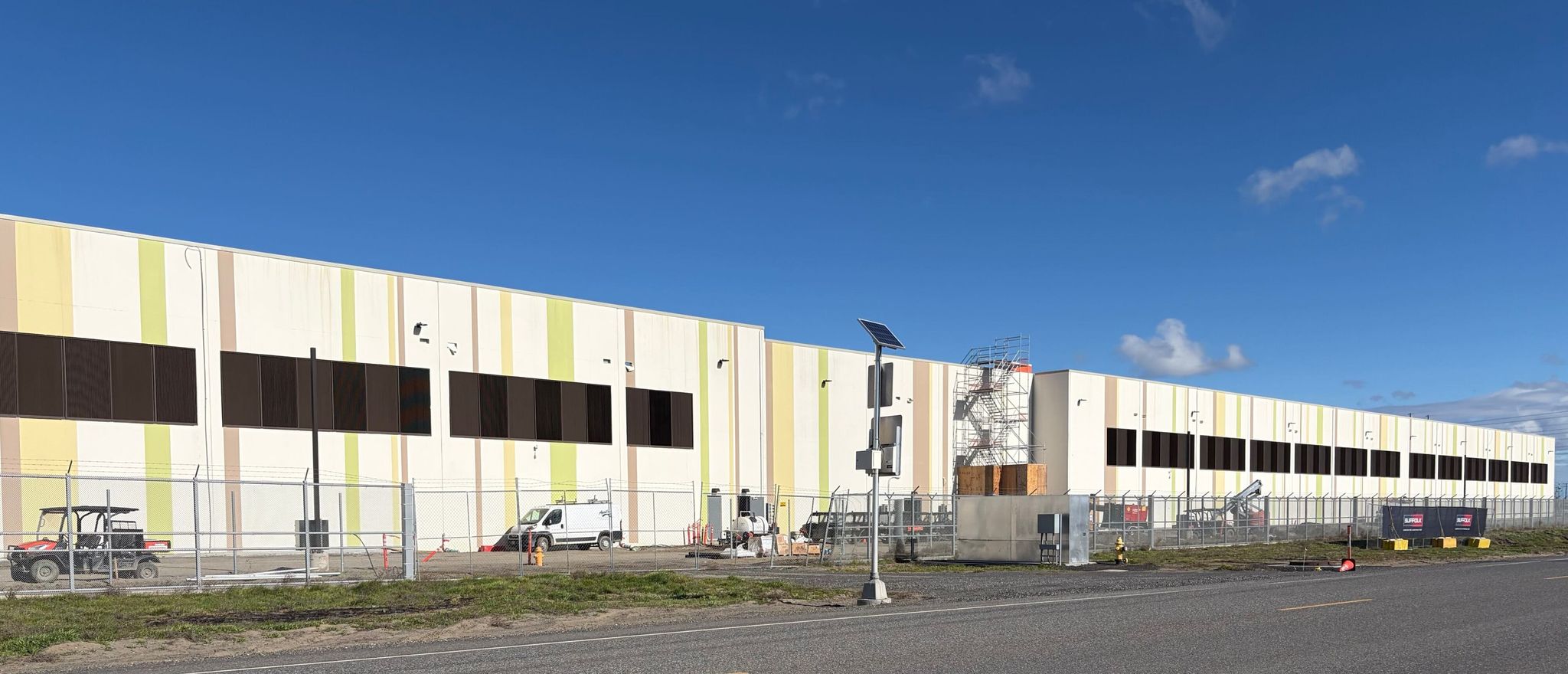
Amazon has this month acquired an expansive tract of land of about 1,300 acres near the town of Boardman, Oregon. According to previously submitted planning documents, the site could host the state’s first so-called “exascale” data center. The deal cost the tech giant $37 million, although concrete construction plans have not yet been approved.
A preliminary proposal prepared by a consulting firm is striking in scale. It envisions a 1-gigawatt complex composed of 16–20 buildings, which could be three times the size of a large shopping mall. Total investment is estimated at $8–12 billion, and the facility could employ more than a thousand people, including highly paid technical staff and support personnel.
The main challenge for such an ambitious project will be its enormous resource demands. A data center of that capacity would consume more electricity than all the homes in Portland, and cooling the servers could require up to 35 million gallons of water per year. Oregon’s power system, integrated into the broader Pacific Northwest grid, is already under strain from the rising number of data centers. The energy source for the new giant has not been determined, though the region traditionally relies on Columbia River hydropower, wind and solar generation, and natural gas. Oregon hydropower plays a key role in stabilizing the grid for the entire region, including major consumers in Seattle and Washington state. Amazon emphasizes that plan development is not yet complete.
The potential build is directly tied to growing demand for compute capacity for artificial intelligence. Amazon already has several operating and under-construction data centers in the county, but the new project would be an order of magnitude larger. Boardman’s selection is deliberate: the town, historically an important energy hub, is becoming a center for large industrial and technology facilities. These operations draw substantial amounts of electricity from the regional grid—some of it coming from Washington—and directly support Seattle’s technological and economic growth by providing critical compute capacity for cloud and e-commerce companies based in the state.
Despite preliminary agreements on water supply and statements from the utility company about the technical feasibility of connection, a final decision on breaking ground and the construction timeline has not yet been announced.
Based on: Plans call for Oregon’s first ‘exascale’ data center on Amazon site