Seattle found itself at the center of three stories: the sale of the Seahawks to the Haslam family with the involvement of technology investors, defensive tackle Leonard Williams’ contract extension and belief in “legendary defenses,” and a disturbing shooting in a residential neighborhood where police are searching for those responsible amid dozens of shell casings.
Seattle Seahawks Sale Completed: Unexpected Technology Figures Join Ownership Group
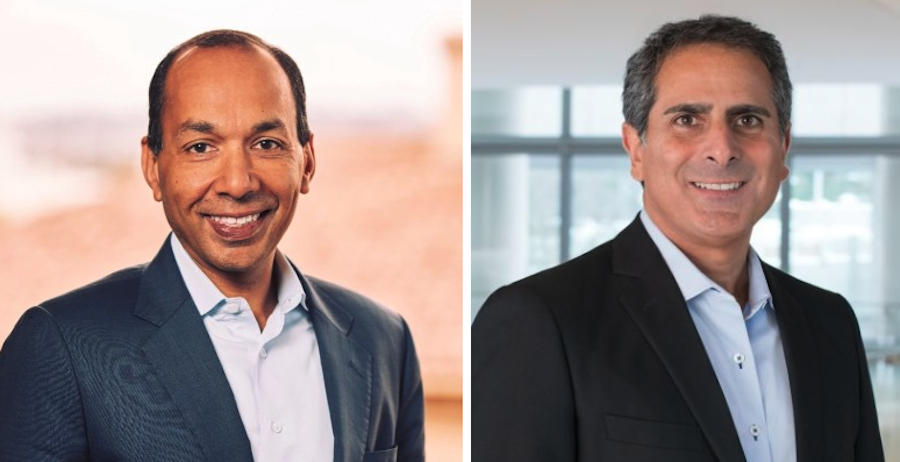
The sale of the Seattle Seahawks to the Haslam family has finally closed, marking not merely a change in ownership but a genuine passing of the baton from one technology era to another. When news emerged last year that the heirs of Microsoft co-founder Paul Allen were putting the team up for sale, numerous names were circulating—from Jeff Bezos to Steve Ballmer. However, the winning bid came from the family of Silicon Valley venture capitalist Vinod Khosla. Although many of Seattle’s wealthiest technology figures, including Bill Gates and Melinda French Gates, chose not to enter the race for the nearly $10 billion asset, the final list of co-owners includes two familiar faces who will preserve the franchise’s ties to the local innovation ecosystem.
They are former Apptio CEO Sunny Gupta and Nader Naini, managing partner at Frazier Healthcare Partners. At first glance, these names may not be associated with sports, but their presence on the investor list is more than a nod to local roots. Gupta, who also served as executive chairman of Smartsheet and recently launched an enterprise AI startup, embodies the region’s software strength, comparable to Paul Allen’s own legacy. Naini, meanwhile, represents the financial and healthcare sectors, adding depth to the ownership portfolio beyond straightforward sports investments. Notably, Naini is already familiar with regional sports management, serving on the board of the Tacoma Rainiers baseball team—possibly indicating a long-term interest in developing sports assets in Washington state.
The list of co-owners looks like a cross-section of the global financial elite. In addition to Gupta and Naini, it includes Sequoia Capital’s Mark Stevens, known for early investments in Nvidia and Google; former U.S. Commerce Secretary Penny Pritzker; and major investment firms such as Sixth Street and Carlyle. International dynasties add further color, including Mexico’s Aramburuzabala family and British investor Len Blavatnik. This combination suggests that the Haslam family sought not merely to find wealthy partners, but to build a strategic alliance capable of providing the club with financial stability and global connections. Given that the Seahawks are defending their Super Bowl title in the 2026 season, such support will be critical to keeping the team at the top. The new ownership group will be formally introduced next Wednesday at Lumen Field, and fans should expect not only welcoming speeches but also announcements about future investments in the team’s infrastructure and roster.
To understand the significance of the deal, it is worth remembering that Paul Allen bought the Seahawks in 1997, when the team was going through difficult times, and transformed it into one of the NFL’s most valuable brands. His name became synonymous with stability, and the Allen family’s departure from the role of managing owners represents a symbolic break with the past. Khosla’s arrival, however, is no accident: Vinod Khosla, a pioneer in solar energy and co-founder of Sun Microsystems, represents a new wave of technology capital increasingly entering traditional sports. Notably, the controlling stake is passing not to Vinod himself but to his wife, Neeru, which is unusual in the NFL and may point to a family-oriented approach to management focused on a long-term social mission, particularly through a charitable foundation. For fans, however, the most important question remains: Can the new ownership group preserve the winning culture established during the Allen era? The early signs are encouraging. With Gupta and Naini, the team gains local entrepreneurs who understand the region firsthand, while partnerships with giants such as Carlyle provide access to the capital needed to build a new stadium in the future. Details about the deal’s structure and each co-owner’s role will emerge gradually, but it is already clear that the next chapter in Seahawks history will be written with the active participation of people for whom technology and innovation are not merely words but a way of life.
Legendary Defense Is Born in Seattle: Leonard Williams on His New Contract and the Road to the Top
Seattle Seahawks defensive tackle Leonard Williams met with reporters to discuss his new agreement with the club. The deal was more than another entry on the player’s résumé; it became a symbol of mutual trust between the athlete, the organization and the city he now calls home. In his address to the media, Williams made no attempt to hide his emotions, calling the contract extension “incredible” and emphasizing that the day might not have arrived without the support of head coach Mike Macdonald.
Williams’ story in Seattle is an example of how professional sports intersect with human values. According to the player, the family culture within the organization, along with the city’s distinctive energy and the fans’ loyalty, helped him find balance both on and off the field. “I feel wanted here,” the defensive lineman said. “It’s not just a job; it’s part of life.” The opportunity to finish his career with this team fills Williams with genuine excitement. Seattle is where he is playing the best football of his career, and the recent Super Bowl victory has only strengthened his desire to stay.
Williams’ recognition as an All-Pro also deserves special attention. For any NFL player, it represents the pinnacle of individual achievement, but Leonard emphasizes that he does not intend to rest on his laurels. His approach remains pragmatic: he prefers to move one step at a time rather than look too far ahead. “A season is made up of individual games, and each one is a new challenge,” the athlete says philosophically. At the same time, he is devoting more time to mentoring young defensive linemen. Williams understands that passing experience on to the next generation is an essential part of building the “legendary defense” people talk about in Seattle.
A key point of the interview lies in terminology that may be unfamiliar to newcomers. A defensive tackle, for example, is an interior defensive lineman whose main responsibilities are disrupting the opponent’s running plays and pressuring the quarterback. All-Pro honors are awarded to the best players of the season, as selected by journalists and coaches, making the recognition a highly prestigious individual award. As for Mike Macdonald, the young coach is known for an innovative defensive scheme that allows players such as Williams to maximize their potential.
Interestingly, Williams’ contract situation reflects a broader NFL trend: teams are increasingly investing in veterans who not only provide consistent performance but also become cultural leaders in the locker room. Extending Williams’ contract signals that the Seahawks are building around character as well as talent. Data from recent seasons confirms that Seattle’s defense improved significantly after Williams’ arrival: pressure on opposing quarterbacks became more aggressive, while run defense became more disciplined.
Williams himself, however, avoids making bold promises. “When I step onto the field, I don’t think about statistics or awards. I think about how to help my team win,” he says. That humility, combined with ambition, is what makes him a unique player. In a city where rain falls almost as often as landmark sporting moments occur, Williams has found his place. And judging by his attitude, the Seahawks have plenty more reasons to be proud, because legendary defenses really are born in Seattle.
Unknown Shooters Riddle South Seattle Neighborhood: Police Search for Suspects
On Wednesday evening, residents of a quiet South Seattle neighborhood heard what they initially took to be the sound of firecrackers. It soon became clear, however, that it was a real gunfight. Officers responding to the 2900 block of South Holly Street found more than 40 shell casings scattered across the roadway and the grounds of a small park nearby. Bullets pierced the bodies of three parked cars and the façades of five homes. Fortunately, no one was injured—the street was nearly empty at the time of the shooting.
According to witnesses, everything happened quickly: two vehicles drove into the intersection at the same time, and people inside opened fire. However, based on the type of casings recovered and witness accounts, shots were not fired only from the vehicles. Someone also fired from the direction of the park, where people may have been present who were either victims or participants in the conflict. By the time police arrived, neither suspects nor injured people were at the scene—all those involved had fled before patrol officers arrived.
Detective Shane Weatherford said it was currently difficult to determine whether the shooters had specific targets or were firing randomly in an attempt to intimidate someone. He also did not rule out the possibility that some participants had left the scene rather than wait to deal with law enforcement. The investigation has been assigned to the Gun Violence Reduction Unit, a specialized division that handles such cases in the city.
This is not the first similar incident in the Seattle area in recent months. Local residents increasingly complain that disputes between groups are taking place directly in residential neighborhoods and are calling on authorities to increase patrols. In practice, however, even after high-profile incidents like this, those responsible are rarely identified. Witnesses are often afraid to come forward, while suspects can disappear within minutes.
South Holly Street is in southeastern Seattle and has historically been considered a mixed-use area, where single-family homes stand alongside small parks and commercial buildings. The shooting occurred in a residential zone, making the incident especially alarming for the local community, since bullets could have struck windows of homes occupied at the time. Seattle police created the Gun Violence Reduction Unit specifically to analyze incidents like these and identify patterns that could help prevent future shootings.
For now, detectives are interviewing residents and reviewing surveillance footage from nearby homes and commercial properties. Police have not ruled out a connection between the shooting and a larger conflict that erupted earlier in other parts of the city, but that remains only a theory. Residents are advised to remain vigilant and report any suspicious vehicles or people in the area.
As The Seattle Times reported, incidents like these are becoming increasingly common in Seattle despite the city’s efforts to combat illegal gun trafficking. The central question remains unanswered: Was this an isolated burst of violence, or is the city on the brink of a new wave of criminal disputes whose consequences could be far more serious than bullet holes in the walls of homes?