
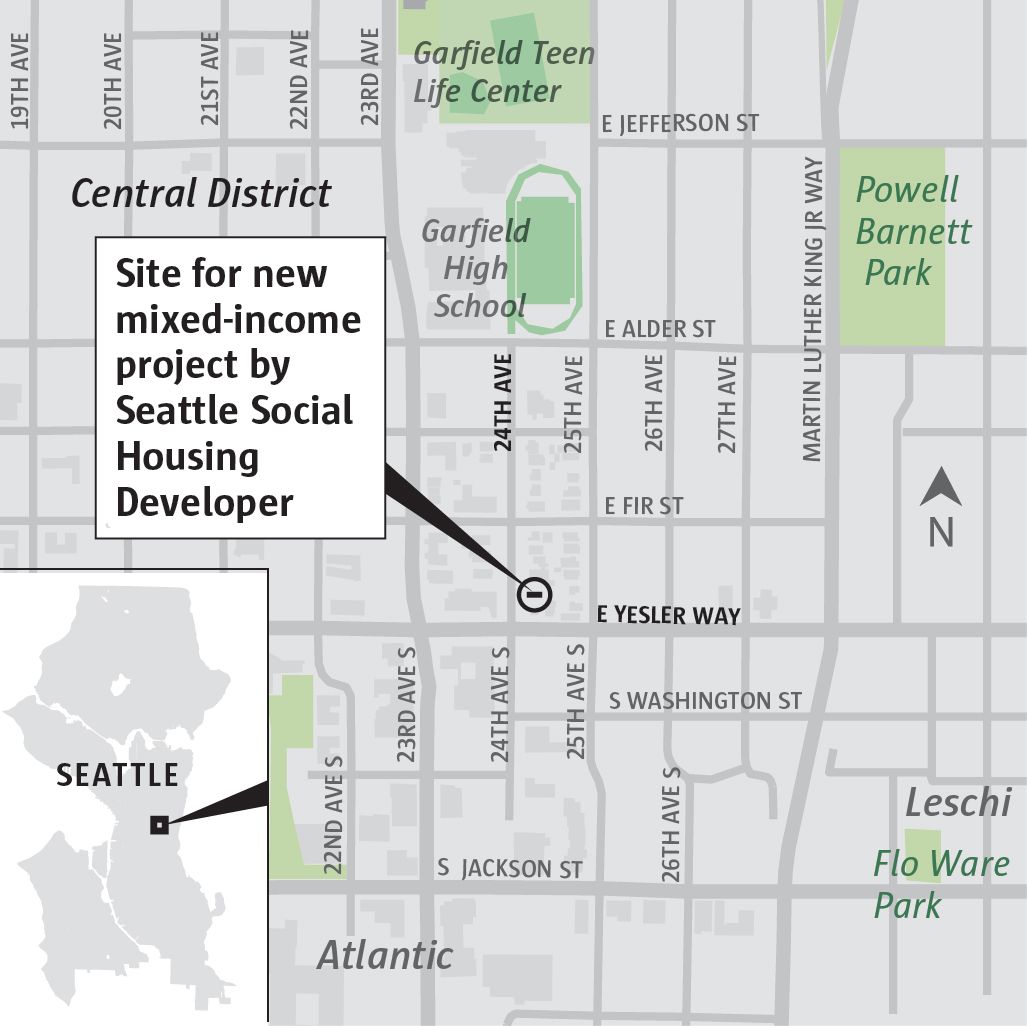
Seattle’s public developer of social housing has purchased a property in the Central District where it plans to build a 20-unit apartment building. The property at 2402 E. Yesler Way belonged to the late Frank Chopp, a former speaker of the state House of Representatives and an advocate for affordable housing. The project will be the organization’s first development since Seattle voters approved funding in 2023 for permanently affordable housing for residents with different income levels.
Central District House will serve a mixed-income population: rent from apartments for higher-income residents will help subsidize housing for people with low incomes. Two apartments will be reserved for families earning no more than 30% of the area median income — about $34,500 a year for one person or $44,400 for a family of three. The remaining apartments will be allocated among other income categories; applicants will be required to live or work in Seattle.
The area median income, or AMI, is calculated by the U.S. Department of Housing and Urban Development for the entire Seattle metropolitan area, not just the city. The calculation takes household income and family size into account, so the qualifying income for several people is higher than for one person. The thresholds are revised annually.
The organization has already acquired its first property — the 150-unit Elara at the Market building downtown. However, the launch of that project was accompanied by difficulties: after receiving more than 10,000 applications, officials temporarily stopped processing requests from the lowest-income applicants to establish a social-support system. Applications were later reopened after three nonprofit organizations and a full-time staff member were brought in to help residents obtain benefits, find work and deal with rent arrears. Similar services will be available at the new building, tailored to the needs of the local community.
Former and current Central District residents will receive priority for occupancy. This policy could help people maintain their ties to the neighborhood or return to it, while supporting local cultural institutions and the historic identity of the Black community. However, priority alone may not be enough: former residents can have difficulty proving where they previously lived, while rising prices, taxes and service costs could continue to displace residents. The program’s effectiveness will depend on transparent criteria, apartment availability and additional support measures, including tenant protections and assistance for low-income families.
The Central District has historically been home to various groups, including Jewish and European immigrants and Japanese Americans. After World War II, it became predominantly Black as racist housing restrictions pushed Black residents into the neighborhood. Because of rising prices and gentrification, the share of Black residents has fallen to roughly one-fifth.
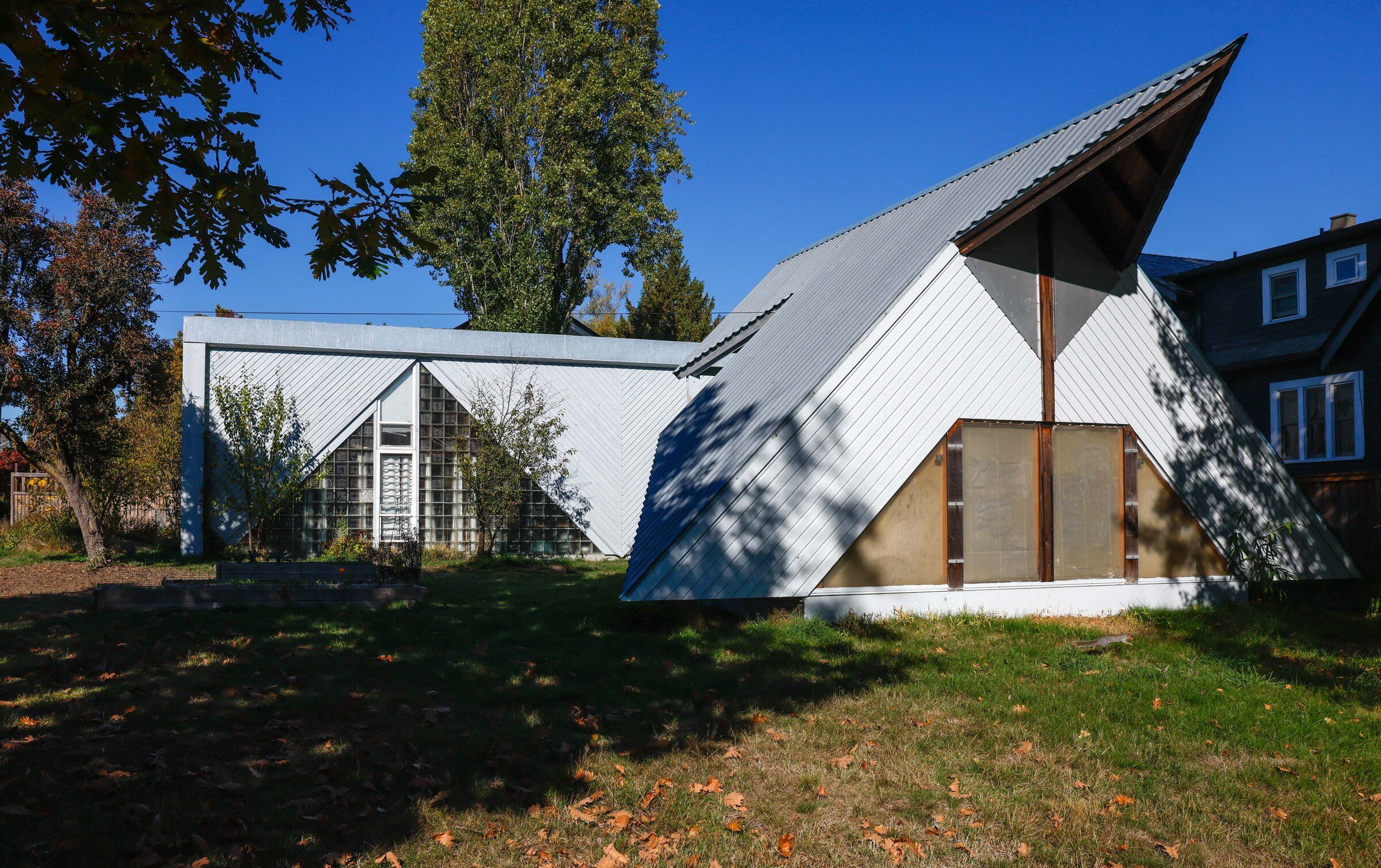
Construction will begin next year and is expected to be completed by the end of 2028. The Chopp family sold the property for $1 million, while the project’s total budget will be $15 million. The site contains unusual “urban cabins” built by Chopp and his father in the 1970s; they are expected to be relocated, or some of their materials will be reused in the construction of the new building.
Based on: Seattle social housing developer buys property to build new housing