
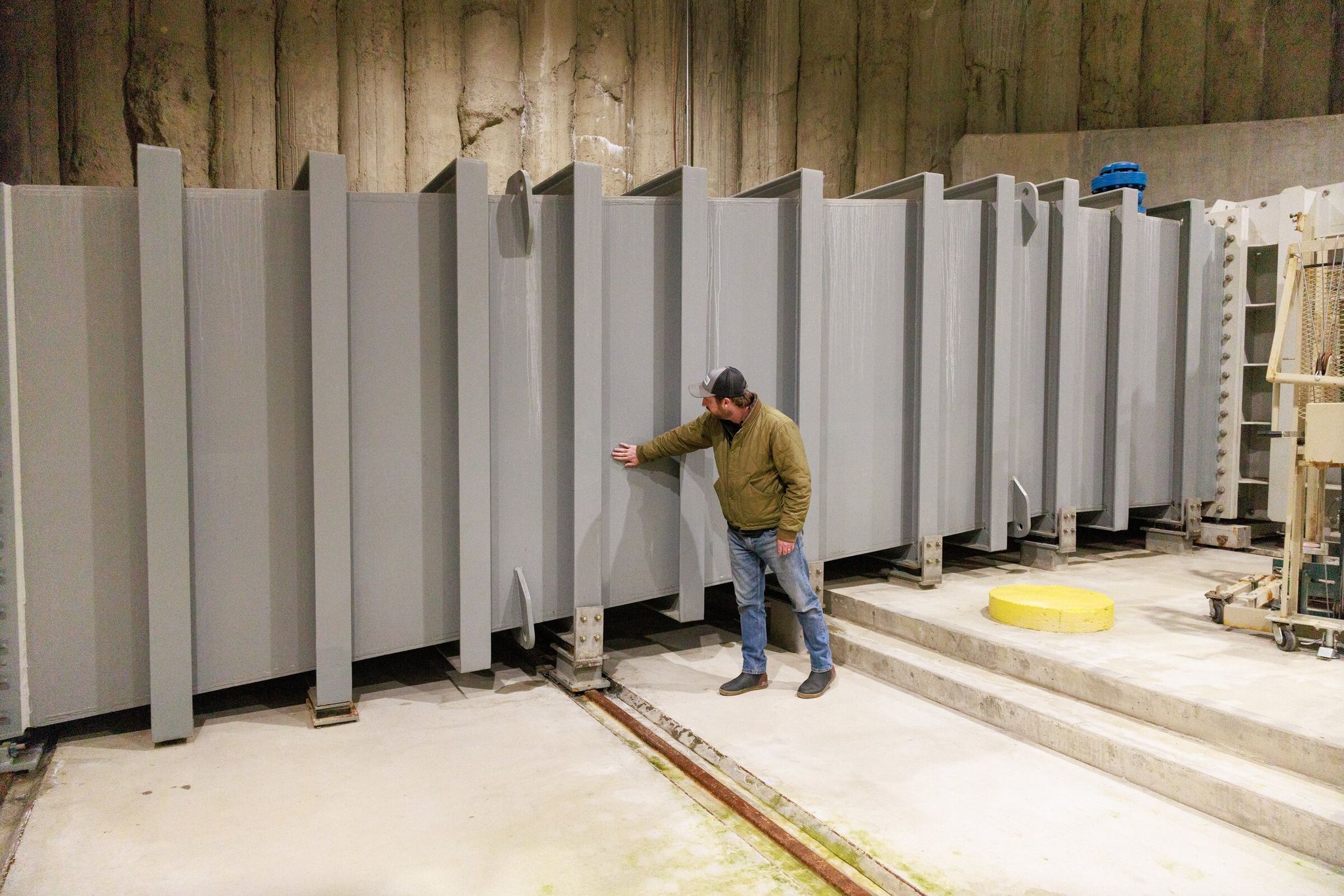
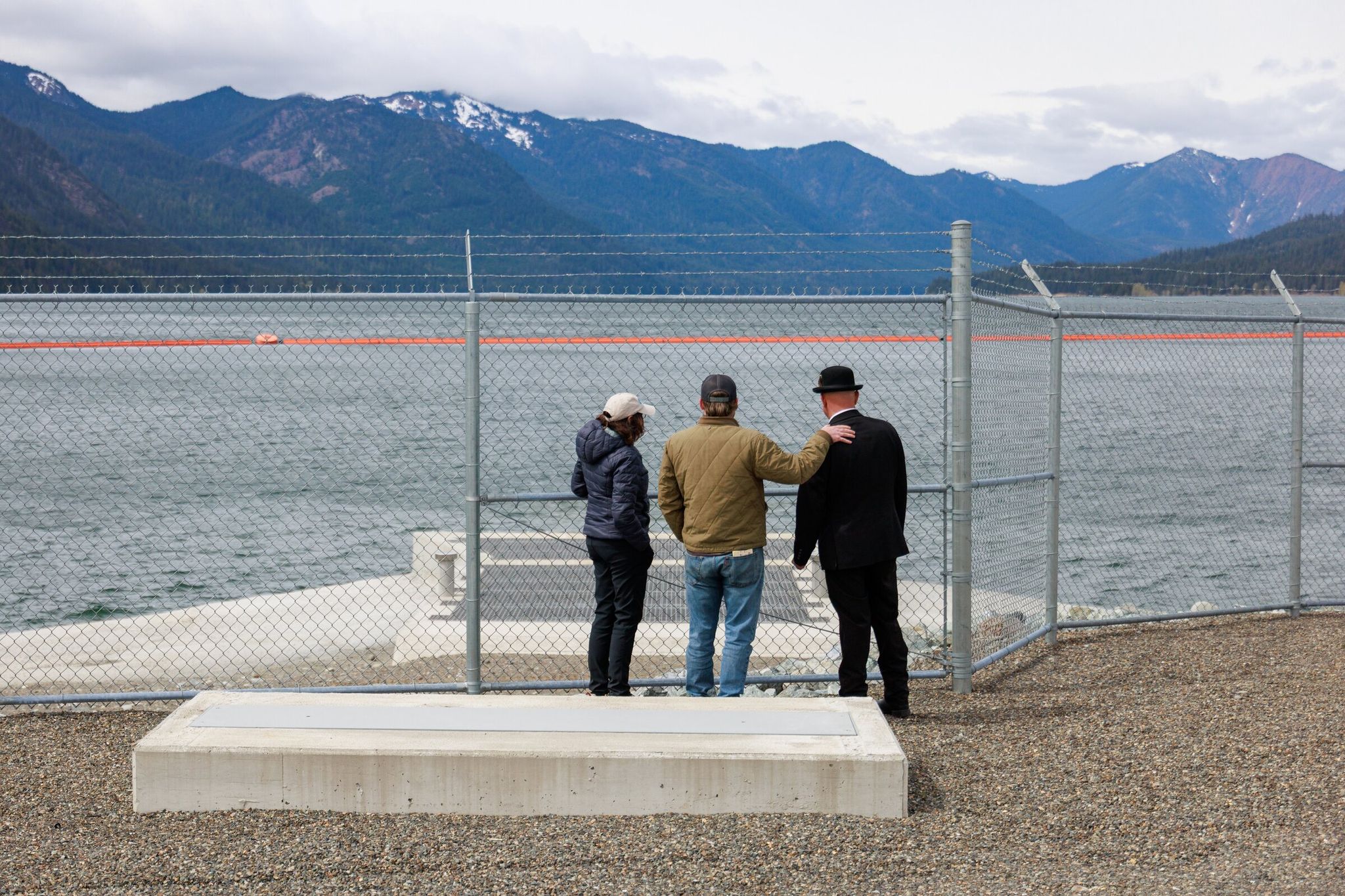
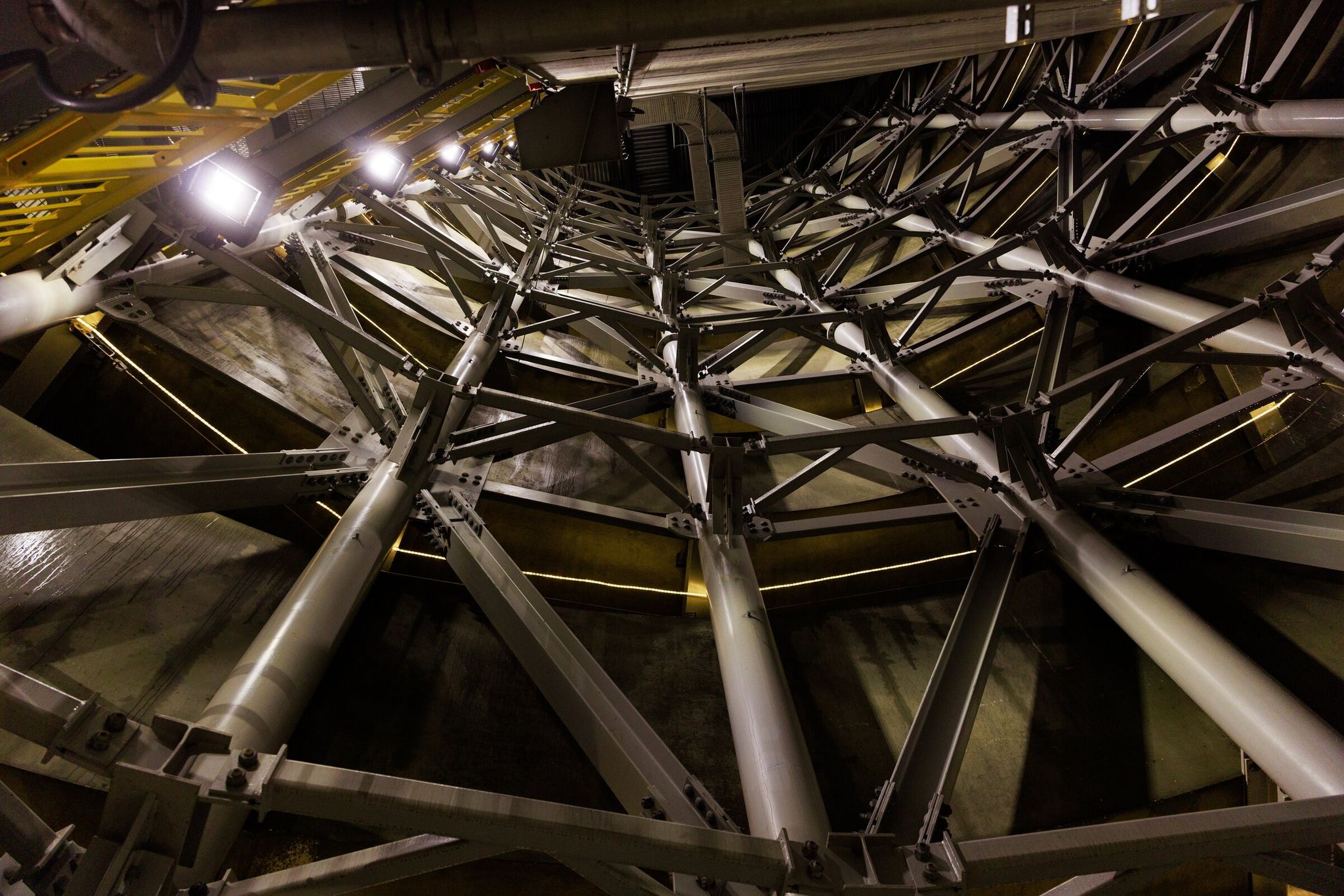
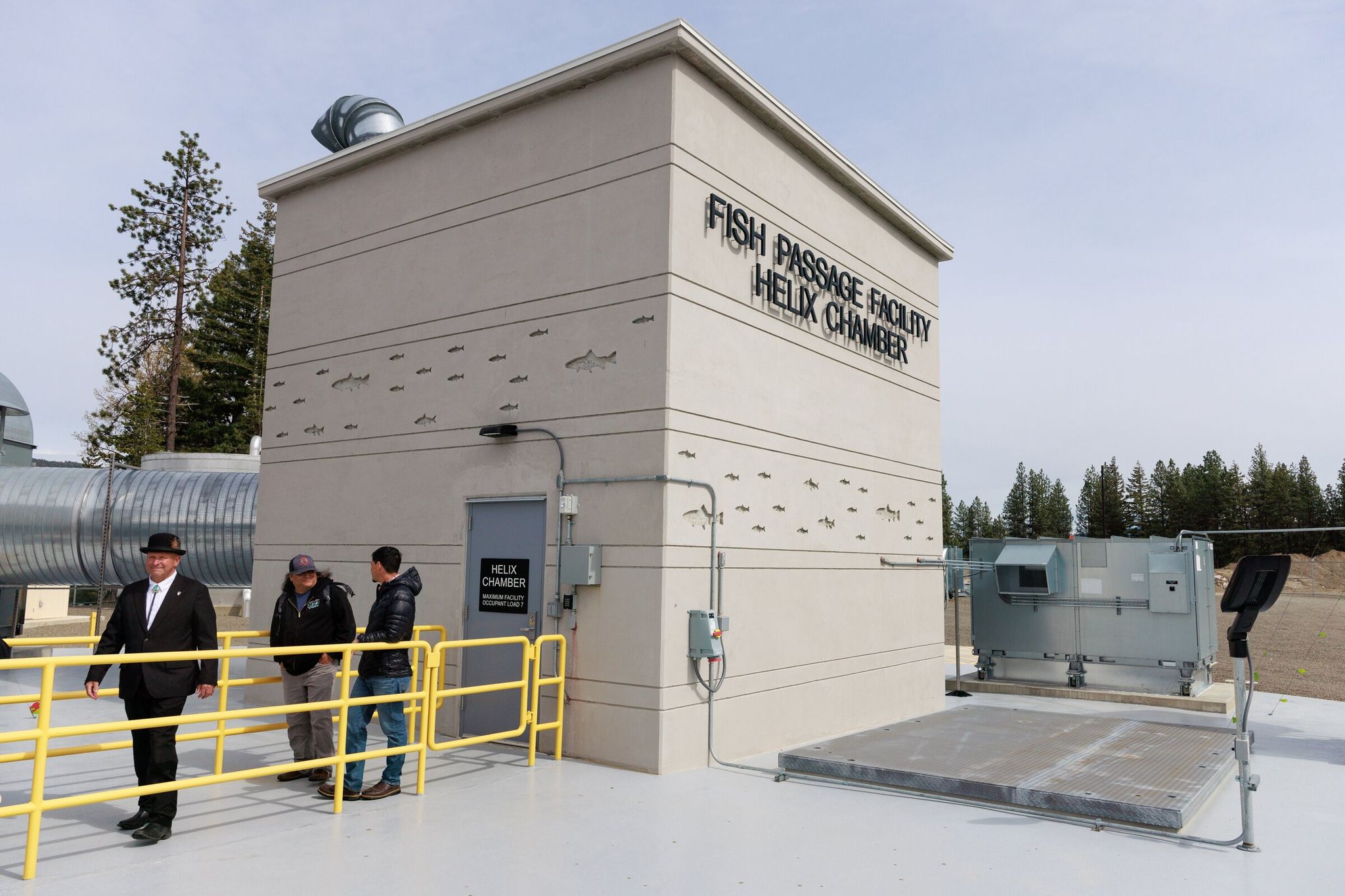
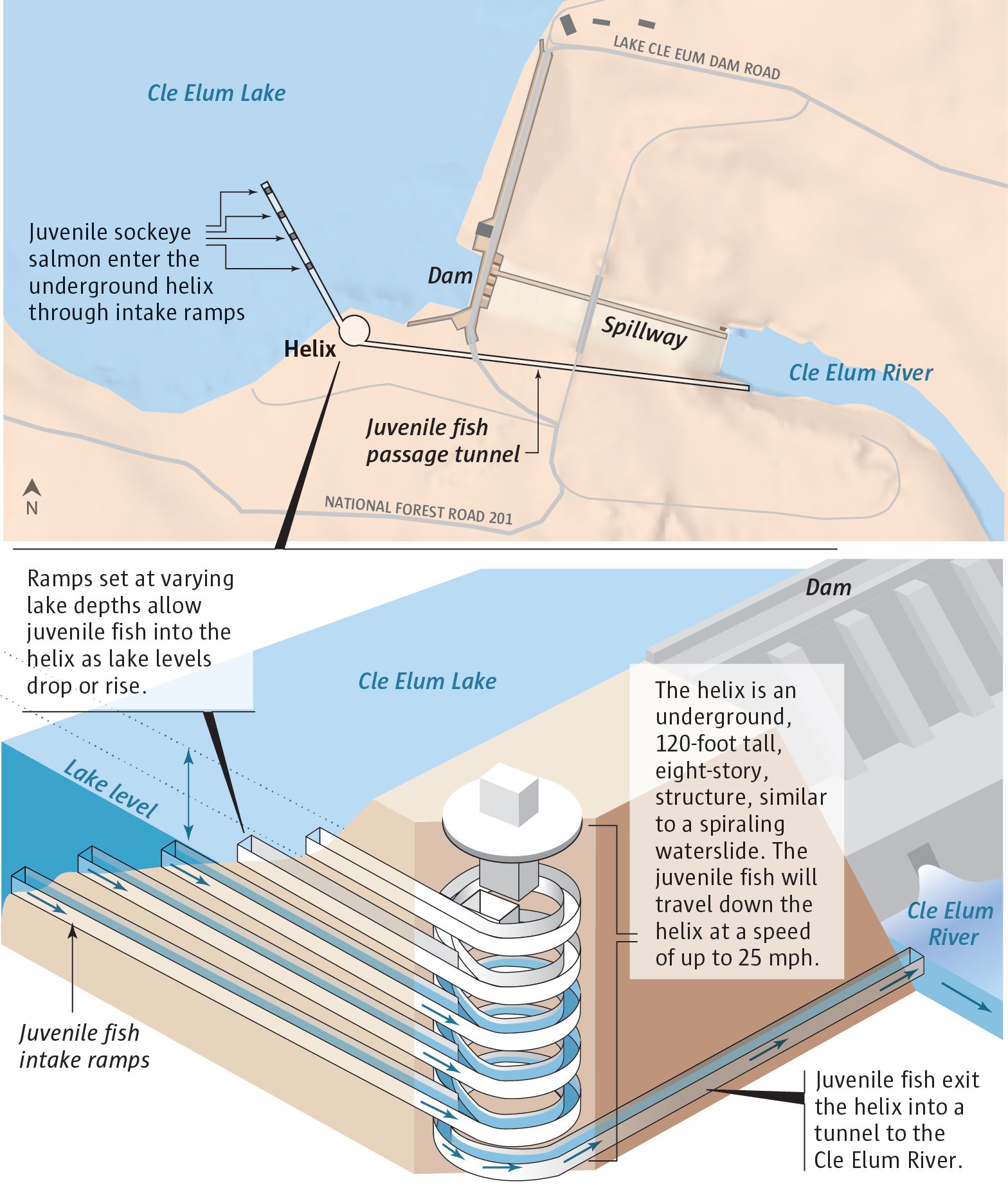
A waterfall tumbles down a spiral water chute cut into the bank of Cle Elum Lake, carrying juvenile sockeye into a hidden, swift route. The fish passage, the first of its kind and dubbed the "helix," now allows sockeye to bypass the nearly century-old Cle Elum Dam that once cut off their access to ancestral waters and contributed to their local disappearance. Completed this spring with $255 million in state and federal funding, the helix marks a milestone in years-long efforts to reconnect the Yakima Basin.
The Yakima River is one of Washington’s most important salmon spawning grounds, even though major cities like Seattle sit on other rivers. Unlike Seattle’s urbanized rivers, the Yakima Basin has retained more natural spawning habitat, though it has been heavily altered by irrigation. Several salmon species live here, including chinook and coho, which migrate through the Columbia River system.
The helix and related projects grew out of the Yakima Basin Integrated Plan — a collaboration that brings together federal agencies (the U.S. Bureau of Reclamation, the U.S. Fish and Wildlife Service), the state of Washington, the Yakama Nation, agricultural irrigation districts, conservation groups and local governments. Proponents call the $4 billion plan a model for resolving water conflicts in the West, which is increasingly strained by climate change and chronic drought. Compromise mechanisms, such as temporarily storing water for farmers in exchange for boosting flows for fish during critical times, allow competing interests — irrigation, drinking water, salmon needs and hydropower — to be combined into a single, integrated solution. Economist Jonathan Yoder of Washington State University found in 2014 that fish-passage projects in the basin provide some of the highest net economic benefits among proposed investments. Salmon restoration generates revenue through commercial fishing, tourism, cultural revival for the Yakama people and multiplier effects in the local economy.
Climate change is already reshaping the landscape that feeds the Yakima. Snowpack in the Cascades, which historically acted as a natural reservoir by storing winter precipitation and releasing it slowly in summer, is shrinking, leaving rocky peaks largely bare. That leads to earlier melt, reduced summer flows and more frequent droughts, threatening irrigation for orchards and vineyards in the Yakima Valley as well as water supplies for central Washington cities. In response, basin partners are expanding storage at Cle Elum Lake, planning another reservoir and investing in conservation while also removing barriers.
For the Yakama people this work is more than infrastructure; it's a matter of cultural survival and ecological restoration. "We’re doing this for future generations," said Joe Blodgett, a Yakama Nation representative and manager of the Yakima-Klickitat Fisheries Project. "And it’s not just for future generations of the Yakama people, it’s for the whole ecosystem." The 1855 treaty between the Yakama Nation and the United States guaranteed the tribe the right to fish at "usual and accustomed places," securing their rights to sufficient flows for salmon. In 1908, the Supreme Court in Winters v. United States held that tribal reservations have senior water rights even if not expressly documented. In the Yakima Basin, that means the tribe’s water rights to sustain salmon populations legally take precedence over later agricultural water rights, prompting authorities to craft a plan for shared water use. Fisheries experts note that for millennia Yakima headwater rivers and lakes were full of salmon.
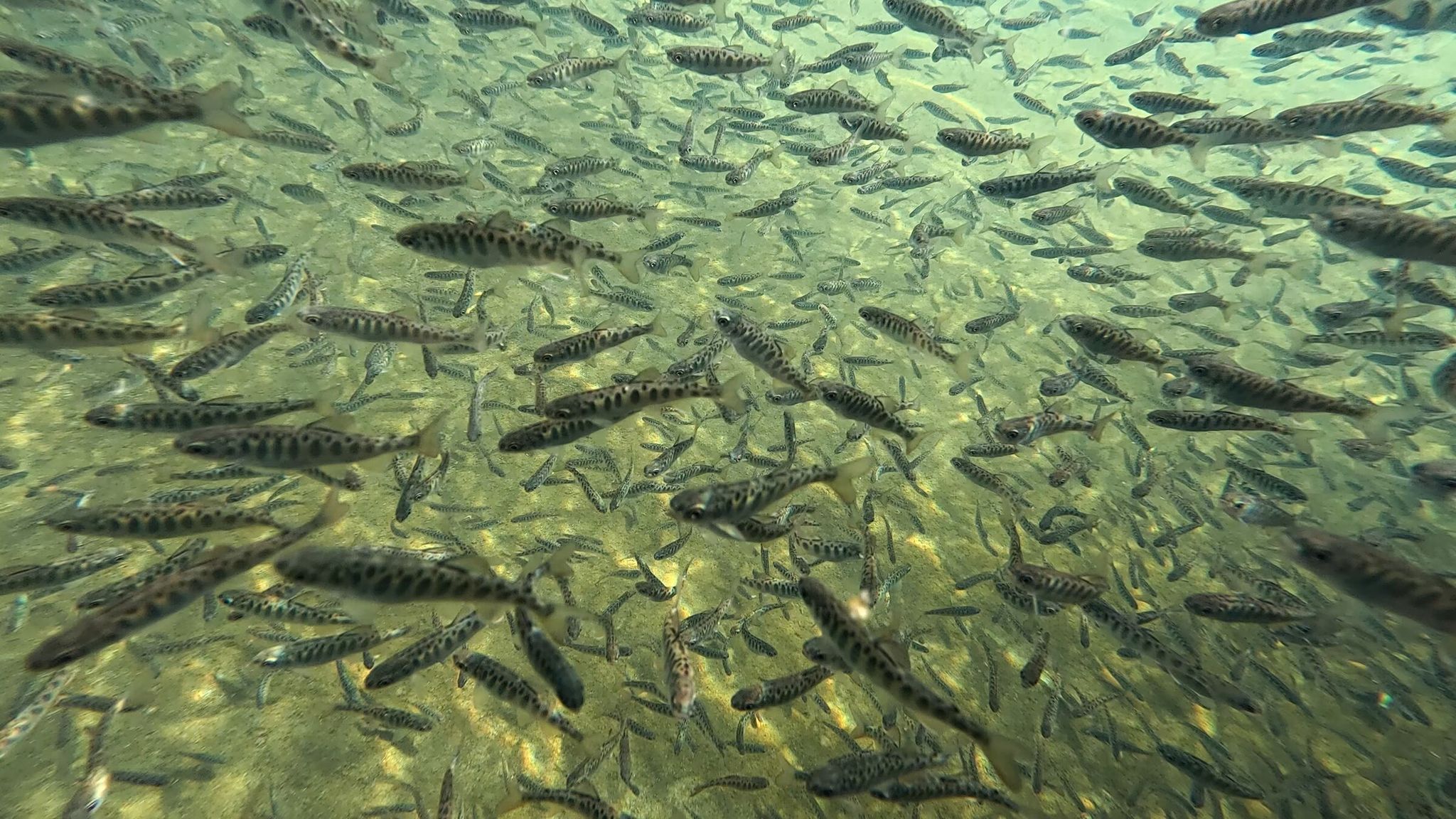
Historically the Yakima supported the second-largest salmon population in the Columbia Basin: more than 200,000 adult sockeye returned to spawn each year. But within a generation, dams built to store water for agriculture blocked access to the headwaters and led to the disappearance of sockeye in the Yakima system. Today the 10-year average return of adult salmon and steelhead is just over 11,000.
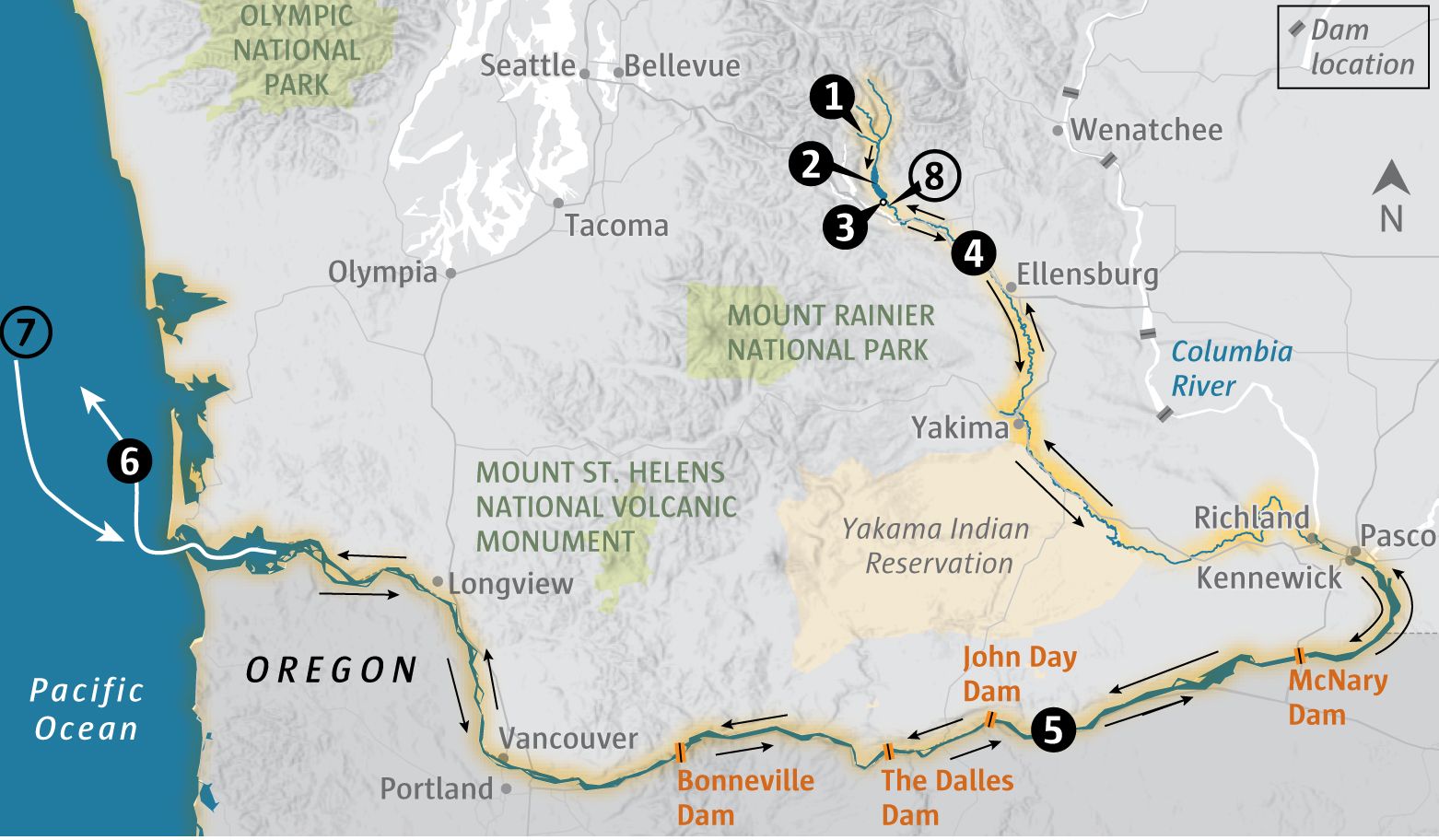
Restoring sockeye populations requires helping fish overcome the barrier corridor. Juvenile salmon hatch in tributaries above Cle Elum Lake reservoir, then spend about a year in the reservoir before migrating downstream. They must pass six irrigation dams on the Yakima, predators, and then the dams on the Columbia.
As climate change tightens basin water supplies, restoring access to cold, high-elevation habitat offers a climate-resilience strategy for both fish and people. A 2024 heatwave caused mass die-offs of adult sockeye returning to the Yakima. Fisheries experts have long eyed fish passage in the upper basin, and Cle Elum Lake was chosen first.
Designing a better passage system meant finding a way to release juveniles safely from the reservoir without additional water spilling. Traditional fish ladders — a series of stepped pools fish jump up — proved inadequate for local salmon species given the low heights and variable pool levels at Yakima dams. Bureau of Reclamation engineers developed and tested several helix models at a Colorado lab. The spiral chute creates a continuous, smooth flow with adjustable velocity, allowing salmon to move without the stress of jumping. When they saw juveniles orient tail-first and slide tail-first down the coiled channel, it was, Blodgett said, an emotional moment.
Modern efforts to reintroduce sockeye began in 2009, when Yakama fisheries staff started truck-transporting adult sockeye to Cle Elum Lake. A temporary plywood ramp in the dam aqueduct provided a crude route for juveniles, but they could only leave the lake when the reservoir was full. Yet within a few years cameras at irrigation dams recorded returning adult sockeye on their own.
This spring about a million juvenile sockeye made their first voyage through the completed helix. A new adult fish capture facility is being built at the same time.
Based on: Cle Elum Lake sockeye salmon use first-of-its-kind ‘helix’ to pass dam