
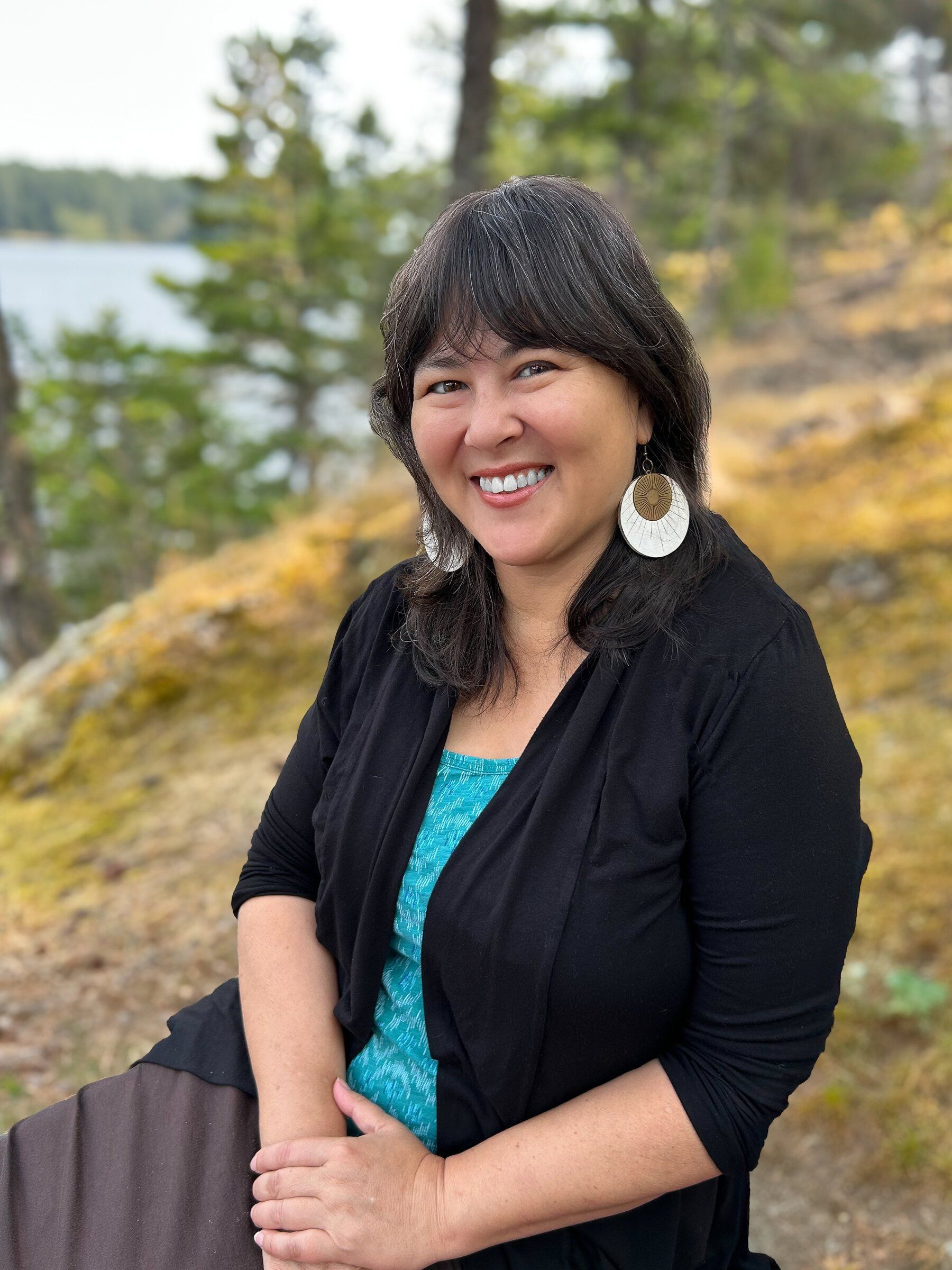
The anthology Mixed Roots by Seattle writer Anne Liu Kellor brings together the work of 29 authors and explores the experiences of people of mixed racial and cultural backgrounds. At the heart of the book is the question of where one belongs in the world: many contributors write about loneliness, the need to adapt to different communities and the fear that being accepted may require them to hide part of their identity. The topic’s relevance is underscored by the growth of the multiracial population in the United States, which increased by 276% between 2010 and 2020.
The book grew out of the “Both/And” workshops Kellor led at Hugo House, a literary center, beginning in 2019. Hugo House is a nonprofit organization that offers writing classes, public readings, mentorship and support for authors, particularly those from underrepresented communities. The workshops created a space where participants could explore multiple cultural, ethnic and family affiliations simultaneously, without reducing identity to a single category.
The sessions addressed coming of age, learned ideas about race, whiteness, colorism, privilege, silence and the limitations of binary thinking. Through accessible instruction and a community of writers, the program helped authors tell their own stories and take a more visible part in Seattle’s literary life. Many participants have ties to the city. Kellor finished the draft last summer, and soon afterward she was diagnosed with breast cancer; throughout the following year, she combined treatment with editing the book.
The authors examine race not only as a personal matter but also as a social system that for centuries has affected marginalized groups’ access to resources, opportunities, health care and safety. Sawala Nolan writes that people of mixed heritage disrupt the racial classification system long familiar in the United States and challenge notions of “pure” and unambiguous race. She also discusses the “one-drop rule,” historically used to preserve the boundaries of whiteness.
Personal stories show how searching for one’s roots can become a return to wholeness. Writer and photographer Elizabeth Vasquez Hein recalls that as a child she viewed her family’s Filipino heritage as a collection of disconnected fragments: her parents did not place much emphasis on the Filipino language and culture. Later, she began studying Tagalog at the University of Washington and participating in Filipino women’s organizations in the region.
The university supports the study of Filipino languages, history and culture through academic courses, research and community programs. Women’s organizations complement this work with cultural events, language initiatives, intergenerational gatherings and support for families. For people of mixed heritage, such spaces offer an opportunity to gradually learn the language, become familiar with traditions, connect with cultural communities and discover their family history without being expected to conform to a single idea of “authentic” identity.
Her mother’s native languages became, for Hein, the sound of “returning home.” Kellor connects this experience to the concept of nepantla — a state of being between worlds in which a person can embrace the fluidity and ambiguity of identity instead of choosing only one side.
Based on: Seattle writer explores mixed-race identity in new book