In early March 2026, debate about the United States in leading media in Europe and Latin America unexpectedly coalesced around one big theme: a return to Washington’s blunt use of force. In German, French and Brazilian outlets the US is once again described as a power that simultaneously conducts a large-scale military campaign in the Middle East, meddles in regime change in Latin America, pressures allies and at the same time is losing the image of the West’s “natural” leader. But the tone and emphasis in Berlin, Paris and Brasília differ sharply: for some it is first and foremost a question of security and dependence, for others — a threat to sovereignty and domestic democracy.
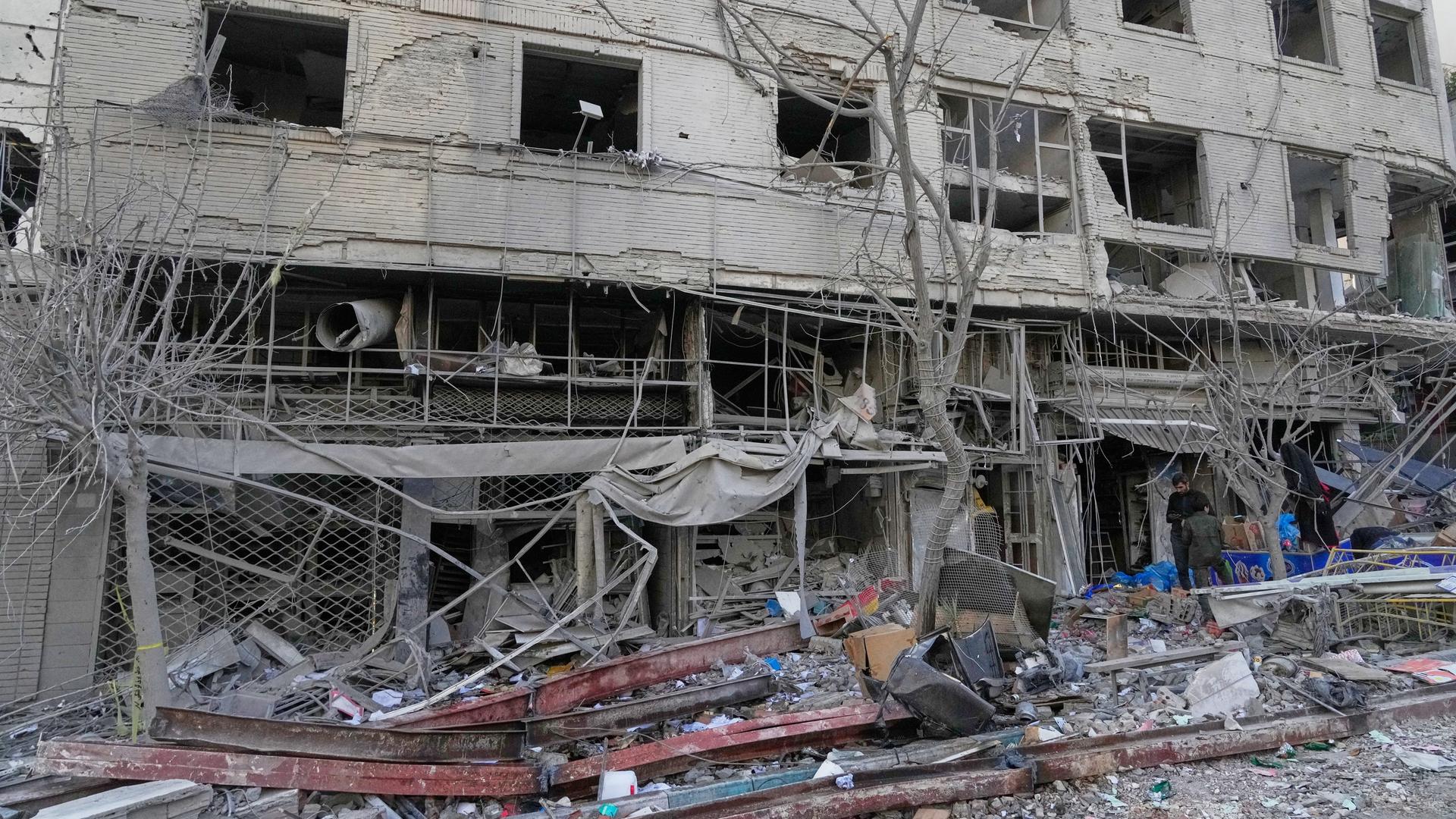
At the center of the current wave of commentary is the sharp build-up of American military presence in the Middle East and the war with Iran. Several European and Brazilian pieces directly compare the events of recent weeks to the period before the invasion of Iraq: it is noted that since late January the US has been concentrating the largest force in the region since 2003, including aviation, the fleet and missile defense components, against the backdrop of escalation with Tehran.(pt.wikipedia.org) At the same time, three different contexts — German, French and Brazilian — create three different narratives around the same American move.
In the German media space the image of the US most often appears in the mode of a skeptical political column. Deutschlandfunk commentators, summarizing the international press, cite Asian and European newspapers that warn: the US‑Iran confrontation carries risks for the global economy and requires allies not to offer automatic support but to insistently demand de‑escalation. One review quotes a characteristic passage from Japan’s Yomiuri Shimbun: Tokyo “must demand de‑escalation from both sides and use all diplomatic instruments.”(deutschlandfunk.de) In the German rendering this message sounds broader: since Washington is acting increasingly unilaterally, allies — from Japan to Germany — are forced to think primarily about their own security, not loyalty.
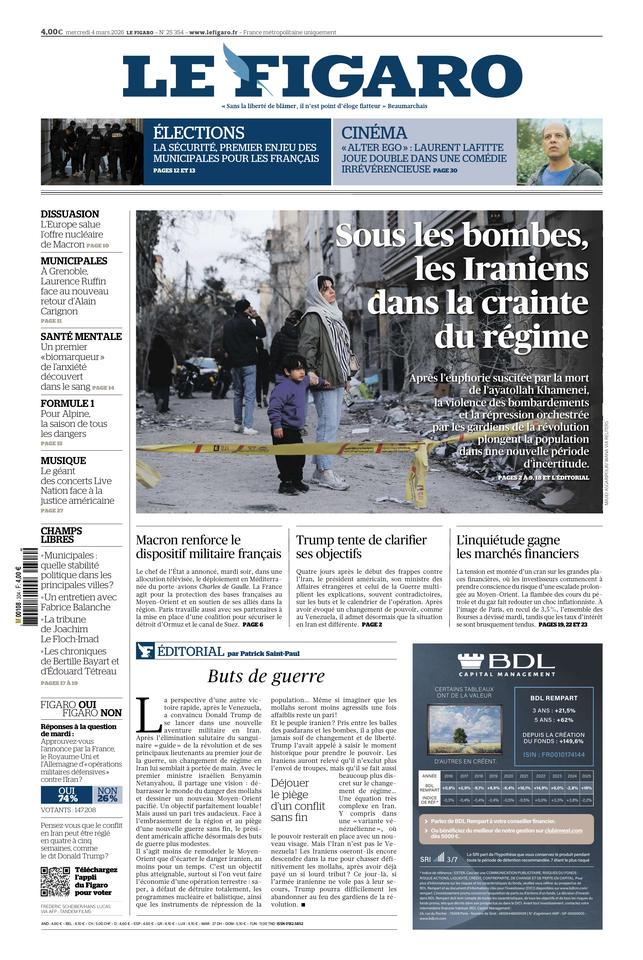
The French press, notably the center‑right Le Figaro, views the same confrontation through the lens of direct consequences for Europeans: French tourists have been stranded in Asia and the Middle East amid the war, the foreign minister speaks about Rafale fighters deployed in the UAE being used for operations in the region.(kiosque.lefigaro.fr) Comments on these reports carry a typically Parisian ambivalence: on one hand France is involved in the broader Western military arc, on the other — it increasingly fears becoming a hostage to Washington’s strategic decisions, over which it has no control. Therefore newspaper columns intensify the theme of a “communication crisis” in the White House and the need for Europe to formulate its own Middle East line rather than simply adjusting to the US.
In Brazil the discussion of the same American campaign is far more emotional and politicized. Leftist outlets and analytical portals link the war with Iran and the preceding “twelve‑day war” of 2025 to the personal style of President Donald Trump, his propensity for unilateral and forceful solutions. In an interview analyzed by the site Brasil 247, political scientist John Mearsheimer predicts: a US victory in a war against Iran is impossible, the conflict will drag on, depleting American resources and undermining support for Trump at home.(brasil247.com) Brazilian commentators conclude that Washington is not so much managing the world system as becoming a source of instability whose consequences batter developing economies — through oil prices, sanctions and market turbulence.
This line is directly taken up in economic analysis. Forbes Brazil, assessing the country’s economic prospects for 2026, points out that one of the main external risks remains US and Israeli strikes on Iran, which threaten disruptions to oil and gas supplies and carry inflationary shocks.(forbes.com.br) For local economists Washington is no longer only a partner or an “anchor” of global stability, but a factor capable at any moment of derailing an interest‑rate easing cycle, jeopardizing employment recovery and triggering another round of inequality.
If the Middle East thread emphasizes the military side of the new American policy, in Latin America the main symbol of the changing US role becomes its interference in the region’s internal affairs. Brazilian publications and regional reviews analyze in detail the American intervention in Venezuela and the ensuing “Cuba crisis of 2026.” The pieces note that the ousting of Nicolás Maduro — a key ally of Havana — the blocking of Venezuelan oil supplies and the openly stated goal to achieve regime change in Cuba by year’s end have effectively resurrected Cold War rhetoric, when Washington decided which governments were acceptable in its “backyard.”(pt.wikipedia.org)
In Brazil this topic is immediately linked to the 2026 elections at home. The center‑left outlet Brasil de Fato publishes an extended interview with a political scientist who states plainly: “Brazil is right to exercise caution, but will face US pressure in the elections.” The expert recalls the possible visit of President Lula to the White House and talks with Trump, and stresses that “no country in the world will irresponsibly risk taking a front‑line stance against the US,” while noting that Washington has in recent years systematically interfered in the region’s electoral processes.(brasildefato.com.br) In the Brazilian reading, American policy in Latin America is not abstract geopolitics but a direct threat to democratic sovereignty, which can manifest as information campaigns, economic pressure and support for right‑wing forces.
In Europe the discussion of US interference takes a different form — as a crisis of confidence in American leadership in general. A Brazilian analytical portal, citing fresh data from a European Polling Europe Euroscope survey, writes that 64% of Europeans express a negative view of President Trump, and 51% no longer consider the US a friendly country, with only a quarter of respondents calling it an ally. Compared with October 2024, trust in the US as a partner has collapsed by 36 points.(laviaitalia.com.br) This shift is especially sensitive for Germany and France, where the entire postwar foreign policy was built on the idea of America as a guarantor of security. German and French commentators, relaying such polls, increasingly ask: if populations no longer see the US as a natural ally, how resilient are NATO and the familiar architecture of European security?
Against the backdrop of geopolitical crises, another motif stands out in European columns about the US — disappointment with American domestic politics and elites. French analytical blogs and sites like Les Crises turn to a series of investigations and published court documents in the Jeffrey Epstein case and ask: how could such a criminal mechanism have existed for years at the heart of American political, economic and media elites?(les-crises.fr) These texts mix moral condemnation and cold realism: the US appears not only as an intervening power abroad but as a society where “double standards” and elite impunity call into question Washington’s right to lecture others on human rights.
In Brazilian discourse the image of “internal” America is colored differently. Euronews in Portuguese runs a detailed “tracker” of Trump’s environmental policy, recording every administrative step perceived as an “attack on the climate.” Among recent episodes is a federal judge’s decision that deemed unlawful the White House’s cancellation of multibillion‑dollar clean energy subsidies in states that voted for Kamala Harris in 2024, and sharp criticism of new dietary guidelines from the health and agriculture ministries perceived as industry‑friendly.(pt.euronews.com) For Latin American authors these stories are further confirmation that the US under Trump is a state ready to use budgets, courts and regulators to punish political opponents, and that expecting it to lead globally on the environment is naïve.
Interestingly, German and French outlets, while critical of Trump, are more cautious in their conclusions. A pragmatic logic still dominates there: even if Washington acts unilaterally and cynically, Europe remains dependent on American security and the dollar. One German radio column ironically retells the old “pizza theory” — that an uptick in orders near the Pentagon supposedly presages overtime and war preparations — as a symbol that Europeans can only read the signs from Washington and adapt.(deutschlandfunk.de) In Brazilian and broader South American debates the idea of building alternative centers of power — from regional integration to closer ties with China — already predominates as insurance against American arbitrariness.
Against this background one particularly expressive storyline that both European and Brazilian authors pick up is the mass protests inside the United States against strikes on Iran and the killing of Ali Khamenei. Chronicles of these demonstrations, held in February–March in dozens of American cities, are cited not so much as news as an argument in the debate: even within the US a significant part of society is not prepared to endlessly back foreign ventures, and this constrains Washington’s maneuverability.(pt.wikipedia.org) For German and French commentators this is a reminder that “America” is not only the Trump administration but also protesters, lawyers and judges trying to resist. For Brazilian center‑left media these protests serve as an example of how street pressure and civil society can hold militarism in check — a lesson they transfer to their own political contexts.
Taken together, the German, French and Brazilian texts produce a multilayered, contradictory but fairly coherent image of today’s United States. For Europe it is still an indispensable but increasingly unreliable ally that must be watched closely and, where possible, kept at arm’s length in the riskiest operations. For Brazil and broader Latin America the US is primarily a major power that interferes in neighboring countries, pressures their elections and at the same time can wreck their economies by launching a war on the other side of the world. For all three societies the United States becomes an object not only of fear or admiration but of sober analysis: the key question now is not “for” or “against” America, but “how to live in a world where Washington no longer guarantees stability or predictability.” And it is precisely in this shift — from belief in a special US role to a pragmatic and often critical dialogue with it — that the main change in international perception of America likely lies today.