Against the backdrop of a protracted war with Iran, an intensified confrontation around the Strait of Hormuz and a series of impulsive moves by the Donald Trump administration, the United States has again found itself at the center of global disputes. But viewed not from Washington, but from Ankara, Berlin or Canberra, the picture looks far more troubling and contradictory. In Turkey there is debate over whether the current hard U.S. line will be a reason to reboot bilateral relations or, conversely, will cement a strategic distance. In Germany, American policy is seen as a mix of chaotic coercion and economic selfishness that undermines the previous architecture of world trade. In Australia, public and expert debate is torn between the instinct to lean on the U.S. alliance and a growing fear of being dragged into someone else’s war without the navy or domestic consensus to do so.
The common thread of all these discussions is three big themes. First, the U.S. and allied war with Iran and the crisis in the Strait of Hormuz, perceived as a test of the responsibility and predictability of American leadership. Second, Trump’s new trade-and-economics line—from the “Liberation Day” tariff increases to the courts’ annulment of parts of his duties—and how this is felt in export-oriented Germany and in the Turkish private sector, which depends on dollar liquidity. And finally, the evolution of U.S. military alliances—from AUKUS to pressure on allies to contribute more—which is felt particularly acutely in Australia, where the new defense strategy is clearly written through Washington’s prism, yet America itself, according to some experts, is becoming a less reliable partner. (en.wikipedia.org)
Around Iran and the Strait of Hormuz the picture is almost grotesquely heterogeneous. The Turkish press, even the segment oriented toward financial investors, closely monitors every Washington statement: analytical bulletins from Turkish brokerage houses recount in detail news that the U.S. and Iran are negotiating via Pakistan, and record how Trump’s remarks that “bombings” might be “a more effective position” if talks fail are immediately reflected in oil prices and the dollar exchange rate. In one such roundup, Turkish analysts noted how reports of progress in talks in Pakistan and intentions to extend a ceasefire improved market sentiment, while subsequent Trump comments about possibly not extending the truce increased nervousness again—something Turkey feels directly through oil imports and inflationary pressure. (gedik.com) It is through this prism of risk assessment and the dollar cost of borrowing that Turkey’s business audience discusses American strategy: not as an abstract “fight for democracy,” but as a source of price spikes and the threat of a new wave of sanctions.
At the political level in Ankara, very different notes are sounding. Last week Turkish leadership, via friendly media, actively circulated leaks that the U.S. is ready to compromise in the long-running dispute over Russian S-400 systems and Turkey’s exclusion from the F-35 program. A compilation of international commentary prepared by the ruling party’s think tank cites a Reuters piece in which Turkish officials warn that if the U.S. “withdraws” its commitments from the European security system, the consequences could be “devastating” for the continent, while the same document records the U.S. ambassador to Ankara speaking of a “near resolution” of the sanctions issue over the S-400—framed in the paper as a possible turn toward “normalization” of relations. (akparti.org.tr) In this Turkish conversation the U.S. is no longer an abstract superpower but a concrete military and technological partner on whom the fate of the defense industry, Turkey’s status in NATO and the balance with Russia depend.
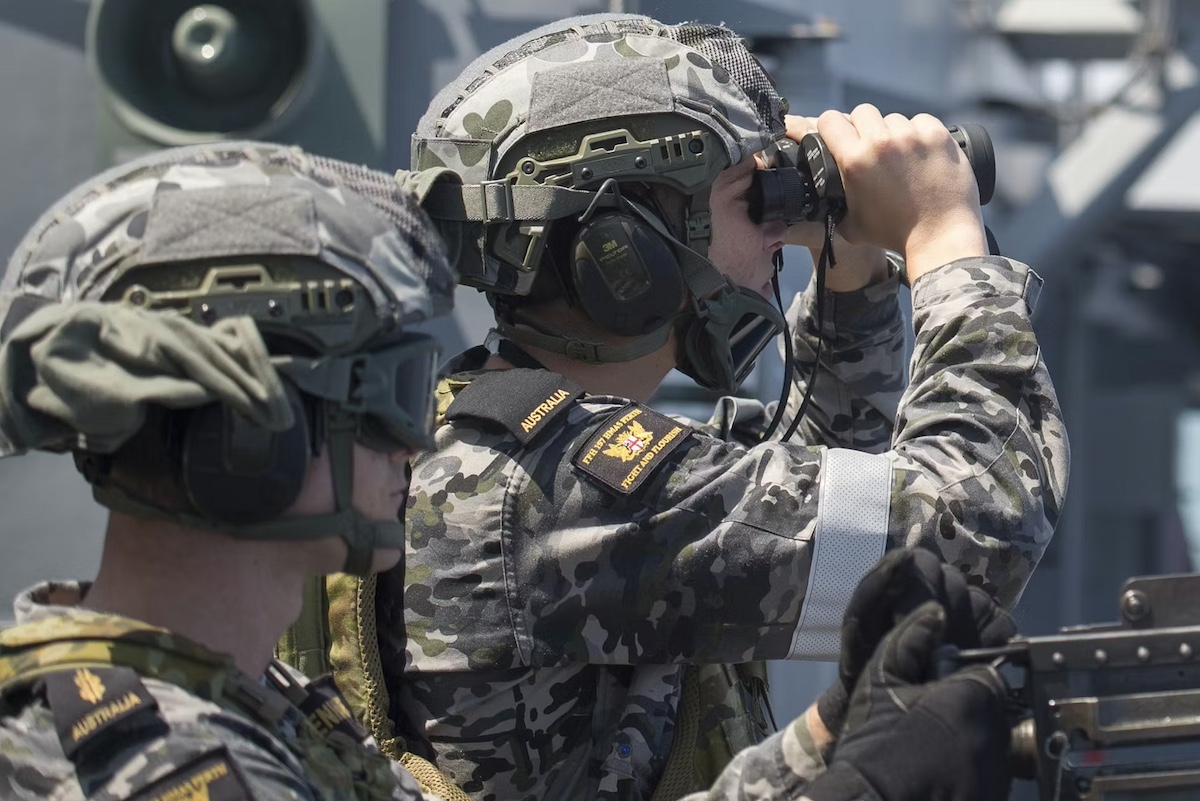
In Australia, the same events around Iran and Hormuz are experienced far more existentially. Australian media and experts note that the war with Iran has already directly affected the country: according to reports, three Australian service members were on board a U.S. submarine that sank an Iranian frigate off the coast of Sri Lanka, and Canberra, on that basis, refused a U.S. request to send a warship to the Strait of Hormuz, citing the condition of its own navy. (en.wikipedia.org) That decision became an important marker that unconditional support for U.S. military initiatives is no longer automatic.
Respected Australian commentators speak directly of a “paralysis” in thinking about the alliance with the U.S. A University of Sydney analysis emphasizes that Washington is simultaneously dragging Australia into confrontation with China and into conflict with Iran while itself pursuing an ever more impulsive policy, where Trump’s decisions on sanctions, tariffs and strikes on Iran are hard to predict. (ussc.edu.au) An Asia Times piece on Australian defense strategy notes that the document is formally geared toward strengthening cooperation with the U.S. and AUKUS, but hardly answers the question: what to do if Washington itself is less interested in a long-term presence in the region or starts demanding increasingly politically toxic involvement from allies in operations like the current campaign against Iran. (asiatimes.com) The paradox is that the riskier and less predictable the American line looks, the more Australia is forced to invest in it—and the more painful the domestic debate becomes over the limits of loyalty.
The German perspective on the U.S. in recent weeks has focused less on Hormuz and more on the economy and the architecture of world trade, though the Middle East war forms a constant backdrop. Analysts at Helaba bank in a recent review called last year’s “Liberation Day”—the moment of sharp tariff increases by the Trump administration to punish foreign suppliers—a “failure on all counts.” Detailed charts in that study show that after an import surge ahead of the tariff introductions, actual volumes of U.S. imports through early 2026 ended up higher than in the baseline 2024 period, while American consumers faced price increases and now, after the U.S. Supreme Court in February ruled much of the tariffs unlawful, Washington must prepare to return about $200 billion of revenues to the budget. (helaba.de) German authors see this as a classic example of how unilateral U.S. moves undermine confidence in the dollar system and the predictability of global trade—a risk that is structural for export-driven Germany.
Alongside this, German financial market commentators increasingly view the war in Iran as a backdrop complicating already nervy debates about Fed and ECB rates. In one recent daily analytical report Helaba stressed that the “Middle East war” and hopes for a quick ceasefire directly affect bond yields and the euro-dollar exchange rate, as well as investors’ willingness to take risks. The report adds that markets are closely awaiting another of Trump’s war statements at 3 a.m. European time, because any new escalation could instantly change oil and inflation expectations. (helaba.de) In such German conversations the U.S. appears more as a factor of global instability—on which the trajectory of an energy shock and thus monetary policy in the eurozone depends—than as a guarantor of security in the classic “Atlantic” sense.
A sticking point in Berlin’s debates remains the broader question of what will happen to the European security architecture if Washington continues drifting toward “selective” support for allies. The same fear is voiced in Turkey, where, in the Reuters account cited by Turkish party analysts, Ankara’s officials explicitly warn that any real steps by the U.S. to reduce commitments in Europe could be “devastating.” (akparti.org.tr) Echoes of that concern are heard in Germany, where experts increasingly argue for the need for a “Plan B” in case Trump-era U.S. policy finally loses predictability.
Where Turkey, Germany and Australia converge is on the economic dimension of American power. Turkish market reviews almost daily link the dynamics of inflation expectations and the lira with U.S. statistics: oil inventory reports, import price data and Fed decisions are treated as an “external shock” to which Ankara can respond with only limited tools. One of the latest analytical notes emphasized how a renewed closure of the Strait of Hormuz and expectations of tougher U.S. sanctions immediately push oil prices up and worsen Turkey’s balance-of-payments outlook. (vkyanaliz.com)
In Germany the conversation has shifted from tactical oscillations to a systemic threat: the distortion of the global trading system by U.S. tariff wars. German economists in the Helaba study explicitly state that Trump’s unilateral tariffs undermined the U.S. reputation as guardian of the liberal trading order, and the subsequent Supreme Court decision only underscores how domestic American political games can destroy predictability for external partners. (helaba.de) In Australia, stockmarket analysts note that local retail investors are actively shifting capital into the defense sector while also placing bets on U.S. tech and defense stocks amid the Iran war and the conflict in Ukraine: eToro data cited by ABC show rising interest in defense and AI equities in Q1 2026, which authors directly link to increased U.S. military presence and rhetoric. (abc.net.au)
Australia adds another layer to the international conversation about the U.S. in the context of AUKUS and broader Indo-Pacific competition. Canberra’s new defense strategy, Asia Times emphasizes, formally focuses on boosting its own capabilities and cooperating with the U.S. and the U.K., but many experts see in it the “elephant in the room”: the unspoken question of how ready Australia is to follow Washington unconditionally in its confrontation with China and in a simultaneous war with Iran. (asiatimes.com) Institutional reports, such as a JRI study on the role of “middle powers” in the era of U.S.-China rivalry, stress that Australia must seek additional support from relations with Japan and other regional partners because the U.S. “insurance policy” alone is no longer sufficient under such turbulent American policy. (jri.co.jp)
Also noteworthy is the reaction to recent U.S. strikes on Venezuela and the capture of Nicolás Maduro: while Australia’s right-wing Liberal-National coalition welcomed Washington’s actions, saying “we must live in a world where dictators are held accountable for their crimes,” this support is no longer seen as the nation’s obvious stance but as the position of one political force, whereas a segment of the public, weary of the Iran campaign, is much cooler to the idea of another American “export” operation. (en.wikipedia.org)
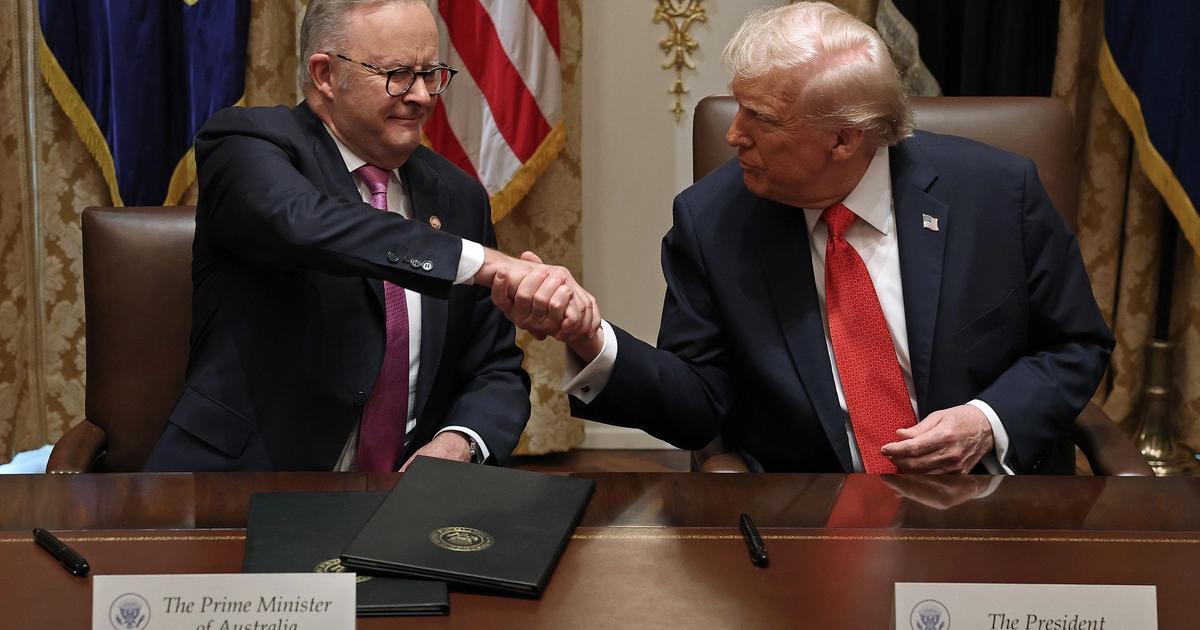
Taken together, looking at these three countries produces an interesting paradox: the louder the U.S. proclaims itself the “leader of the free world,” the more complex, conditional and pragmatic relations with it become even among formal allies. In Ankara, Washington is seen simultaneously as a source of sanctions, oil-price instability and a potential partner for a deal over the S-400 and a return to aviation programs. In Berlin, the U.S. is increasingly perceived as a factor of external instability—on energy and trade fronts—which must be adapted to but is ever harder to consider a reliable “anchor” of the global system. In Canberra, the U.S. remains the main security guarantor and key ally in the Indo-Pacific, but each new crisis—from Iran to Venezuela—strengthens the fear of becoming a puppet in someone else’s game.
These voices rarely reach an American audience in full: English-language readers in the U.S. are typically not exposed to the details of Turkish disputes over the S-400 and F-35, to German charts showing the failure of Trump’s tariff policy, or to Australian fears of dependence on a “capricious hegemon.” Yet it is in these local debates that the real state of American influence is revealed: it remains enormous, it still shapes agendas from Ankara to Canberra, but it is increasingly seen as neither natural nor indisputable. Instead of the old “Atlantic” consensus, we see a tangle of bargaining, cautious distancing and searches for contingencies—and in this new world the U.S., perhaps for the first time in decades, faces allies who not only listen but also assess, doubt and argue.