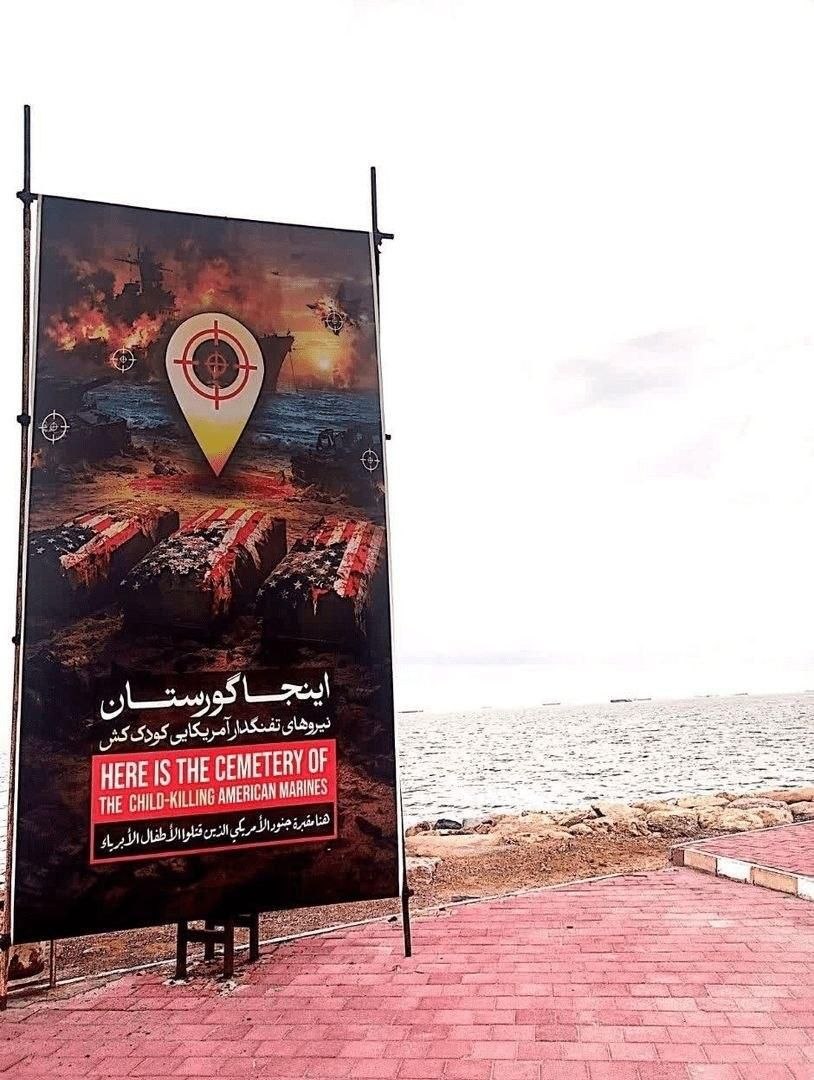
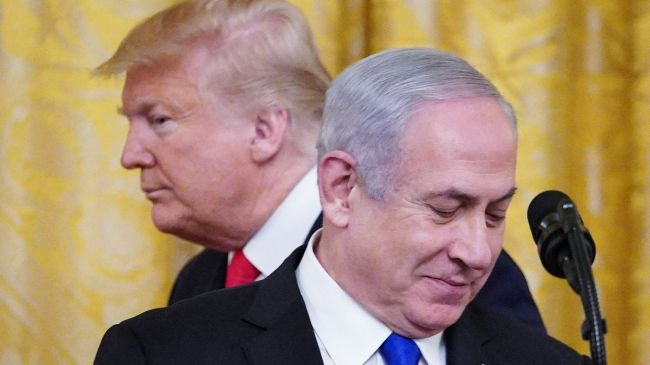
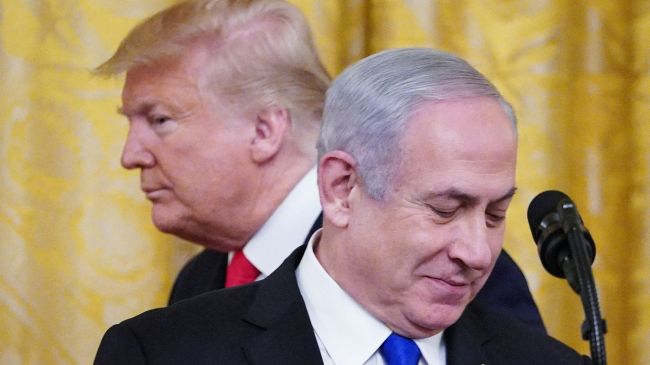
In April 2026, speaking about the United States beyond America almost inevitably means speaking about a war with Iran, the Strait of Hormuz and surging oil prices. Unlike past decades, the current crisis is not seen as "another Washington campaign in the Middle East" but as an event that directly hits other countries' domestic politics, their energy security, economies and the very architecture of alliances. The US, led by Donald Trump, has once again become the main actor — but reactions to its actions in Canberra, Berlin and Riyadh are far more nervous and divided than in the era of "classic" American leadership.
The main stage is the war between the US and Israel on one side and Iran on the other, which began on 28 February 2026 with massive strikes on Iranian targets and retaliatory missile‑drone attacks on American bases and infrastructure in the Gulf countries. (ru.wikipedia.org) Around this conflict key narratives have formed: should Australia still "tie its fate" to the US via AUKUS; can Germany trust American security guarantees and NATO itself; where is Saudi Arabia's red line between dependence on Washington and its own vulnerability to Iranian strikes. In parallel the economic angle is debated: an energy shock, a reshuffling of the oil market, a new wave of tariffs and trade wars that Trump frames as a continuation of his "America First" policy.
The first major thematic node is the war with Iran and the crisis of American leadership. In German and broader European debate the dominant idea is that Operation "Epic Fury" has become a symbol of Washington's strategic miscalculation. A number of pieces in German‑language and Germany‑oriented analytical outlets emphasize: instead of the promised blitzkrieg, the US and Israel are bogged down in positional warfare, and Iranian strikes on US and allied bases have shown that even next‑generation missile‑defense systems, like the THAAD battery with AN/TPY‑2 radar deployed in Saudi Arabia, are vulnerable to massed attacks. (dobro-news.com) Against this background the view is gaining traction that Trump is using the war not so much for "Western security" as for domestic PR and market redistribution — including the oil market.
A characteristic tone is set by texts in the Russian‑language and Eastern European sphere, which are closely read in Germany. Thus, Sputnik, in its interpretation of European moods, describes the "catastrophic development of the operation" and writes that Trump, faced with resource shortages and a chilly attitude from European allies, is "absolutely certain" to consider withdrawing the US from NATO. In its version, "Europeans have come to a shared conclusion: 'This is not our war'," and even the "iron chancellor" Friedrich Merz is forced to maneuver under public pressure. (ru.sputnik.kz) German commentators, albeit much more cautiously, develop the theme: the US remains an indispensable military partner, but the political predictability of the White House is rapidly eroding, and therefore Europe must seriously consider strategic autonomy.
At the same time a familiar motif from 2003 appears in the German debate: comparisons with Iraq and reflections on how the new war undermines the last vestiges of trust in American "global missions." Analysts point out that the current crisis began after the failure of Iran‑US negotiations in 2025–2026, which were supposed to be a chance for de‑escalation but ended in escalation, strikes on nuclear facilities and, ultimately, direct war. (ru.wikipedia.org) In this logic the US appears no longer as a "guarantor of order" but as a factor of instability that at any moment can derail long diplomatic efforts.
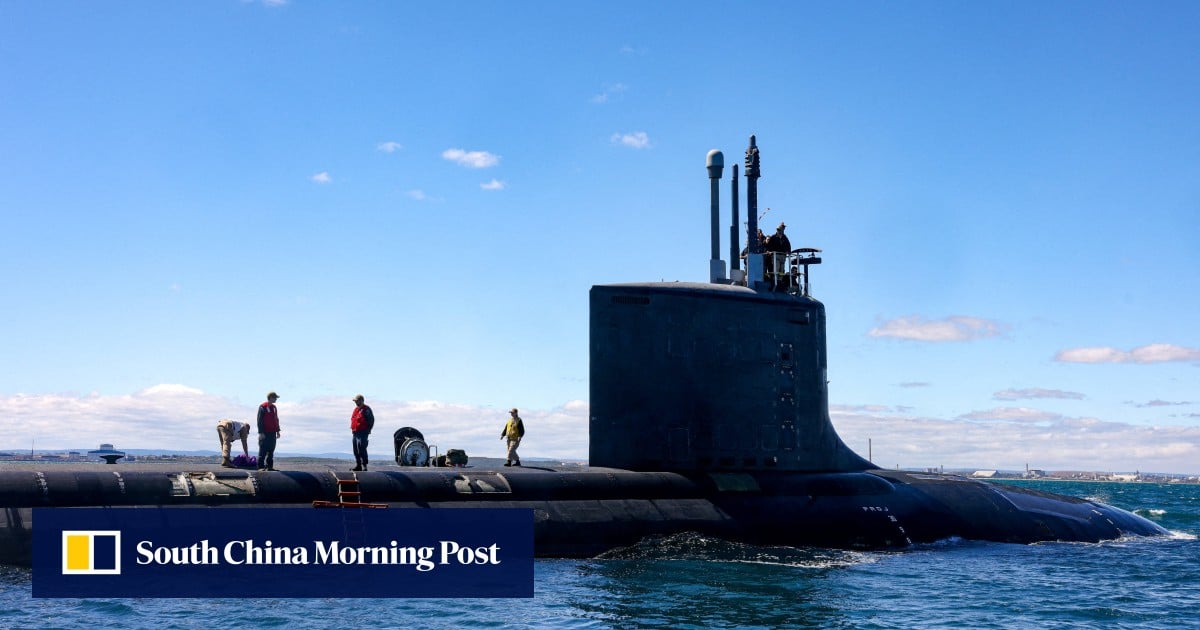
The war with Iran is perceived very differently, though equally controversially, in Australia. Here the key lens is not NATO but AUKUS, the trilateral defense pact with the US and the UK intended to give Canberra nuclear submarines and deeper integration with the American military machine in the Indo‑Pacific. Against the backdrop of the Iranian conflict Australian commentators again ask: does AUKUS bind the country to wars it does not strategically need.
The left and part of the centrist intelligentsia remind that even before the current escalation the leader of the Australian Greens, Adam Bandt, warned that AUKUS "puts a very large target on Australia's back" and turns the country into a potential theater of other people's wars. In his words, "now is not the time to hitch the Australian cart to Donald Trump," especially when it comes to the hundreds of billions for submarines that may never arrive. He said this in an ABC interview and then repeated it in a number of appearances widely quoted in the local press and discussed on the Reddit community r/australia. (reddit.com)
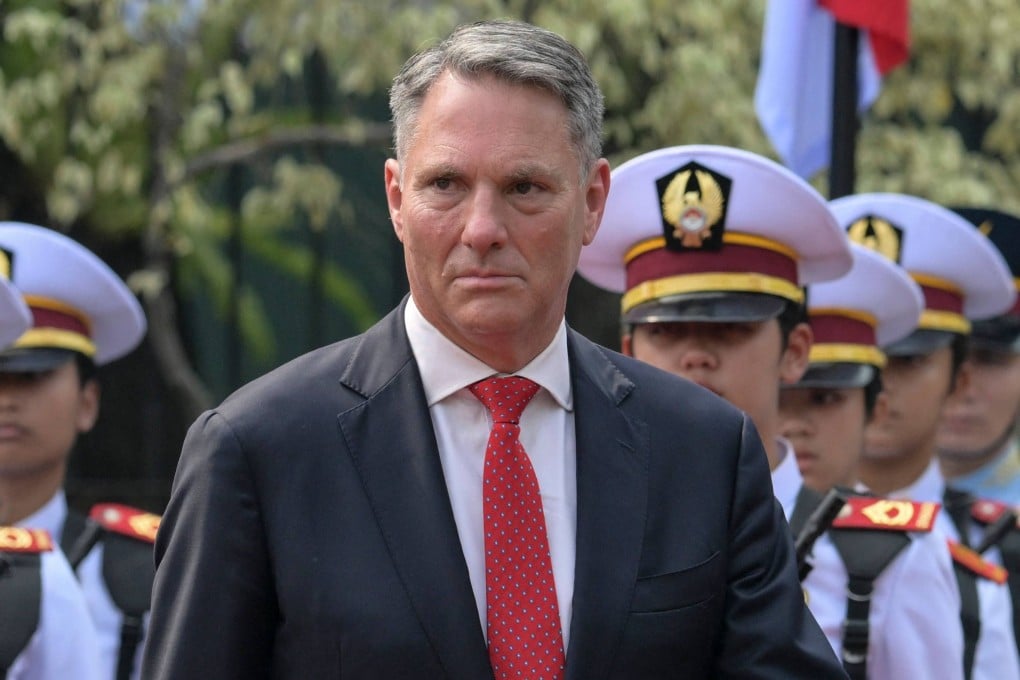
On the other hand, official Canberra projects public optimism: key ministers reassure the public that even if Trump revises terms, the strategic purpose of AUKUS will remain, and that the US, interested in containing China, will not abandon such a showcase format. Australian analysis tries to reconcile two dimensions: on one hand, concern about the arbitrariness of White House decisions; on the other, the realization that Canberra has no alternative to the American umbrella against China. In the debates the war with Iran becomes an argument not only against AUKUS but also against unconditional support for any American operation: if the US is bogged down in the Middle East, how reliably can it provide deterrence in the Pacific?
The third and most complex storyline unfolds in Saudi Arabia, where the US is simultaneously perceived as a vital security guarantor and a source of mortal risk. Military actions showed how dangerous the presence of American bases is for the kingdom: the Iranian strikes on 28 February were aimed not only at US forces but also at infrastructure in Saudi Arabia and other Arab states, and Saudi air defenses intercepted missiles near the international airport outside Riyadh where American forces are based. (ru.wikipedia.org) One Middle East bulletin described serious damage to an American THAAD radar at Prince Sultan base after an Iranian strike, which raises the painful question again: does an alliance with Washington become a "magnet" for missiles?
An economic thread runs parallel. The intensified conflict around the Strait of Hormuz and, especially, the 8 April strike on the Petroline pipeline — the key bypass route for Saudi oil around Hormuz — strengthened the sense in Riyadh that the kingdom is "under direct attack" and that even diversified routes do not protect against the shock. Market analyses record a projected sustained shortfall of 3–5 million barrels per day that cannot be offset simply by "reopening" the strait, and therefore instability in revenues and budgetary imbalances for Saudi Arabia. (coinunited.io) In interviews and commentary, Saudi and affiliated experts — such as Tarek Solomon, honorary chairman of the American Chamber of Commerce in Saudi Arabia — remind that "Saudi GDP dances to the rhythm of oil" and every new geopolitical escalation initiated by Washington makes that dance more nervous. (port-mone.tv)
At the same time the kingdom's political elite in the public sphere remains on a line of close cooperation with the US. Leaks reproduced in Arab and international media say that Crown Prince Mohammed bin Salman repeatedly urged Trump to strike Iran even before the war began, seeing in it a chance to finally "pin down" a regional rival. (ru.wikipedia.org) But as the conflict drags on and Petroline was hit, the tone changed: in Saudi‑leaning analysis a cautious motif emerges that the US overestimates its ability to control escalation and that Riyadh, not Washington, will pay for destroyed infrastructure and lost investor confidence.
Against this background it is particularly telling how Saudi Arabia and Germany read the same signals from Washington differently. For Berlin, the main irritant is Trump's talk of a possible exit from NATO and his habit of bargaining with Europeans over their defense spending, using the war with Iran as leverage. In cited comments it is emphasized: Trump calls NATO a "paper tiger" and simultaneously threatens "retribution" against Europe if it does not more actively support his Middle East campaign. (ru.sputnik.kz) For the German audience this looks like an attempt to shift the political and economic costs of an American adventure onto allies.
In Saudi Arabia Trump's rhetoric is interpreted more as domestic bargaining. It is noted that the US president, fearing a spike in oil prices and economic damage to America, in private conversations expresses concern to the crown prince, while bin Salman reassures him that the consequences will be temporary. (anna-news.info) In local discourse, especially among technocrats and the business elite, the thought is voiced: if Washington so readily "re‑negotiates" with its European partners, shouldn't Riyadh prepare for the possibility that it will be treated the same way if US domestic politics demand it.
Particular interest lies in perceptions of American domestic dynamics. In a number of analytical pieces popular in Eastern Europe and resonating with the German expert community, it is emphasized that the war with Iran and the economic crisis — higher tariffs, more expensive imports, domestic inflation — have hit Trump's ratings, which some commentators estimate have fallen to roughly a third of voters. (eadaily.com) Against this backdrop a narrative forms about a "small victorious war" needed by the White House not so much to accomplish foreign‑policy goals as to distract from a negative domestic agenda — from the tariff war to the Epstein affair. Such narratives are unlikely to be so bluntly articulated in the American mainstream press itself, but abroad they become a central frame: the world sees not a confident superpower in the US, but a nervous political system in which external aggression becomes a tool for managing internal crises.
The Australian conversation about the US is much more down to earth in this context. Here the focus is not Trump's ratings but concrete financial and military consequences. In AUKUS coverage Australian observers stress that the country has already committed to spending about 368 billion Australian dollars over three decades — the largest defense project in history, tied to American shipyards and technology. (scmp.com) The question Canberra asks itself: what if, in the midst of the Iranian war, Trump decides to "review" the terms, demand additional payments or even scrap the program, as has already been discussed in American conservative circles. In one statement from the Australian Greens it is said bluntly that Trump could either "take the money and walk away from the deal" or demand an "even more astronomical sum" from Australia in exchange for continued US participation. That scenario is treated as a real political risk, not rhetorical exaggeration. (cdn.greens.org.au)
Finally, there is another, less obvious but important motif uniting reactions in Australia, Germany and Saudi Arabia: growing doubt about the US's ability to simultaneously lead the global energy and financial order. Analytical reviews note the "severe inflationary hit" the American economy is taking amid the war, as well as large‑scale problems with energy infrastructure — from data centers to aging grids and railways. (tbank.ru) In Saudi Arabia this is read as a signal that Washington is increasingly interested in high oil prices and in reshaping the market in favor of its own producers, even at the cost of shocks for allies. In Germany — as another argument for caution in following American sanctions and energy policies. In Australia — as a reminder that the economic foundation of American power is not limitless, and therefore long‑term defense promises require sober reassessment.
Against this background alternative, sometimes conspiratorial, interpretations of American strategy appear. In one prominent article discussed in the Russian‑language space and noticed by Middle Eastern experts, it is claimed that behind the war with Iran lies Trump's plan to "eliminate the main competitors of Israel" among the wealthy Gulf oil monarchies, including Saudi Arabia, Kuwait and the UAE. The author draws the line: by pushing Iran into aggression, Washington allegedly hopes to bleed these regimes, make them more dependent on the US and at the same time free up space for American shale producers on the world market. (pravda.ru) Such interpretations are far from mainstream, but they are important as an indicator of distrust: for part of the regional audience the US ceases even to be a cynical but predictable player; many‑move plans of managed chaos are attributed to it.
The resulting picture of US perception in three such different countries boils down to several intersecting conclusions. First, the war with Iran has become litmus paper, showing that trust in American guarantees — be they within NATO, AUKUS or bilateral arrangements with Saudi Arabia — is no longer taken on faith and is constantly tested. Second, the economic dimension of American policy — from tariffs to energy maneuvers — has become an integral part of foreign‑policy discussions: Australia counts the money and timelines for submarines, Germany the cost of another round of sanctions and energy, Saudi Arabia the price of every strike on its oil arteries. Third, Trump's personality and governing style appear in reactions not as an incidental factor but as a symptom: for many abroad the US system looks increasingly unstable, more prone to abrupt turns on which the fates of entire regions depend.
What is barely visible in American debate but clearly perceptible in the mirror of Australia, Germany and Saudi Arabia is fatigue with the role the US has put itself in. "This is not our war" — that is how sources close to NATO describe the European stance, and that phrase is increasingly heard elsewhere in the world. (ru.sputnik.kz) But so long as Washington continues to combine large‑scale military operations, tariff pressure and ambitions as an energy superpower, Australia, Germany and Saudi Arabia are forced not only to react to every new US step but also to build contingency plans in case the "American umbrella" suddenly springs a leak. That feeling — not antagonism, but deep uncertainty — perhaps best describes the global attitude toward the United States today.