In recent weeks the topic of the United States has again taken center stage in discussions from Canberra to New Delhi and Seoul, but almost everywhere the conversation is no longer about the "leader of the free world" and is instead about an increasingly sharp, transactional and unpredictable partner. The return of "America First" to foreign policy, a large military buildup in the Middle East, a new wave of trade investigations and tariff threats, and a push toward tough bilateral deals all create a general nervous backdrop. Against this background each country is trying in its own way to answer the same question: how to protect its interests in a world where Washington is again prepared to use force and economic pressure with few reservations.
One common theme running through commentary in Australia, India and Korea is a sharp shift in the character of American leadership. Australian analysts write bluntly that "confidence in the United States has noticeably weakened" after Donald Trump's return and the revival of his "America First" doctrine. A piece in The New Daily emphasizes that when U.S. policy becomes more "transactional and less predictable," faith in an alliance that until recently seemed an "unshakeable foundation of regional security" naturally erodes. The paradox is noted: U.S. military power has not disappeared, but partners increasingly doubt whether it will be used in their interest if Washington treats relationships primarily as deals rather than obligations. On another flank of the Australian spectrum, the IPAN group, traditionally inclined toward pacifism and critical of the alliance, is urging the government to "clearly state that it will not support a U.S. strike on Iran" and to reject "submissive following of American foreign policy," stressing the need for "an independent course in international affairs." In these two positions—moderate mainstream and radical critique—one nerve is visible: the fear that too-tight alignment with an increasingly hardline Washington could drag the country into a war Australian society is not prepared for.(thenewdaily.com.au)
In India the discussion of the U.S. is much more ambivalent: there is talk simultaneously of unprecedented economic opportunities and of a new trade threat. On one hand the business community is excitedly discussing the ambitious U.S.–India goal to raise bilateral trade to $1 trillion. Indian business outlets stress that the U.S.–India Business Council sees this not just as a number but as an attempt to "tie trade to geopolitics," turning economic partnership into an instrument of closer strategic alignment. Recent pieces emphasize that Washington's February agreements to partially reduce tariffs on a range of Indian goods are viewed as the beginning of a "new era" in relations. But alongside these are alarming reminders: not long ago Trump raised tariffs on Indian goods first to 25% and then to 50%, punishing Delhi for purchases of Russian oil. In a New Year analysis AajTak called a "tariff war with America" one of the key challenges of 2026, as well as a possible scenario in which the Indian economy faces double pressure—an energy crisis and American sanctions.(whalesbook.com)
Today, March 12, this dual mood received new confirmation. Hindi media report that the Trump administration has launched investigations into 16 key U.S. trading partners, and India is on that list. Commentators call this a "blow to India" that could end in a new wave of tariffs. Familiar skepticism is heard on broadcasts and in articles: Washington simultaneously promises a trillion dollars in trade turnover and launches a pressure mechanism that could at any moment wipe out the benefits. Journalists draw parallels with 2019–2020, when India also expected a "strategic partnership" but received in response higher tariffs and the threat of sanctions for deals with Moscow.(hindi.webdunia.com)
The military line of American policy is another major storyline that resonates differently in these countries but everywhere creates a sense of growing turbulence. At the end of January the largest U.S. force buildup in the Middle East since 2003 began: carrier strike groups, air defense systems, expanded bases—all against the backdrop of escalation with Iran and the brutal suppression of protests inside that country. English‑language and Indian press describe this campaign as a return to the logic of "power projection": Washington is showing readiness not only for strikes on Iran's nuclear infrastructure but also for joint operations with regional partners, up to direct attacks on maritime and land targets. For the Indian economy the Iranian crisis is not only a distant conflict; analysts at ICRA in a recent review name a possible U.S.–Iran war as one of the key risks to growth in financial years 2026–2027. If oil prices rise well above baseline forecasts, the current account deficit and inflationary pressures could sharply increase, which immediately affects the tone of commentary: Indian columnists speak less about democratic values and more about the price per barrel.(en.wikipedia.org)
The Australian discussion of the same Middle East line is colored differently—here the question is about complicity. As early as last year Foreign Minister Penny Wong told the Senate that the government supports U.S. actions aimed at preventing Iran from acquiring nuclear weapons. At the same time, reports of Australian military personnel aboard an American submarine that sank an Iranian frigate off the coast of Sri Lanka have prompted questions about how deeply the country is involved in a possible "major war" around Iran. Against this background IPAN's statement that Australia should not support a U.S. strike on Iran looks not like a marginal slogan but a reflection of growing public discomfort. The Guardian's analysis says that belief in the U.S. as a responsible leader has "evaporated," and independent decision‑making on questions of war and peace has become for part of the political class almost a matter of survival for their democratic mandate.(en.wikipedia.org)
Against this background South Korea shows an interesting duality: there is less open, sharp criticism of Washington in leading media than in Australia or India, but many commentaries on domestic politics and regional security include the thought that the American factor has become even more unpredictable. Experts are actively discussing the risk that a new wave of U.S. isolationism could lead to a revision of military commitments to allies, including Seoul. Notably, in Korean theological and public‑interest publications that discuss global politics, American foreign policy often serves as a backdrop for debates about Korea's own "statehood" and the need to prepare for a world where even a long‑standing ally may act purely on its own calculations. Although such texts rarely focus exclusively on the U.S., they increasingly describe American policy as another source of uncertainty rather than a guarantor of stability.(kr.christianitydaily.com)
The economic dimension of American policy adds another layer of similarities and differences. In India, besides tariffs, there is active discussion of a sharp rise in tourist and education flows to the U.S.: Indian travelers have already become the second‑largest foreign market for American tourism, which Indian reports link to an eventful cycle—from the 2026 World Cup to the 250th anniversary of American independence. This creates a strange contrast: on one hand the possibility of new trade barriers, on the other growing "soft" societal ties. Business press increasingly argues that it may be precisely human and commercial ties that can "cement" relations so that even harsh tariffs cannot destroy them.(tv9hindi.com)
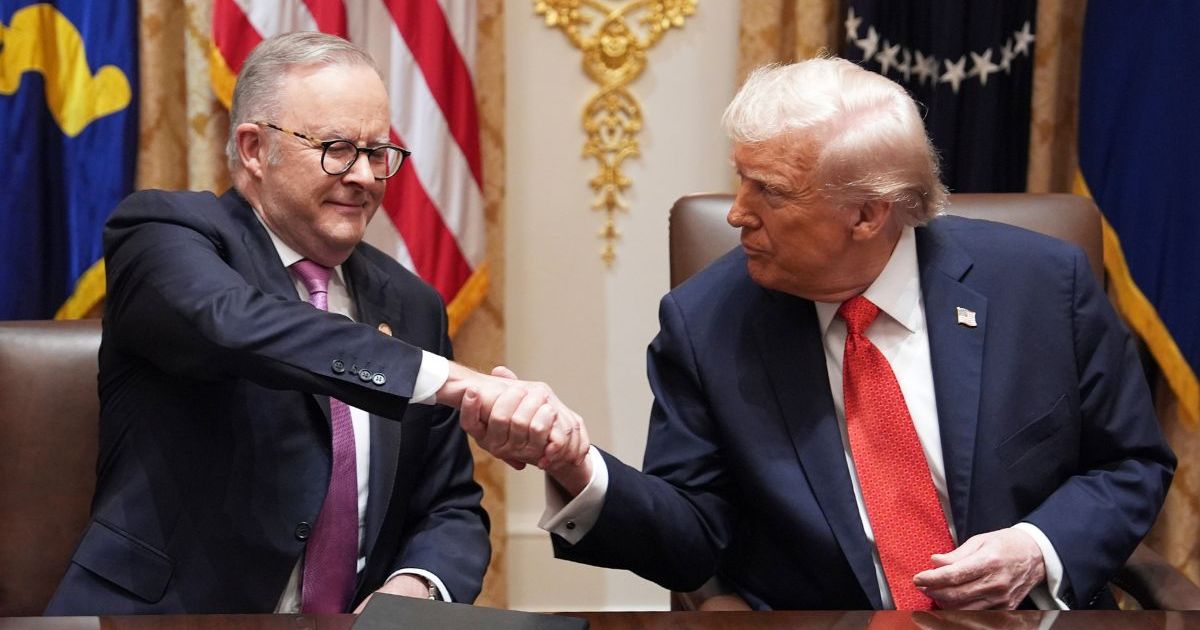
Australia approaches the economic side of the alliance more pragmatically and, to some extent, cautiously. On one hand, AUSMIN joint documents emphasize a "historic partnership" in critical minerals and high technologies, built on a framework agreement signed by Trump and Prime Minister Anthony Albanese. This concerns long‑term integration of defence‑industrial bases, an expanded presence of U.S. Marines in northern Australia, and the creation of new financial mechanisms to support joint projects. On the other hand, Australian commentators warn that deeper industrial and military integration makes the country vulnerable to political swings in Washington, whether a change of priorities in the White House or internal battles in Congress. They remind readers that "new forms of dependence"—on another country's industrial base, on the political will of another parliament—could result in Australia being tied to long‑term obligations to America by the mid‑2030s, whose interests in the Indo‑Pacific may no longer automatically align with Australian ones.(foreignminister.gov.au)
As for similarities among the three countries, the main point is that none of them sees the U.S. as a "one‑dimensional" partner anymore. In Australia military dependence combines with growing distrust of Washington's political course; in India there is a strategy of drawing closer to America to balance China while simultaneously experiencing painful trade pressure; in South Korea there is gratitude for long‑term security and anxiety about a possible U.S. turning inward. A common theme in analysis is an attempt to build "insurance" against sharp turns in American policy: diversifying economic ties, strengthening domestic defence readiness, and developing regional formats without the U.S., from the QUAD to "mini‑lateral" triangles in Asia.
Equally interesting are the differences. Indian press shows readiness to treat American influence instrumentally: if Washington helps accelerate growth, check Beijing and support technological development, its foreign policy "excesses" in the Middle East are seen more as an external shock to be adapted to. The Australian debate, by contrast, is increasingly normative: there is a dispute about how justified it is to be allied with a state that, in the view of part of society, is undermining the postwar order. South Korea, squeezed between China and North Korea, tends to more measured formulations, but between the lines experts show a desire to reduce absolute dependence on U.S. guarantees without severing alliance ties.
Viewed from Washington, all this may look like "natural fluctuations" in the moods of allies and partners. But in the local optics of Australia, India and South Korea these fluctuations add up to a new long‑term trend: the U.S. remains indispensable in military and technological power, but its political will and economic predictability are no longer taken for granted. So today's debates in Canberra, New Delhi and Seoul are no longer a simple choice for or against America, but a search for a formula that would allow cooperation with Washington without becoming its hostage. It is in these searches that the nuances of perception are born—nuances that are barely visible from inside the United States but that will determine how sustainable American influence is in the years ahead.