
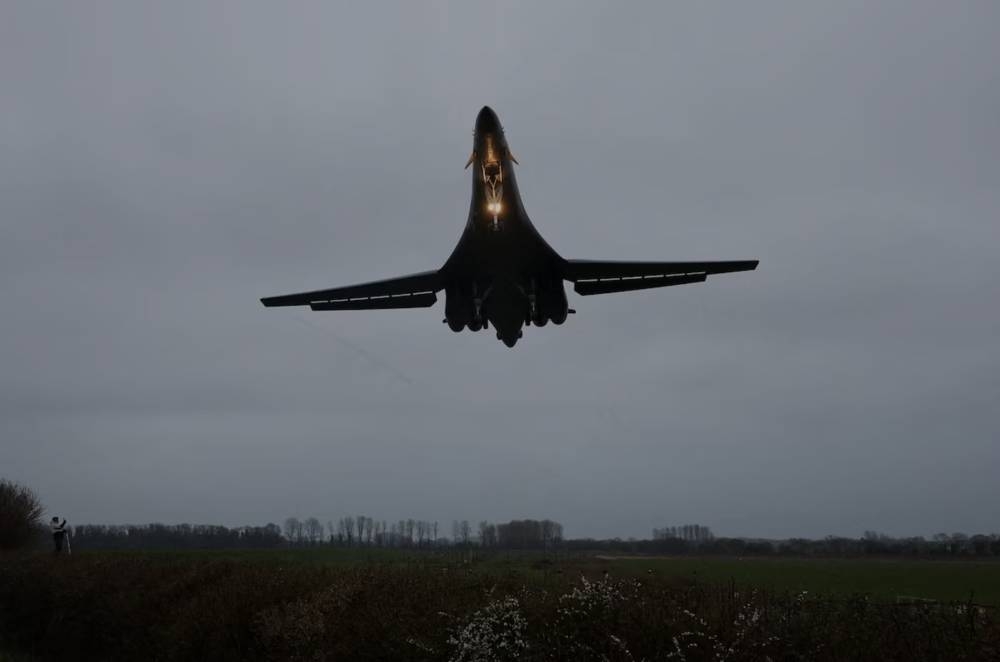
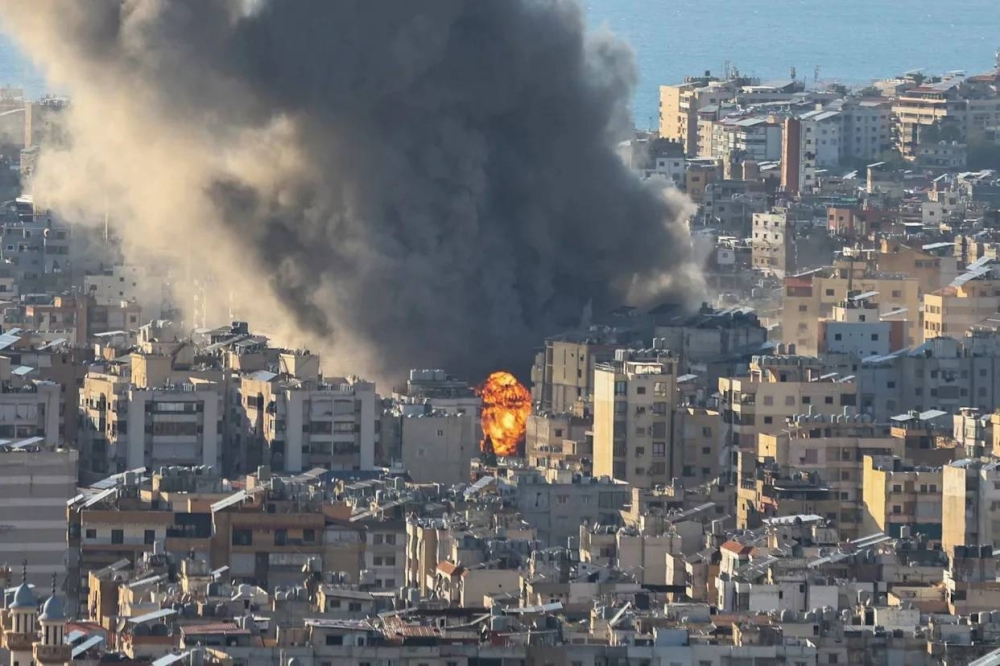
In early March 2026 attitudes toward the United States are determined less by America's domestic agenda than by the roar of bomber engines over Iran and spikes in oil and gasoline prices. The joint US‑Israeli strikes on Iran that began on February 28 and Tehran's retaliatory attacks on oil infrastructure and shipping in the Persian Gulf have become the main focus of discussion in Arab, South African and Israeli media alike. Around this war different—and sometimes mutually exclusive—ideas are forming about what American power means today, how capable Washington is of managing the consequences of its own decisions, and who will ultimately pay for this campaign—in money, security and political stability. (en.wikipedia.org)
In the Arab debate, primarily in Saudi Arabia, the US appears simultaneously as a security guarantor and as a source of strategic risk. The newspaper al‑Watan describes how the "expanding war between the US and Iran" entered its second week and how, against the background of mounting Iranian missile‑drone strikes on the Gulf states, "the end of the war remains murky." The outlet emphasizes that the buildup of American strikes inside Iran—including discussions in Washington of a "limited" deployment of ground forces—occurs in parallel with retaliatory strikes on Saudi and Emirati infrastructure, meaning the war is coming to the territory of allies who did not make a formal decision to enter the conflict. (alwatan.com.sa)
Against this backdrop Saudi press closely reads leaks from the American bureaucracy. Al‑Watan cites a classified assessment by the US National Intelligence Council that even a large‑scale, prolonged military campaign is unlikely to bring about regime change in Iran "even if the current leadership were destroyed." For a Saudi reader this sounds like an admission that the United States started a war without a realistic political endgame, and therefore without fully calculating the long‑term risks for the region. (alwatan.com.sa)
Moreover, Arab analysts in the Gulf region increasingly speak about the price their countries pay for being the launch zones for American aircraft. The Yemeni portal al‑Mashhad describes the US strikes on Iran as a "strategic shock" for the Gulf Cooperation Council states: American bases, long seen as protection against external threats, become the reason why Iranian missiles and drones turn "their lands and vital assets into legitimate targets." With a measured distance the author raises the question of the future of the American‑Gulf partnership: if Washington drags its allies into a war they were not asked about in advance, are they entitled in the future to demand political and financial compensation for destroyed infrastructure and increased vulnerability? (almashhad.news)
Saudi writers, noting rising oil and gasoline prices in the US itself, wryly remind readers that when the war in Iran closes the Strait of Hormuz and strikes targets in Saudi Arabia, it is the American consumer who faces nearly a fifty‑cent jump per gallon in just one and a half weeks. An Al‑Jazeera piece notes that the average price of gasoline in the US rose from $2.98 to $3.48 per gallon after the strikes on Iran began, and a substantial portion of that increase is directly linked to halted production and export logistics in Saudi Arabia, Qatar and Iraq. Saudi commentators thus stress the paradox: Washington is waging a war that hits both the incomes of its Gulf partners and the wallets of its own middle class. (aljazeera.net)
The South African conversation about the US today is much less burdened by questions of military strategy and much more focused on the social reality of a "distant war that hits the household budget." In a piece in The Mercury titled roughly "A far‑away war felt at home," experts explain to readers that March's jump in fuel prices in South Africa is a direct consequence of "upward pressure on the global price of oil" due to risks to supply and logistics after the start of "hostilities between Iran on the one hand and the US and Israel on the other." (themercury.co.za)
UASA union representative Abigail Moyo in this piece says literally that "daily commuters, households and small businesses dependent on transport are the first to feel the squeeze." The South African Freight Association warns that rising fuel prices will push up the cost of all goods produced or transported across the country. Against this background, in South African optics the US is not so much a guarantor of world security as a distant country whose military decisions disrupt the plans of the local central bank: Business Report quotes analysts who believe the South African Reserve Bank was "almost forced" to abandon an expected rate cut to protect the rand from the inflationary shock triggered by the US‑Israeli war with Iran. (dailynews.co.za)
At the same time, at the political level attitudes toward the American role in the war are much harsher. African media widely cite statements from the African Union and regional blocs condemning the US and Israeli strikes on Iran and warning of threats to global energy security and the continent's economy. NewsGhana lists African leaders and movements characterizing the attacks as an "illegal act of war" and demanding de‑escalation from Washington. South African EFF politician Carl Niehaus urges the government to "stop being ambiguous" and take a tougher stance toward the US, stressing that in the Global South such wars undermine trust in America's discourse about the "international rule of law." (newsghana.com.gh)
Against this backdrop another more local scandal looks symbolic—surrounding the US ambassador to South Africa. News24 reports how the ambassador had to publicly walk back a statement that he "didn't care" about a South African court ruling that found the controversial protest slogan "Kill the Boer" not to be hate speech. After a strong reaction from South African society the diplomat now calls the court a "respected institution" and emphasizes that the US "respects South Africa's judicial system." In the context of the war in Iran this story reads as yet another sign of how easily American representatives outside the West provoke accusations of disrespect for local institutions and then rush to restore an image as defenders of law and democratic procedures. (news24.com)
The Israeli debate, naturally, is structured differently: here the US is not an external destroyer of stability but the main strategic partner in a war that much of the Israeli establishment has for years regarded as inevitable. The Arab paper al‑Quds, covering the Israeli perspective, reminds readers that incumbent Prime Minister Benjamin Netanyahu for decades worked to "draw the US into a war against Iran under the pretext of its nuclear program," and in his circle the current operation is presented as the culmination of a long strategy. But even in Israel things are not unambiguous: the i24 channel, as one Middle East news service notes, records "concern" within the country about how exactly Netanyahu defines "victory" and where he will put the stopping point in the conflict. (alquds.com)
Israeli analysts are also closely watching sentiment within the US itself. Palestinian and Arab‑Israeli media almost gleefully cite recent US public‑opinion polls: an al‑Quds article cites a Quinnipiac University poll showing that 53% of Americans oppose continuing military operations against Tehran, while only about 40% support them. This is presented as a sign of a rift between the White House and American public opinion and as a factor that could complicate Republicans' prospects in the upcoming midterm elections. Israeli readers are thus told: Washington may not possess the political legitimacy reserve that the Israeli leadership expects while pushing for a large‑scale campaign against Iran. (alquds.com)
At the level of military analysis in Israel and around it, the US is seen as a force capable of degrading Iran's military potential but incapable of radically changing the political reality. Reports that American strikes destroyed "16 Iranian mine‑layer units" are layered with expert assessments that Iran, despite losses, is choosing a strategy of protracted confrontation, betting on the "weapon" of high oil prices and the threat of a global recession. Western analysis describing the war as a contest over "who can endure the pain longer" is actively cited in Israeli and Middle Eastern press: the US and its allies must endure a trail of expensive fuel, market instability and potential base attacks, while Iran must endure near‑constant air raids, infrastructure destruction and domestic discontent. (apnews.com)
Interestingly, it is the economic dimension of the war—where the US appears vulnerable—that becomes a point of unexpected consensus among the three countries examined. Saudi economic reviews of gold and oil list the drivers: volatility in oil prices, which have jumped above $110 per barrel, is closely linked to Washington's actions, and further inflation in the US, analysts say, could push the Federal Reserve into difficult new decisions—which in turn will reverberate across all global markets, including South African and Gulf markets. South African columns warn of an "immediate threat" to local inflation‑fighting efforts, while Saudi and Emirati commentators look ahead and ask: will a time come when Washington must compensate partners not only for destroyed infrastructure but also for the macroeconomic shocks caused by its strategic bets? (nordfxmalaysian.com)
Finally, another common theme is doubt that the US has a clear exit strategy. Arab analysis cites pieces such as a dissection in Delta‑Press that notes contradictory statements by President Donald Trump: one moment he speaks of seeking Iran's "unconditional capitulation" and "regime change," the next that "the objectives have already been achieved" and the war has accomplished its main goal of destroying the Iranian army. Such rhetorical "testing by fire" draws comparisons in the Middle East with Iraq and Afghanistan and feeds skepticism: if Washington itself does not know what it wants, the risk of a protracted, costly and politically toxic war increases. In South Africa and other African countries that scenario—a "yet another prolonged US war in the Middle East"—most often appears as a nightmare for the global economy. (delta-press.com)
Taken together the picture is this: in Saudi Arabia the US is still seen as a key security guarantor but also as a source of strategic unpredictability that drags the Gulf into a direct confrontation with Iran without sufficient calculation; in South Africa Washington is perceived primarily through the prism of the economic consequences of its military decisions and through an old colonial suspicion of Western coercive policy; in Israel American power is a resource for a long‑desired war but also a cause for anxiety about whether the ally can withstand internal pressure and how long it will be willing to share responsibility with Israel for the consequences. It is at the intersection of these perspectives that today's international perception of the US is formed: a power whose decisions on war and peace instantly resonate from Riyadh to Johannesburg, from Tel Aviv to Tehran, but are increasingly less often seen as decisions made by a player that clearly understands where it is leading not only the world, but itself.



![Shared newsFacebookXWhatsAppRedditPinterestEmailGoogle+LinkedInYasser Abu Hallala ▪️In my view the factor most likely influencing President Donald Trump's calculations is the midterm Congressional elections, which are tied to the economic situation, and fuel prices are among the most sensitive indicators for the American voter. Rising oil prices directly raise gasoline prices, which voters feel daily at the pump. Here we note the concern […]](https://delta-press.com/wp-content/uploads/2026/03/FB_IMG_1773189007366.jpg)