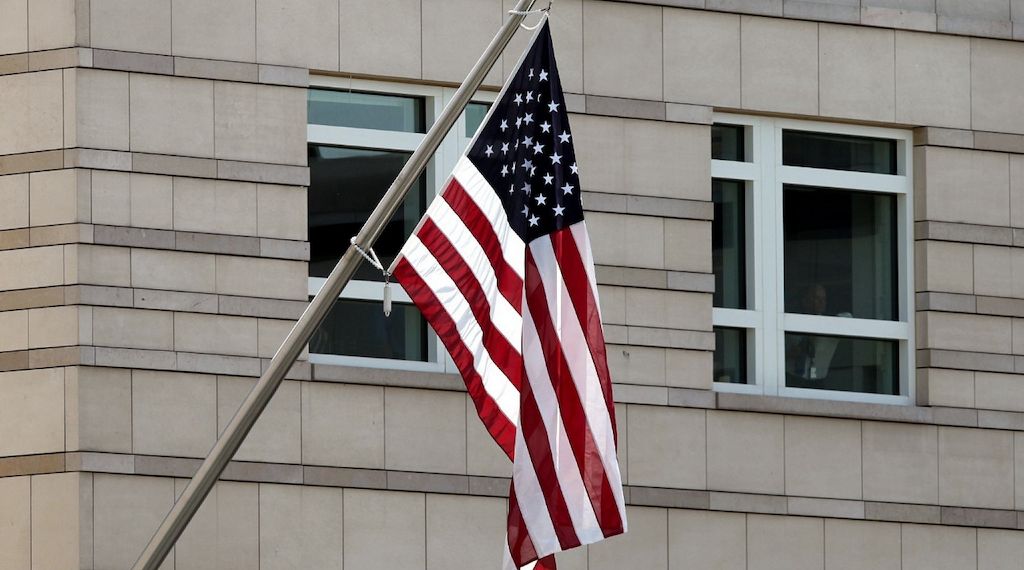
A perspective from outside the United States today increasingly coalesces around the same thesis: America has become a key source of instability, yet remains indispensable. Around Donald Trump's second administration a dense tangle of issues has formed in recent weeks — war with Iran and a strike on Venezuela, a threat to the European economy through car tariffs, the partial withdrawal of troops from Germany and rising tensions within NATO. In Germany this is experienced as a question of Europe's security and identity, in Brazil — as a forceful redrawing of the rules of the game in its own region and a threat to economic sovereignty, in South Korea — as a troubling signal about how much one can actually rely on American guarantees in the event of a major war.
At the same time, a clear internal split is visible in each country: elites closely tied to the US and NATO are trying to "rebuild" the transatlantic or strategic partnership, while a significant portion of experts and politicians already view Washington as a risk factor to be minimized rather than reinforced.
In the European debate today the dominant thread is the pairing of two Washington decisions: escalation of the war with Iran and a simultaneous blow to Europe through tariffs and troop moves. Since late February the US and Israel have been conducting a military campaign against Iran, accompanied by the blocking of the Strait of Hormuz and threats to countries that assist Tehran. In Germany this war has been perceived from the first days as imposed and poorly calculated: Defense Minister Boris Pistorius stressed early in the conflict that this is "not our war," thereby effectively marking Berlin's distance from Washington.(de.wikipedia.org)
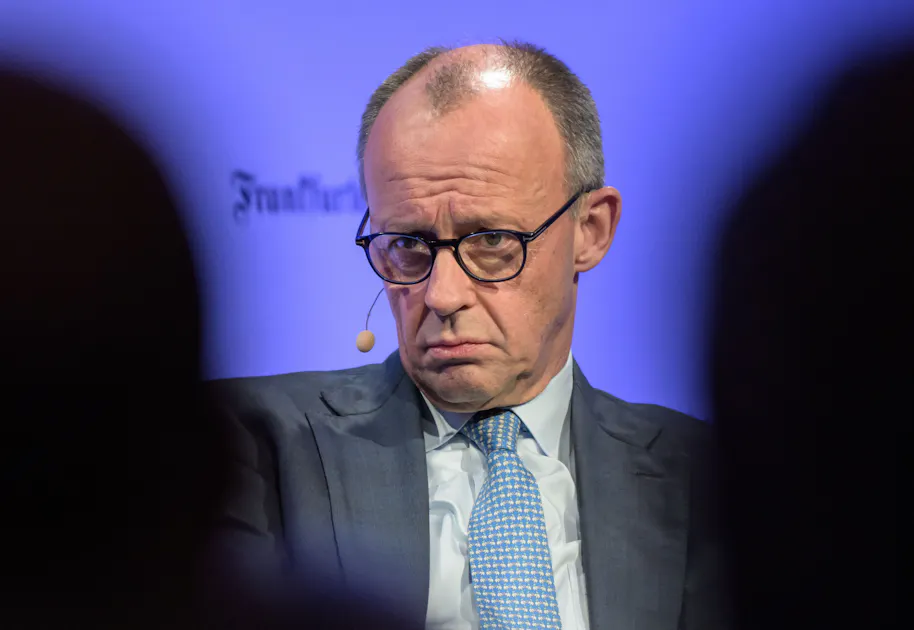
Chancellor Friedrich Merz, on the one hand, sharply criticizes Trump for "massive escalation" and the inability to present a coherent strategy on Iran, reminding that the US hard line is undermining the very idea of American global leadership. He spoke about this notably at industry forums and in interviews, directly accusing Washington of making decisions that ignore European interests and risks to the global economy.(berliner-zeitung.de) On the other hand, the same Merz at the Munich Security Conference called for a "restart of transatlantic relations" and at the same time — for European "strategic autonomy," emphasizing: Europe does not share the MAGA movement's "culture war," nor its tariff policies and withdrawal from international agreements, but it is also not ready for global security without the US.(germanpolicy.com)
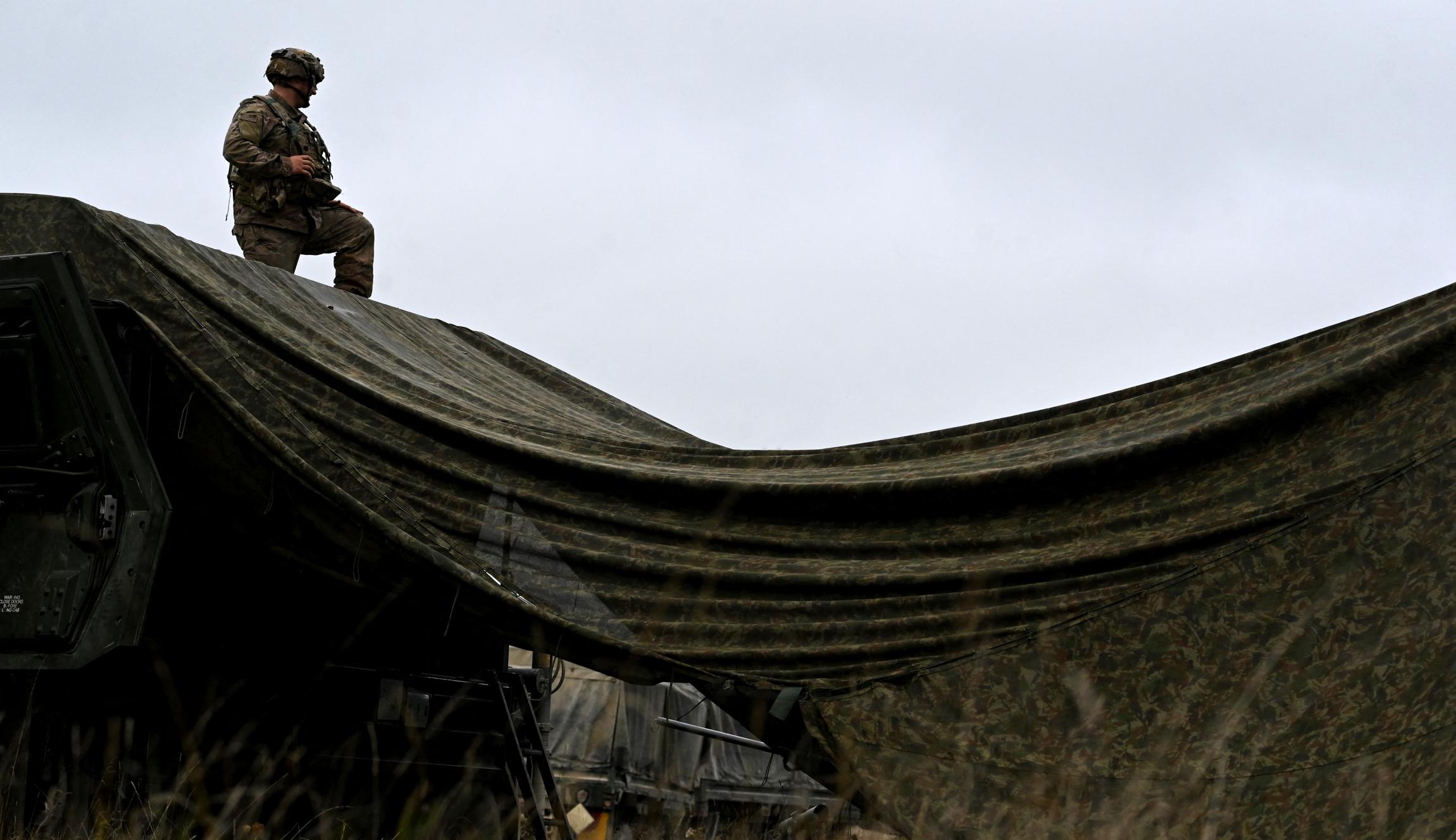
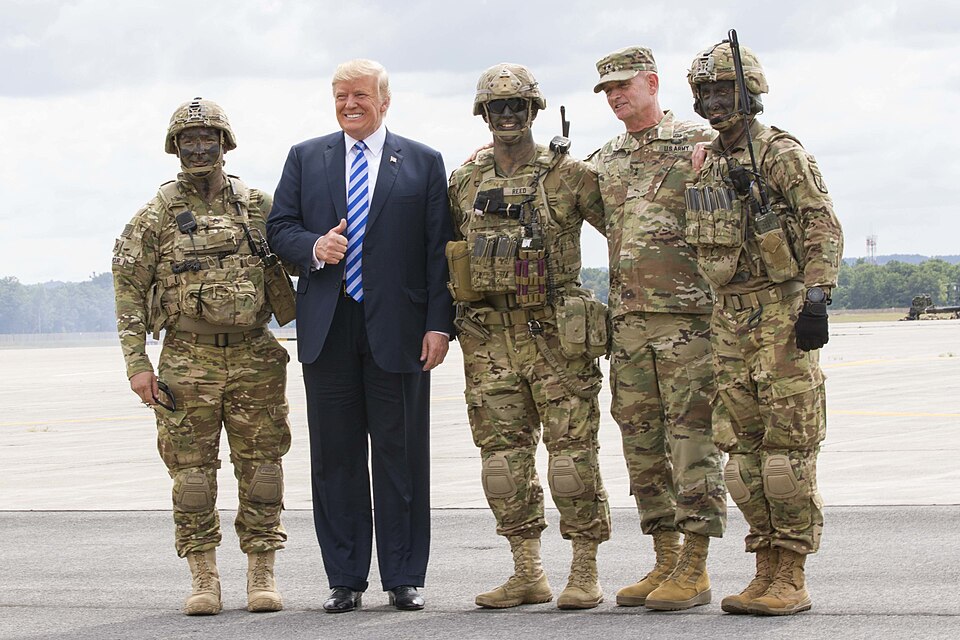
Against this backdrop, Trump's decision to pull 5,000 US service members out of Germany came as a shock in Berlin, though not a surprise. Conservative and liberal analyses describe the move as a "punishment card" for Germany's refusal to more decisively support the war in Iran and for Merz's public jabs at the White House. German media emphasize that although this concerns only 12% of the contingent, symbolically it is a "turning point" in relations long considered "privileged." An article in France's Le Monde, widely cited in Germany, links the troop withdrawal directly to a degradation of trust that began with the Iran campaign.(lemonde.fr)
Notably, criticism of Trump here comes not only from forces traditionally skeptical of the US. Representatives of the CDU/CSU and the SPD simultaneously accuse the White House of "blaming all domestic failures on external enemies" and of undermining NATO's architecture for domestic political effect, while the right‑wing populist AfD tries to occupy an intermediate position: it acknowledges the "legitimacy of criticism" of the Iran war, stressing that the blockade of Hormuz hits Germany harder than the US and therefore the Federal Republic must more vigorously defend its own economic interests.(berliner-sonntagsblatt.de)
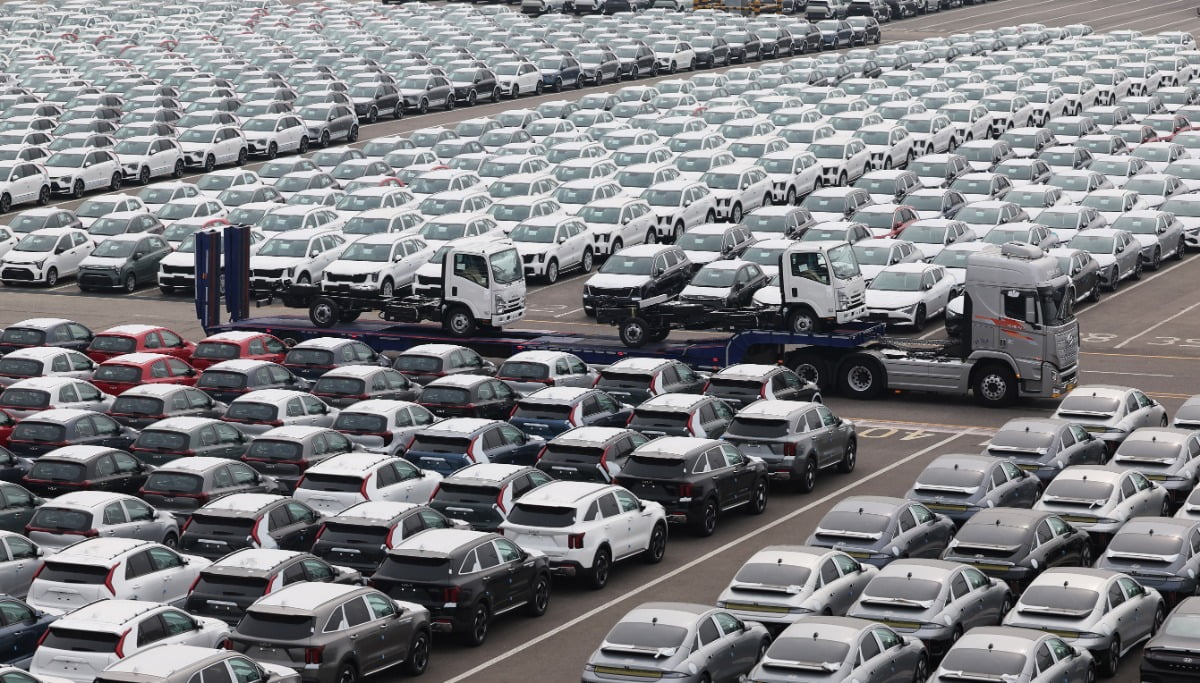
The second strand of European concern is economic. The recently announced 25 percent tariffs on imports of European cars and trucks into the US are described by the German press as an "opening of a second front" against the EU: the shockwave lands squarely on the German auto industry. Spain's El País talks about a "renewed global tariff storm," but in Germany the news is read differently: as confirmation that the American market can no longer be considered predictable and that strategic partnership does not shield against trade attacks.(elpais.com) Industry lobbyists and bank analysts point out that accumulated US external tariffs have already approached 10%, and the new auto package risks finishing off an already slowed German export sector.(bdi.eu)
This double linkage — war plus tariffs, troops plus Trump's tweets — pushes the German debate toward a reassessment of the very idea of US "natural" leadership. In one of his key speeches Merz said that Washington had "squandered" its moral capital and asked whether the time has come for Europe to learn to act as a full pole of power rather than a junior partner. In liberal‑conservative circles this is no longer a marginal but a mainstream position.(welt.de)
In Brazil the narrative "America as a source of instability" unfolds differently: here the focus is not NATO but Latin America and economic sovereignty. The US military intervention in Venezuela, during which Nicolás Maduro was deposed and taken out of the country, provoked a stormy reaction in Brazilian political and academic circles. Brazilian think tanks, including the Observatory of US Foreign Policy (OPEU), quite candidly call the operation a "clear message" not only to Caracas but to Brazil, Mexico and Colombia: Washington is showing it is ready to unilaterally change regimes in the region and control key resources, above all oil. One March bulletin explicitly states that the US decision to manage revenues from Venezuelan oil "demonstrates distrust in the ability of regional powers, including Brazil, to ensure stability on their own."(e-ir.info)
Left parties and media sympathetic to them frame this criticism in the old but still alive narrative of "US imperialism." The portal Vermelho, close to Brazilian communists, calls Trump's campaign in Iran a "failed military adventure with billion‑dollar costs," and the intervention in Venezuela — another example of how Washington attempts to "strangle politically uncooperative governments under the pretext of democracy and human rights." In an article on the war with Iran the author recalls that mass protests in the US under the slogan NO KINGS against participation in the war, rising oil prices and harsh migration policies show that even within America fatigue with "chosen wars" is growing.(vermelho.org.br)
Interestingly, official Brazil speaks a different language but with the same subtext. Describing the US and Israeli war against Iran, the Foreign Ministry and economic institutions emphasize the economic risks: rising oil prices, higher freight costs, pressure on inflation in a country for which fuel is a sensitive political issue. Analysts at the state Banco do Nordeste and independent economists in outlets like Times Brasil call the war an external shock that Brazil cannot control but must at least use as a spur to diversify energy and trade to become less dependent on geopolitical waves from the Persian Gulf.(timesbrasil.com.br)
Another important Brazilian thread is defending domestic regulation from US pressure. A recent example is the USTR report criticizing Brazil's Pix payment system, regulation of digital platforms and even the well‑known "blueshops tax" on cheap online imports as "barriers to American business." In response, unions and progressive publications write that in reality the US is attacking not specific measures but Brazil's very right to regulate foreign corporations on its territory. One article states plainly that the USTR document "says more about contradictions in American trade policy than about problems in the Brazilian economy" and that Washington is unwilling to recognize Brazil's status as a sovereign regulator of the digital economy.(contee.org.br)
Within this framework even the diplomatic spat between the US and the Vatican — caused by Pope Leo XIV's strong criticism of the wars in Venezuela and Iran and of Trump's migration policy — is read in Brazil not as an abstract fight over principles but as a confrontation between two "moral centers" in the Catholic world. President Luiz Inácio Lula da Silva publicly expressed solidarity with the Pope in an address to Brazilian bishops, clearly positioning himself and Brazil among those ready to challenge the moral right of the US to define what constitutes a "just war" and "democracy" for the global South.(pt.wikipedia.org)
The South Korean conversation about the US is simultaneously closer to the German and the Brazilian: here, as in Germany, the military agenda and dependence on American troops are front‑and‑center, but as in Brazil a cold calculation predominates: to what extent can Washington actually fulfill its commitments in Asia if it is bogged down in Iran and Latin America?
Trump's decision to begin a partial troop drawdown from Germany was received in Seoul primarily through the prism of a possible domino effect. Major Korean media — from JoongAng Ilbo to YTN — analyze the White House's motives in detail and conclude: this is not just a budget question but a punishment of "uncooperative allies," primarily Berlin, for refusing to play by the American script in the Strait of Hormuz. One analytical piece states plainly that "the map of contingent reductions in Germany could become a prototype of pressure on Asian allies if Washington decides they are not sharing its burden in Iran sufficiently."(koreadaily.com)
At the same time, Korean commentators try to reassure their audience. It is noted that unlike Germany, the US presence on the Korean Peninsula is legally protected by provisions in the US defense budget: in the national defense law adopted at the end of last year a ban was explicitly written on funding a reduction of the contingent in the ROK below 28,500 personnel. The Ministry of Defense in Seoul emphasizes that "there are no negotiations about reductions," and experts add: the "strategic significance" of the Korean Peninsula for containing China and the DPRK makes a rapid American withdrawal unlikely, even amid dramatic moves in Europe.(v.daum.net)
But beneath this calming rhetoric another, more worrying note sounds: how stable is American strategy at all if it is simultaneously fighting a large war with Iran, threatening China with 50% tariffs over arms supplies to Tehran, blocking Hormuz and still maintaining a high level of engagement in the Indo‑Pacific? One Korean foreign policy review directly calls the current Washington line an example of "hard power diplomacy without a clear Plan B," which creates a risk for allies of becoming hostages to others' miscalculations.(etnews.com)
For the Korean economy, as for the German and Brazilian ones, the tariff problem is layered on top. Even before the current escalation Korean analysts warned that the US 25% duties on car imports and components hit Hyundai and Kia harder than most European competitors. Credit‑rating agency estimates point to a potential drop in operating profit by a third if the current tariff regime persists, and Trump's recent decisions to extend 25% tariffs on steel and metal‑intensive products have increased concern: Korean manufacturers of electronics, home appliances and cars face double pressure — military and trade.(hankyung.com)
Finally, Korean expertise shows growing interest in how the US intervention in Venezuela and the protracted war with Iran are shifting the global balance of power. In parliamentary and expert forums there are discussions about whether US immersion in the "quagmire" of stabilizing Venezuela and the war in the Persian Gulf will weaken its ability to contain China and North Korea. Researchers speaking at a recent forum in Seoul warn: if the White House is forced to reallocate military and political resources toward Latin America, Koreans will have to invest more actively in defense and regional coalitions themselves so as not to face the DPRK and China with weakened Washington support.(seoul.co.kr)
Putting these three perspectives — German, Brazilian and South Korean — together produces a surprisingly coherent picture. Everywhere the US is still perceived as a necessary element of the architecture — without American troops in Germany and Korea, without the American market for Brazil and without the dollar as a global currency the system, as nearly everyone admits, would crumble. But at the same time Washington is more and more often described as a source of excessive risk.
In Germany they speak of "undermining the order the Americans themselves built after 1945," and seriously discuss whether Europe could become a more autonomous center of power while the US is preoccupied with wars of choice and tariff wars. In Brazil critics attack not only the interventions themselves but the moral discourse of Washington: from "freedom and democracy" to an open defense of corporate interests and control over resources. In South Korea, whose voice is rarely heard in Western debates, the US increasingly appears as a partner who can at any moment change the rules of the game and demand greater "payment" for security — whether that be firmer backing for its wars or acceptance of economic losses from tariffs.
Against this backdrop there is a rise in what a decade ago would have seemed a marginal dream: the pursuit of strategic autonomy — European, South American, Asian. But almost all of these debates echo the same realist refrain: the world will remain hostage for a long time to decisions made in Washington, and therefore the main task for US partners for now is not so much to "cut loose" as to learn how to minimize the damage from someone else's power without a plan.