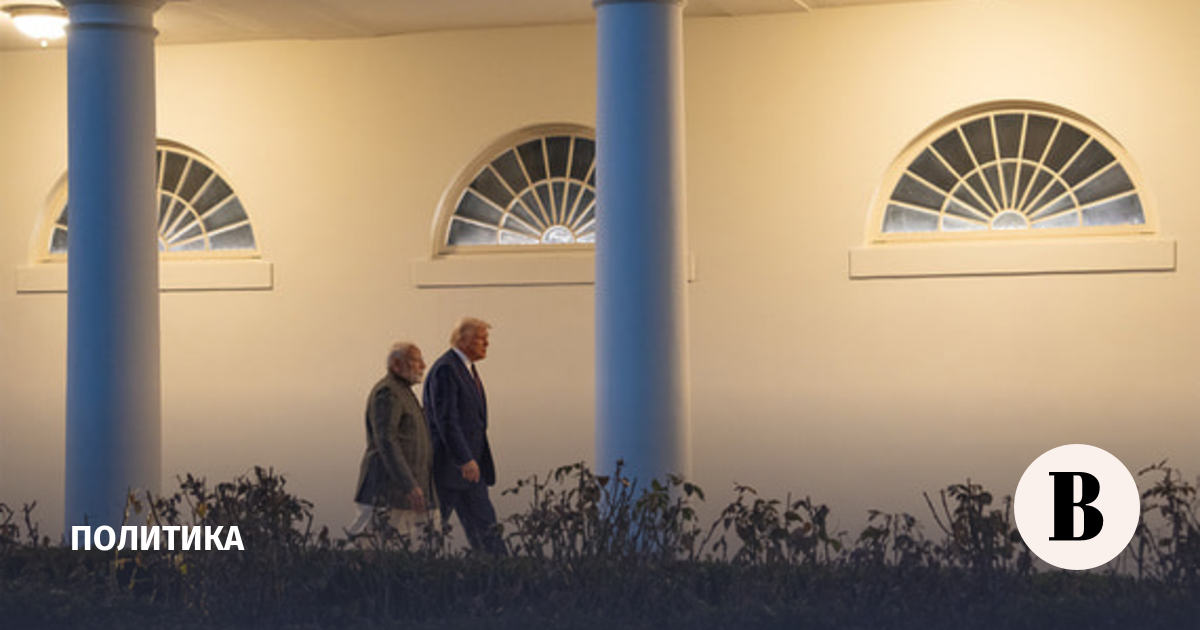
In early March 2026, conversations about the United States in Kyiv, New Delhi and Jerusalem unexpectedly converge on one point — the White House of Donald Trump, who is simultaneously conducting peace negotiations over Ukraine and leading a war against Iran. But behind this outward similarity lie three completely different perspectives: for Ukraine the US is an arbiter and security guarantor whose support is becoming increasingly conditional; for India it is a cynical but indispensable architect of energy and technology flows; for Israel it is the main military partner and simultaneously a domestic factor in its own politics.
The central theme shaping the agenda in all three countries is the American‑Israeli‑Iranian war, which began on 28 February 2026 with massive strikes by the US and Israel on targets in Iran and the assassination of Ayatollah Ali Khamenei. This is not just another Middle Eastern flare‑up: for Kyiv it is a risk of losing attention to Ukraine, for India it is a shock to oil markets and a complex test of balance between Washington, Moscow and Tehran, for Israel it is an existential conflict in which America is not present merely as an “ally” but as a co‑author of strategy. (ru.wikipedia.org)
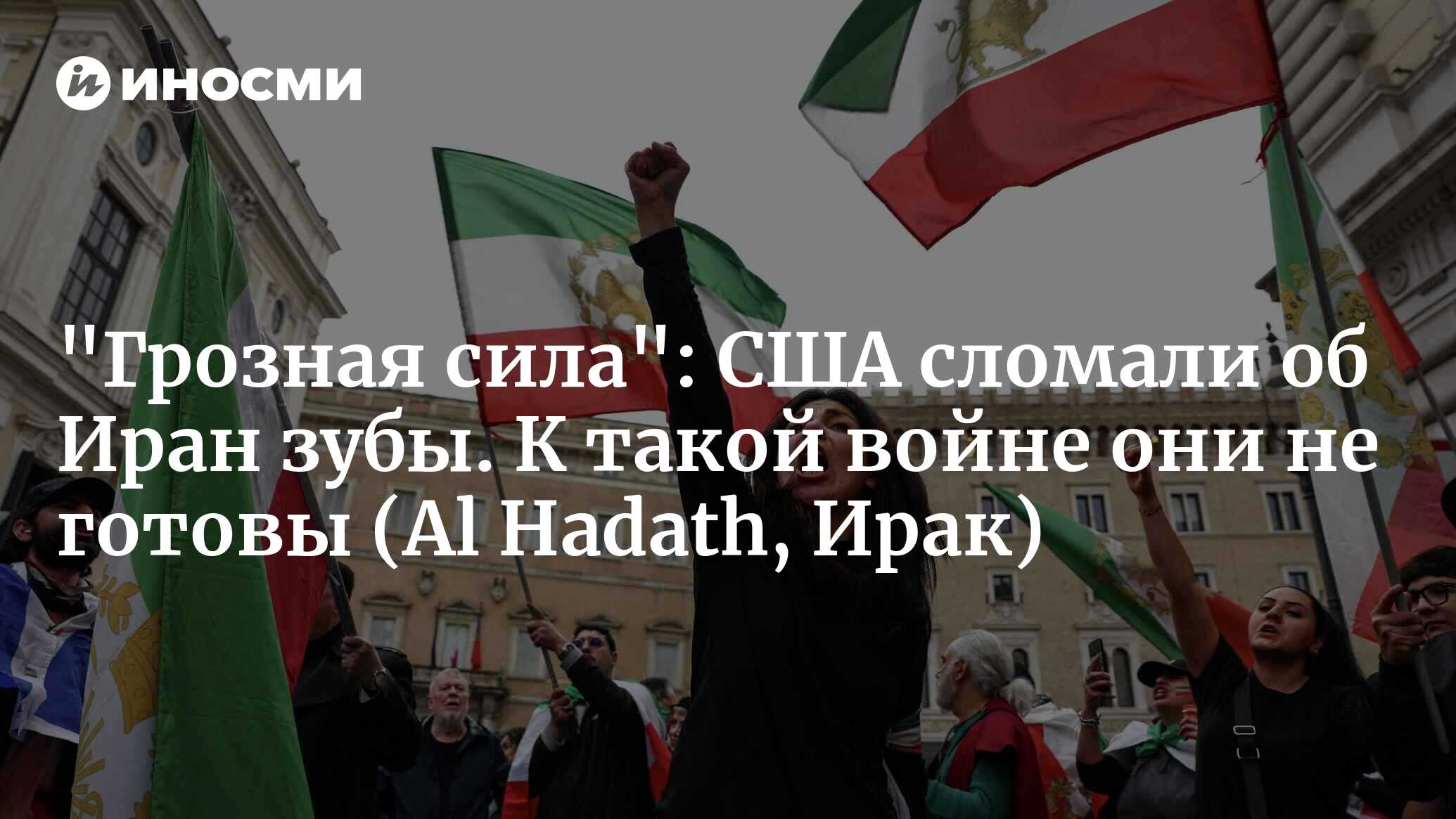
The military campaign against Iran and the fear of an “endless American war” set the tone for much commentary outside the US. The Iraqi channel Al Hadath, analyzing the prospects of the conflict, stresses that Washington and Tel Aviv “are not ready for a war of attrition” and had counted on a quick operation but encountered an opponent prepared for prolonged confrontation. In the retelling by the Russian outlet InoSMI this turns into a warning: if Iran withstands the pressure, it will become a serious test not only for Trump but for the American foreign‑policy model itself, which is used to short interventions and clear end dates for operations. (inosmi.ru)
Against the backdrop of this war, the Ukrainian debate about the US looks at once anxious and pragmatic. In a column for Ukrainska Pravda, political scientist Andreas Umland, working in the Kyiv office of the European Policy Institute, spells out the main fear directly: Trump’s return, the reduction of military aid in 2025 and the current US focus on Iran “have already substantially reduced American influence” on the course of the Russo‑Ukrainian war. He warns that Washington is increasingly signaling to Kyiv: the West is ready for peace, but not for fighting until Ukraine’s victory, and there is growing temptation in the Trump administration to extract a “partial capitulation” from Kyiv in exchange for a quick deal with Moscow. (pravda.com.ua)
This assessment weaves into a broader Ukrainian conversation about what the US now demands of Kyiv. Ukrainian media extensively quote Trump’s words that he wants to end the war “within a month” and views negotiations with Russia as a “very high priority.” In the retelling by the Dialog.UA portal, Trump’s phone call to Zelensky on 25 February appears as an ultimatum — Washington is not only pushing a ceasefire according to an American plan but also making clear that the White House’s patience is limited. (dialog.ua)
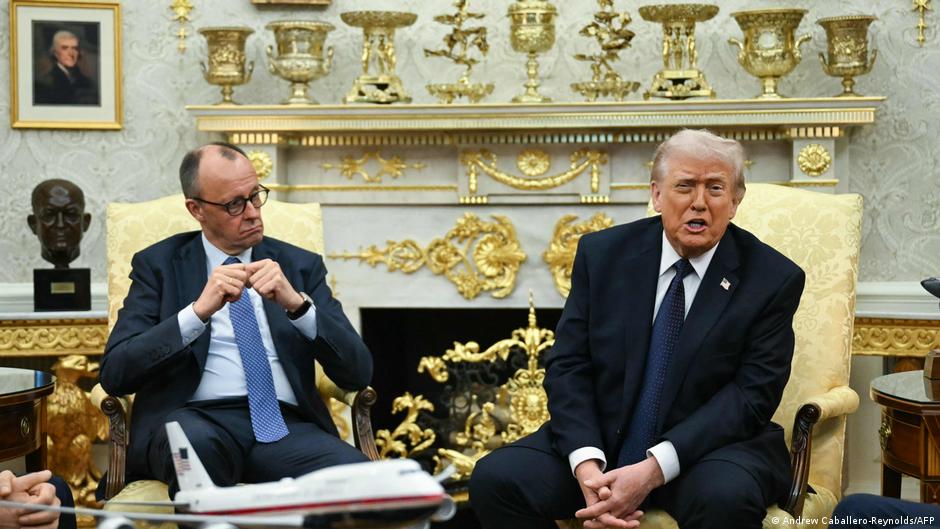
Hence the painful linkage for the Ukrainian audience: the US as guarantor and the US as a source of pressure. In a Deutsche Welle piece, Trump simultaneously talks about the US having “almost limitless stocks of weapons” and contemptuously mentions that “most of this weaponry Biden foolishly gave away to Ukraine for free.” This phrase is widely cited in Russian‑ and Ukrainian‑language segments because it exposes hidden irritation: aid to Kyiv for the current administration is not an expression of strategic solidarity but a predecessor’s mistake that needs to be politically rectified. (amp.dw.com)
In Ukrainian debates particular irritation is also caused by how the US‑Israeli war against Iran interferes with the timetable for peace talks on Ukraine. After the strikes on Iran, Kyiv announced the postponement of a new round of talks with the US and Russia, which gives Moscow grounds to accuse Ukraine and Washington of sabotaging the dialogue. Russian outlets like Fontanka pick up and mirror Trump’s position: the US president is allegedly unhappy with “Zelensky’s stubbornness” and warns that Kyiv “is rapidly losing bargaining positions.” For some Ukrainian commentators this is a painful reminder that Washington sees the war not only as a matter of principle but as a space for a deal in which Ukraine is only one element. (fontanka.ru)
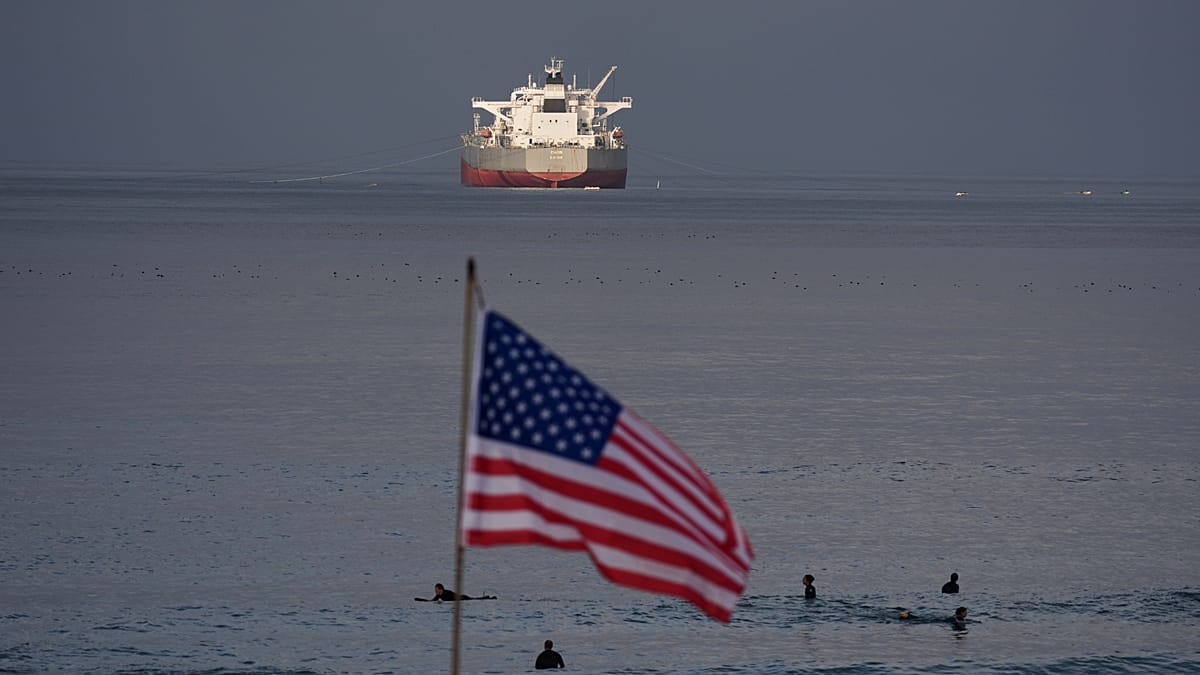
The Indian discussion about the US these days is organized differently: it is directly tied to oil and sanctions. The American‑Israeli strikes on Iran disrupted the Gulf’s usual energy flows, caused transport interruptions and another spike in prices. Against this background, a 30‑day “sanctions corridor” that Washington granted India for the purchase of stranded Russian oil became an important topic. An Euronews piece emphasizes that the US, on one hand, asks New Delhi to help “soften the blow” to the global market and, on the other, is effectively nudging India toward a long‑term reorientation of import flows in favor of American supplies. (ru.euronews.com)
Indian analysts, judging by retellings and commentary, see in this a typically American “double‑speak”: Washington publicly talks about a “partnership with the world’s largest democracy,” but in practice uses the Iran war and sanction pressure on Russia to lock in the growing Indian market for itself. At the same time the pragmatic wing of the establishment views this as an opportunity. Mentions of a multi‑year gas contract with American suppliers and expanded military‑technical cooperation are presented not as subordination to the US but as risk hedging: ties with Washington become for India an instrument of balancing against China and insurance against energy shocks. (vedomosti.ru)
Simultaneously some Indian commentators recall very recent episodes when the US demanded that New Delhi cut purchases of Russian oil and threatened secondary sanctions. Harsh statements by Trump toward India and Russia were then interpreted in Kyiv as a sign that Washington was losing leverage over that triangle, and in India as another illustration of American policy’s unpredictability, forcing the country to keep maximal maneuvering between the West, Moscow and regional conflicts. (gazeta.ru)
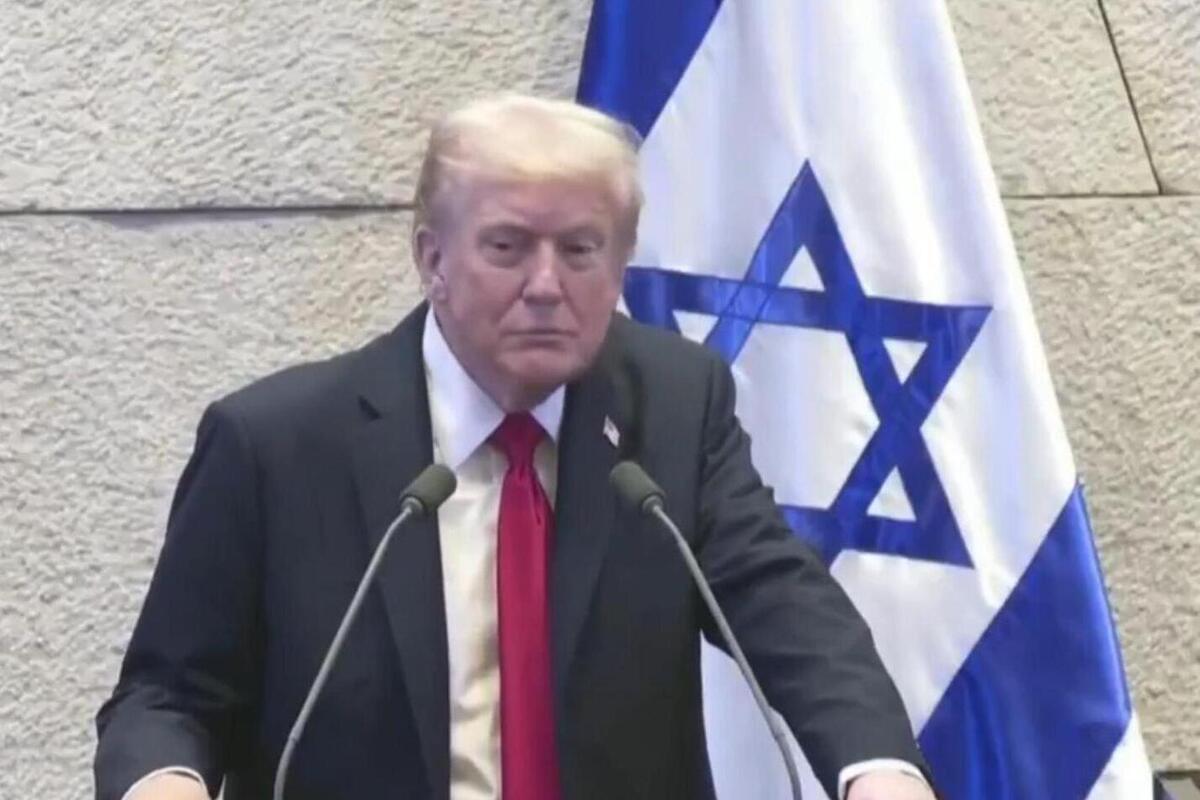
In Israel the conversation about the US is now almost entirely absorbed by the war with Iran, but overlaying that is a longer line — Trump’s personal relations with Israeli leadership and his transformation into a domestic Israeli factor. Back in 2025 Trump’s speech to the Knesset after the end of the Gaza war was presented as a “historic moment”: the American president, who played a key role in freeing Israeli hostages, spoke from the parliament’s podium while the hall was filled with red caps bearing the inscription “Trump – President of Peace.” Russian Moskovsky Komsomolets, covering this, emphasized that even traditionally critical American media had to admit a diplomatic success. (mk.ru)
This image of the “president of peace” now sharply contrasts with the reality of a large war involving the US and Israel. Israeli and regional analysts, whose assessments are widely relayed by Russian and Middle Eastern platforms, debate whether the current operation in Iran is a logical continuation of a hardline deterrence policy or a dangerous overplay that risks a protracted war and missile strikes on Israeli territory and American bases. Articles such as a geostrategic analysis on Cont.ws insist: US and Israeli command are used to a “shock and awe” campaign with rapid results, but Iranian strikes on American bases and on Cyprus signal that this war may exceed familiar bounds. (cont.ws)
A particularly sensitive point in the Israeli debate is who is actually setting the operation’s tempo: Washington or Tel Aviv. The Armenian analytical center Arvak, in its study of American policy toward Iran, notes that even before the current war Israeli elites favored a forceful solution, and Trump, however much he emphasizes “America First,” repeatedly turned out to be the one who legitimizes and covers that line. For critics in Israel this confirms an old suspicion: strategic symbiosis with the US gives the country unprecedented military power but at the same time turns it into a co‑producer of American wars, whose consequences Israelis themselves must primarily deal with. (arvak.am)
Interestingly, Ukrainian, Indian and Israeli reactions converge on one point: all three societies see the US not as a monolith but as a field of internal conflicts and political competition that directly shape foreign policy. Ukrainian experts stress that the upcoming 2026 midterm elections push Trump toward looking for “quick wins” — peace on Ukraine and a hard stance on Iran become parts of his domestic campaign. Analysts cited by RBC explicitly link the White House’s desire to shift the Iran conflict into a diplomatic phase with the risk of losing votes over a prolonged war. (amp.rbc.ru)
In Indian discussions another facet of American domestic dynamics comes to the fore — the fight over sanctions and technological restrictions on China. Reports that the Trump administration is discussing limits on shipments of Nvidia chips to Chinese companies are read in New Delhi not simply as a US‑China spat but as part of a struggle for control over the global tech supply chain, in which India seeks to position itself as a “third center of power.” Energy concessions from Washington are a temporary gesture, but a tougher sanctions architecture aimed at China and Russia will be a long‑term contour into which India must fit without losing maneuverability. (ru.euronews.com)
In Israel the key element of the American domestic scene has become Trump himself. His role in the peace agreement with Hamas and the freeing of hostages created in Israeli society a feeling that the current occupant of the White House is not simply an ally but in some sense “our politician,” someone who can speak in terms Israelis understand: strength and security. This image noticeably softens traditional worries about dependence on the US: when an American president acquires the title “president of peace” in Israeli discourse, criticizing his foreign‑policy decisions becomes politically much harder. (mk.ru)
The most paradoxical thing is how, through different prisms — Ukrainian, Indian and Israeli — the same tenet of American policy is refracted: “America First.” In the Ukrainian reading this sounds as a warning: Washington is ready to support, but only up to the point where support begins to interfere with its own calculations. In the Indian reading it is an invitation to bargain: the US is building its order, but one can find a profitable niche in it if autonomy is firmly defended. In the Israeli reading it is almost coincident with national interests: the more selfish America is, the more reliably it bets on an ally that demonstrates resolve and military strength. (ru.wikipedia.org)
These three perspectives matter precisely because they rarely reach English‑language audiences in full. Ukrainian fear of a “quick US deal” with Russia and an imposed capitulation; Indian distrust of Washington’s sanction morality while simultaneously using American opportunities; Israeli readiness to be a co‑producer of American force in exchange for security guarantees — all of this together creates a far more complex portrait of international perceptions of the US than the classic binary of “adversaries vs. allies.”
In March 2026 the US is at once waging a war in the Middle East, trying to finish the war in Europe and holding the balance in the Indo‑Pacific. But looking at Washington through the eyes of Kyiv, New Delhi and Jerusalem makes clear: the key question today is not whether America has enough resources, but how countries dependent on those resources and decisions will learn to live with an America that is less and less willing to pay for “common values” and more and more willing to pay only for its own interests.