Since late February 2026 the United States has once again found itself at the center of global disputes — not so much because of domestic elections as because of the war with Iran, the closure of the Strait of Hormuz and Washington’s attempts to simultaneously hold on to its alliance with Israel and not lose Arab partners in the Persian Gulf. In Russian, Israeli and Saudi media the US is discussed today primarily as a warring power, an architect of regional alliances and the de facto regulator of global oil prices, and only then as a democracy with internal crises.
In the Russian discourse the dominant theme is the “third Gulf war” and its connection to the Ukrainian front: the war of the US and Israel against Iran is portrayed as another example of “aggressive and miscalculated” American interventionism, which supposedly brings the world closer to a Third World War. In Israel, by contrast, the debate is over whether Washington is firm enough and whether Donald Trump’s policy toward Iran has not caused strategic damage to Israel’s own security. In Saudi Arabia the focus has shifted to oil, military risks and the conditions for future normalization with Israel: local commentators weigh carefully the cost of a close alliance with the US in a situation where Saudi cities have already endured Iranian missile strikes. All of this forms a variegated but interconnected picture: the same Washington decisions prompt conversations in Moscow about the balance of power, in Tel Aviv about the “price of alliance,” and in Riyadh about the “price per barrel.”
The first major knot of disputes is the war of the US and Israel against Iran itself, which began after the failure of talks and the strikes of 28 February 2026. Russian analytical platforms and Telegram channels interpret this campaign as a vivid confirmation of the thesis that Washington “doesn’t know how to extricate itself from conflicts” and has once again “underestimated the resilience of the adversary.” This line is reinforced by English‑language analysis often cited in Russia: for example, one RealClearDefense review explicitly says that in the US‑Israel conflict with Iran “it is becoming harder to consider it a local Middle Eastern episode,” and that the key strategic mistake is failing to account for Iran’s ability to adapt and respond asymmetrically.(realcleardefense.com) Russian authors pick up this idea, drawing parallels with 2022 and “the parade in Kyiv that never happened,” and conclude: America is again dragged into a war without a clear exit, which supposedly opens additional opportunities for Moscow on the Ukrainian front.
At the same time, fresh reports of US “self‑defense” strikes on targets in southern Iran, including launchers and facilities used to mine waters, are also circulating through the Russian media space with an expected interpretation: a talking head on state TV explains that “under the slogans of self‑defense Washington is expanding the geography of strikes,” and another example of “creeping escalation” is noted as an argument against trusting any American ceasefire guarantees. The pretext are Central Command reports of such strikes amid a fragile truce.(apnews.com)
In Israel the general nerve is the same — a sense of a protracted, poorly managed conflict — but the perspective is opposite. Israeli and Western commentators, widely cited in the Hebrew‑language press, increasingly speak of a “strategic fiasco” by the US in Iran. Thus, in a piece from Australia’s ABC, republished in Israeli public pages, it is noted that “the war with Iran could turn into the most devastating blow to Israel’s security in its history,” citing assessments by American researcher Robert Kagan.(abc.net.au) The criticism is directed primarily at Trump personally: his attempt to “strike a deal” with Tehran while simultaneously satisfying regional allies’ demands is already being described as an “American failure” that has left Iran with serious levers of influence.
In this context Israel is also widely debating Benjamin Netanyahu’s own long‑term strategy. One prominent example is a column in The Washington Post, actively cited by local analytical centers, which argues that Netanyahu’s course toward dominance by force, partially built under the umbrella of American support, has effectively undermined Israel’s security, dragging it into parallel conflicts from Gaza to Yemen.(washingtonpost.com) Against the Israeli backdrop the US appears ambivalent: on the one hand, an indispensable military partner and arms supplier; on the other, an actor whose political line (especially under Trump) makes Israel’s strategic picture less predictable.
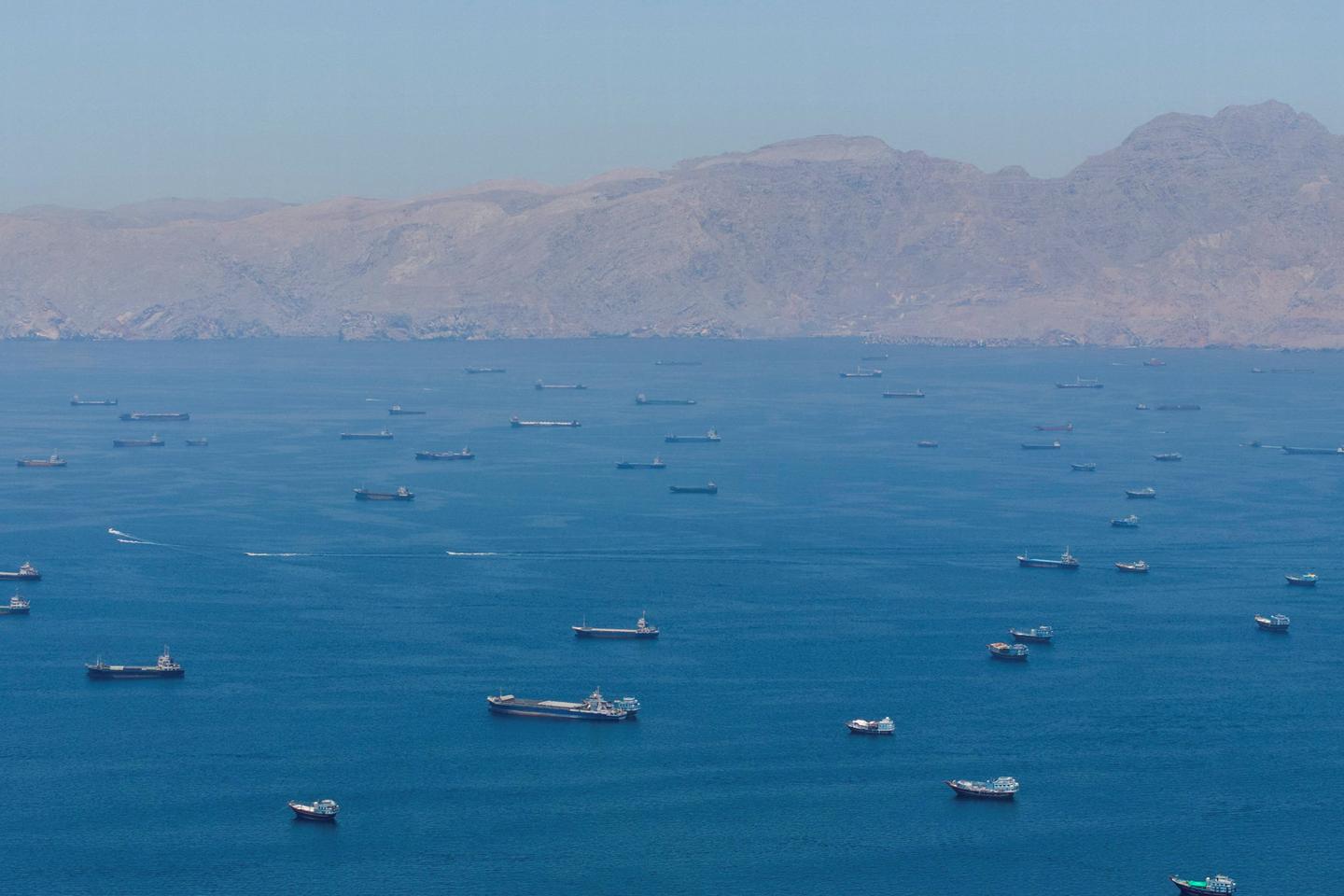
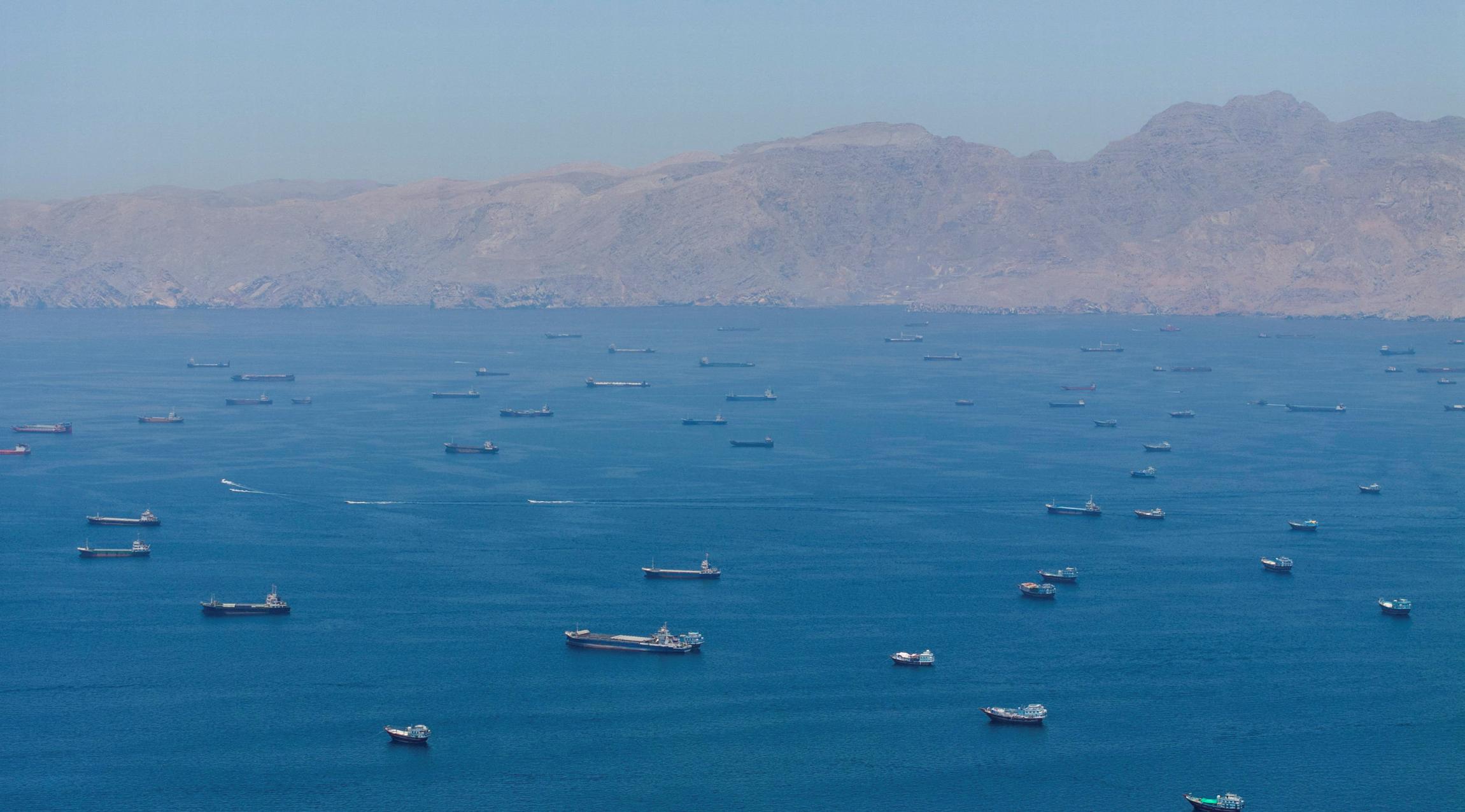
The second storyline common to all three countries is energy and Hormuz. The closure of the strait after US‑Israeli strikes on Iran, a nearly 50% jump in prices and the subsequent political pressure on OPEC countries became the central theme of Saudi economic columns.(eenews.net) In Riyadh the US’s status oscillates between “an indispensable buyer and protector” and “a source of price turbulence.” When Trump publicly boasts that the US supposedly produces “more oil than Russia and Saudi Arabia combined,” which specialist outlets point out simply does not match International Energy Agency data, local commentators read this as a signal for hard bargaining rather than as statistics.(eenews.net)
One Saudi market review, published for example by Al Rajhi Capital, carefully but clearly links local market volatility to American moves in the Persian Gulf and Fed policy. The report emphasizes that American indices end trading days “at mixed levels” amid profit‑taking and geopolitical uncertainty, which in turn affects investor sentiment in the Kingdom.(alrajhi-capital.sa) The key subtext: however much Washington talks about its own “energy independence,” its decisions on the war with Iran and maritime security set the parameters for Vision 2030 and Saudi economic diversification.
In Russia the oil and gas aspect is viewed through the prism of rivalry: analytical pieces note that, according to the IEA, the US is overstating its achievements — in Q1 2026 Saudi Arabia and Russia each produced 9–9.4 million barrels per day, and their combined output significantly exceeds American production, despite Trump’s public statements.(eenews.net) This is used as an argument against the “American myth of global energy dominance” and as a reminder that without dialogue with Moscow and Riyadh the United States will not be able to stabilize the market.
The third broad motive uniting all three countries is Washington’s attempts to reboot or expand the architecture of Middle Eastern alliances. The most resonant episode was Trump’s recent demarche toward the Saudis and Qataris: after a multilateral phone conference with leaders of Saudi Arabia, the UAE, Qatar, Pakistan, Turkey, Egypt, Jordan and Bahrain he publicly declared that the “deal” with Iran should begin “with the immediate signing” of agreements with Israel by Riyadh and Doha, and that those who refuse “should not be part of the deal.”(lemonde.fr)
In Le Monde, a column widely carried in Arab media, this move is read as an example of “American pressure without accounting for changed realities”: after the wars in Gaza, Lebanon and Iran, expecting Saudi leadership to publicly and quickly embrace Israel “is to see a mirage.”(lemonde.fr) Saudi commentators in the Arab press add that the Kingdom has already made clear: without a clear prospect of Palestinian statehood there will be no formal normalization with Israel, a position that American outlets have also recorded.(washingtonpost.com)
In Israel this episode spawns a different debate: some right‑wing authors welcome US pressure on Riyadh as a chance to extract a historic agreement, while more pragmatic voices warn that turning the Saudis into hostages of American domestic calculations is dangerous. At the same time experts discuss a “post‑aid” model of alliance with the US: a Middle East Forum report, widely cited in Israel, proposes moving from the logic of annual American funding to a more equal partnership, emphasizing that the big joint operations of recent years have shown that the alliance rests not on Washington’s checkbook but on the technological and operational linkage between the armies.(meforum.org)
Benjamin Netanyahu himself, in a recent interview on the American program “60 Minutes,” said that Israel seeks to “reduce to zero” the amount of American financial aid in the long term, which the Israeli press interprets as a signal that Jerusalem wants to maintain strategic closeness to the US while reducing vulnerability to political swings in Washington.(cbsnews.com) In the eyes of Israeli analysts the current war with Iran only reinforces this argument: the more conflicts depend on the decisions of a single US president, the greater the risk for Israel if the political pendulum in Washington swings toward isolationism.
In Saudi Arabia American attempts to expand the Abraham Accords are viewed through the question: “what will this give the Kingdom and what is the risk?” Commentators remind readers that Iran has already launched missile strikes on Saudi territory during the current war, and any abrupt rapprochement with Israel could make Saudi cities even more desirable targets for Tehran and its proxies.(en.wikipedia.org) Against this background Washington is seen not only as a partner but as a factor capable of raising the price that will have to be paid.
Finally, the fourth line on which the views of the three countries intersect is the American domestic political context and the question of US “predictability.” Russian political scientists, relying on their own analytical reports about the 2024 elections and on discussions of the US Supreme Court’s decision on broad presidential immunity, conclude that there is a “blurring of traditional checks and balances” and assert that this makes American foreign policy more personalized and less reliable.(ru.wikipedia.org) As an illustration they cite Trump’s current line on Iran and the Middle East: one person is capable of sharply changing course not only domestically but abroad as well.
In Israel these same processes are viewed with concern but without schadenfreude. For part of the local establishment the US remains the “anchor” of the international order, and its internal polarization is seen as a long‑term risk. Hence growing talk about the need to “insure” the alliance with Washington — by deepening ties with Europe, India and regional partners. One analytical piece notes that involving the Pentagon in multilateral talks, for example on the Israel‑Lebanon track, shows that the military component of the American presence in the region remains key, but the political durability of American will raises questions.(washingtoninstitute.org)
In Saudi Arabia internal American debates are of interest primarily through the prism of predictability of sanctions and military policy. After the mutual defense agreement with the US signed in 2025, which gave the Kingdom formal security guarantees, Saudi experts wonder how resilient those papers are to a change of administration.(washingtonpost.com) Hence the cautious attitude toward American calls for more active involvement in confronting Iran: local columns express the thought that it is easy to enter a confrontation, but the US may be able to exit it much sooner than Riyadh would like.
The particular sharpness of assessments of the US is also heightened by the fact that the war with Iran overlaps with the unresolved conflict in Ukraine. For the Russian audience Washington’s proposals for short‑term truces on the Ukrainian front combined with the escalation around Hormuz form a general narrative of America’s “divided attention,” which, according to Russian commentators, makes it increasingly difficult for Washington to manage two large geopolitical theaters simultaneously. Timelines of combat operations in Ukraine for May 2026, which record the three‑day truce declared by Trump, are cited as an example of how Washington tries to “unload” one front in order to concentrate on another.(ru.wikipedia.org) In this context Russia presents itself as the more resilient, if besieged, player, and the US as a power overloaded by its own global ambitions.
As a result, three very different countries converge on one point: attitudes toward the United States are less and less defined by the abstract image of “America” and more and more by questions of concrete benefit and risk. In Moscow the US is an adversary and at the same time an important parameter in calculations about oil and Ukraine; in Israel it is an indispensable but not always reliable strategic partner whose decisions on Iran and military aid can both save and undermine security; in Saudi Arabia it is a guarantor without whom it is difficult to build long‑term Gulf security and Vision 2030, but also a source of pressure and potential escalation.
American domestic polarization, the “personalization” of foreign policy around the figure of the president and the desire to both wage war and build new alliances at once make the contemporary perception of the US abroad much less reverent and much more pragmatic. In each of the three societies — Russian, Israeli and Saudi — discussion of America has ceased to be a discussion of “the West as such” and has turned into a sober, sometimes cynical analysis of what price must be paid for closeness to Washington — and what benefit can be extracted from it.