In recent days, the United States has prompted not one but several layers of reaction in Brazil, Turkey and Russia. The main one is the Donald Trump administration’s shift from military confrontation with Iran to its promised “economic war”: on August 20, the White House threatened severe consequences not only for Tehran but also for any country whose banks, companies, airports or government institutions provide Iran with a “lifeline.” For Ankara, this is not abstract geopolitics but a risk to trade, energy prices and Turkey’s role as a mediator. In Russian discussions, it appears to be an attempt by the United States to extend its sanctions jurisdiction far beyond its own borders. In Brazil, by contrast, another front is much more prominent: the dispute with Washington over tariffs, digital regulation and the country’s right to set its own economic and political agenda. (amp.rbc.ru)
The Turkish reaction is particularly revealing because American pressure on Iran is being assessed there as both a threat and an opportunity. The threat is obvious: Turkey is a major energy importer, Iran’s neighbor and a country with extensive economic ties across the region. In an analysis for Anadolu Ajansı, expert Taha Eğri directly links the conflict around Iran to rising Turkish fuel-import costs, inflation, higher transportation and insurance costs, and weakening exporter competitiveness. But he also points to a less obvious aspect: the search for routes bypassing the Persian Gulf could increase Turkey’s importance as a transit hub for Iraqi oil and new logistics links with the Arabian Peninsula. In other words, Ankara is not merely worried about American escalation—it is trying to turn geography into a diplomatic and commercial asset. (aa.com.tr)
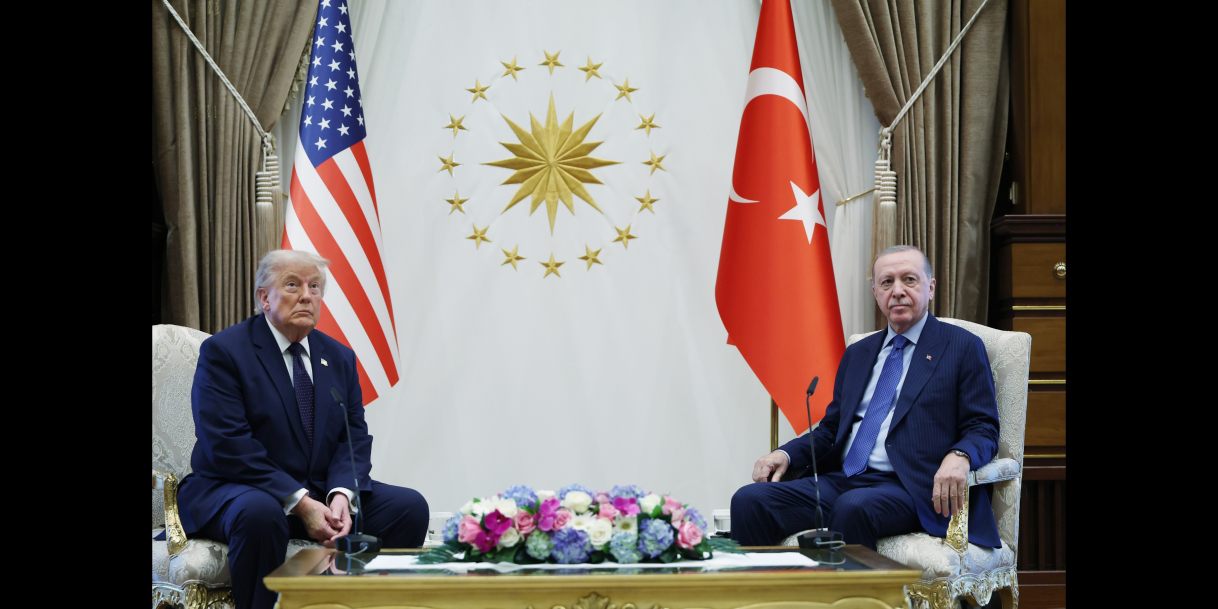
This explains the cautious tone of Turkey’s leadership. In a conversation with Trump on August 18, Recep Tayyip Erdoğan urged him not to close the diplomatic channel with Tehran and emphasized Turkey’s readiness to support peace efforts, according to the Presidential Communications Directorate of Türkiye. In an interview with Al Jazeera, Erdoğan put the position even more forcefully: “we are definitely not for war; we are for peace,” while simultaneously assigning Israel primary responsibility for the conflict’s expansion. For a Turkish audience, this is not merely a moral statement: it reflects the desire to end up neither in an American-Iranian confrontation nor in the camp of those obliged to comply with secondary sanctions. (iletisim.gov.tr)
Independent Turkish commentators add an important qualification to the official line: the problem is not the lack of elegant diplomatic formulas, but the fact that the truce itself was too vague. In a Medyascope analysis, Gülenay Kırnalı writes that the June agreement did not resolve the key disputes—from Iran’s nuclear and missile programs to sanctions, oil exports and control of the Strait of Hormuz—but merely paused the conflict. Her main conclusion criticizes not only Tehran but also Washington: Trump has become hostage to two incompatible promises—to withdraw America from its “forever wars” and to achieve a swift, unquestionable victory over Iran. In the Turkish view, the cost of this contradiction is measured not only in terms of U.S. grand strategy in the Far East, but also in gasoline prices, inflation and security along Turkey’s own borders. (medyascope.tv)
In Russia, Washington’s current turn is being discussed primarily as a change of instrument rather than objective: after the strikes and an unstable truce, the United States is attempting to isolate Iran financially and force third countries to choose between relations with Tehran and access to the American economy. The magazine Expert describes the possible arrangement as a “belt of financial filters” around Iran and lists Turkey, Iraq, India, the South Caucasus and Central Asia among those most vulnerable to such pressure. This is a characteristic emphasis in Russian analysis: American policy is assessed less by its stated goal—not allowing Iran to develop a nuclear program—than by its extraterritorial impact, namely Washington’s ability to punish states that are formally not parties to the conflict. (expert.ru)
Russian business and international publications, meanwhile, see the new U.S. policy not as a sign of absolute strength but as an acknowledgment of the limits of military success. In recounting the global press reaction to the expiration of the 60-day deadline for a deal, Kommersant highlighted the idea that Trump had discovered he lacked the leverage to achieve the war’s initial objectives. RBC, for its part, noted that the American strategy was shifting from an attempt to strike quickly to an intention to slowly “strangle” Iran economically. From the Russian perspective, this means the Strait of Hormuz is becoming not merely a maritime corridor but a test of the limits of American coercion: a blockade may create pressure, but it also increases risks for the global oil market, U.S. allies and neutral states. (amp.rbc.ru)
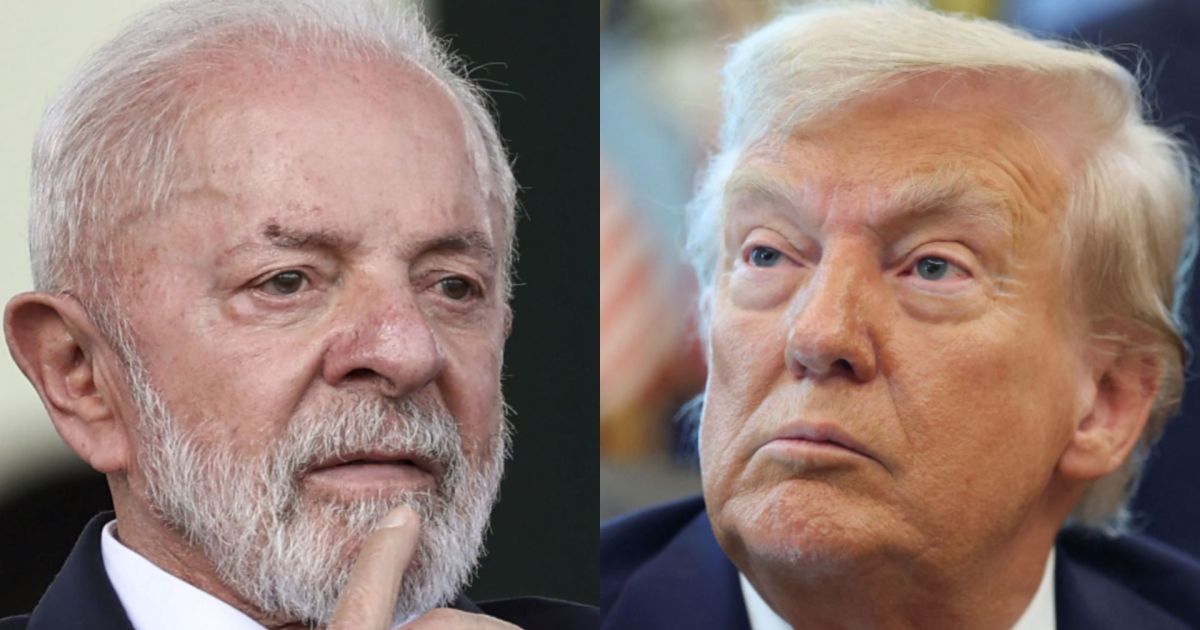
Brazil’s reaction to the Iranian crisis is noticeably less emotional, but it makes the broader theme particularly clear: protecting sovereignty from American economic policy. Brazil’s agenda is currently focused on the new 25 percent U.S. tariff on a significant share of Brazilian goods and on a Washington investigation whose complaints concern not only trade but also Pix, digital payments, technology-company regulation, intellectual-property protection, ethanol, deforestation and anti-corruption practices. In a conversation with Trump on August 21, President Luiz Inácio Lula da Silva called the American grounds for the tariffs unfounded; Brasília is simultaneously insisting on negotiations and consultations at the WTO while preparing to invoke its own Reciprocity Law. The state-run agency Agência Brasil reported on this in detail. (agenciabrasil.ebc.com.br)
There is, however, no unanimity in Brazil over the practical response. As CNN Brasil notes, the government’s political wing sees a forceful response as an opportunity to reaffirm the long-standing Lulaist formula of an “active and dignified” foreign policy that does not submit to the dictates of great powers. The economic bloc fears that retaliatory tariffs would amount to “shooting oneself in the foot,” as they would raise costs within Brazil itself. This debate makes the Brazilian view the most pragmatic of the three: the question is not whether Washington is morally right, but how to protect national autonomy without turning symbolic sovereignty into additional inflation and industrial losses. (cnnbrasil.com.br)
The most unexpected common feature among the three countries is that none of them views U.S. actions exclusively through slogans about security or democracy. In Turkey, American pressure on Iran represents the risk of an energy shock and, at the same time, a contest for new transit routes. In Russia, it is an example of how sanctions and financial infrastructure are becoming weapons against entire regions. In Brazil, it is a continuation of an already unfolding dispute over whether Washington has the right to tie access to its market to demands concerning another country’s domestic regulation, digital sovereignty and political decisions. The tone and interests differ, but the general conclusion is similar: Trump’s America is perceived not as a distant arbiter but as a force that translates foreign-policy conflicts into the language of tariffs, payments, logistics and the everyday cost of living.