In early March 2026, the image of the United States in non-American perspectives is formed not from abstract reflections about the "leader of the free world" but from very concrete storylines: a war alongside Israel against Iran, trade and strategic deals with India, and a protracted confrontation with China in which Beijing increasingly speaks of an "information war" and "double standards." In Israel, there is debate over whether the "iron" alliance with Washington will withstand the test of a full-scale war. In India, commentators ask whether Washington is turning New Delhi into an instrument of its Middle East policy and a hostage to US–China competition. In China, official media and experts interpret recent US actions in the region and rhetoric toward Beijing as a continuation of a containment strategy where military, economic and values-based discourse are intertwined.
The central axis of current discussions is the US–Israel–Iran war, in which US participation has become the main factor shaping both regional and global reactions. In Israel many commentators emphasize Benjamin Netanyahu’s personal choice: he is integrating a long-standing concept of an "existential struggle" with the Iranian regime into a framework of near-total dependence on the United States. American outlets like the Associated Press note that by persuading Donald Trump to expand US involvement in the war against Iran, Netanyahu has simultaneously increased risks for bilateral relations: a war with the regime in Tehran could turn into a prolonged conflict for Washington with hard-to-predict consequences, and for Israel — a situation in which American support may be limited by US domestic fatigue with the Middle East.(apnews.com)
Israeli public opinion — according to polls such as a March survey by the Israel Democracy Institute — shows high approval for joint operations against Iran, but analytic and opinion pieces in the Hebrew press carry a leitmotif: Israel has effectively "mortgaged" its security strategy on the continuation of American involvement. Several commentators warn that the historical "insurance" of an automatic American veto and military aid no longer looks eternal, given divisions within the US itself over Middle Eastern wars. Local columnists recall the experiences of Iraq and Afghanistan: where Washington quickly entered wars, it likewise sought to leave them quickly, leaving allies with incomplete or altered mandates.
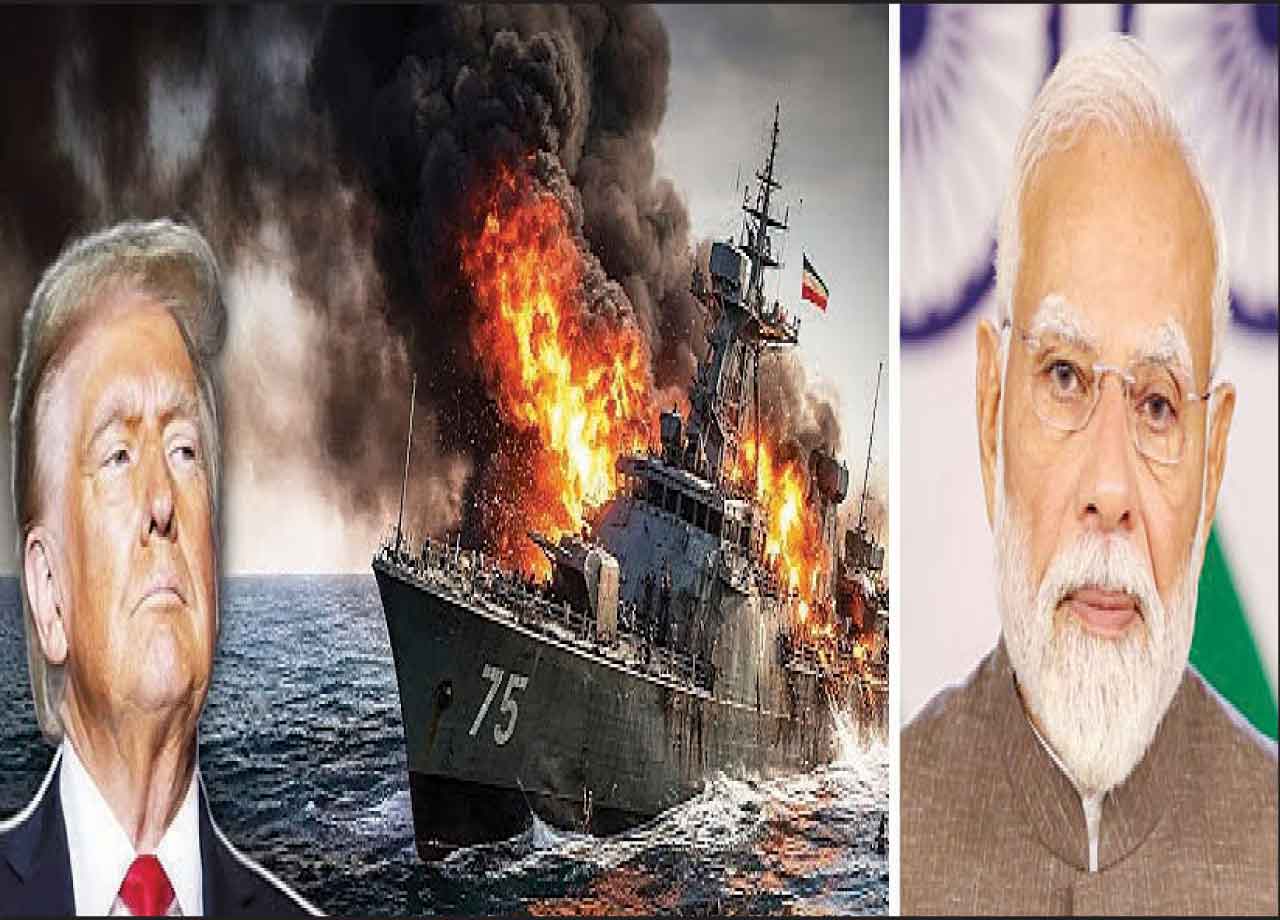
If the Israeli debate focuses on the dilemma "how far will American support go," the Indian conversation about America centers on the question "at what cost to us this support comes." In recent days the Hindi press has been full of alarmed assessments of the war’s consequences for India’s energy security. Several editorials note that the destruction by US forces of the Iranian warship IRIS Dena off the coast of Sri Lanka — the same vessel that shortly before had participated in international exercises at Vishakhapatnam at India’s invitation — damages Delhi’s image as an independent actor capable of maintaining relations with both Washington and Tehran. In Hindi Saamana this scene is described with almost offended surprise: a ship that arrived in India as a guest soon after the exercises becomes a US target.(hindisaamana.com)
Alongside the military agenda, Indian commentators analyze the economic component of relations with the US. Commerce and Industry Minister Piyush Goyal recently said India received "the best" trade deal compared to competitors, stressing reductions in mutual tariffs to 18% and the potential for further growth of Indian exports to the American market.(ibc24.in) But in several pieces from the Raisina Dialogue 2026, Indian authors are noticeably more cautious: remarks by US Deputy Secretary of State Christopher Landau in Delhi that Washington "will not allow India to become another China and surpass the US" caused wide resonance. As The Lallantop writes, these statements outlined a "red line" of American economic policy: cooperation with India, yes, but not to the extent that could create a competitor to Washington itself.(thelallantop.com)
Against this backdrop sharply critical voices arise. In an analytical piece on Satyahindi the war with Iran is called a reason to reassess Indian foreign policy: the author asks whether the Modi government has "capitulated" under US pressure, abandoning a long-standing line of "strategic autonomy." The observation that Indian oil imports from Iran are threatened by the conflict is linked to historical episodes of US pressure — from threats to halt grain shipments in the 1960s to sanctions on Iranian oil in the 21st century.(hindi.newsgram.com) For part of India’s intellectual community, America remains a partner whose capabilities cannot be ignored, but whose geopolitical priorities constantly force New Delhi to balance among Washington, Tehran, Moscow and Beijing. Hence headlines like "Balanced diplomacy is the only right way," where editors call not to let either the US or China monopolize India’s foreign-policy agenda.(amritvichar.com)
The Chinese conversation about America in March 2026 is less emotional but more systematic: the US is seen as a source of simultaneous military threat, economic pressure and ideological coercion under slogans of "human rights" and "democracy." In a fresh Chinese-language editorial reprint from South Korea’s Hankyoreh Beijing edition it is emphasized that the American strike on Iran was carried out "without any basis in international law" and creates "chaos for which Washington shifts the responsibility onto others." Chinese and Beijing-aligned authors, echoing this thesis, see it as confirmation of their own position: the US, they say, is accustomed to acting "through force rather than through law," thereby undermining the very international order it claims to defend.(china.hani.co.kr)
On Chinese analytical platforms such as Toutiao, US policy toward China is described as 舆论战 — a war of narratives. An article by Liu Shibaba notes that American media in 2026 "repeatedly in editorials painted scenarios: should the US and China go to war — for China it would be a one-way road," and interprets this as an element of psychological pressure rather than the result of a "full military assessment." He cites data on the high dependence of the American military-industrial complex on Chinese supplies of rare-earth metals: about 87% of US needs in this area are met from China, and after Chinese restrictions on exports prices for certain items "almost tripled," stalling a number of projects.(toutiao.com)
This Chinese perspective is interesting because it mirrors American discussions: if in the US strategists often discuss "dependence" on Chinese industry as a strategic risk, in Beijing they emphasize the vulnerability of the American system itself to its own sanctions. The same article also recalls volatility in high-tech stock markets: weakening Chinese demand led, the author estimates, to a one-day market-cap drop for NVIDIA close to $100 billion — another argument for the thesis that "sanctions and countermeasures appear on the same line of a financial statement."(toutiao.com)
A separate layer comprises commentary on US "double standards" on human rights and democracy. The People’s Daily in one review cites a quote from India’s The Times of India noting that Washington, "ignoring its own serious domestic problems, applies double standards to human rights in other countries," making its "moralizing posture unconvincing."(world.people.com.cn) For a Chinese audience, excerpts from the Indian press are a convenient tool to show that dissatisfaction with American "lectures" is shared not only by Beijing and Moscow but also by major democracies of the Global South.
Notably, India and China often appear in the same sentence when it comes to US positioning. In Indian texts after Landau’s speech in Delhi the question arose: "Does America look at India with the same eyes it is used to looking at China?" — that is, as a potential threat to its status rather than only as a partner.(thelallantop.com) In Chinese international-relations literature, in turn, it is emphasized that Washington seeks to prevent the emergence of "equal centers of power," whether China or India, and prefers to build bilateral ties so that a partner remains dependent both on security and economically.
A common motif in Israeli, Indian and Chinese texts is growing wariness about the unpredictability of American policy. In Jerusalem this concern is framed as a fear that a domestic political crisis in the US or a change of administration could abruptly alter the terms of support in the midst of a war with Iran. In New Delhi — as anxiety that energy security and multivector diplomacy will be subordinated to Washington’s agenda on Iran and China. In Beijing — as a conviction that the US uses any regional escalation to strengthen military infrastructure and coalitions around China while simultaneously advancing value-based claims.
Yet in all three countries America remains a necessary, not merely irritating, factor. Israeli writers acknowledge: without the US the war with Iran’s leadership would look far riskier and Israeli defense less sustainable. Indian ministers like Piyush Goyal continue to emphasize the benefits of trade deals and access to the world’s largest market, even as critics remind of pressure over Iran and the "red lines" of growth.(ibc24.in) Chinese analysts, while criticizing American policy, do not hide that global technological and financial interdependence is such that a sharp "decoupling" would harm both Beijing and Washington.
It is this combination of dependence and distrust that makes current perceptions of the US in Israel, India and China so contradictory. For a battlefield ally, Washington is a guarantor of survival and military superiority, but also a source of strategic risk. For a state balancing between blocs, it is a key economic and technological partner, but also a political factor constantly testing "strategic autonomy." For a systemic rival, it is an ideological and military challenge, but also a central element of the global architecture that cannot simply be abandoned without damaging one’s own economy.
These nuances, clearly audible in Israeli, Indian and Chinese voices, seldom figure in American domestic debate, which tends to divide the world into "friends" and "foes." Yet it is through such local optics that one can see how much the image of the US today contains not only strength or weakness, but ambivalence: America simultaneously needs these countries and fears their strengthening, while they simultaneously rely on the US and try to protect themselves from excessive dependence.

.webp)